Mausoleum of Galla Placidia, Ravenna
Mausoleum in Ravenna
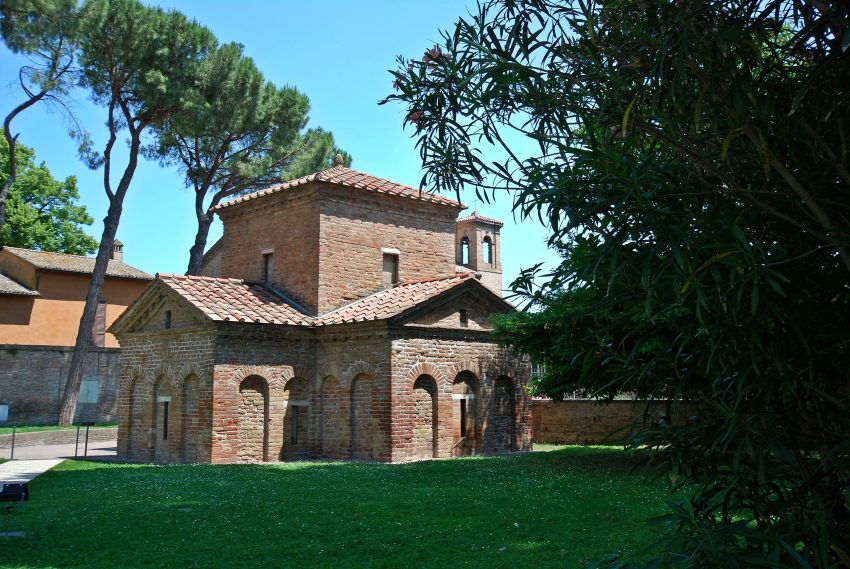
Tucked just behind the Basilica of San Vitale, the Mausoleum of Galla Placidia is one of those Ravenna sights that looks modest from the outside and then completely disarms you the moment you step indoors. The exterior is compact and quietly beautiful in its brickwork, sitting calmly in the complex, as if it's trying not to give away what's waiting inside.
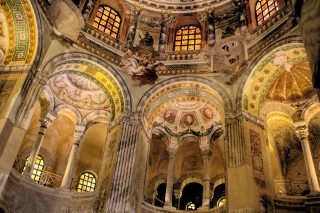
Once you enter, the atmosphere changes instantly: golden light filters through small alabaster windows, and every surface seems to shimmer with colour. It is one of the must-see places in Ravenna for anyone curious about early Christian art, and it's often visited on walking tours of Ravenna because it's an easy pairing with San Vitale and the other UNESCO sites nearby.
Table of Contents
- History and Significance of the Mausoleum of Galla Placidia
- Things to See and Do in the Mausoleum of Galla Placidia
- How to Get to the Mausoleum of Galla Placidia
- Practical Tips on Visiting the Mausoleum of Galla Placidia
- Where to Stay close to the Mausoleum of Galla Placidia
- Is the Mausoleum of Galla Placidia Worth Visiting?
- FAQs for Visiting Mausoleum of Galla Placidia
- For Different Travelers
- Nearby Attractions to the Mausoleum of Galla Placidia
History and Significance of the Mausoleum of Galla Placidia
The mausoleum was commissioned in the first half of the 5th century by Empress Galla Placidia, daughter of Theodosius I and a major political figure in the Western Roman Empire. She served as regent for her son, Valentinian III, and intended this small building to be her final resting place. History, however, had other plans: she died in Rome in 450 AD and was buried there, leaving the Ravenna mausoleum as a monument shaped by intention, symbolism, and later memory rather than a confirmed imperial tomb.
Architecturally, the building follows a Latin cross plan, with a dome hidden from the outside by a square lantern tower at the crossing. It originally connected to the nearby Church of Santa Croce through a narthex, and the site you see today sits lower than it once did due to centuries of ground subsidence that affected many parts of Ravenna. The result is a structure that feels even more intimate than its original design, as though you're stepping down into a protected chamber of light and colour.
The real significance, though, is the interior mosaic programme, which balances late Roman artistic tradition with Christian themes of salvation, victory over death, and eternal life. It is a small space with an outsized emotional impact, and that contrast is part of why it’s treasured: the mausoleum doesn’t overwhelm by size, but by intensity.
Things to See and Do in the Mausoleum of Galla Placidia
Give yourself a minute outside to notice how unassuming the building is. The brick façade and compact form are part of the experience, because they set up the surprise of what comes next. If you’re visiting with San Vitale, it’s worth doing the mausoleum first, simply because it’s quieter and more intimate, and it tunes your eye to mosaic detail before you see the grander spaces.
Inside, the starred sky in the dome is the moment everyone remembers: a deep, luminous field of stars centred by a golden cross, with the symbols of the Evangelists placed around it. Don’t just look up once and move on; let your eyes adjust, then look again, because the colours and the light change as you stand still.
In the lunettes, you’ll see apostles and carefully framed symbolic scenes, including deer drinking from a sacred font, and the figure of Saint Lawrence with his gridiron, a vivid image that anchors the building’s themes of faith and martyrdom. Above the entrance, look for Christ as the Good Shepherd, one of the most beloved images here, rendered with a softness that feels surprisingly human for something so old.
Finally, notice the three marble sarcophagi placed in the arms of the cross. Whether or not they held the burials traditionally associated with the mausoleum, they underline the building’s original function and reinforce the central themes you see in the mosaics: death transformed into hope, and darkness turned into light.
How to Get to the Mausoleum of Galla Placidia
Most international visitors arrive via Bologna Guglielmo Marconi Airport, with additional options including Rimini Federico Fellini Airport depending on routes and season, then continue to Ravenna by ground transport. For the best deals and a seamless booking experience, check out these flights to Ravenna on Booking.com.
Ravenna is straightforward to reach by train, typically via Bologna, and from Ravenna station you can walk, take a local bus, or use a short taxi ride to the San Vitale area where the mausoleum sits. Use Omnio to easily compare schedules, book train tickets, and find the best prices all in one place for a hassle-free journey across Italy.
Local buses and taxis make the final leg easy, and walking is a pleasant option if you want to approach through the historic centre. If you’re driving, aim for parking areas on the edge of the centre and finish on foot, as the immediate area can be constrained by limited access streets. If you are looking to rent a car in Italy I recommend having a look at Discover Cars, first, as they compare prices and review multiple car rental agencies for you.
Practical Tips on Visiting the Mausoleum of Galla Placidia
- Suggested tips: Visit early in the day for a calmer experience, and pause for a moment once inside so your eyes adjust to the low light and the mosaics begin to glow.
- Best time to visit: Morning for fewer people and softer light, or late afternoon if you want a more atmospheric, contemplative feel.
- Entrance fee: €10.50
- Opening hours: March to November: Every day 9.00-19.00 last entry 18.45 November to March: Every day 10.00-17.00 last entry 16.45
- Official website: https://www.ravennamosaici.it/orari-e-prezzi/#biglietteria
- How long to spend: 20-40 minutes is typical, longer if you enjoy slow-looking and want time to revisit the dome and lunettes.
- Accessibility: Expect historic thresholds and a compact interior; if you need step-free access or have mobility concerns, check current arrangements in advance.
- Facilities: Limited facilities on site; plan cafés, toilets, and longer breaks in the surrounding historic centre.
- Photography tip: If photography is permitted, avoid flash and focus on wide, steady shots that capture the dome and the overall glow rather than close-ups in low light.
- Guided tours: A guided UNESCO walk is ideal here because the iconography is rich, and a good guide can help you decode the symbols quickly without slowing the visit.
- Nearby food options: The streets around the centre have plenty of casual spots for piadina and espresso, making it easy to sandwich this visit between a light meal and your next monument.
Where to Stay close to the Mausoleum of Galla Placidia
To stay close to the mausoleum, base yourself in central Ravenna so you can walk to San Vitale and the surrounding UNESCO monuments at a relaxed pace. Hotel Bisanzio is a dependable choice near the historic core, ideal for early starts and easy evenings. For a more characterful stay right in the centre, Albergo Cappello gives you a classic Ravenna location with a boutique feel. If you prefer a smaller, quieter base that still keeps you within walking distance of everything, A Casa di Paola Suite B&B is a convenient and well-positioned option.
Is the Mausoleum of Galla Placidia Worth Visiting?
Yes, unequivocally. Ravenna has many mosaic masterpieces, but this is one of the rare places where the scale, the light, and the imagery combine into something that feels almost otherworldly. The small size is not a limitation; it's the reason the visit feels so concentrated and memorable.
It’s also a perfect counterpoint to the larger basilicas. Where grand churches impress through space and ceremony, this mausoleum impresses through intimacy and atmosphere, leaving you with the sense that you’ve stepped into a jewel box of late antique imagination.
FAQs for Visiting Mausoleum of Galla Placidia
What Other Travellers Say...

Mausoleo di Galla Placidia on Via San Vitale 17 is a small, unassuming brick chapel whose interior dazzles with intact late-Roman mosaics: a deep, star-studded blue dome with a gilded Latin cross framed by the four evangelists, lunettes showing Christ the Good Shepherd and Saint Lawrence, and abundant decorative motifs like doves and vines. Visitors describe an intimate, cool chamber lit by alabaster windows where the luminous mosaics draw the eye upward; entry is tightly timed so visits are short and sometimes involve a brief queue, and many recommend pairing the visit with nearby San Vitale to make the most of the experience.


For Different Travelers
Families with Kids
This is a great stop for families if you frame it as a quick, high-impact experience: a small building that opens into a starry sky. Keep the visit short and focused, and encourage children to spot the stars, the cross, and the animal scenes, which helps them stay engaged without needing long explanations.
Pair it with something more spacious afterward, like a stroll through the nearby streets or a larger church interior, so kids can decompress after the quiet, enclosed space.
Couples & Romantic Getaways
For couples, the mausoleum is one of Ravenna’s most atmospheric experiences, especially if you visit at a quieter time when you can stand beneath the dome without feeling rushed. The light through the alabaster windows and the soft glow of the mosaics creates a mood that feels intimate and timeless.
It also works beautifully as part of a slow day: combine it with San Vitale, then take a long walk through the centre, ending with dinner somewhere tucked into Ravenna’s evening streets.
Budget Travelers
This is one of the best-value cultural visits in Ravenna because it delivers a truly iconic experience without requiring a full day or expensive logistics. Build your itinerary around walkable monuments in the centre, and you can see several major sites with minimal transport costs.
If you’re watching spend, look for combined tickets that cover multiple monuments in the area, and plan your day so you’re not backtracking across the city.
History Buffs
If you’re interested in the late Roman world, this mausoleum is a compact masterclass in how politics, faith, and art intersected in the 5th century. Galla Placidia’s era was one of transition, and the building’s iconography reflects a society thinking deeply about authority, salvation, and continuity.
Spend extra time reading the scenes as a programme rather than isolated images: the dome, lunettes, and symbolic motifs work together to communicate ideas about eternal life, victory over death, and the Christian reimagining of Roman visual language.
Nearby Attractions to the Mausoleum of Galla Placidia
- Basilica of San Vitale: Ravenna's most celebrated church, renowned for its dazzling mosaics and imperial imagery.
- Basilica of Sant'Apollinare Nuovo: A central basilica with long mosaic processions that feel like a visual chronicle of the era.
- Neonian Baptistery: A compact, richly decorated baptistery with a remarkable dome mosaic and strong late antique atmosphere.
- Dante's Tomb: A small but meaningful landmark that anchors Ravenna's literary identity in a quiet corner of the centre.
- Domus dei Tappeti di Pietra: An underground site with impressive floor mosaics that add a different perspective on Ravenna's artistry.
The Mausoleum of Galla Placidia appears in our Complete Guide to Visiting Ravenna!

Moira & Andy
Hey! We're Moira & Andy. From hiking the Camino to trips around Europe in Bert our campervan — we've been traveling together since retirement in 2020!
This website uses affiliate links which may earn a commission at no additional cost to you!
Planning Your Visit
March to November: Every day 9.00-19.00 last entry 18.45
November to March: Every day 10.00-17.00 last entry 16.45
€10.50
Nearby Attractions
- Basilica of San Vitale (0.1) km
Basilica - National Museum of Ravenna (0.1) km
Historic Building and Museum - Domus dei Tappeti di Pietra (0.3) km
Historic Site and Museum - Piazza del Popolo (0.4) km
Square - Arian Baptistery (0.5) km
Baptistery - Museo Dante (0.6) km
Historic Building and Museum - Neonian Baptistery (0.6) km
Baptistery - Ravenna Cathedral (0.6) km
Cathedral - Dante’s Tomb (0.6) km
Tomb - Basilica of San Francesco (0.6) km
Basilica