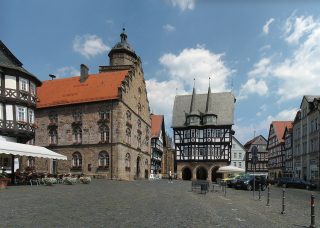
Marburg Rathaus
Town Hall in Marburg

The Marburg Rathaus is one of the top sights in Marburg if you want to feel the city's history, politics, and everyday life all in one place. Built between 1527 and 1529 in the late Gothic style, this town hall anchors the Marktplatz, surrounded by steep lanes and half-timbered houses. Its mix of red sandstone, timber framing, and a tall tower crowned by a spire gives the building a dramatic vertical presence, especially when you look up from the cobbles of the square below.
Inside, the Rathaus is still very much a working building, home to the mayor's office, city council chamber, and other administrative spaces. Yet visitors are welcome to explore selected areas and, when accessible, climb the roughly 40-metre tower for a panoramic view over the old town roofs and up towards the castle and Lahnberge. The building is a highlight of any walking tour of Marburg, tying together imperial assemblies, religious debates, and modern city life in one compact, atmospheric setting.
Table of Contents
- History and Significance of the Marburg Rathaus
- Things to See and Do in the Marburg Rathaus
- How to Get to the Marburg Rathaus
- Practical Tips on Visiting the Marburg Rathaus
- Where to Stay close to the Marburg Rathaus
- Is the Marburg Rathaus Worth Visiting?
- FAQs for Visiting the Marburg Rathaus
- Nearby Attractions to the Marburg Rathaus
History and Significance of the Marburg Rathaus
The Marburg Rathaus rose on the Marktplatz in the late 1520s, just as the city was becoming both a princely centre and an early hub of the Reformation. Its late Gothic architecture, with steep gables, pointed details, and the prominent tower, reflected the confidence of a community that wanted a town hall worthy of imperial visits and major civic events. Built in red sandstone and accented with timber framing in later sections, it stands as a textbook example of how German towns blended stone prestige with half-timbered tradition.
Over the centuries, the Rathaus has been extended and adapted, with new wings and interior reconfigurations layered onto the original structure. The central tower, rising to about 40 metres and crowned by a slender spire, quickly became a symbol of Marburg’s civic authority. Inside, the richly decorated council chamber has hosted countless city meetings, negotiations, and celebrations, with carved woodwork and paintings reinforcing the idea that this was the ceremonial heart of local government.
Historically, the town hall has seen far more than routine bureaucracy. During the Holy Roman Empire, it served as a venue for imperial assemblies and high-level gatherings; throughout the religious and political upheavals of the 16th and 17th centuries, it remained a stage for debates, proclamations, and alliances. Despite wars, conflicts, and changing regimes, the building survived, retaining its historic charm and continuing to function as a symbol of resilience and continuity in Marburg’s urban life.
Things to See and Do in the Marburg Rathaus
Most visitors first encounter the Rathaus from the Marktplatz, where its asymmetric façade, Gothic touches, and tower immediately draw the eye. Take a moment to circle the building, noting how red sandstone, timber framing, and different rooflines reveal the stages of its growth. The way the structure leans into the sloping square, surrounded by other old houses, makes it feel rooted in the town’s medieval fabric rather than standing apart from it.
If the tower is open during your visit, climbing it is a real treat. From the top, you can look down over the tilting roofs of the Oberstadt, pick out the spires of St. Elizabeth's Church and the mass of the Landgrafenschloss on its hill, and follow the line of the Lahn river through the valley. This spot is one of the best places to see in Marburg for understanding the city's layout and how the old town clings to the hillside.
Inside, the highlight is the historic council chamber, used for important meetings and ceremonial occasions. Elaborate woodwork, panelling, and paintings create a warm, almost theatrical space that contrasts with the stone exterior. Depending on access and whether events are happening, you may also see staircases, corridors, and minor rooms that show how the building has been adapted for modern administration while preserving its character. Even if parts of the interior are off-limits, simply standing in the square and watching everyday life play out around the Rathaus gives you a strong sense of why it remains a living civic symbol and one of the things to do in Marburg that shouldn't be missed.
How to Get to the Marburg Rathaus
Most international travellers reach Marburg via Frankfurt Airport, a major European hub located around an hour to an hour and a half away by road or train. For the best deals and a seamless booking experience, check out these flights to Marburg on Booking.com.
From Frankfurt (Main) Hauptbahnhof, frequent regional and InterCity trains run to Marburg (Lahn); from the station, you can either walk (uphill) into the Oberstadt or take a bus towards the old town, then follow the signs and narrow lanes up to the Marktplatz, where the Rathaus dominates the square. Train schedules and bookings can be found on Omio.
If you're arriving by car, follow the autobahn network towards Gießen and then continue to Marburg, where signs guide you to central parking areas; from there, it's a short but often steep walk through cobbled streets to reach the Market Square and town hall. If you are looking to rent a car in Germany I recommend having a look at Discover Cars, first, as they compare prices and review multiple car rental agencies for you.
Once in the old town, the Rathaus is easy to find-simply aim for the Marktplatz, which also serves as a hub for markets, festivals, and city celebrations throughout the year.
Practical Tips on Visiting the Marburg Rathaus
- Suggested tips: Combine a visit to the Rathaus with nearby cafés and shops on the Marktplatz, then continue uphill or downhill to link it with the castle and St. Elizabeth's Church.
- Best time to visit: Late morning or mid-afternoon often offers a lively but not overwhelming atmosphere in the square; evenings can be especially atmospheric when the façades are softly lit.
- Entrance fee: Entering the square and exterior areas is free; check locally for any small fee or guided-tour charge to access interior rooms or the tower.
- Opening hours: Administrative hours follow standard weekday schedules; public access to interiors and the tower varies, so consult local information or tourist offices.
- How long to spend: Allow 20-45 minutes to explore the square, photograph the exterior, and, if available, visit the interior and tower.
- Accessibility: The Marktplatz is cobbled and sloping, and access to the interior and tower involves stairs; visitors with reduced mobility should check current accessibility details.
- Facilities: Facilities within the Rathaus are geared towards administration, but toilets, cafés, and shops are plentiful around the Market Square and nearby streets.
- Photography tip: Shoot the Rathaus from multiple angles in the Marktplatz to capture its height and detailing; if you climb the tower, bring a wide-angle setting for sweeping views and a zoom for picking out landmarks.
- Guided tours: City walking tours often include the Rathaus and sometimes offer access to interior rooms, making it a great place to visit on a walking tour of Marburg if you want added historical context.
- Nearby food options: The surrounding Marktplatz and Oberstadt lanes are packed with restaurants, bakeries, and bars where you can linger over coffee or a meal after your visit.
Where to Stay close to the Marburg Rathaus
Staying in or near the Oberstadt lets you experience the Marburg Rathaus and Market Square at different times of day, from quiet early mornings to lively evenings. A centrally located option is Welcome Hotel Marburg, just a short walk from the Marktplatz and ideal for exploring both the old town and riverside. For a more resort-like stay along the Lahn with an easy stroll or bus ride up into the historic centre, VILA VITA Rosenpark offers comfort and spa facilities. Travellers who prefer a quieter, residential feel might consider Hotel Im Kornspeicher, from which you can reach the Rathaus by bus or car while enjoying a calmer base outside the busiest streets.
Is the Marburg Rathaus Worth Visiting?
The Marburg Rathaus is absolutely worth visiting, even if you only have a short time in the city. Architecturally, it's a beautiful example of late Gothic civic design, with red sandstone, timber framing, and a tall tower that give the Marktplatz its distinctive profile. Historically, it has seen everything from imperial assemblies to local council debates, embodying the continuity of civic life over nearly five centuries.
Because it stands at the heart of the old town, the Rathaus naturally anchors your exploration of Marburg: from here, you can look up to the castle, down towards the river, and out into the lanes of the Oberstadt. It's a place where history, politics, and everyday social life still intersect, making it a highlight of any walking tour of Marburg and one of the best places to visit in Marburg if you want to feel the city's pulse.
What Other Travellers Say...

Stadt Marburg’s Rathaus sits at Markt 1 in Marburg’s compact old town and is often recommended as a must-see; visitors praise the pretty town centre and say a few hours are enough to take it in. The Rathaus itself has a castle-like appearance with interesting architectural details to explore, and there are small exhibitions inside covering the town’s roughly 800-year history and aspects of the local Jewish past, though some travellers note the displays may be limited for international visitors.


FAQs for Visiting the Marburg Rathaus
Nearby Attractions to the Marburg Rathaus
- St. Elizabeth's Church - A pure Gothic church housing the shrine of St. Elizabeth of Hungary and beautiful stained glass.
- Landgrafenschloss (Marburg Castle) - A medieval hilltop fortress with museums and panoramic views over the city and Lahn valley.
- Marburg Old Town (Oberstadt) - Steep cobbled streets, half-timbered houses, and small shops spreading out around the Marktplatz.
- Lahn Riverside Promenade - A scenic path along the river, perfect for a stroll or bike ride after exploring the old town.
- Old Botanical Garden - A tranquil green space near the university, ideal for a quiet break among trees and plant collections.
The Marburg Rathaus appears in our Complete Guide to Visiting Marburg!

Moira & Andy
Hey! We're Moira & Andy. From hiking the Camino to trips around Europe in Bert our campervan — we've been traveling together since retirement in 2020!
This website uses affiliate links which may earn a commission at no additional cost to you!
Planning Your Visit
Administrative hours follow standard weekday schedules; public access to interiors and the tower varies, so consult local information or tourist offices.
Entering the square and exterior areas is free; check locally for any small fee or guided-tour charge to access interior rooms or the tower.
Nearby Attractions
- Marburg Castle (0.3) km
Castle and Museum - Lahn Wasserfall Viewpoint (0.6) km
Viewing Point and Waterfalls - St. Elizabeth's Church (0.7) km
Church - Kaiser Wilhelm Tower (1.5) km
Tower - Botanischer Garten Marburg (2.8) km
Gardens - Alsfeld Fairy Tale House (35.7) km
Historic Building and Museum - Regional Museum Alsfeld (35.7) km
Museum - Dreifaltigkeitskirche (35.7) km
Historic Building - Neurathhaus (35.7) km
Historic Building and Museum - Schwälmer Brunnen (35.8) km
Statue