Marburg Castle
Castle and Museum in Marburg
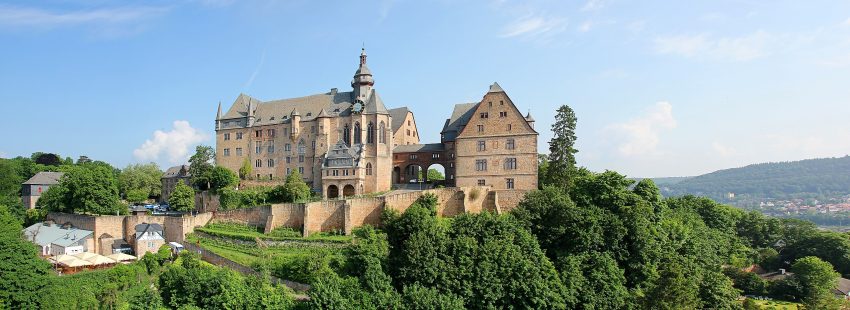
Perched high above the half-timbered roofs of the old town, Landgrafenschloss is one of the best places to visit in Marburg if you want to understand how the city grew from a medieval stronghold into a centre of learning and faith. Originally built in the 11th century and later expanded, the castle served as the residence of the Landgraves of Hesse until the 16th century, shaping regional politics for centuries. Today its stone walls, courtyards, and towers still dominate the skyline, instantly recognisable from almost anywhere in town.
Beyond its striking octagonal tower and fortified silhouette, Marburg Castle is famous as the site of the Marburg Colloquy of 1529, where Martin Luther and Ulrich Zwingli tried-unsuccessfully-to unite Protestant factions. Inside, exhibitions of historic weapons and armour, richly panelled rooms, and displays on the castle's architecture and local history bring different eras to life. It's a great place to visit on a walking tour of Marburg, linking the riverside, steep lanes, and university buildings into one unforgettable uphill journey.
Table of Contents
- History and Significance of the Landgrafenschloss
- Things to See and Do in the Landgrafenschloss
- How to Get to the Landgrafenschloss
- Practical Tips on Visiting the Landgrafenschloss
- Where to Stay close to the Landgrafenschloss
- Is the Landgrafenschloss
- FAQs for Visiting Landgrafenschloss
- Nearby Attractions to the Landgrafenschloss
History and Significance of the Landgrafenschloss (Marburg Castle)
Landgrafenschloss began life in the 11th century as a hilltop fortress guarding the Lahn valley and the trade routes that crossed it. Its position on the Schlossberg made it ideal for both surveillance and defence, and over time it grew into the main seat of the Landgraves of Hesse. For several centuries, this was the political heart of the region, where decisions about territory, alliances, and taxes were made behind thick stone walls overlooking the town below.
In the 13th century, the castle’s most distinctive architectural feature-the octagonal tower-was added, giving the complex its characteristic profile. This tower, combined with curtain walls, courtyards, and residential wings, marked the transition from a purely military fortress to a true princely residence. The Landgraves continued to expand and adapt the castle until the 16th century, when political and residential priorities shifted and the court gradually moved elsewhere.
The castle's most famous moment on the European stage came in 1529, when it hosted the Marburg Colloquy. Here, Martin Luther and Ulrich Zwingli met in an attempt to reconcile their theological differences and forge a united Protestant front. Although they agreed on many points, they could not reach consensus on the nature of the Eucharist, and the hoped-for unity failed to materialise. That debate, held within these walls, left a lasting mark on the history of the Reformation and adds an extra layer of meaning to any visit today.
Things to See and Do in the Landgrafenschloss (Marburg Castle)
One of the first things you'll notice as you approach the castle is how its bulk and height dominate the town. From the courtyard, take time to admire the octagonal tower and the mix of medieval and later architectural elements-high walls, narrow windows, and steep roofs all stacked above the old town like a stone crown. The climb up is rewarded with a superb panorama over Marburg's half-timbered houses, the spires of St. Elizabeth's Church, and the winding Lahn river.
Inside, the castle hosts exhibitions that bring its long history into focus. Displays of historic weapons and armour give a sense of the military culture that once ruled here, while themed rooms explore topics such as the Landgraves’ court, the development of the building, and regional history. As you wander, you’ll move through halls with timbered ceilings, stone staircases, and window seats that look out over the valley, each space offering a slightly different perspective on life in a medieval and early modern princely residence.
Don't miss the rooms connected to the Marburg Colloquy and the castle's role in the Reformation, where interpretive panels and objects help you imagine the debates that took place within these walls. Outside, stroll the gardens and terraces that wrap around the complex: they're ideal for photos and quiet pauses, especially at the edges where the town drops away steeply below. With so many viewpoints and layers of history, the Landgrafenschloss is one of the must-see places in Marburg for anyone interested in castles, religion, or simply great vistas.
How to Get to the Landgrafenschloss (Marburg Castle)
Most international visitors reach Marburg via Frankfurt Airport, which offers frequent flights from across Europe and beyond and lies around an hour to an hour and a half away by rail or road. For the best deals and a seamless booking experience, check out these flights to Marburg on Booking.com.
By train, regular regional and InterCity services run from Frankfurt (Main) Hauptbahnhof to Marburg (Lahn); from Marburg station, you can walk or take a bus into the old town, then follow the signposted footpaths and stairs up to the castle on the Schlossberg. Train schedules and bookings can be found on Omio.
If you're travelling by car, follow the autobahn network towards Gießen and then continue on main roads to Marburg, where signs direct you towards the town centre and up to parking areas near the castle or below the hill, from which you can walk up. If you are looking to rent a car in Germany I recommend having a look at Discover Cars, first, as they compare prices and review multiple car rental agencies for you.
Local buses and taxis also connect the station with stops closer to the old town and the castle path, making it easy to include Landgrafenschloss in a wider exploration of the Lahn valley.
Practical Tips on Visiting the Landgrafenschloss (Marburg Castle)
- Suggested tips: Wear comfortable shoes-the walk up to the castle involves steep streets and stairs-but take your time, as the viewpoints along the way are part of the experience.
- Best time to visit: Late morning or mid-afternoon offer good light for views and photos; in summer, consider visiting earlier or later in the day to avoid the hottest hours on the exposed hilltop.
- Entrance fee: museum adult/concession €5/3
- Opening hours: Museum 10am-6pm Apr-Oct, to 4pm Nov-Mar
- Official website: https://www.uni-marburg.de/uni-museum
- How long to spend: Allow 1.5-2 hours to tour the exhibitions, explore the courtyards and gardens, and enjoy the panoramic views at a relaxed pace.
- Accessibility: Access to the hilltop and some interior areas involves steep paths and stairs, and not all parts of the historic building are fully accessible; check current information if mobility is a concern.
- Facilities: On-site facilities typically include basic visitor services; more cafés, toilets, and shops can be found in the old town below.
- Photography tip: Capture wide shots from the terraces looking over Marburg, then focus on details like stonework, towers, and interior exhibits; interior shots may require a higher ISO to avoid flash.
- Guided tours: From April to October, guided tours usually depart from the courtyard on Saturdays at 3.15 pm and Sundays at 3 pm (for an additional fee on top of entrance), offering deeper insight into the castle’s history and rooms.
- Nearby food options: Plan to eat in the old town after your visit, where numerous cafés and restaurants cluster along the lanes and squares at the foot of the Schlossberg.
Where to Stay close to the Landgrafenschloss (Marburg Castle)
Choosing accommodation near Marburg’s centre makes visiting the castle simple and lets you enjoy the hilltop views at different times of day. A comfortable riverside choice is VILA VITA Rosenpark, which offers easy access to both the Lahn promenade and the climb up to the old town and castle. For a more urban feel right by the pedestrian zone, Welcome Hotel Marburg puts you within a short walk of shops, cafés, St. Elizabeth's Church, and the paths leading up the Schlossberg. If you prefer a quieter neighbourhood setting, Hotel Im Kornspeicher offers a peaceful base a short drive or bus ride from the centre, ideal if you want to combine time in the city with excursions into the surrounding countryside.
Is the Landgrafenschloss (Marburg Castle) Worth Visiting?
Landgrafenschloss is absolutely worth visiting, especially if you're drawn to places where political, religious, and architectural history all intersect. As the former residence of the Landgraves of Hesse, it tells the story of a powerful regional dynasty; as the site of the Marburg Colloquy, it played a key role in the drama of the Reformation; and as a hilltop fortress, it offers some of the finest views over Marburg and the Lahn valley.
Even if you're not a devoted history buff, the combination of atmospheric courtyards, museum exhibits, and panoramic terraces makes the castle a compelling stop. Its location high above the old town also helps you make sense of Marburg's layout, from St. Elizabeth's Church at the base of the hill to the university quarter and river beyond. For many travellers, that blend of scenery and story makes Landgrafenschloss one of the things to do in Marburg that they remember long after they've left.
What Other Travellers Say...

Landgrafen Palace in Marburg sits above the old town and invites visitors to climb up winding streets to explore an 11th-century castle complex featuring a Gothic hall, period interiors and a museum of cultural history; guests praise the sweeping city views, pleasant gardens and photo-worthy spots, enjoy the quieter atmosphere compared with more famous castles, note playful attractions like a giant shoe at the gate, and describe the experience as evocative of medieval Europe.


FAQs for Visiting Landgrafenschloss (Marburg Castle)
Nearby Attractions to the Landgrafenschloss (Marburg Castle)
- Old Botanical Garden - A peaceful green oasis near the university, perfect for a quiet break among trees and plant collections.
- St. Elizabeth's Church - A pure Gothic church that houses the shrine of St. Elizabeth and inspired the design of Cologne Cathedral.
- Marburg Old Town (Oberstadt) - A network of steep lanes, half-timbered houses, and lively squares just below the castle.
- University Quarter - Historic university buildings and student hangouts that reflect Marburg’s longstanding academic life.
Lahn Riverside Promenade - A scenic path along the river, ideal for a gentle walk or bike ride after exploring the hilltop.
The Marburg Castle appears in our Complete Guide to Visiting Marburg!

Moira & Andy
Hey! We're Moira & Andy. From hiking the Camino to trips around Europe in Bert our campervan — we've been traveling together since retirement in 2020!
This website uses affiliate links which may earn a commission at no additional cost to you!
Planning Your Visit
Museum 10am-6pm Apr-Oct, to 4pm Nov-Mar
museum adult/concession €5/3
Nearby Attractions
- Marburg Rathaus (0.3) km
Town Hall - St. Elizabeth's Church (0.6) km
Church - Lahn Wasserfall Viewpoint (0.8) km
Viewing Point and Waterfalls - Kaiser Wilhelm Tower (1.6) km
Tower - Botanischer Garten Marburg (3.1) km
Gardens - Alsfeld Fairy Tale House (36.0) km
Historic Building and Museum - Regional Museum Alsfeld (36.0) km
Museum - Dreifaltigkeitskirche (36.0) km
Historic Building - Neurathhaus (36.0) km
Historic Building and Museum - Schwälmer Brunnen (36.0) km
Statue