La Grand Puit, Carcassonne
Historic Site and Monument in Carcassonne
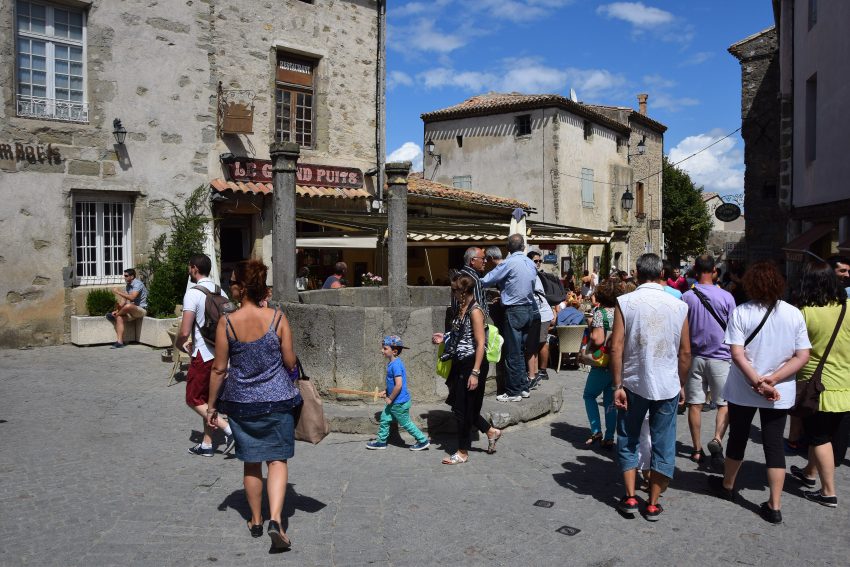
La Grand Puit (often referred to locally as the Grand Puits) is a historic medieval well tucked inside the Cité de Carcassonne, the walled upper town that most visitors come to explore. It's not a “museum-style” attraction with ticket desks and turnstiles—think of it as a small but meaningful landmark you encounter while wandering the stone lanes.
Because it sits right on a natural walking route through the Cité, La Grand Puit works best as a quick stop on a self-guided stroll or as a point of context on a guided walking tour. The best way to experience it is simply to pause, look closely at the structure, and imagine the daily life that once revolved around drawing water here.
Table of Contents
- History and Significance of the La Grand Puit
- Things to See and Do in the La Grand Puit
- How to Get to the La Grand Puit
- Practical Tips on Visiting the La Grand Puit
- Where to Stay Close to the La Grand Puit
- Is the La Grand Puit Worth Visiting?
- For Different Travelers
- FAQs for Visiting La Grand Puit
- Nearby Attractions to the La Grand Puit
History and Significance of the La Grand Puit
La Grand Puit is tied to the practical reality of medieval life: reliable water access inside fortified walls. In a hilltop citadel built for defense, a deep well was not just convenient—it was essential for survival during sieges and for the everyday needs of residents.
Beyond utility, the well also functioned as a social node. In medieval towns, shared water points were natural meeting places where news traveled, routines formed, and the rhythms of the community became visible.
Today, its significance is mostly interpretive: it’s a small, quiet reminder that the Cité wasn’t only a postcard-perfect fortress, but a living place that depended on infrastructure as much as battlements.
Things to See and Do in the La Grand Puit
Start by taking a slow lap around the well area and looking at the stonework details and proportions—features like the rim and support elements help you read it as an engineered object, not just a “pretty old thing.” It’s a great moment to connect the Cité’s dramatic skyline with the less glamorous systems that made the settlement workable.
Use La Grand Puit as a navigation anchor while exploring nearby lanes: it's an easy reference point when you're weaving between viewpoints, small shops, and shaded corners. If you're doing a walking tour, ask your guide about siege logistics and daily water use—this is one of the best spots for that kind of context.
Finally, treat it as a micro-break in your itinerary. The Cité can get busy; stopping here for a few minutes helps you reset before continuing toward the ramparts, viewpoints, or a café stop.
How to Get to the La Grand Puit
The nearest airports are Carcassonne Airport (Salvaza, CCF) for limited routes, or Toulouse–Blagnac Airport (TLS) for the widest range of flights and onward connections. For the best deals and a seamless booking experience, check out these flights to Carcassonne on Booking.com.
Carcassonne is straightforward by train, with services connecting via major hubs like Toulouse and Narbonne; from Carcassonne station, you can continue by taxi, local bus, or a longer walk up toward the Cité. You can use SNCF Connect to check schedules, compare routes, and purchase tickets for National (SNCF ) and regional trains (TER). For a more streamlined experience, we recommend using Omio, which allows you to easily compare prices, schedules, and book tickets for both National and Regional travel across all of Europe, all in one place.
If you're driving, aim for the main Cité parking areas below the walls and walk up into the fortified town to reach La Grand Puit within the pedestrian lanes. If you are looking to rent a car in France I recommend having a look at Discover Cars, first, as they compare prices and review multiple car rental agencies for you.
Practical Tips on Visiting the La Grand Puit
- Entrance fee: Free.
- Opening hours: 24 Hours.
- Best time to visit: Go early morning or later afternoon for a calmer feel in the Cité and better light for photos. Midday can be crowded, especially in peak season.
- How long to spend: Plan 5–15 minutes at the well itself, or longer if you’re using it as a waypoint during a deeper wander through the Cité.
- Accessibility: Expect uneven cobblestones, slopes, and occasional steps in the surrounding streets. A stroller or wheelchair may need assistance depending on your exact approach route.
- Facilities: There are no dedicated facilities at the well, but you’ll find restrooms, cafés, and shops elsewhere throughout the Cité.
Where to Stay Close to the La Grand Puit
Base yourself inside the Cité de Carcassonne if you want the most atmospheric mornings and evenings, when day-trippers thin out and the lanes feel almost theatrical.
Hôtel de la Cité Carcassonne – MGallery A classic splurge choice inside the walls, ideal if you want a once-in-a-lifetime stay with immediate access to the Cité’s lanes and landmarks.
Le Donjon – Coeur de la Cité A strong mid-range option for sleeping inside the medieval city, great for travelers who want location first and an easy walk to everything.
Hôtel Du Pont Vieux Just outside the walls, this is a practical pick for quick access to the Cité without paying the premium of staying inside it.
Tribe Carcassonne A modern, design-forward base closer to the lower town and transport links, useful if you’re mixing the Cité with restaurants and day trips.
Mercure Carcassonne La Cité Convenient for drivers and families who want parking and an easy approach to the Cité on foot.
Is the La Grand Puit Worth Visiting?
Yes—La Grand Puit is worth visiting as a small, meaningful stop because it adds “daily life” texture to a Cité itinerary that can otherwise feel focused only on walls, towers, and dramatic views. It's quick, free to see as you pass, and it helps you imagine how the fortified town actually functioned.
Honest Pivot: if you're short on time and only want the biggest highlights, you can skip making a special detour and instead prioritize the ramparts viewpoints and the Château Comtal. La Grand Puit is best for travelers who enjoy small historical details and like building a story from modest landmarks.
For Different Travelers
La Grand Puit is a flexible stop: it can be a two-minute glance on a fast route, or a thoughtful pause on a slower, story-driven walk through the Cité. How much you'll enjoy it depends on whether you like small details that enrich a bigger visit.
Families with Kids
Kids often enjoy the simple idea of a “deep medieval well,” especially if you frame it as a survival tool for a castle-town. Keep it short and turn it into a quick imagination game: who came here, how often, and what would happen during a siege?
Pair the stop with something more hands-on afterward, like a rampart walk or a snack break. That way, the well becomes a memorable story beat rather than a stand-alone “sight.”
Couples & Romantic Getaways
For couples, La Grand Puit works as a quiet pause away from the busiest viewpoints. It's a good place to slow down, take a few photos, and enjoy the atmosphere of the lanes without needing a formal visit.
If you’re staying inside the Cité, it’s especially pleasant to pass by in the evening when the mood shifts and the streets feel more intimate.
Budget Travelers
This is an easy win for budget travelers because it’s part of the free-to-wander experience of the Cité’s streets. You can build a satisfying “details walk” that includes small landmarks like this without paying for every stop.
Use it as a waypoint while you focus your paid entry on just one big-ticket site (often the castle/ramparts), keeping the rest of your day flexible and low-cost.
History Buffs
History buffs will appreciate La Grand Puit as infrastructure history: the unglamorous but essential systems that made a fortified settlement viable. It's a useful counterbalance to the more ceremonial or military-focused parts of the Cité.
To get more from it, connect it to a broader narrative about siege readiness, population needs, and how medieval towns organized shared resources within defensive walls.
FAQs for Visiting La Grand Puit
Getting There
Tickets & Entry
Visiting Experience
Tours, Context & Itineraries
Photography
Accessibility & Facilities
Food & Breaks Nearby
Safety & Timing
Nearby Attractions to the La Grand Puit
- Château Comtal: The Cité’s main castle complex, offering exhibits and access to sections of the ramparts.
- Ramparts Walk (Les Remparts): A classic Carcassonne experience with elevated views over the lower town and surrounding countryside.
- Basilique Saint-Nazaire: A beautiful church known for its mix of architectural styles and impressive stained glass.
- Porte Narbonnaise: The iconic main gate area, great for photos and for understanding the fortress layout.
- Pont Vieux: The historic bridge linking the lower town to the approach toward the Cité, especially scenic at sunset.
The La Grand Puit appears in our Complete Guide to Visiting Carcassonne!

Moira & Andy
Hey! We're Moira & Andy. From hiking the Camino to trips around Europe in Bert our campervan — we've been traveling together since retirement in 2020!
This website uses affiliate links which may earn a commission at no additional cost to you!
Planning Your Visit
24 Hours.
Free.
Nearby Attractions
- Musee de L'Inquisition (0.0) km
Attraction and Museum - Cité de Carcassonne (0.1) km
Ancient City, Castle and City Walls - Château et Remparts (0.1) km
Castle, City Walls and Historic Site - Jean-Pierre Cros-Mayrevieille Monument (0.1) km
Memorial, Monument and Statue - Porte Narbonnaise (0.1) km
Attraction, City Gate and Historic Site - Dame Carcas (0.2) km
Statue - Porte de l'Aude (0.2) km
City Gate, City Walls and Historic Site - Eglise Saint-Gimer (0.2) km
Church and Religious Building - Basilique Saint-Nazaire (0.3) km
Basilica, Church and Religious Building - Musée de l'Ecole (0.3) km
Museum