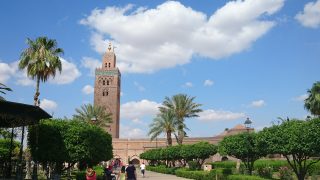
Jemaa el-Fnaa, Marrakesh
Market and Square in Marrakesh

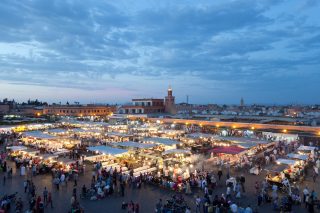
Jemaa el-Fnaa is the living stage of Marrakech, an open-air theatre where life never really stops. From early-morning juice sellers to late-night food stalls, the square pulses with energy and colour, making it one of the top sights in Marrakech for anyone who wants to feel the city rather than just see it. You are in the medina's central crossroads here, where locals shop, meet friends, and pause to watch the endless flow of performers and vendors.
The name Jemaa el-Fnaa carries layers of meaning and mystery, reflecting its long and sometimes dramatic history. Historians link it to an unfinished Saadian-era mosque whose ruins once occupied part of the square, while older traditions associate it with courtyards, gathering places, and public executions. Today, none of those ruins are visible, but the sense of an age-old gathering place is unmistakable, and the square is a highlight of any walking tour of Marrakech thanks to its deep roots in the city's story.
History and Significance of Jemaa el-Fnaa
The origins of Jemaa el-Fnaa go back to the founding of Marrakech by the Almoravids in the 11th century. Early on, the city's life revolved around the Ksar el-Hajjar fortress and the first Friday mosque, and a large open area known as Rahbat al-Ksar grew up next to the fortress as a space for markets, proclamations, and public ceremonies. This early square became the natural stage for everything from weekly trading to royal appearances, executions, and festive celebrations, setting the pattern for Jemaa el-Fnaa's role as a public arena.
When the Almohads took Marrakech in 1147, they reshaped the city with major construction projects, including the nearby Koutoubia Mosque and a new royal kasbah further south. As power shifted towards the kasbah, the old palace and fortress near the square were gradually dismantled, but the open space survived thanks to its importance as a market and gathering place. Over the centuries, new buildings edged into its margins, but the square itself remained, adapting to changing rulers, trade routes, and urban plans while keeping its core function as the city's social and commercial heart.
The name Jemaa el-Fnaa reflects this layered history. “Jemaa” can mean congregation or mosque, while “fnaa” suggests ruin, extinction, or an open forecourt. One influential explanation points to Saadian sultan Ahmad al-Mansur's attempt in the late 16th century to build a monumental mosque in the middle of the square; the project was abandoned, perhaps due to plague, and the unfinished structure fell into ruin. Over time, the “mosque of tranquillity” it was meant to be became known by popular irony as the “mosque of annihilation,” giving rise to the name Jemaa el-Fnaa. In modern times, the square has been legally protected, recognised by UNESCO as part of humanity's Intangible Cultural Heritage, and celebrated as a living repository of oral tradition, performance, and daily urban life.
Things to See and Do in Jemaa el-Fnaa
Experiencing Jemaa el-Fnaa is less about ticking off individual sights and more about following the rhythm of the day. In the morning, the square feels relatively open, with orange juice stands setting up, a few water sellers strolling past in their colourful hats, and the first snake charmers and henna artists taking their places. This is a good time to get your bearings, buy a drink, and take in the vast, sunlit expanse framed by the medina's rooftops and the Koutoubia's minaret.
By afternoon, the square grows busier and more varied. Musicians begin to gather small circles of listeners, storytellers launch into tales in Arabic or Berber, and herbalists display trays of roots, powders, and traditional remedies. You might see acrobats, card tricksters, or men demonstrating everything from cosmetics to kitchen tools. Around the edges of the square, the entrances to the souks draw you into covered lanes full of spices, leather goods, textiles, and metalwork, while rooftop cafés and terraces above offer shady spots to watch the whole scene from above.
After sunset, Jemaa el-Fnaa transforms again as dozens of food stalls appear in neat rows, filling the air with smoke and the scent of grilled meat, tagines, and fried seafood. This is when the square is at its most intense: locals and visitors crowd around tables, musicians play harder, and the hum of conversation rises. Sharing a simple meal here is one of the things to do in Marrakech that connects you directly to the city's everyday hospitality. Take your time to wander between stalls, compare menus, and then settle in for dinner as the square glows under strings of lights and the call to prayer echoes from nearby mosques.
How to Get to Jemaa el-Fnaa
Getting to Jemaa el-Fnaa starts with reaching Marrakech, and most international visitors arrive via Marrakech Menara Airport, located just a short drive from the city centre. For the best deals and a seamless booking experience, check out these flights to Marrakesh on Booking.com. From the airport, taxis and pre-arranged transfers are the most straightforward options; ask the driver to drop you near Jemaa el-Fnaa or the Koutoubia Mosque, then walk the last few minutes into the pedestrianised square.
If you are travelling within Morocco, trains connect Marrakech with major cities like Casablanca, Rabat, and Tangier, arriving at the main railway station in the new town.Train schedules and bookings can be found on Omio. From the station you can take a petit taxi directly towards Jemaa el-Fnaa, or use city buses that terminate close to the medina; once you are near the old city walls, follow signs or the flow of people towards the square. Long-distance buses from other regions also serve Marrakech, with taxi links from the bus stations into the medina.
Driving yourself into the heart of the medina is not possible, as Jemaa el-Fnaa is pedestrian-only and the surrounding streets can be narrow and busy. Instead, park in one of the guarded car parks around the perimeter of the old city and walk in, or leave the car at your accommodation and rely on taxis and your feet. Once you are nearby, you will usually be guided by the sound of music, the sight of food stall smoke rising, and the flow of people heading to the square.
Practical Tips on Visiting Jemaa el-Fnaa
- Suggested tips: Keep small change handy for drinks, snacks, and tipping performers, and remember that anyone who poses for photos or engages you in a trick will usually expect some payment.
- Best time to visit: Come twice if you can - once in the daytime to get your bearings and again after dark to experience the full food-stall and performance atmosphere.
- Entrance fee: Free - Jemaa el-Fnaa is a public square open to everyone.
- Opening hours: Effectively 24/7, with the liveliest period from late afternoon into late evening.
- How long to spend: Allow at least 1-2 hours to explore, longer if you plan to eat at a food stall, watch performances, or wander into the souks.
- Accessibility: The square itself is flat and open, but it can be very crowded and noisy, and the approach streets may have uneven surfaces and occasional steps.
- Facilities: Toilets are available in some cafés and restaurants around the edges; many rooftop terraces offer seating, Wi-Fi, and shade with views over the square.
- Photography tip: For the best overview shots, head to one of the rooftop cafés at golden hour; always ask before photographing individuals, especially performers and stallholders.
- Guided tours: Joining a guided medina tour that includes Jemaa el-Fnaa can help you understand its history, decode some of the performances, and navigate common scams more confidently.
- Nearby food options: Beyond the food stalls in the square, explore the surrounding streets and rooftops for restaurants serving Moroccan classics with views over the action below.
Where to Stay close to Jemaa el-Fnaa
Staying near Jemaa el-Fnaa puts you right at the city's energetic core, with the souks, Koutoubia Mosque, and many key sights within easy walking distance. A comfortable and well-located choice is Les Jardins de La Koutoubia, which offers quiet courtyards, pools, and rooftop terraces just a short stroll from the square. If you prefer to stay in a traditional riad tucked into the medina streets, Riad Dar Anika combines warm service with classic design only a few minutes’ walk away. For travellers who like a budget-friendly base with unbeatable proximity, Hotel Ali sits right off the square, perfect if you want to step straight into the action every morning and evening.
Is Jemaa el-Fnaa Worth Visiting?
Jemaa el-Fnaa is absolutely worth visiting and, for many travellers, it is the defining experience of Marrakech. Few places capture so much of a city's soul in one open space: food, music, storytelling, bargaining, and everyday life all layered together from early morning until late at night. It can be noisy, chaotic, and sometimes overwhelming, but that is part of its appeal; approached with curiosity and a bit of patience, it rewards you with moments and memories you simply will not find anywhere else, firmly earning its place as one of the best places to visit in Marrakech.
What Other Travellers Say...

Jemaa el-Fnaa in Marrakesh is a bustling central square overflowing with market and food stalls, juice stands, restaurants, live music, street performers and all kinds of evening entertainment that give it a lively, unforgettable atmosphere; visitors say it transforms from a calmer daytime scene to a full‑on, crowded night experience with great street food and Berber tea, but advise being polite yet firm with persistent vendors, watching out for pickpockets, being cautious around animal photo setups and some pushy sellers or henna artists, and expecting nearby souks and the medina within easy reach.


FAQs for Visiting Jemaa el-Fnaa
Nearby Attractions to Jemaa el-Fnaa
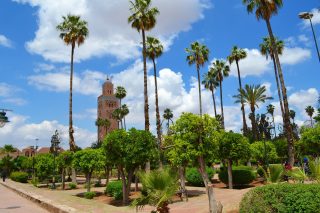
- Koutoubia Mosque: The iconic 12th-century mosque with its towering minaret, just a short walk from the square and a key landmark for orienting yourself in the medina.
- Marrakech Souks: A maze of covered market streets leading off the square, where you can shop for spices, textiles, leather, metalwork, and souvenirs.
- Bahia Palace: A 19th-century palace with ornate rooms and tranquil courtyards that showcase the craftsmanship of Moroccan artisans.
- Saadian Tombs: Atmospheric royal tombs tucked near the Kasbah Mosque, known for their intricate tilework and richly decorated burial chambers.
- Dar Si Saïd Museum (Museum of Moroccan Arts): A historic palace turned museum displaying traditional crafts, woodwork, carpets, and decorative arts from across Morocco.
The Jemaa el-Fnaa appears in our Complete Guide to Visiting Marrakesh!

Moira & Andy
Hey! We're Moira & Andy. From hiking the Camino to trips around Europe in Bert our campervan — we've been traveling together since retirement in 2020!
This website uses affiliate links which may earn a commission at no additional cost to you!
Planning Your Visit
Effectively 24/7, with the liveliest period from late afternoon into late evening.
Free – Jemaa el-Fnaa is a public square open to everyone.
Nearby Attractions
- Souks of Marrakesh (0.1) km
Market - Le Jardin Secret (0.5) km
Gardens and Historic Building - Kasbah Mosque (0.5) km
Mosque - Koutoubia Mosque (0.5) km
Mosque - Dar Si Said (0.6) km
Historic Building and Museum - Tiskiwin Museum (0.6) km
Museum - Koutoubia Gardens (Lalla Hassna Park) (0.6) km
Gardens - Almoravid Koubba (0.6) km
Historic Building - Dar el Bacha (0.7) km
Historic Building and Museum - Marrakech Museum (0.7) km
Museum