Greyfriars Priory, Gloucester
Historic Site and Monastery in Gloucester
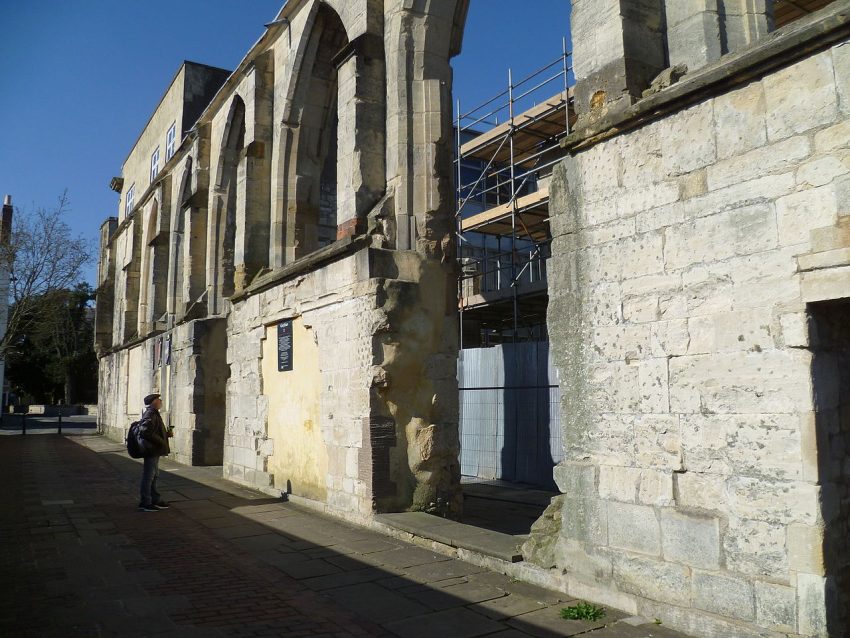
Greyfriars Priory is one of the things to do in Gloucester for visitors interested in medieval history, monastic life, and atmospheric ruins tucked into the modern cityscape. Founded in 1231 by Franciscan friars dedicated to poverty, simplicity, and service, the priory once housed around forty men who played a vital role in the spiritual life of medieval Gloucester. Today, its surviving remains offer a peaceful and evocative reminder of the city's ecclesiastical past.
It is often visited on walking tours of Gloucester, especially for those exploring the area around Southgate Street and the historic monastic quarter. Although much of the priory is in ruins, the standing walls and architectural fragments still convey the scale and significance of this important medieval institution.
Table of Contents
- History and Significance of Greyfriars Priory
- Things to See and Do in Greyfriars Priory
- How to Get to Greyfriars Priory
- Practical Tips on Visiting Greyfriars Priory
- Where to Stay close to Greyfriars Priory
- Is Greyfriars Priory Worth Visiting?
- FAQs for Visiting Greyfriars Priory
- Nearby Attractions to Greyfriars Priory
History and Significance of Greyfriars Priory
Greyfriars was established in 1231 on land donated by Lord Berkeley and became one of three monastic houses in Gloucester supported by King Henry III. The friars followed the ideals of St Francis-poverty, preaching, and service-and lived entirely on alms. By the late 13th century, around forty friars lived here.
Relations with their neighbours at St Peter's Abbey (now Gloucester Cathedral) were not always peaceful. In the 14th century, the two institutions became embroiled in a dispute over a shared water supply. The quarrel escalated to the point where Edward the Black Prince himself had to intervene-and ruled in favour of the Franciscans.
The present structure dates largely from 1518, rebuilt with support from the Berkeley family. Architecturally, Greyfriars is notable for its nave and north aisle being almost equal in height and width-an unusual layout found nowhere else in England. Although much of the priory was lost after the Dissolution, key sections remain standing and have been incorporated into the modern city.
Things to See and Do in Greyfriars Priory
Visitors can explore the atmospheric ruins of the priory, including tall sections of stone walls, graceful arches, and fragments of the original layout. The site’s open-air design allows for quiet wandering, photography, and reflection on the lives of the friars who once lived and worshipped here.
While the priory church is no longer intact, the surviving architecture makes its distinctive proportions easy to imagine. The area around the ruins is landscaped, making it a pleasant place to pause during a walk around the city centre.
Interpretation boards often provide additional context about the priory’s unique design, its conflicts with other religious houses, and its reconstruction in the early 16th century.
How to Get to Greyfriars Priory
Gloucester enjoys excellent rail services, with direct trains from London Paddington, Birmingham, Bristol, Cardiff, Cheltenham, and Worcester. From Gloucester Station, it is a short walk through the city centre to the priory ruins. Train schedules and bookings can be found on Omio.
For international visitors, the nearest airport is Bristol Airport, with convenient rail and bus connections via Bristol Temple Meads. For the best deals and a seamless booking experience, check out these flights to Gloucester on Booking.com.
If travelling by car, Gloucester is easily reached via the M5 and A40. Several central car parks provide easy access to Southgate Street and the priory site.
Practical Tips on Visiting Greyfriars Priory
- Suggested tips: Explore the site alongside Blackfriars Priory and nearby St Mary de Crypt for a fuller monastic trail.
- Best time to visit: Morning or late afternoon for the best lighting on the stonework.
- Entrance fee in Euros: Free entry.
- Opening hours: Open access during daylight hours.
- Official website: Refer to Gloucester heritage listings.
- How long to spend: 15-30 minutes.
- Accessibility: Level pathways around the ruins; some uneven ground.
- Facilities: Shops and cafés nearby in the city centre.
- Photography tip: Capture the surviving arches and tall walls framed against the sky.
- Guided tours: Occasionally available through local heritage organisations.
- Nearby food options: Plenty of cafés and restaurants on Southgate Street and around the Quays.
Where to Stay close to Greyfriars Priory
For a central and historic stay, The New Inn is close to many key attractions. A modern option near the docks is Premier Inn Gloucester City Centre. For those preferring boutique comfort near shops and cultural sites, try The Locking Castle Hotel.
Is Greyfriars Priory Worth Visiting?
Yes. Greyfriars Priory is one of the must-see places in Gloucester for anyone interested in medieval history, quiet heritage sites, and evocative ruins. Its unusual architectural layout and centuries of monastic history make it a fascinating addition to any visit.
What Other Travellers Say...

Greyfriars is a small ruin of a Franciscan friary tucked in a square between a church and the shopping centre in Gloucester (Greyfriars, Gloucester GL1 2TG). Visitors say it's compact and easy to see in a short visit, free to enter, and partially hidden behind a modern building that appears to support one of the old walls; information on-site is limited, and some visitors note occasional unpleasant odours, so temper expectations.


FAQs for Visiting Greyfriars Priory
Nearby Attractions to Greyfriars Priory
- Blackfriars Priory: Magnificent medieval scissor-braced roof and historic scriptorium.
- Gloucester Cathedral: One of England's finest medieval cathedrals.
- Museum of Gloucester: Roman origins, archaeology, and fine art.
- Gloucester Historic Docks: Victorian warehouses, boats, cafés, and museums.
- Soldiers of Gloucestershire Museum: Three centuries of regimental history.
The Greyfriars Priory appears in our Complete Guide to Visiting Gloucester!

Moira & Andy
Hey! We're Moira & Andy. From hiking the Camino to trips around Europe in Bert our campervan — we've been traveling together since retirement in 2020!
This website uses affiliate links which may earn a commission at no additional cost to you!
Planning Your Visit
Any reasonable daylight hours
Free
Nearby Attractions
- Museum of Gloucester (0.2) km
Museum - Eastgate Viewing Chamber (0.2) km
Roman Site - Blackfriars Priory (0.2) km
Priory - Soldiers of Gloucestershire Museum (0.3) km
Museum - The House of the Tailor of Gloucester (0.3) km
Museum and Shop - Gloucester Cathedral (0.4) km
Cathedral - Gloucester Waterways Museum (0.5) km
Museum - Gloucester Docks (0.5) km
Docks - Gloucester and Sharpness Canal (9.2) km
Canal - Chedworth Roman Villa (22.6) km
Historic Site