Gloucester Cathedral
Cathedral in Gloucester
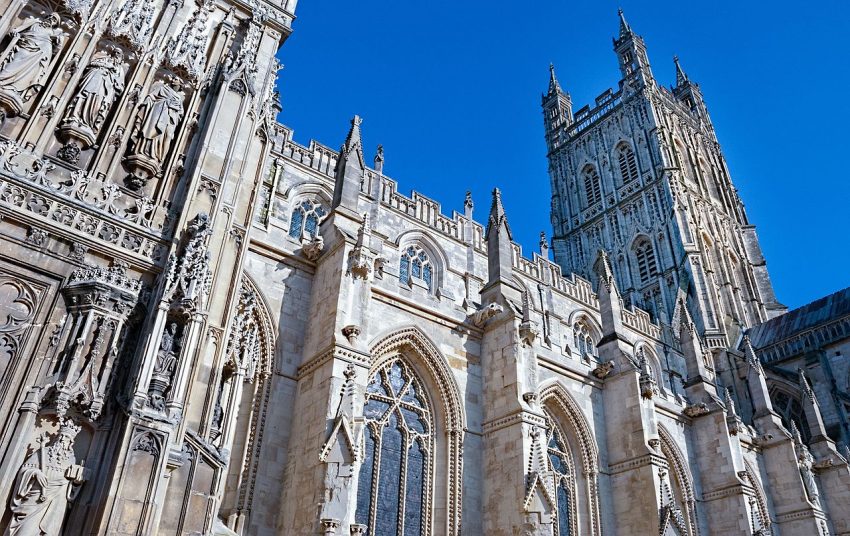
Gloucester Cathedral is one of the best places to visit in Gloucester, an extraordinary monument rising above the city with over thirteen centuries of Christian history. Formally known as the Cathedral Church of St Peter and the Holy and Indivisible Trinity, it stands near the River Severn and remains a living place of worship. From its Norman nave to its soaring Gothic tower, the building captures the evolution of English architecture and the story of the region.
It is often visited on walking tours of Gloucester thanks to its delicate fan-vaulted cloisters, magnificent stained glass, royal tombs, and rich monastic heritage. Visitors can explore medieval crypts, wander the cloister made famous by film productions, and learn about the cathedral's unique role in English history-including coronations, pilgrimages, and artistic innovation.
Table of Contents
- History and Significance of Gloucester Cathedral
- Things to See and Do in Gloucester Cathedral
- How to Get to Gloucester Cathedral
- Practical Tips on Visiting Gloucester Cathedral
- Where to Stay close to Gloucester Cathedral
- Is Gloucester Cathedral Worth Visiting?
- FAQs for Visiting Gloucester Cathedral
- Nearby Attractions to Gloucester Cathedral
History and Significance of Gloucester Cathedral
The site originated in 678-679 as an abbey dedicated to St Peter. Over the next centuries, the abbey evolved dramatically, with its foundations for the present church laid by Abbot Serlo between 1072 and 1104. When Gloucester became a diocese in 1541, the building was elevated to cathedral status under its first bishop, John Wakeman.
Gloucester Cathedral is remarkable for its blend of architectural styles. The Norman nave, early Gothic vaults, and magnificent Perpendicular choir each represent key phases of medieval design. The cathedral contains one of England's four great apsidal crypts, and its 15th-century central tower rises 225 feet, dominating the city skyline.
Pilgrimage played a decisive role in its development. After the death of Edward II at Berkeley Castle in 1327, pilgrims flocked to his tomb inside the cathedral, bringing funds that allowed major rebuilding works in the 14th century. The cloisters-world-famous for their fan vaulting designed between 1351 and 1377-are among the earliest examples of this architectural form in existence.
Royal connections add further prestige. Henry III was crowned here in 1216, an event commemorated in stained glass, and the cathedral houses monuments to historical figures including Robert Curthose, eldest son of William the Conqueror, and Edward Jenner, pioneer of the smallpox vaccine.
Things to See and Do in Gloucester Cathedral
Begin with the Norman nave, whose massive columns and rounded arches date back to the 11th century. The crypt is another highlight: a rare apsidal design and one of only four of its kind in England. Visitors can trace the cathedral’s architectural evolution through its Early English, Decorated, and Perpendicular features, including the elaborate choir vaulting enriched with tracery, ribs, and bosses.
The cloisters are a favourite part of any visit. Their exceptional fan vaults and monastic carrels-once used by monks for study and writing-make them a masterpiece of medieval architecture. The cloisters are also well known for appearing in major film productions, adding a modern layer to their appeal.
Other highlights include the shrine of Edward II, the vibrant medieval stained glass (including one of the earliest known depictions of golf), the Lady Chapel, and monuments to Robert Curthose and Edward Jenner. The cathedral’s blend of artistry, history, and craftsmanship offers compelling experiences for every visitor.
How to Get to Gloucester Cathedral
Gloucester is well connected by rail, with direct trains from London Paddington, Cardiff, Bristol, Birmingham, and other regional cities. Services arrive at Gloucester Station, a short walk from the cathedral. Train schedules and bookings can be found on Omio.
For international travellers, the nearest major hub is Bristol Airport, with rail and bus connections onward to Gloucester. For the best deals and a seamless booking experience, check out these flights to Gloucester on Booking.com.
Travelling by car is straightforward, with major routes including the M5 and A40. Several city car parks offer convenient access, and the cathedral is a short stroll from central parking zones.
Practical Tips on Visiting Gloucester Cathedral
- Suggested tips: Join a volunteer-led tour to appreciate the hidden details of the cloisters and crypt.
- Best time to visit: Morning for quiet exploration; afternoons for atmospheric light.
- Entrance fee in Euros: Entry is by donation; special tours may have small fees.
- Opening hours: Open daily, with hours varying by season and services.
- Official website: Visit Gloucester Cathedral's official site for current information.
- How long to spend: Around 1.5 to 2 hours.
- Accessibility: Good overall access, though some historic areas have uneven surfaces.
- Facilities: Café, shop, restrooms, and visitor centre on site.
- Photography tip: Capture the cloisters when sunlight casts patterned shadows across the stone.
- Guided tours: Available daily, including specialist crypt and tower tours.
- Nearby food options: Numerous cafés, pubs, and restaurants within walking distance.
Where to Stay close to Gloucester Cathedral
For a comfortable stay steps from the cathedral, The New Inn offers historic charm. A modern option with easy cathedral access is Premier Inn Gloucester City Centre. For boutique style near the docks and cathedral, consider The Locking Castle Hotel.
Is Gloucester Cathedral Worth Visiting?
Absolutely. Gloucester Cathedral is one of the must-see places in Gloucester, blending extraordinary medieval architecture, royal history, atmospheric cloisters, and active worship. Its cultural and historical depth make it one of Britain's finest ecclesiastical buildings.
What Other Travellers Say...

Gloucester Cathedral at 12 College Green is an impressive medieval church noted for its tomb of King Edward II, musical events and daily Church of England services; visitors praise its breathtaking vaulted ceilings, stained glass, cloisters and whispering gallery, mention Harry Potter filming locations, note entry is by voluntary donation with optional paid crypt and highlights tours, and describe it as accessible to wheelchair and visually impaired visitors with friendly staff and plenty to explore.


FAQs for Visiting Gloucester Cathedral
Nearby Attractions to Gloucester Cathedral
- Gloucester Docks: Historic waterways with museums, cafés, and shops.
- Museum of Gloucester: Displays Roman, medieval, and local history.
- Gloucester Quays: Shopping, dining, and leisure in converted warehouses.
- Kingsholm Stadium: Home of Gloucester Rugby, a city institution.
- Robinswood Hill Country Park: Scenic walks with views over the Severn Valley.
The Gloucester Cathedral appears in our Complete Guide to Visiting Gloucester!

Moira & Andy
Hey! We're Moira & Andy. From hiking the Camino to trips around Europe in Bert our campervan — we've been traveling together since retirement in 2020!
This website uses affiliate links which may earn a commission at no additional cost to you!
Nearby Attractions
- The House of the Tailor of Gloucester (0.1) km
Museum and Shop - Blackfriars Priory (0.3) km
Priory - Greyfriars Priory (0.4) km
Historic Site and Monastery - Eastgate Viewing Chamber (0.4) km
Roman Site - Soldiers of Gloucestershire Museum (0.4) km
Museum - Museum of Gloucester (0.6) km
Museum - Gloucester Waterways Museum (0.7) km
Museum - Gloucester Docks (0.7) km
Docks - Gloucester and Sharpness Canal (9.5) km
Canal - Chedworth Roman Villa (22.7) km
Historic Site