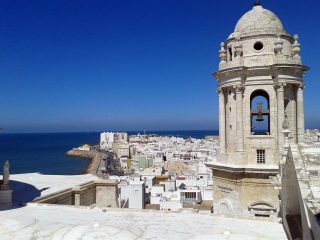
Gadir Archaeological Site, Cádiz
Historic Site in Cádiz

The Gadir Archaeological Site offers one of the most fascinating windows into Cádiz's deep past. Thought to have been founded around 800 BC by Phoenician traders from Tyre-now in southern Lebanon-Gadir is one of the earliest urban settlements in Western Europe. Its remains are rare, precious, and among the best preserved Phoenician structures ever found. For travellers interested in ancient history, this is one of the top sights in Cádiz and a remarkable experience that reveals how the earliest inhabitants lived, built, and traded.
Located in the old town, nine metres below the La Tía Norica Puppet Theatre, the site preserves a section of the ancient island of Erytheia, the smallest of the archipelago that once formed Cádiz. The layout of streets, houses, and domestic utensils from the 9th century BC is beautifully presented, and the evolution from Phoenician settlement to Roman city unfolds step by step. With its rare architecture, cobbled streets, and industrial traces, the site is a highlight, especially for lovers of archaeology and ancient cultures.
Table of Contents
- History and Significance of Gadir Archaeological Site
- Things to See and Do in Gadir Archaeological Site
- How to Get to Gadir Archaeological Site
- Practical Tips on Visiting Gadir Archaeological Site
- Where to Stay close to Gadir Archaeological Site
- Is Gadir Archaeological Site Worth Visiting?
- FAQs for Visiting Gadir Archaeological Site
- Nearby Attractions to Gadir Archaeological Site
History and Significance of Gadir Archaeological Site
The Phoenicians were among the Mediterranean’s greatest traders from 1500 to 600 BC, and their maritime expertise led them to establish far-reaching colonies. Gadir-meaning “walled enclosure”-was founded around 800 BC and became a key outpost for trade routes stretching from the Levant to the Atlantic.
Few Phoenician sites survive in the Western Mediterranean, which makes this discovery extraordinarily important. Excavations revealed the highest point of Erytheia, one of the ancient islands that would later merge to form Cádiz. Archaeologists uncovered eight well-preserved houses organised around two cobbled streets, along with everyday utensils that give insight into ancient domestic life. These finds show how the settlement grew, functioned, and eventually fell victim to destruction in the 6th century BC.
The site also preserves remains from Cádiz's Roman era, including basins from a fish-salting factory-evidence of the city's importance in the Roman fishing industry. Together, these layers tell a rare story of continuous occupation, making Gadir one of the things to do in Cádiz for anyone who wants to understand the city from its very beginnings.
Things to See and Do in Gadir Archaeological Site
Begin by exploring the Phoenician street layout, where the foundations of homes, terraces, and two main cobbled streets give a clear picture of how Gadir was organised. The excavation’s lighting and walkways provide excellent visibility and atmosphere, making it easy to imagine the ancient community that once lived here.
Look for household artefacts that illustrate everyday life-utensils, ceramics, and tools that survived nearly three millennia. Informational displays explain the chronology of the site, taking you from its foundation in the 9th century BC through its destruction in the 6th century BC and onward to its Roman transformation.
Don't miss the remains of the Roman fish-salting factory, including preserved basins used for curing fish. This industrial legacy highlights Cádiz's long connection with the sea. The museum's audiovisual presentation helps bring the Phoenician world to life, making this site one of the things to do in Cádiz that offers both education and immersion.
How to Get to Gadir Archaeological Site
The Gadir Archaeological Site sits in the heart of Cádiz's old town, easily accessible from most central attractions.
Travelling by air, visitors typically arrive through Jerez Airport or Seville Airport and continue to Cádiz by bus or train. For the best deals and a seamless booking experience, check out these flights to Cádiz on Booking.com.
If visiting by train, Cádiz station is about a 15-20 minute walk from the site, with taxis and local buses available for convenience. Train schedules and bookings can be found on Omio.
For travellers arriving by car, parking is available in public car parks around the old town. From there, it’s a short walk to the La Tía Norica Puppet Theatre entrance that leads to the underground museum. If you are looking to rent a car in Spain I recommend having a look at Discover Cars, first, as they compare prices and review multiple car rental agencies for you.
Practical Tips on Visiting Gadir Archaeological Site
- Best time to visit Gadir Archaeological Site: Morning or midday, when crowds are lighter.
- Entrance fee in Euros: Low-cost or free depending on season and schedule.
- Opening hours: Typically open several days a week; check ahead as times vary.
- Official website: Consult Cádiz municipal or tourism sites for up-to-date schedules.
- How long to spend: 45-60 minutes.
- Accessibility: The site includes ramps but may have some uneven areas.
- Facilities: Basic facilities available at the theatre entrance.
- Photography tip: Low light conditions-use steady hands or adjust camera settings.
- Guided tours: Often included as part of scheduled entry sessions.
- Nearby food options: Numerous cafés and tapas bars in the surrounding streets.
Where to Stay close to Gadir Archaeological Site
Cádiz’s old town provides many excellent accommodation options within walking distance of the site. Consider Hotel La Catedral for classic charm near major landmarks. A more modern option is Senator Cádiz Spa Hotel, offering comfort close to museums and markets. For a contemporary stay with sea views, Parador de Cádiz is also within easy reach.
Is Gadir Archaeological Site Worth Visiting?
Absolutely. With its rare Phoenician remains, multi-layered history, and excellent preservation, the Gadir Archaeological Site is one of the best places to visit in Cádiz for anyone interested in ancient civilisations. It brings the city's past vividly to life and offers a captivating look at nearly 3,000 years of human history.
What Other Travellers Say...

Yacimiento Arqueológico Gadir on C. San Miguel is a compact, well-organized archaeological museum focused on the ancient Phoenician city; visitors praise its clear multilingual panels, helpful staff, and a short introductory film (and additional video) that set the scene, with highlights including a very old cat skeleton and human remains tied to a fire. The experience is free but requires booking a time slot in advance; tours are concise (around 30–60 minutes) and make for an excellent, informative stop near the nearby market.


FAQs for Visiting Gadir Archaeological Site
Nearby Attractions to Gadir Archaeological Site
- Cádiz Cathedral - A golden-domed landmark with a panoramic tower.
- Torre Tavira - A historic watchtower with a Camera Obscura.
- Mercado Central de Abastos - Spain's oldest covered market full of flavour and colour.
- Gran Teatro Falla - A lively Mudéjar-style theatre with cultural events.
- Plaza de las Flores - A popular square filled with flower stalls and cafés.
The Gadir Archaeological Site appears in our Complete Guide to Visiting Cádiz!

Moira & Andy
Hey! We're Moira & Andy. From hiking the Camino to trips around Europe in Bert our campervan — we've been traveling together since retirement in 2020!
This website uses affiliate links which may earn a commission at no additional cost to you!
Planning Your Visit
Tuesday to Sunday from 10.00 am to 5.00 pm. Visit every hour. Closed on Mondays.
Free entrance
Nearby Attractions
- Torre Tavira (0.0) km
Tower - Freiduria Las Flores 1 (0.1) km
Attraction and Café - Casa Palacio de Moreno de Mora (0.1) km
Historic Building, Historic Site and Palace - Mercado Central (0.1) km
Market - Museum of the Cádiz Parliament (0.2) km
Museum - Plaza de San Antonio (0.3) km
Square - Museum of Cádiz (0.4) km
Museum - Cádiz Cathedral (0.4) km
Cathedral and Historic Building - Gran Teatro Falla (0.5) km
Historic Building and Theatre - Arco del Pópulo (0.5) km
Historic Building