Fuerte de Navidad, Cartagena
Castle and Museum in Cartagena
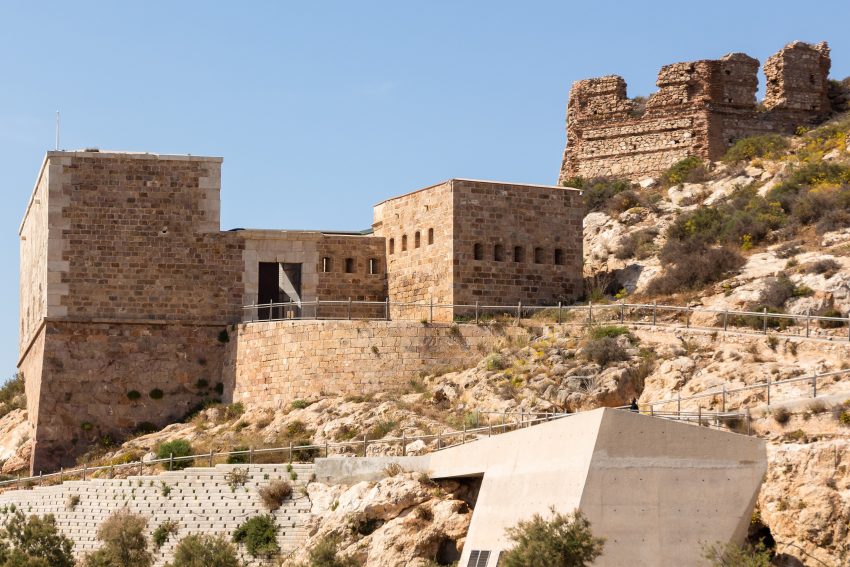
Fuerte de Navidad (often called “Christmas Fort” in English) is one of Cartagena's most rewarding detours because it turns a defensive site into an experience: you cross the bay, step into a real coastal battery, and then explore how soldiers actually lived inside a 19th-century fortress. Set beside its lighthouse on the right-hand side of the bay, it has the kind of “end-of-the-harbour” atmosphere that makes the history feel tangible rather than abstract.
For a walking-tour-style day in Cartagena, this is best used as your scenic break from the city's Roman and modernist core. Do your old-town sights on foot, then switch gears with the tourist boat ride and fort visit, before returning to the centre refreshed and ready for another round of museums, tapas streets, and waterfront promenades.
Table of Contents
- History and Significance of the Fuerte de Navidad
- Things to See and Do in the Fuerte de Navidad
- How to Get to the Fuerte de Navidad
- Practical Tips on Visiting the Fuerte de Navidad
- Where to Stay Close to the Fuerte de Navidad
- Is the Fuerte de Navidad Worth Visiting?
- For Different Travelers
- FAQs for Visiting Fuerte de Navidad
- Nearby Attractions to the Fuerte de Navidad
History and Significance of the Fuerte de Navidad
Fuerte de Navidad sits at the maritime threshold of Cartagena, built to control the entrance to one of Spain's most strategically important natural harbours. That location explains everything about it: the fort is part of a wider defensive network that evolved as warfare, artillery range, and naval priorities changed, and it helps you understand Cartagena as a military-port city rather than “just” a historic town.
What makes this site different from many fortifications is the interpretation focus on daily life. Instead of only telling you what the walls did, it shows you how a garrison functioned-where men slept, how they ate, and how the fortress routines worked alongside the heavier story of conflicts and coastal protection. If you like places where history is explained through lived detail, this is one of Cartagena’s strongest.
Things to See and Do in the Fuerte de Navidad
Start with the casemates and bunkers, where the fort’s structure reads clearly: thick protective vaulting, practical circulation routes, and the kind of spaces that were designed for function before comfort. The interpretation is at its best when you slow down and picture the soundscape-metal, orders, wind, and the constant awareness that the harbour entrance mattered.
Hands-on elements are part of the appeal here, especially if you are travelling with anyone who likes interactive history. Learning how artillery was handled, and how soldiers ate and relaxed between duties, gives the visit a human scale that many coastal batteries lack.
Finish on the terrace. The views are the “why it’s worth it” moment: the bay, the harbour logic, and the surrounding headlands make immediate sense from here, and it is an easy place to linger before you take the return boat ride and re-enter the city at street level.
How to Get to the Fuerte de Navidad
The nearest airport is Región de Murcia International Airport (RMU), with Alicante-Elche Airport (ALC) often the most practical alternative depending on flight availability and price. For the best deals and a seamless booking experience, check out these flights to Cartagena on Booking.com.
If you are arriving by train, Cartagena’s station is a straightforward gateway to the centre, and from there the simplest plan is to reach the port area where the tourist boat departs. Train schedules and bookings can be found on Omio.
If you prefer to drive, you can reach the fort via the Algameca road on the western side of the bay, but most visitors find the tourist boat approach more enjoyable and less logistical. If you are looking to rent a car in Spain I recommend having a look at Discover Cars, first, as they compare prices and review multiple car rental agencies for you.
Practical Tips on Visiting the Fuerte de Navidad
- Entrance fee: €4.00 (standard); €2.50 (reduced). Combined fort + tourist boat ticket: €10 (standard)
- Opening hours: High season (1st July to 15th September) Tuesday to Sunday 11.00 to 15.00 and 16.30 to 19.30 Mid-season (from 15th March to 30th June / from 16th September to 1st November) Tuesday to Friday 11.00 to 15.00 Saturday and Sunday 11.00 to 17.30 Low season (2nd November to 7th December): Tuesday to Friday 11.00 to 14.00 Saturday and Sunday 11.00 to 16.00
- Official website: https://puertodeculturas.cartagena.es/ficha_fuerte_navidad.asp?idioma=2
- Best time to visit: Go on a clear day with good visibility so the terrace views over the harbour and headlands really land.
- How long to spend: Plan 2-3 hours for the boat ride plus the visit, with extra time if you like reading exhibits and lingering on viewpoints.
- Accessibility: The boat makes access easier, but expect ramps, uneven surfaces, and some slopes within a working-fort footprint.
- Facilities: Treat this as a focused visit; bring water and plan your main café stop back in Cartagena’s centre before or after the crossing.
Where to Stay Close to the Fuerte de Navidad
For a culture-heavy itinerary, base yourself in Cartagena’s historic centre so you can walk to the port, Roman Theatre, and evening dining without needing transport; if your priority is easy arrivals and departures, staying closer to the station-side centre keeps logistics simple while remaining close to the sights.
For a reliable city base with straightforward access to both the centre and the port-side routes, consider Sercotel Alfonso XIII. If you want a practical, good-value option that still keeps you walkable to the waterfront and old town, Hotel Los Habaneros is a solid pick. For a quieter, full-service feel while staying close to the action, NH Campo Cartagena works well for short breaks.
Is the Fuerte de Navidad Worth Visiting?
Yes. If you want one experience in Cartagena that combines scenery, context, and a sense of place, the boat-and-fort pairing is hard to beat, and it adds a completely different texture to a city day that might otherwise stay focused on Roman remains and urban streets.
Honest pivot: if you are on a very tight schedule, sensitive to motion on the water, or visiting on a day with poor visibility, the value drops because the ride and viewpoint are part of the payoff. In that case, you will get more reliable returns by prioritising Cartagena’s central museums and street-level highlights.
What Other Travellers Say...

Reviews describe a small ruined fort that can be an interesting brief stop, especially alongside a lighthouse/harbour visit, with good sea and coastline views and optional guided help on site. Several visitors note the entry fee (sometimes free at certain times) and feel it may not be worth paying given how little there is to see and that similar views are available elsewhere. Practical issues mentioned include limited nearby parking and occasional access/closure confusion, and one reviewer reported being approached for money.


For Different Travelers
Families with Kids
This is one of the easiest ways to keep history engaging, because the boat ride feels like an activity in itself and the fortress visit has clear “what is this used for?” moments. Keep the pacing flexible: do the key spaces, the terrace view, and then head back before attention spans fade.
Bring light snacks and water and treat it like a half-day outing rather than trying to cram it between too many other sites. If the weather turns windy, the boat crossing can feel longer, so plan a calm indoor backup in the city for later.
Couples & Romantic Getaways
The combination of sea air, harbour views, and the fortress terrace makes this a very easy “special” outing without needing a full day trip. Time it so you return to Cartagena in the late afternoon, then roll straight into a waterfront stroll and dinner in the old town.
For photos, the terrace is the anchor, but the real charm is the in-between moments: the approach to the lighthouse, the fortress lines against the bay, and the feeling of leaving the city behind for a while.
Budget Travelers
This is a strong value if you pick it as your main paid experience for the day, because it bundles transport, views, and a substantial historic site in one go. Build the rest of your itinerary around free or low-cost highlights in the centre so the day still feels full without stacking multiple tickets.
If you are watching spending closely, choose your museum priorities in town carefully and let this be your “big” experience. Cartagena rewards that selective approach.
History Buffs
Fuerte de Navidad is especially satisfying because it makes Cartagena's defensive geography obvious: you can see why the harbour entrance mattered and how fortifications worked as a system rather than as isolated monuments. Pair it mentally with the city's hilltop forts and batteries and you get a coherent “military landscape” narrative in a single afternoon.
If you like material culture, focus on the everyday-life interpretation and the way the spaces are organised. It is a better “how it worked” visit than many fort sites that only deliver views.
FAQs for Visiting Fuerte de Navidad
Getting There
Tickets & Entry
Visiting Experience
Photography
Accessibility & Facilities
Nearby Attractions to the Fuerte de Navidad
- Roman Theatre Museum: Cartagena's headline Roman site, combining major ruins with a well-designed museum route.
- Civil War Shelters Museum: An immersive underground visit that adds powerful modern history to the city's story.
- Castillo de la Concepción: A hilltop castle-zone viewpoint that complements the coastal perspective from the fort.
- Panoramic Elevator (Ascensor Panorámico): A quick, scenic lift that links the centre to the hilltop park and viewpoints.
- Cala Cortina: Cartagena’s closest city beach, ideal for a quick swim or a seaside pause after sightseeing.
The Fuerte de Navidad appears in our Complete Guide to Visiting Cartagena!

Moira & Andy
Hey! We're Moira & Andy. From hiking the Camino to trips around Europe in Bert our campervan — we've been traveling together since retirement in 2020!
This website uses affiliate links which may earn a commission at no additional cost to you!
Planning Your Visit
High season (1st July to 15th September) Tuesday to Sunday 11.00 to 15.00 and 16.30 to 19.30
Mid-season (from 15th March to 30th June / from 16th September to 1st November) Tuesday to Friday 11.00 to 15.00 Saturday and Sunday 11.00 to 17.30
Low season (2nd November to 7th December): Tuesday to Friday 11.00 to 14.00 Saturday and Sunday 11.00 to 16.00
€4.00 (standard); €2.50 (reduced). Combined fort + tourist boat ticket: €10 (standard)
Nearby Attractions
- Naval Museum Cartagena (1.4) km
Museum - National Museum of Underwater Archaeology (1.4) km
Attraction and Museum - Museo del Teatro Romano de Cartagena (1.5) km
Museum, Roman Site and Theatre - Ayuntamiento Cartagena (1.5) km
Attraction, Historic Building and Town Hall - Teatro Romano de Cartagena (1.5) km
Museum, Roman Site and Theatre - Old Cathedral of Cartagena (1.5) km
Cathedral, Historic Site and Ruins - Calle Mayor (1.6) km
Area and Street - Castillo de la Concepción (1.7) km
Castle, Museum and Viewing Point - Cartagena’s Panoramic Elevator (1.7) km
Viewing Point - Civil War Shelters Museum (1.7) km
Museum