Forte Diamante, Genoa
Castle in Genoa
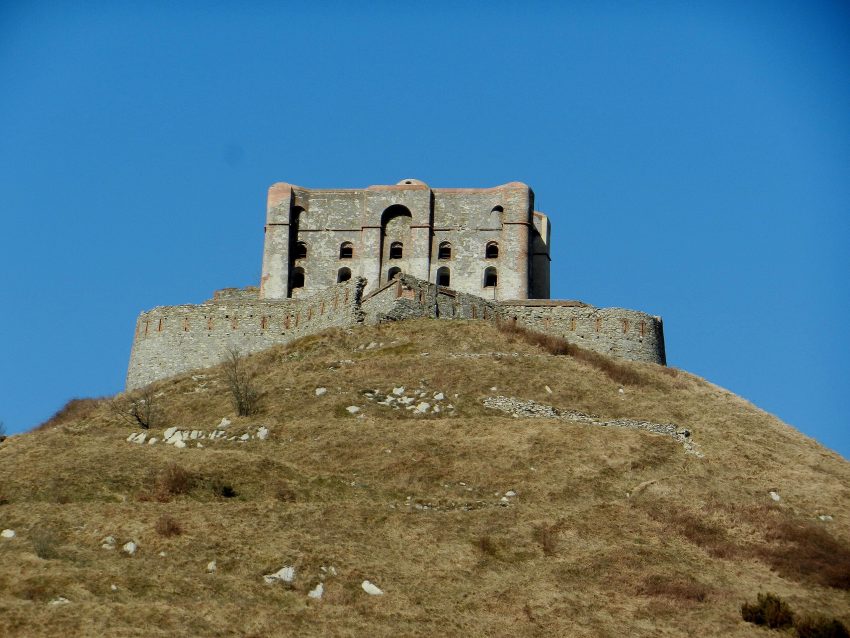
Forte Diamante is one of the top sights in Genoa for travellers who enjoy panoramic viewpoints, rugged landscapes, and stories of military strategy. Perched at 667 metres above sea level, it crowns the ridge between Val Polcevera and Val Bisagno, forming part of the city's formidable defensive system. Though the interior is no longer accessible, the fortress remains an evocative landmark, surrounded by nature and layered in history.
It is also a great place to visit on a walking tour of Genoa's hills, particularly for hikers making their way along the Forti di Genova trail. The journey to Forte Diamante, with its sweeping views over the valleys, mountains, and coastline, reveals why this stronghold was once vital to the city's protection.
Table of Contents
- History and Significance of Forte Diamante, Genoa
- Things to See and Do in Forte Diamante, Genoa
- How to Get to Forte Diamante, Genoa
- Practical Tips on Visiting Forte Diamante, Genoa
- Where to Stay close to Forte Diamante, Genoa
- Is Forte Diamante, Genoa Worth Visiting?
- FAQs for Visiting Forte Diamante, Genoa
- Nearby Attractions to Forte Diamante, Genoa
History and Significance of Forte Diamante, Genoa
The site atop Monte Diamante has been associated with military activity since at least 1395, when records mentioned the “Bastia del Pino,” an early defensive position. Its strategic importance grew significantly during the Austrian siege of 1747, prompting the creation of a star-shaped palisade redoubt to protect the surrounding valleys from incoming attacks.
In 1756, the Republic of Genoa formally commissioned the construction of a major fort on the mountain, guided by Engineer Jacques De Sicre with contributions from Robert de Cotte and Marshal Antonio Federico Flobert. Despite delays caused by land disputes, the project progressed thanks to the persistence and financial support of Marquis Giacomo Filippo Durazzo. Forte Diamante was completed in 1758.
The fortress underwent multiple modifications throughout its lifetime. The original pitched slate roof was replaced with a defensive terrace during the Napoleonic period, and 19th-century enhancements by the Kingdom of Sardinia added machicolations, expanded barracks, and a semi-circular tower with a spiral staircase. The fort played a critical role in the 1800 battle between French defenders and Austrian forces led by the Count of Hohenzollern, holding firm despite a fierce siege.
By 1914, Forte Diamante was abandoned as a military site. While the structure has since deteriorated, its imposing silhouette and historic legacy endure as powerful symbols of Genoa's once extensive defensive network.
Things to See and Do in Forte Diamante, Genoa
Most visitors come to Forte Diamante for its spectacular views and atmospheric setting. From the hilltop, you can gaze across the Ligurian Apennines, the city below, and the distant shimmer of the Ligurian Sea. Photographers and hikers alike find the panorama one of the most rewarding in the region.
Although the interior is closed to the public, the exterior remains impressive. The sturdy stone walls, bastions, and distinctive profile reveal the architectural evolution of the fort across centuries-from Genoese design to Napoleonic adaptations and Savoy-era improvements.
Exploring the area around the fort provides a deeper understanding of the defensive strategy that linked Forte Diamante with nearby structures like Fort Puin, Fort Fratello Minore, and Fort Fratello Maggiore. Together, they once formed an advanced protective system guarding the vulnerable northern ridge of Genoa.
How to Get to Forte Diamante, Genoa
The nearest international gateway is Genoa Cristoforo Colombo Airport, with buses and taxis connecting to the city centre and onward to the trailheads leading into the forts system. For the best deals and a seamless booking experience, check out these flights to Genoa on Booking.com.
Reaching the fort typically involves a combination of public transport and hiking. Travellers arriving by train can use Genova Pontedecimo or Genova Piazza Principe stations before taking local buses toward the upper districts near the footpaths. Use Omnio to easily compare schedules, book train tickets, and find the best prices all in one place for a hassle-free journey across Italy.
If travelling by car, visitors can park in areas such as Trensasco, Sant’Antonino, or San Martino di Struppa before beginning the ascent on foot. The hiking approach is part of the experience and reveals stunning landscapes along the way. If you are looking to rent a car in Italy I recommend having a look at Discover Cars, first, as they compare prices and review multiple car rental agencies for you.
Practical Tips on Visiting Forte Diamante, Genoa
- Suggested tips: Wear sturdy footwear and bring water-the paths are steep and exposed in places.
- Best time to visit: Spring and autumn for cooler hiking conditions and clear views.
- Entrance fee in Euros: Free; the fort can be viewed from the outside.
- Opening hours: Accessible year-round, though weather conditions may affect trails.
- Official website: Search “Forti di Genova Forte Diamante” for trail information.
- How long to spend: 2-3 hours including the hike.
- Accessibility: The trail is not suitable for those with mobility limitations.
- Facilities: None at the site; bring all essentials with you.
- Photography tip: Sunset over the Ligurian Apennines creates dramatic silhouettes of the fort.
- Guided tours: Some hiking groups and local associations offer guided excursions.
- Nearby food options: Small cafés and trattorias can be found in the lower neighbourhoods before or after the hike.
Where to Stay close to Forte Diamante, Genoa
For easy access to the hiking routes, consider staying near the northern districts or central Genoa. A convenient and comfortable option is Hotel Bristol Palace, providing central access to public transport routes. For travellers wanting to stay near the historic harbour, Grand Hotel Savoia offers elegance and excellent transport links. A cosy alternative in the old town is Hotel Le Nuvole.
Is Forte Diamante, Genoa Worth Visiting?
Yes, Forte Diamante is absolutely worth visiting, especially for hikers and history enthusiasts. Its commanding position, dramatic scenery, and rich military past make it one of the most memorable vantage points in Genoa. Even without access to the interior, the experience of reaching the fort and taking in the views is deeply rewarding.
What Other Travellers Say...

Forte Diamante in Sant'Olcese is a hilltop fort reached by an invigorating, sometimes steep hike; paths can be poorly marked in places so bring supportive footwear and be prepared to follow maps or ask other walkers, runners or cyclists for directions. Visitors praise the sweeping views, the chance to climb into the fort to explore its interior, and family-friendly routes that can be shortened or combined with a zigzag descent toward Righi; there's a pleasant trattoria nearby where you can park, use the restroom and grab a snack or meal before or after your walk.



FAQs for Visiting Forte Diamante, Genoa
Nearby Attractions to Forte Diamante, Genoa
- Fort Puin: Another scenic fort along the ridge offering beautiful valley views.
- Fort Fratello Minore: Part of the advanced defensive system above Genoa.
- Fort Fratello Maggiore: A companion fort linked historically with Forte Diamante.
- Trensasco Funicular: A fun and scenic way to reach the hillside trails.
- Val Bisagno viewpoints: Sweeping panoramas across the valley and surrounding mountains.
The Forte Diamante appears in our Complete Guide to Visiting Genoa!

Moira & Andy
Hey! We're Moira & Andy. From hiking the Camino to trips around Europe in Bert our campervan — we've been traveling together since retirement in 2020!
This website uses affiliate links which may earn a commission at no additional cost to you!
Planning Your Visit
Nearby Attractions
- D'Albertis Castle (4.9) km
Castle - Palazzo Reale (5.3) km
Palace - Basilica of the Santissima Annunziata del Vastato (5.3) km
Basilica - Galata Maritime Museum (5.4) km
Museum - Soianata Castelletto (5.4) km
Viewing Point - Oriental Art Museum (5.6) km
Museum - Via Garibaldi Palaces (5.6) km
Palace - National Gallery in Palazzo Spinola (5.6) km
Gallery and Historic Building - Aquarium (5.8) km
Aquarium - Palazzo San Giorgio (5.8) km
Palace


