Fort of São Bento, Ribeira Brava (Madeira)
Tourist Office and Tower in Ribeira Brava (Madeira)
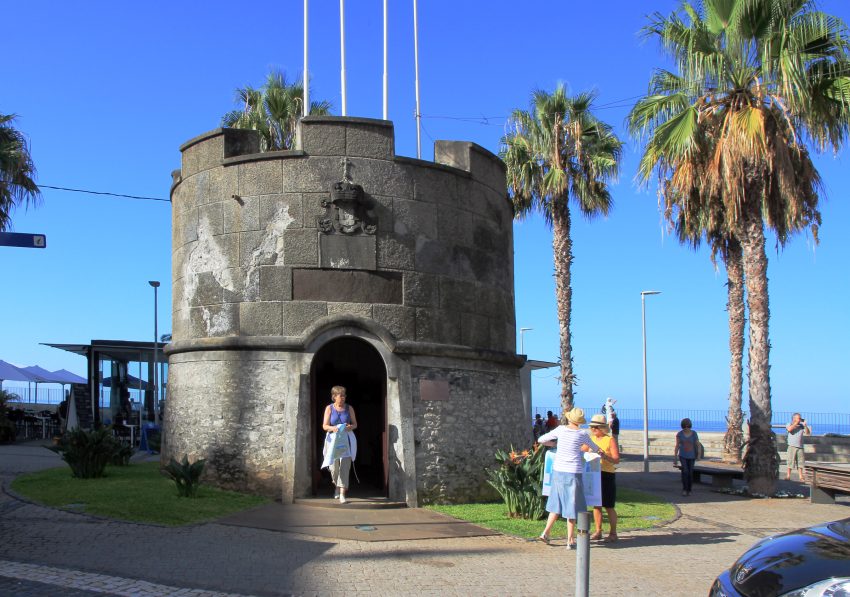
Forte de São Bento sits right by the sea in Ribeira Brava, a small coastal town on Madeira's south coast, and it's one of those places you notice immediately as you arrive. Built as a defensive outpost in the early 1700s, the fort is compact but distinctive, with a small circular tower, crenulated terrace, and a façade that still carries the visual language of coastal protection and authority.
Today it blends seamlessly into the town's everyday life as a tourist information center, which makes it easy to pop in without needing a big plan. It's one of the must-see places in Ribeira Brava on a walking tour of Ribeira Brava, especially if you like attractions that combine history, sea views, and a genuine sense of place.
Table of Contents
- History and Significance of the Forte de São Bento
- Things to See and Do in the Forte de São Bento
- How to Get to the Forte de São Bento
- Practical Tips on Visiting the Forte de São Bento
- Where to Stay Close to the Forte de São Bento
- Is the Forte de São Bento Worth Visiting?
- For Different Travelers
- FAQs for Visiting Forte de São Bento
- Nearby Attractions to the Forte de São Bento
History and Significance of the Forte de São Bento
Forte de São Bento was built in 1708 under the governance of Duarte Pereira Sodré, part of a wider effort to protect Madeira's coastline and small harbours from seaborne threats, including pirate raids. Its position at the edge of Ribeira Brava reflects a practical defensive logic: close enough to the water to respond quickly, and visible enough to signal control of the shoreline.
By the early 19th century, records describe the fort as being in poor condition, which is a familiar story for smaller coastal defenses once the immediate threat landscape changed. What makes this fort particularly interesting is how it later regained importance through restoration and beautification in the early 20th century, helping it become a proud visual marker on the approach to the village.
The fort’s later reuses also tell a very Madeiran story of buildings evolving with community needs. It served as a prison after being leased to the municipal council in the 1920s, and today it has a far more welcoming role as a tourist information center, keeping the structure active rather than frozen as a purely historic relic.
Things to See and Do in the Forte de São Bento
Start outside and take your time with the main north-facing façade, where the portal’s Roman arch and emblematic details give the small structure a surprisingly ceremonial feel. Even if you’re not a “fort person,” the architectural symbolism is easy to appreciate, and it photographs well from a few different angles.
Walk around toward the sea-facing side and look for the niche with the image of Saint Benedict, a small detail that adds character and helps explain why the fort feels more personal than purely military. From here, the coastal setting really clicks: you can imagine how the fort once watched the waterline, and why the town still treats it as part of its identity.
Finally, use the tourist information center function to your advantage. It’s a practical stop to confirm local opening times, get ideas for short walks, and decide whether you want to continue along the promenade, head inland to viewpoints, or build a broader day route around the south coast.
How to Get to the Forte de São Bento
Most visitors arrive in Madeira via Cristiano Ronaldo Madeira International Airport near Funchal. For the best deals and a seamless booking experience, check out these flights to Ribeira Brava (Madeira) on Booking.com. From the airport (or from Funchal), Ribeira Brava is an easy south-coast journey by road, and the fort is centrally placed near the seafront once you arrive.
Madeira has no passenger rail network, so trains are not an option for reaching Ribeira Brava. Train schedules and bookings can be found on Omio. Instead, the most straightforward public-transport option is to use intercity buses from Funchal toward Ribeira Brava and walk from the main stop toward the waterfront.
If you're driving, the route from Funchal to Ribeira Brava is direct and typically quick, making it an easy add-on to a south-coast day that also includes viewpoints and nearby villages. If you are looking to rent a car in Portugal I recommend having a look at Discover Cars, first, as they compare prices and review multiple car rental agencies for you.
Practical Tips on Visiting the Forte de São Bento
- Entrance fee: Free, external access only.
- Opening hours: 24 Hours
- Best time to visit: Late morning to early afternoon is ideal if you want good light on the façade and a lively town atmosphere around the seafront. Near sunset, the fort feels more atmospheric, and it pairs nicely with a slow promenade walk.
- How long to spend: 15-30 minutes is enough to appreciate the exterior details, take photos, and stop by the information desk. If you’re using it as a planning point for the rest of your day, allow closer to 40 minutes so it stays relaxed.
- Accessibility: The fort is in the town center, so the approach is straightforward, but expect typical seaside paving and occasional curb changes. If you want the easiest experience, keep it as a short stop focused on the exterior and the information area.
- Facilities: The biggest advantage here is the tourist information function, plus nearby cafés, rest stops, and the seafront promenade within a couple of minutes' walk. Treat it as a convenient hub before continuing elsewhere in Ribeira Brava.
Where to Stay Close to the Forte de São Bento
For a culture-heavy itinerary, the best area to base yourself is Funchal so you're close to museums, dining, and evening life; if your trip's main focus is coastal exploring and day trips along the south coast, basing yourself around Ribeira Brava or nearby Ponta do Sol often makes logistics simpler.
If you want to stay close to the fort and keep your days easy and walkable, consider Hotel do Campo for a relaxed base with quick access to town. For a simple, central option that keeps you near the waterfront and local restaurants, Brava Mar Hotel is a practical choice. If you'd like a quieter, more romantic village feel while staying close to Ribeira Brava by road, Estalagem da Ponta do Sol works well.
Is the Forte de São Bento Worth Visiting?
Yes, particularly as a quick, high-value stop that adds historical texture to Ribeira Brava's seafront. It's small enough not to dominate your day, but distinctive enough to become a memorable marker of the town once you've seen it up close.
It’s also worth visiting because it’s still useful. Even travelers who aren’t focused on military history often appreciate having a scenic landmark that doubles as a practical place to orient themselves and plan the rest of their route.
What Other Travellers Say...

Fort of São Bento sits by the beachfront on R. Gago Coutinho e Sacadura Cabral in Ribeira Brava and functions largely as a small tourist information spot and viewpoint; visitors say it's an old tower right in front of the beach with pleasant sea views and nearby terraces for eating and drinking, while others find it very small with limited attractions, making the area better suited for relaxing, shopping for souvenirs, or enjoying the beach and open-air swimming pool.


For Different Travelers
Families with Kids
This works well for families as a short, contained stop that doesn’t demand a long attention span. The tower shape, crenulations, and “fort by the sea” setting give kids a clear visual story without needing much explanation.
To keep it smooth, pair the visit with a nearby promenade walk or a snack stop, using the fort as a quick anchor rather than the day’s main activity. It’s especially useful as a reset point between longer drives or more demanding excursions.
Couples & Romantic Getaways
For couples, the appeal is in the setting and pacing: a small historic landmark right by the water, followed by a slow stroll along the seafront. It’s an easy, unforced kind of romance that feels more local than staged.
If you time it for late afternoon, you get softer light and a calmer mood around the waterfront. It’s a good starting point for a relaxed evening that continues into a seaside dinner nearby.
Budget Travelers
This is a strong budget-friendly stop because it’s quick, central, and enjoyable even if you treat it primarily as an exterior visit and a scenic pause. You get a sense of history and place without needing a big spend or a complex plan.
It also helps you structure a low-cost day along the south coast. Using towns like Ribeira Brava as walking-friendly anchors reduces transport friction and makes it easier to enjoy Madeira through simple stops and short strolls.
History Buffs
History-focused travelers will appreciate how the fort’s features reflect coastal defense priorities, and how its later transformations mirror changing civic needs over time. The shift from defense to disrepair to restoration tells a practical story of infrastructure adapting to new realities.
To deepen the experience, look for the symbolic details on the façade and the saint’s niche on the sea-facing side, then connect those to the fort’s role as both a military statement and a community landmark. It’s a small site, but it carries a surprisingly layered narrative.
FAQs for Visiting Forte de São Bento
Getting There
Visiting Experience
Tours, Context & Itineraries
Photography
Accessibility & Facilities
Food & Breaks Nearby
Safety & Timing
Nearby Attractions to the Forte de São Bento
- Igreja Matriz de São Bento: The town's main church, a worthwhile interior-and-façade stop that adds context to Ribeira Brava's historic core.
- Ribeira Brava Seafront Promenade: A scenic waterfront walk for sea air, people-watching, and an easy extension to your fort visit.
- Cabo Girão Skywalk: A dramatic glass-floor viewpoint nearby that delivers one of Madeira’s most striking coastal perspectives.
- Câmara de Lobos: A characterful fishing town not far away, ideal for a short detour for harbour views and local atmosphere.
- Ponta do Sol: A small, photogenic south-coast village that pairs well with Ribeira Brava for a relaxed afternoon route.
The Fort of São Bento appears in our Complete Guide to Visiting Ribeira Brava (Madeira)!

Moira & Andy
Hey! We're Moira & Andy. From hiking the Camino to trips around Europe in Bert our campervan — we've been traveling together since retirement in 2020!
This website uses affiliate links which may earn a commission at no additional cost to you!
Planning Your Visit
24 Hours
Free, external access only.
Nearby Attractions
- Ribeira Brava Lighthouse (0.1) km
Lighthouse - São Bento Church (0.1) km
Church - Madeira Ethnographic Museum (0.4) km
Museum - Cascata dos Anjos (4.9) km
Waterfalls - Cabo Girão Viewpoint (5.9) km
Viewing Point - Câmara de Lobos (7.4) km
Village - Paul da Serra (10.2) km
Hike and Nature Reserve - Eira do Serrado Viewpoint (10.3) km
Viewing Point - Curral das Freiras (Nuns Valley) (10.7) km
Town - Levada das 25 Fontes (PR6 & PR6.1) (11.5) km
Hike


