Fontana del Nettuno, Messina
Attraction, Fountain and Monument in Messina
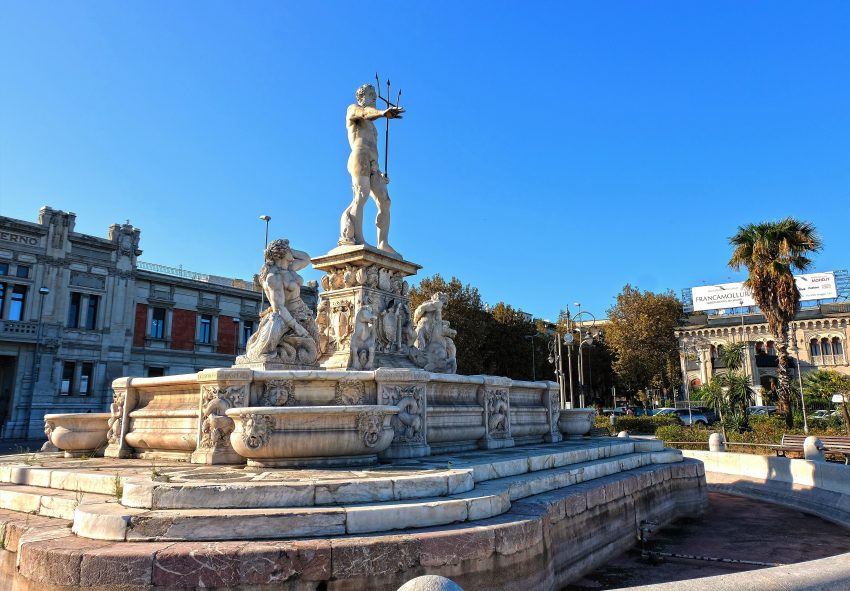
Fontana del Nettuno is Messina's monumental Neptune fountain, set where Via Giuseppe Garibaldi opens into Piazza dell'Unità d'Italia, just a short stroll from the waterfront and the city's port area. It's an easy landmark to weave into a first-time walk through central Messina, especially if you're exploring the city on foot between the marina, the main boulevard, and nearby historic sights.
The fountain's dramatic figures and sea-facing setting make it one of the best quick photo stops in town, particularly when the light hits the marble and the Strait of Messina feels close enough to touch. If you're doing a self-guided walking tour, pair it with a loop that includes the nearby cathedral zone and other Montorsoli-linked works around the center.
Table of Contents
- History and Significance of the Fontana del Nettuno
- Things to See and Do in the Fontana del Nettuno
- How to Get to the Fontana del Nettuno
- Practical Tips on Visiting the Fontana del Nettuno
- Where to Stay Close to the Fontana del Nettuno
- Is the Fontana del Nettuno Worth Visiting?
- For Different Travelers
- FAQs for Visiting Fontana del Nettuno
- Nearby Attractions to the Fontana del Nettuno
History and Significance of the Fontana del Nettuno
Commissioned in the mid-16th century and associated with Florentine sculptor Giovanni Angelo Montorsoli, the Fontana del Nettuno is one of Messina's standout Renaissance-era civic artworks. Its central figure of Neptune (god of the sea) was conceived as a powerful symbol of the city's relationship with the water and the maritime identity that has shaped Messina for centuries.
The fountain's story is also a story of Messina's resilience. The city has endured earthquakes, upheavals, and wartime damage, and the fountain has been moved and restored over time, with some sculptural elements replaced by later copies while originals were safeguarded. Today, seeing it in Piazza dell'Unità d'Italia helps you understand how Messina rebuilt and re-centered its public monuments after major historical shocks.
Beyond the headline figure of Neptune, the surrounding mythic references (including the legendary dangers of the Strait) add a layer of local meaning. Even if you're not deep into mythology, the composition reads instantly as “Messina and the sea,” which is exactly why it remains such a beloved city emblem.
Things to See and Do in the Fontana del Nettuno
Start by circling the basin slowly and taking in the full sculptural program rather than jumping straight to the front-facing Neptune. The fountain is designed to be read in the round, and the different angles reveal how the figures interact, how the water setting frames the scene, and how the monument relates to the open space of the piazza.
For photography, the easiest “postcard” view is from the piazza side with the monument centered, but the most atmospheric shots often come from slightly off-axis angles that include the marina and sky. If you’re visiting near sunrise or late afternoon, the softer light can bring out the carving details and reduce harsh shadows.
Treat this as a short, high-impact stop rather than a long visit. It's ideal as a breather point on a walking tour: pause, take photos, read the monument as a piece of civic storytelling, then continue along Via Garibaldi or toward the waterfront promenade.
How to Get to the Fontana del Nettuno
The nearest major airports are Catania–Fontanarossa Airport (CTA) and Reggio Calabria Airport (REG), with additional options via Palermo Airport (PMO) depending on your route through Sicily. For the best deals and a seamless booking experience, check out these flights to Messina on Booking.com.
Messina is well connected by rail, and arriving by train is a convenient way to reach the city center before continuing on foot or by local transit to Piazza dell'Unità d'Italia. Use Omnio to easily compare schedules, book train tickets, and find the best prices all in one place for a hassle-free journey across Italy.
If you’re traveling by car, aim for central parking areas and plan to finish the last stretch on foot, as traffic patterns and limited parking can make the immediate center slower than it looks on a map. If you are looking to rent a car in Italy I recommend having a look at Discover Cars, first, as they compare prices and review multiple car rental agencies for you.
Practical Tips on Visiting the Fontana del Nettuno
- Entrance fee: Free.
- Opening hours: 24 Hours.
- Best time to visit: Go early morning for quieter photos, or late afternoon for warmer light and a pleasant stroll along the waterfront.
- How long to spend: 10–20 minutes is enough for a full walk-around, photos, and a quick pause before continuing your route.
- Accessibility: The piazza setting is generally flat and straightforward for step-free access, though surfaces can be uneven in places.
- Facilities: There are benches and open space nearby, and you’ll find cafés and services within a short walk along central streets.
Where to Stay Close to the Fontana del Nettuno
Base yourself in central Messina near the waterfront and Via Garibaldi for the easiest walkable access to the Fontana del Nettuno and the city's main sights.
Hotel Royal Palace A practical pick for travelers who want a central address and a straightforward, comfortable base for walking to the fountain and the port area.
Hotel Messenion A solid option if you like being close to the city’s core streets and want an easy start for a morning loop that includes the piazza and waterfront.
Elysium B&B A good choice for a smaller, more local-feeling stay, especially if you prefer a quieter base while remaining walkable to central landmarks.
B&B Liberty Ideal if you want to stay right on (or very near) the main boulevard, making it simple to build a self-guided walking tour around the fountain.
Town House Messina A convenient, central stay for short visits where you want to maximize time on foot and keep transport needs minimal.
Is the Fontana del Nettuno Worth Visiting?
Yes, it's worth visiting, especially if you're already exploring central Messina. It's a classic “quick stop, big payoff” attraction: visually striking, historically meaningful, and perfectly placed for a walking itinerary that also includes the waterfront and other city highlights.
Honest Pivot: If you’re short on time and not particularly interested in public monuments, you can skip a dedicated trip just for the fountain and focus instead on Messina’s museums or a day trip to nearby destinations. It shines most when it’s part of a broader stroll rather than the single main goal of your day.
What Other Travellers Say...


For Different Travelers
Fontana del Nettuno works well as a flexible stop: it's outdoors, easy to reach, and doesn't require a big time commitment. How much you'll enjoy it depends on whether you like sculpture, city history, and scenic urban viewpoints.
Families with Kids
Kids often respond well to the larger-than-life Neptune figure and the dramatic mythic theme, especially if you frame it as a “sea god guarding the strait.” It’s also a good energy reset because you can keep the visit short and let everyone move around the open piazza.
To make it more engaging, turn it into a quick scavenger hunt: spot the trident, find sea creatures, and look for the most “stormy” expression among the figures. Then reward the stop with a nearby gelato or snack break.
Couples & Romantic Getaways
For couples, the fountain is a scenic pause on a waterfront walk, with a classic Sicilian city-meets-sea atmosphere. It’s especially pleasant around golden hour when the light softens and the piazza feels calmer.
Pair it with a slow stroll along the marina and a café stop nearby, using the fountain as a meeting point before continuing to dinner. It’s not a “destination date” on its own, but it’s a great backdrop for one.
Budget Travelers
This is an easy win for budget travelers because it's a high-quality sight that fits naturally into a free walking route through the center. You can get strong photos and a sense of Messina's identity without spending money or booking anything.
Use it as a waypoint between other free highlights, and plan your day so you’re walking rather than relying on taxis. If you’re watching costs, it’s also a good place to take a break before moving on to paid attractions.
FAQs for Visiting Fontana del Nettuno
Getting There
Tickets & Entry
Visiting Experience
Tours, Context & Itineraries
Photography
Accessibility & Facilities
Food & Breaks Nearby
Safety & Timing
Nearby Attractions to the Fontana del Nettuno
- Duomo di Messina (Cathedral of Messina): A major landmark known for its impressive façade and the famous astronomical clock nearby.
- Fontana di Orione: Another celebrated Messina fountain with rich sculptural detail, great for fans of Renaissance civic art.
- Museo Regionale Interdisciplinare di Messina: A top stop for art and archaeology, and a place to learn more about the city's preserved originals and collections.
- Sacrario di Cristo Re: A panoramic memorial site with strong views over the city and harbor.
- Passeggiata a Mare: A pleasant waterfront promenade for a relaxed stroll with sea breezes and harbor views.
The Fontana del Nettuno appears in our Complete Guide to Visiting Messina!

Moira & Andy
Hey! We're Moira & Andy. From hiking the Camino to trips around Europe in Bert our campervan — we've been traveling together since retirement in 2020!
This website uses affiliate links which may earn a commission at no additional cost to you!
Planning Your Visit
24 Hours.
Free.
Nearby Attractions
- Via Giuseppe Garibaldi (0.4) km
Area, Attraction and Street - Teatro Vittorio Emanuele II (0.4) km
Arts Venue, Opera House and Theatre - Porta Grazia (0.4) km
City Gate, Historic Site and Monument - Sanctuary of Montevergine (0.5) km
Church, Monastery and Religious Building - Fort Saint Salvatore and Little Madonna of the Port Statue (0.6) km
Castle, Port and Statue - Sacrario di Cristo Re (0.6) km
Church, Memorial and Viewing Point - Palazzo Zanca (0.6) km
- Galleria Vittorio Emanuele III (0.7) km
Attraction, Historic Building and Shopping Centre - Palazzo dei Leoni (0.7) km
Historic Building, Historic Site and Palace - The Bell Tower of the Cathedral of Messina (0.8) km
Attraction, Cathedral and Tower