Episcopal Palace, Braga
Palace in Braga
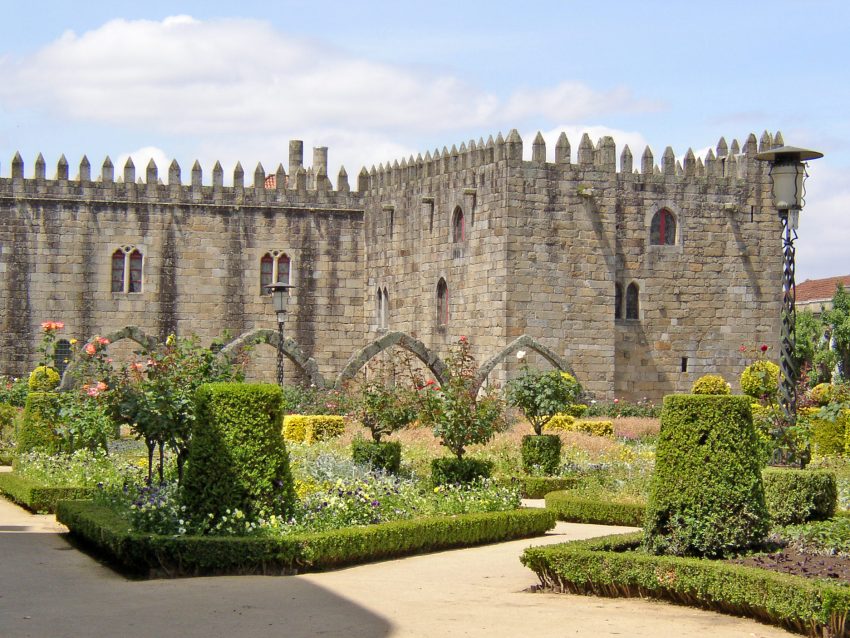
Standing gracefully between the Santa Barbara Garden and Praça do Município, the Episcopal Palace of Braga (Paço Arquiepiscopal) is one of the city's most impressive and historically significant landmarks. Once the residence of the archbishops who ruled both spiritually and politically over Braga for centuries, the palace today embodies the city's layered architectural and cultural history. Its interconnected wings - each from a different period - showcase a seamless blend of Gothic, Renaissance, and Baroque styles, making it one of the must-see places in Braga and a great place to visit on a walking tour of Braga.
More than a monument frozen in time, the Episcopal Palace continues to serve the living city: housing the Public Library of Braga, local archives, and offices of the University of Minho, it remains a vibrant centre of learning and heritage within the old town.
History and Significance of the Episcopal Palace
The origins of the Episcopal Palace date back to the 14th century, when Braga's archbishops sought to build a residence that reflected their influence and authority. Over the following centuries, successive archbishops expanded and remodelled the complex, resulting in the three distinct wings visible today. Each section reflects the architectural tastes and political ambitions of its era, forming a physical record of Braga's evolving history.
The oldest part, the Gothic eastern wing, overlooks the enchanting Santa Barbara Garden. Built during the tenure of Archbishops Gonçalo Pereira and Fernando da Guerra in the 14th and 15th centuries, this granite section features medieval crenellations and arched windows that evoke the fortified residences of the Middle Ages. Its proximity to the garden - with its ruined arches and vibrant flowers - makes it one of the most photogenic corners of the city.
The southern wing, which encloses the courtyard known as Paço Square, incorporates Renaissance and early Baroque elements from the 16th to 18th centuries, reflecting the tastes of Archbishops Agostinho de Jesus and Manuel de Sousa. Finally, the western wing, facing the Municipal Square, was designed in the 18th century by the celebrated architect André Soares for Archbishop José de Bragança. Its elegant façades, ornate stonework, and harmonious proportions exemplify the Northern Portuguese Baroque style at its finest.
Today, the palace’s role has evolved from ecclesiastical residence to cultural institution, preserving centuries of Braga’s scholarly and artistic legacy within its storied walls.
Things to See and Do at the Episcopal Palace
Exploring the Episcopal Palace offers a fascinating journey through Braga's architectural evolution. Begin at the eastern wing, where the Gothic façade and castellated towers stand above the Santa Barbara Garden. This area offers some of the city's most charming views, particularly at sunset when the stone walls glow warmly above the flowerbeds and fountains.
Next, walk around to the Paço Square to admire the mix of Renaissance and Baroque façades, each revealing details that speak to the craftsmanship and artistic ambitions of Braga’s archbishops. Here, the palace’s layered history is most visible - centuries of reconstruction and adaptation captured in stone.
Finally, the Baroque western wing is perhaps the most refined, designed by André Soares, whose work also defines several of Braga's most beautiful buildings, including the Arco da Porta Nova and Palácio do Raio. Inside, the wing now houses the Biblioteca Pública de Braga (Public Library), the district archives, and part of the University of Minho. Visitors are free to wander the exterior spaces and gardens, while entry to the interior facilities depends on current exhibitions or library access policies.
How to Get There
The Episcopal Palace is centrally located between the Santa Barbara Garden and Praça do Município, within easy walking distance of Braga Cathedral and Praça da República. For those arriving by train, Braga Station is around a 15-minute walk away along Avenida da Liberdade. Train schedules and bookings can be found on Omio. Visitors travelling by car can park nearby at public facilities such as Avenida Central or Campo da Vinha. If you are looking to rent a car in Portugal I recommend having a look at Discover Cars, first, as they compare prices and review multiple car rental agencies for you.
Practical Tips on Visiting the Episcopal Palace
- Best time to visit the Episcopal Palace: Morning or late afternoon when the Santa Barbara Garden is bathed in natural light.
- Entrance fee in Euros: Free to explore the exterior; check locally for library or exhibition access.
- Opening hours: Gardens and exterior accessible daily; interior facilities follow library hours (typically 9 am-6 pm, weekdays).
- Official website: www.cm-braga.pt
- How long to spend: Around 45 minutes to 1 hour, longer if visiting the library or archives.
- Accessibility: Exterior areas mostly accessible; some uneven surfaces in the gardens.
- Facilities: Restrooms, reading rooms, and nearby cafés.
- Photography tip: Capture the Gothic wing framed by the flowers of Santa Barbara Garden.
- Guided tours: Occasionally offered as part of cultural or university programmes.
- Nearby food options: Restaurants and cafés around Praça do Município and Rua do Souto.
Is the Episcopal Palace Worth Visiting?
Yes - the Episcopal Palace is one of the top sights in Braga, not only for its architectural variety but also for its atmosphere. It offers a microcosm of Braga's history: Gothic grandeur, Renaissance grace, and Baroque exuberance standing side by side. Combined with the peaceful Santa Barbara Garden and the cultural energy of the Public Library, it's a destination that rewards both casual visitors and those seeking deeper insight into the city's artistic heritage.
What Other Travellers Say...

Archbishops Court in Praça Mun., Braga is a public institution and concert venue set within a gardened compound; visitors praise its atmosphere and acoustics for classical concerts by the local philharmonic and note a rose garden at the rear, while others mention free access to view the grounds from the garden or to wander the site if you can find the entrance, though some visitors warn limited visitor information and occasional closures at reception.


FAQs for Visiting the Episcopal Palace
Nearby Attractions to the Episcopal Palace
- Arco da Porta Nova - The city's grand Baroque gateway leading into the old town.
- Cathedral of Braga (Sé de Braga) - Portugal's oldest cathedral and a masterpiece of sacred art.
- Santa Barbara Garden - A romantic garden filled with flowers and medieval arches beside the palace.
- Palácio do Raio - A blue-tiled Baroque palace by André Soares.
- Biscainhos Museum - A 17th-century palace with art, furnishings, and Baroque gardens.
The Episcopal Palace appears in our Complete Guide to Visiting Braga!

Moira & Andy
Hey! We're Moira & Andy. From hiking the Camino to trips around Europe in Bert our campervan — we've been traveling together since retirement in 2020!
This website uses affiliate links which may earn a commission at no additional cost to you!
Nearby Attractions
- Santa Barbara Garden (0.1) km
Gardens - Braga Cathedral (0.1) km
Cathedral - Torre de Menagem (0.2) km
Tower - Arco da Porta Nova (0.3) km
City Gate - Biscainhos Museum (0.3) km
Museum - Pius XII & Medina Museum (0.3) km
Museum - Praça da República (0.3) km
Square - Theatro Circo (0.4) km
Theatre - Palácio do Raio (0.4) km
Historic Building and Museum - Fonte do Ídolo (0.5) km
Historic Site