Dante’s Tomb, Ravenna
Tomb in Ravenna
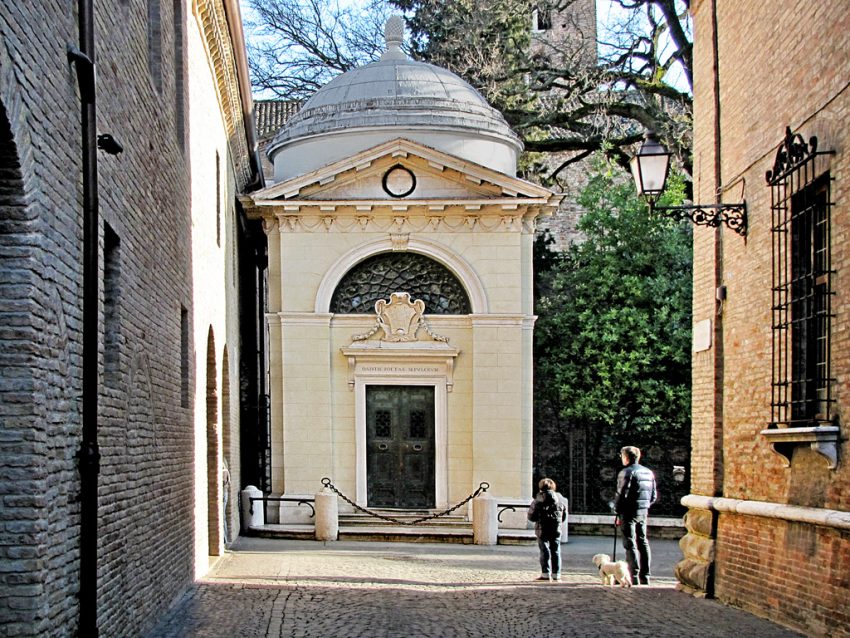
In the heart of Ravenna, Dante's Tomb sits in a hushed, leafy pocket often called the Zone of Silence, a small cluster of memorial spaces where the city invites you to slow down and reflect. It's a short, gentle visit, but it carries an outsized emotional weight, especially if you've ever read even a few lines of Dante and want a moment that feels personal rather than performative.
This spot is one of the must-see places in Ravenna because it distils the city's relationship with Dante into something intimate: a modest “temple” at the end of Via Dante Alighieri, framed by trees and quiet paving stones, where people naturally lower their voices. It's also a highlight of any walking tour of Ravenna, since it fits neatly between major sights and gives you a calm pause from mosaic-filled interiors.
Table of Contents
History and Significance of the Dante’s Tomb
Dante died in Ravenna in 1321, and the city became the guardian of his memory in a way that shaped local identity for centuries. The story is not only about where he is buried, but about why that burial mattered so deeply: Ravenna kept the poet, while Florence-his birthplace-sought to reclaim him, turning his remains into a symbol of cultural ownership and civic pride.
The tomb you see today was designed in the late 18th century by Camillo Morigia, and locals still affectionately nickname it the “sugar bowl” for its compact, rounded form. Above the entrance, the simple inscription identifying the site makes it unmistakable once you arrive, and the setting encourages a slower, more reverential approach than many city landmarks.
Part of the fascination lies in the long saga of Dante's remains, hidden more than once to protect them from political tug-of-war and upheaval. That history gives the site an unusual narrative charge: you are standing at the endpoint of a centuries-long custodianship story, where devotion, secrecy, and civic rivalry all played their part in keeping the poet's resting place in Ravenna.
Things to See and Do in the Dante’s Tomb
Begin by taking in the surrounding “Zone of Silence” atmosphere before you step inside. The experience works best when you treat it as a quiet interlude, not a rushed photo stop. Pause in the small area leading up to the entrance, and notice how the space is designed to funnel attention inward, away from the city’s noise.
Inside the tomb, the visit is brief but concentrated. The interior is marble-lined and intentionally simple, placing emphasis on the sepulchre and the sense of presence rather than decoration. Look for the sculpted bas-relief portrait traditionally associated with the Renaissance restoration period, which gives a human focal point to a site otherwise defined by quiet geometry.
Before you leave, take a moment to look at the small votive elements and commemorative objects that reflect how Dante’s memory has been actively tended rather than merely preserved. If you are visiting around early September, be aware that the area can take on a ceremonial tone connected to annual commemorations, which can change the feel of the visit from solitary reflection to shared civic ritual.
Practical Tips on Visiting the Dante’s Tomb
- Suggested tips: Treat this as a short, reflective stop; visit with a quieter pace, and save the photos for outside so you can fully absorb the calm interior.
- Best time to visit: Early morning or late afternoon, when the area feels most peaceful and you’re less likely to encounter groups.
- Entrance fee: Free
- Opening hours: Winter: Daily: 10:00 – 18:00; Summer: Daily: 10:00 – 19:00
- Official website: https://vivadante.it/tombadidante-3/
- How long to spend: 15-30 minutes is ideal, longer if you want to linger in the surrounding memorial area.
- Accessibility: The area is central and easy to reach on foot, but historic thresholds and tight interior space may require care; visitors with mobility needs should plan for potentially uneven surfaces.
- Facilities: Limited facilities directly at the tomb; cafés, toilets, and shops are a short walk away in the historic centre.
- Photography tip: Photograph the exterior and the quiet approach through the Zone of Silence, then put the camera away for the interior to keep the mood intact.
- Guided tours: A guided city walk can add context about the “Ravenna versus Florence” story and the significance of the surrounding memorial spaces.
- Nearby food options: Plan a café stop nearby after your visit; it’s a natural place to decompress and let the experience settle before continuing sightseeing.
Where to Stay close to the Dante’s Tomb
Staying in central Ravenna makes Dante's Tomb an easy early-morning or evening visit, when the Zone of Silence feels most atmospheric. Albergo Cappello is a characterful choice within easy walking distance of the tomb and the main dining streets. For a straightforward, well-located base in the historic centre, Hotel Centrale Byron keeps you close to major sights without needing transport. If you prefer a slightly more boutique, polished stay while remaining walkable to everything, Palazzo Bezzi Hotel is a comfortable option for a monument-focused itinerary.
Is the Dante’s Tomb Worth Visiting?
Yes, especially if you want a Ravenna moment that feels human and intimate rather than monumental. The tomb is small, but that scale is the point: it encourages a quiet, personal connection to Dante's legacy, without the distractions of a large complex or a long visitor route.
It's also worth visiting even if you are not a Dante specialist, because the site functions as a cultural anchor. Ravenna's UNESCO monuments show you the city's artistic brilliance; Dante's Tomb shows you how Ravenna protects memory, identity, and story in a way that still feels alive.
FAQs for Visiting Dante’s Tomb
What Other Travellers Say...
Reviews Summary
Dante's Tomb on Via Dante Alighieri is a compact neoclassical mausoleum set in a calm garden near the Basilica of San Francesco; visitors note its serene, often quiet atmosphere despite a central location. The shrine, built in 1780, houses Dante's tomb topped by a Renaissance bas‑relief showing him at a lectern and a lamp where Tuscan oil is offered each September; nearby plaques, a bronze wreath, and an ivy‑covered mound mark episodes in the long story of his remains, while the adjacent Zona dantesca and Quadrarco di Braccioforte with medieval sarcophagi offer peaceful corners and a chance to pause, read the inscriptions and look up at the stuccoed dome.
For Different Travelers
Families with Kids
For families, the tomb works best as a quick, story-driven stop rather than a long visit. Keep it simple: explain that this is where a famous poet is honoured, point out the small “temple” shape, and then move on before younger children get restless.
Pair it with a more spacious nearby activity right afterward-an open piazza, a snack stop, or a short stroll-so the quiet, respectful tone doesn’t feel like a constraint. It’s the kind of place that works when it’s brief, calm, and clearly framed.
Couples & Romantic Getaways
For couples, Dante's Tomb is one of Ravenna's most atmospheric moments, especially early or late in the day when the Zone of Silence feels almost cinematic. The experience is short but emotionally resonant, and it lends itself naturally to a slow walk and a café stop afterward.
It also works well as a “soft” cultural highlight: meaningful without being heavy, and intimate without feeling staged. If you enjoy travel that mixes beauty with story, this is a quietly memorable part of Ravenna.
Budget Travelers
This is an easy win for budget travellers because it’s centrally located, typically free, and delivers a strong sense of place without requiring a long detour. You can fit it into a walking day between other central sights and keep your transport costs near zero.
If you are prioritising paid entries, use this as one of your meaningful free stops that still feels essential. It adds cultural depth to a Ravenna itinerary without adding expense.
Nearby Attractions to the Dante’s Tomb
- Basilica of San Vitale: One of Ravenna's most celebrated interiors, renowned for its shimmering mosaics and distinctive octagonal plan.
- Mausoleum of Galla Placidia: A small, starry mosaic interior that feels like stepping into a glowing night sky.
- Basilica of Sant'Apollinare Nuovo: A central basilica famous for long mosaic processions that unfold like a visual narrative.
- Arian Baptistery: A compact UNESCO monument near the station with a striking dome mosaic of Christ's baptism.
- Piazza del Popolo: Ravenna's main square, ideal for a break between sights with cafés and a lively local atmosphere.
The Dante’s Tomb appears in our Complete Guide to Visiting Ravenna!

Moira & Andy
Hey! We're Moira & Andy. From hiking the Camino to trips around Europe in Bert our campervan — we've been traveling together since retirement in 2020!
This website uses affiliate links which may earn a commission at no additional cost to you!
Planning Your Visit
Winter: Daily: 10:00 - 18:00; Summer: Daily: 10:00 - 19:00
Free
Nearby Attractions
- Basilica of San Francesco (0.0) km
Basilica - Museo Dante (0.0) km
Historic Building and Museum - Piazza del Popolo (0.2) km
Square - Archbishop's Museum (0.3) km
Museum - Neonian Baptistery (0.3) km
Baptistery - Arian Baptistery (0.3) km
Baptistery - Archbishop's Chapel of St. Andrew (0.3) km
Church - Basilica of Sant’Apollinare Nuovo (0.3) km
Basilica - Ravenna Cathedral (0.4) km
Cathedral - Basilica di San Giovanni Evangelista (0.4) km
Basilica