Dame Carcas, Carcassonne
Statue in Carcassonne
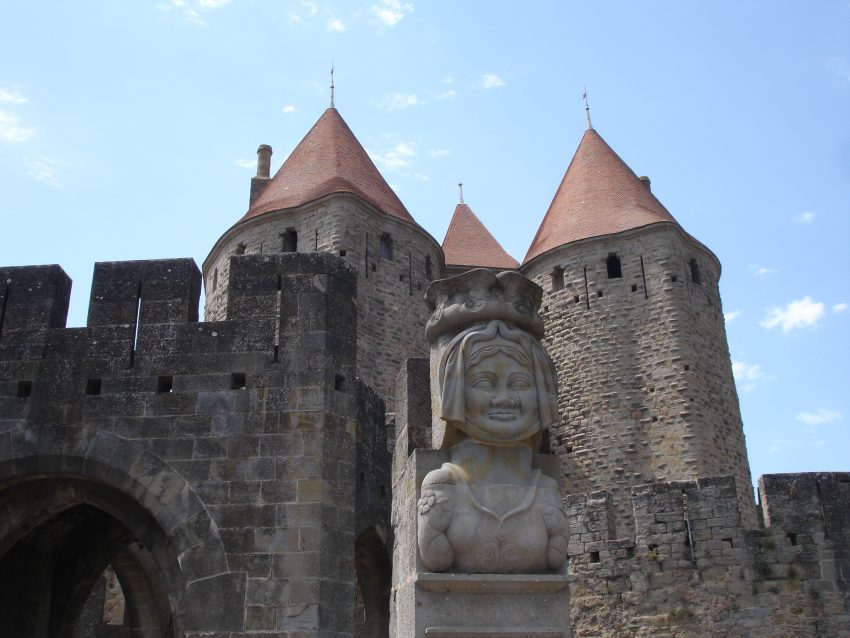
Dame Carcas is one of those places in Carcassonne that works as both a quick photo stop and a proper story-rich landmark. You'll find the statue at the entrance to the medieval Cité, where it welcomes visitors just before or as they begin exploring the fortified old town, making it a natural starting point for a self-guided walk through the citadel.
What makes it memorable is not just the sculpture itself, but the legend attached to it. Even if you only stop for a few minutes, Dame Carcas gives context to Carcassonne's identity and name, and it's one of the best places to pause before heading deeper into the gates, ramparts, and winding streets of the Cité.
Table of Contents
- History and Significance of the Dame Carcas
- Things to See and Do in the Dame Carcas
- How to Get to the Dame Carcas
- Practical Tips on Visiting the Dame Carcas
- Where to Stay Close to the Dame Carcas
- Is the Dame Carcas Worth Visiting?
- For Different Travelers
- FAQs for Visiting Dame Carcas
- Nearby Attractions to the Dame Carcas
History and Significance of the Dame Carcas
Dame Carcas is tied to the best-known legend of Carcassonne, a story that blends medieval imagination, local pride, and place-name folklore. In the traditional tale, she becomes the clever defender of the city during a long siege and uses deception to convince the enemy that supplies inside the walls are still abundant, leading to the lifting of the siege. The city's name is popularly linked to the phrase “Carcas sonne,” referring to the sounding of the city horn.
Today, the statue stands as a symbolic welcome to the Cité rather than a museum object you visit separately. That gives it a different kind of significance: it is part of the living approach to Carcassonne, encountered in motion as you arrive, photograph the gate, and begin to read the city through its legends as much as its stones.
The figure also reflects how Carcassonne presents itself to visitors: part UNESCO-level monumentality, part storytelling city. Even travelers who are mainly here for the castle and ramparts usually pass Dame Carcas first, which makes it one of the most quietly important orientation points in the whole medieval quarter.
Things to See and Do in the Dame Carcas
Start with the statue itself and the entrance setting, because this is where the experience works best: Dame Carcas framed by the approach to the Cité and the atmosphere of the fortified gateway. It is a short stop, but a good one to use for photos, especially before the busiest part of the day when tour groups are moving through the gate.
Take a moment to read or recall the legend before entering the medieval streets, because it changes how the place feels. Carcassonne can be visited as a beautiful fortress alone, but knowing the Dame Carcas story adds a layer of local identity that makes the arrival more memorable and gives meaning to the statue beyond a quick snapshot.
From here, continue into the Cité for the classic Carcassonne experience: the lanes, viewpoints, and, if you want the full historical visit, the castle and ramparts. Dame Carcas is best treated as the opening scene of a wider route rather than a standalone destination, which is exactly why it works so well on a walking itinerary.
How to Get to the Dame Carcas
Dame Carcas is located at the entrance to the medieval Cité of Carcassonne, so the simplest approach is to navigate to the Cité rather than searching for the statue alone. Once you reach the main gateway area, the statue is an easy landmark and one of the first notable sights you encounter.
The nearest airport is Carcassonne Airport (Salvaza), which is the most convenient option for a short city break focused on the Cité and old town. Toulouse-Blagnac is another strong option with more flight connections, followed by a train or car journey onward to Carcassonne. For the best deals and a seamless booking experience, check out these flights to Carcassonne on Booking.com.
Carcassonne has rail connections that make it practical to arrive by train and continue to the medieval Cité by local transport, taxi, or a longer walk depending on your luggage and schedule. If you are combining the visit with a wider South of France itinerary, train travel is often the easiest way to avoid parking logistics in peak season. You can use SNCF Connect to check schedules, compare routes, and purchase tickets for National (SNCF ) and regional trains (TER). For a more streamlined experience, we recommend using Omio, which allows you to easily compare prices, schedules, and book tickets for both National and Regional travel across all of Europe, all in one place.
If you are driving, follow signs for the Cité de Carcassonne and use the car parks near the medieval citadel, which are positioned for a short walk to the entrance area where Dame Carcas stands. This is a good option if you are visiting multiple regional sites in one day or traveling with family. If you are looking to rent a car in France I recommend having a look at Discover Cars, first, as they compare prices and review multiple car rental agencies for you. (Visit Occitanie EN)
Practical Tips on Visiting the Dame Carcas
- Entrance fee: Free.
- Opening hours: Open 24 hours. (Outdoor public monument at the entrance to the Cité.)
- Official website: https://www.carcassonne.org/article-page/dame-carcas
- Best time to visit: Early morning or later afternoon is usually best for a calmer stop and better photos at the entrance before the busiest flows through the Cité.
- How long to spend: 10-20 minutes is enough for the statue itself, but most travelers should pair it with at least 2-4 hours in the medieval Cité and castle area.
- Accessibility: The statue is in an outdoor public area, but surfaces around the Cité can be uneven and busy, so extra time helps if you prefer a slower pace or have mobility needs.
- Facilities: You’ll find wider visitor services, cafés, and toilets in and around the Cité rather than at the statue itself, so treat this as a landmark stop rather than a serviced attraction.
Where to Stay Close to the Dame Carcas
For a culture-heavy itinerary focused on the medieval citadel, the best base is in or just beside the Cité so you can reach Dame Carcas and the main sights early and late, when the atmosphere is at its best.
Staying near the Cité lets you turn a quick stop at Dame Carcas into part of a slower Carcassonne experience, with easy access to the ramparts, evening walks, and restaurants after day-trippers leave. Good options to look at include Hôtel de la Cité Carcassonne - MGallery, Best Western Le Donjon, and Hôtel du Château & Spa Carita.
If you prefer easier station access or a lower-cost base, staying in the Bastide Saint-Louis can work well too, but for this specific stop and a walking-focused visit, being close to the Cité is the more rewarding choice.
Is the Dame Carcas Worth Visiting?
Yes, Dame Carcas is worth visiting, but as a meaningful short stop rather than a standalone attraction. It adds narrative depth to your arrival in the Cité and gives you a stronger sense of Carcassonne's identity before you move on to the bigger-ticket monuments.
Honest Pivot: if you are looking for a long, ticketed attraction with interiors, exhibitions, or a dedicated visit experience, you may find the statue too brief on its own. In that case, treat it as part of the approach to the medieval city and focus your main time on the castle, ramparts, and surrounding streets.
What Other Travellers Say...

Reviews highlight the impressive, well-preserved medieval entrance and fortified Cité of Carcassonne, with the Dame Carcas bust at the main gate being a popular photo spot and point of interest. Visitors enjoy wandering the atmospheric streets, guided or self-guided options, and the abundance of places to eat and shop. Common downsides are heavy crowds and a touristy feel with many souvenir vendors, and some feel the paid castle ticket is not good value compared with exploring the citadel for free.


For Different Travelers
Families with Kids
Dame Carcas is a very easy win for families because it is outdoors, free, and tied to a dramatic legend that children can understand quickly. It works well as a storytelling stop before entering the Cité, especially if you frame it as the beginning of a castle adventure.
Because the stop is short, it is also useful for pacing a family visit. You can pause for photos, explain the legend in simple terms, and then keep moving before younger kids lose interest, saving your longer attention span for the ramparts or a meal inside the medieval quarter.
Couples & Romantic Getaways
For couples, Dame Carcas is less about the statue itself and more about the mood of arrival at the Cité. Stopping here at quieter times can feel cinematic, especially when the light is softer and the approach to the medieval walls sets the tone for a slower walk together.
It is a strong start to a romantic route through Carcassonne because it gives you a shared story immediately, then leads naturally into scenic lanes, viewpoints, and dinner options nearby. If you are staying close to the Cité, it is especially pleasant to pass by more than once at different times of day.
Budget Travelers
Dame Carcas is ideal for budget travelers because it is free and part of the public approach to the Cité. You can enjoy the landmark, photograph it, and take in the atmosphere without buying a ticket, then decide later whether to pay for the castle and ramparts.
This makes it a good anchor for a low-cost walking route through Carcassonne. Pair it with free wandering in the citadel streets and carefully chosen paid sights, rather than trying to do everything at once.
History Buffs
History-focused travelers should absolutely stop at Dame Carcas, not because it is a detailed historical exhibit, but because it represents how Carcassonne's identity has been shaped by legend as well as documented medieval history. It is a useful reminder that famous cities are often remembered through stories that sit alongside the archival record.
The best approach is to use the statue as a thematic introduction, then continue into the castle and ramparts for the deeper architectural and historical material. That combination gives you both the folklore of Carcassonne and the physical evidence of its fortified past.
FAQs for Visiting Dame Carcas
Getting There
Tickets & Entry
Visiting Experience
Tours, Context & Itineraries
Photography
Accessibility & Facilities
Food & Breaks Nearby
Safety & Timing
Nearby Attractions to the Dame Carcas
- Porte Narbonnaise (Narbonnaise Gate) - The monumental main gate to the Cité and the dramatic architectural setting that frames your arrival beside Dame Carcas.
- Château Comtal (Castle of the Counts) - The major paid monument inside the Cité, with exhibitions and access to sections of the ramparts for deeper historical context.
- Ramparts of Carcassonne - A highlight for panoramic views and a better understanding of the city's defensive design and scale.
- Basilica of Saint-Nazaire - A beautiful church within the Cité that adds a different architectural and spiritual dimension to your walking route.
- The medieval streets of the Cité - The lanes, small squares, and stone-fronted passages that make Carcassonne feel immersive beyond its headline monuments.
The Dame Carcas appears in our Complete Guide to Visiting Carcassonne!

Moira & Andy
Hey! We're Moira & Andy. From hiking the Camino to trips around Europe in Bert our campervan — we've been traveling together since retirement in 2020!
This website uses affiliate links which may earn a commission at no additional cost to you!
Planning Your Visit
Open 24 hours. (Outdoor public monument at the entrance to the Cité.)
Free.
Nearby Attractions
- Porte Narbonnaise (0.1) km
Attraction, City Gate and Historic Site - Jean-Pierre Cros-Mayrevieille Monument (0.1) km
Memorial, Monument and Statue - Cité de Carcassonne (0.2) km
Ancient City, Castle and City Walls - La Grand Puit (0.2) km
Historic Site and Monument - Musee de L'Inquisition (0.2) km
Attraction and Museum - Château et Remparts (0.2) km
Castle, City Walls and Historic Site - Musée de l'Ecole (0.2) km
Museum - Basilique Saint-Nazaire (0.3) km
Basilica, Church and Religious Building - Porte de l'Aude (0.3) km
City Gate, City Walls and Historic Site - Jean Deschamps Theatre (0.3) km
Arts Venue, Attraction and Theatre