Condercum Fort, Newcastle upon Tyne
Roman Site in Newcastle upon Tyne
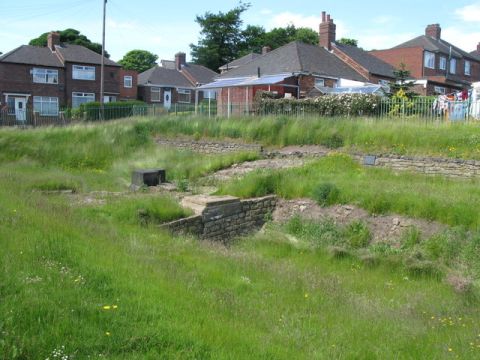
Perched on a hilltop a couple of miles west of today's city centre, Condercum Fort once guarded Hadrian's Wall as the third fort along the line after Segedunum (Wallsend) and Pons Aelius (central Newcastle). Its name, meaning “place with a fine view”, hints at the commanding position Roman soldiers enjoyed as they watched over the frontier and the Tyne valley below. Although the fort itself is now buried beneath a modern reservoir and housing estate, Condercum remains one of the things to do in Newcastle upon Tyne for visitors keen to imagine the Wall's lost strongholds and trace the stories that archaeology has brought back to life.
In its heyday, Condercum was a classic cavalry fort astride the Wall, with its main gates facing north onto the frontier and a busy civilian settlement clustered outside. Excavations before development revealed a “playing-card” shaped fortress of around five acres, three altars dedicated to the local god Antenociticus and everyday remains such as animal bones and shellfish that illuminate the soldiers' diet. Today you come here less for dramatic ruins and more for context: to stand where a thousand-strong part-mounted unit once lived, ate and worshipped, and to link what you see in museums with the real landscape on which it all happened. The site is often visited on tours from Newcastle upon Tyne that focus on Hadrian's Wall and its vanished forts.
Table of Contents
History and Significance of Condercum Fort
Condercum Fort was built as part of Hadrian's grand project to define and defend the northern edge of the Roman Empire. Sitting on a hilltop about 2 miles (3 km) west of Pons Aelius, it became the third fort along the Wall after Segedunum and Newcastle's central stronghold, creating a chain of garrisons that watched over movements across the frontier. Its Latinised name, meaning “place with a fine view”, reflects the impressive outlook from this position, which would have given soldiers a clear view of the surrounding landscape and any approaching groups.
The fort itself followed the standard “playing-card” plan typical of Roman military architecture: roughly rectangular, with rounded corners and strong defences enclosing just over five acres. Built astride the line of the Wall, it had three major gates on the north side - the porta praetoria and both portae principales - opening towards the frontier, as was usual for a cavalry fort. On the south, the Roman military road passed in and out through the portae quintanae, and the vallum (the great earthwork running south of the Wall) closely mirrored the outline of the fort, with an uncut section of ditch deliberately left to accommodate the stronghold.
Although nothing of Condercum is now visible above ground, evidence from excavations has been rich enough to sketch a vivid picture of life here. Animal bones from ox, sheep, pig and red deer show that meat was an important part of the diet, while finds of oyster, mussel, limpet, whelk, cockle, freshwater mussel and even edible snail reveal that soldiers and civilians made the most of both coastal and river resources. Altars dedicated within the fort and at the nearby Benwell Roman Temple link Condercum's garrison to the worship of Antenociticus, a local deity unknown on the continent, highlighting the blend of Roman and native traditions that characterised religious life on the Wall.
Things to See and Do at Condercum Fort
Today, a visit to Condercum is an exercise in historical imagination as much as sightseeing. The fort and its adjoining stretch of Hadrian’s Wall lie beneath a modern reservoir and housing estate, so you will not find standing walls or gateways to explore. Instead, you come to locate the approximate site, appreciate the hilltop setting and picture the “playing-card” outline, north-facing gates and bustling interior that once stood here. Bringing along a simple sketch map or guidebook can help you visualise where the gates, barracks and headquarters might have been beneath your feet.
Knowing who built and used the fort makes this mental reconstruction more rewarding. Building inscriptions show that the defences were initially constructed by soldiers of the Second Augustan Legion, likely with at least one century temporarily based on site while work was underway. In the second century, Condercum’s main garrison was Cohors I Vangionum Milliaria Equitata, a part-mounted unit from Upper Germany with a nominal strength of around a thousand men. Only limited barrack remains have been identified, suggesting that the cohort was split between Condercum and another fort such as Cilurnum (Chesters), with detachments rotating as needed.
Altars dedicated by centurions of the Twentieth Legion (Valeria Victrix) and a prefect of the Vangiones, as well as evidence that a detachment of the British Fleet built the granary, add further layers to the story. These inscriptions suggest periods when legionary builders, auxiliary commanders and even marines were present here to carry out construction or repairs, without being permanently stationed at the fort. Standing on the hill, you can imagine this constant flow of people: troops arriving to build, mend or garrison, supply wagons rumbling in from the south and patrols riding out through the north-facing gates onto the windswept Wall.
How to Get to Condercum Fort
For most visitors, the starting point is Newcastle upon Tyne itself. If you are flying in, Newcastle International Airport lies to the north-west of the city, with frequent domestic and some international flights and a straightforward Metro link into the centre in about 25 minutes. For the best deals and a seamless booking experience, check out these flights to Newcastle upon Tyne on Booking.com. From the city centre you can then continue towards Benwell and the western suburbs by local bus or taxi to reach the area where Condercum once stood.
Arriving by train, you will come into Newcastle Central Station, which sits on the main east coast rail route and is well connected to cities such as London, Edinburgh and York.Train schedules and bookings can be found on Omio. From here, local buses heading west or a short taxi ride will take you out towards Benwell; while you will not find signposted fort remains, maps and guides to Hadrian’s Wall through Newcastle can help you pinpoint the approximate location on its hilltop.
If you are travelling by car, follow signs from Newcastle city centre towards Benwell and the western districts, using a sat nav or map to guide you to the residential streets built over the former fort site. On-street parking may be available, but do be mindful of local residents and any restrictions; once parked, it is best to explore the area on foot, using your knowledge of the fort’s size and layout to imagine where its walls and gates once ran across the slopes.
Practical Tips on Visiting Condercum Fort
- Suggested tips: Bring a basic plan of the fort and a map of Roman Newcastle so you can match the modern streets and reservoir to where Condercum’s walls, gates and interior buildings once lay.
- Best time to visit: Daytime in reasonably clear weather is ideal, as you will rely on views and orientation more than on visible ruins; combining Condercum with better-preserved sites or museums makes for a fuller day.
- Entrance fee: Free
- Opening hours: Daylight Hours
- Official website: https://www.english-heritage.org.uk/visit/places/benwell-roman-temple-hadrians-wall/history/
- How long to spend: Expect to spend around 30-60 minutes walking the area, reading any information you have brought and getting a sense of the hilltop position, plus travel time from central Newcastle.
- Accessibility: Surfaces are typical of a residential suburb, with pavements and some slopes; while there is no rugged terrain, visitors with limited mobility should still take care on gradients and kerbs.
- Facilities: There are no dedicated visitor facilities at Condercum itself, so plan to use toilets, cafés and shops in central Newcastle or nearby local centres before or after your visit.
- Photography tip: Focus on the relationship between the hilltop, the surrounding landscape and the modern skyline to convey the fort’s “place with a fine view” character, even though its walls are gone.
- Guided tours: If you are particularly interested in Roman Newcastle, look out for specialist Hadrian’s Wall or city history walks that include Benwell and Condercum as part of a wider route.
- Nearby food options: Simple cafés and takeaways can be found in the surrounding suburbs, but for more choice it is best to head back towards central Newcastle or the Quayside after your visit.
Where to Stay close to Condercum Fort
Because Condercum lies under a modern suburb rather than in a tourist district, the most convenient base is central Newcastle, where you will find easy transport links west towards Benwell. Close to Newcastle Central Station, Hampton by Hilton Newcastle offers modern comfort and makes it simple to catch buses or taxis out to the fort site while keeping city-centre attractions within walking distance. If you prefer a touch of Victorian character, Royal Station Hotel sits just across from the station in a grand period building, again giving you straightforward access to public transport. Another good option is Holiday Inn Express Newcastle City Centre, a short walk from the station and city centre, with good road links if you plan to explore Hadrian’s Wall by car.
Is Condercum Fort Worth Visiting
If you are looking for dramatic ruins, Condercum Fort will not deliver in the way that sites like Chesters or Housesteads do, because nothing of its walls or buildings is visible today. However, if you already have an interest in Hadrian's Wall, Roman forts and the way archaeology interacts with modern landscapes, Condercum can be quietly rewarding. Standing on its hilltop, knowing its name means “place with a fine view”, and thinking about the Vangiones, legionary builders and marines who once lived and worked here adds depth to museum displays and better-preserved sites. For many Roman-history enthusiasts, it becomes a small but satisfying piece in the larger puzzle of the frontier.
What Other Travellers Say...

Benwell Vallum Crossing, at Denhill Park in Newcastle upon Tyne, is a small, visible Roman site set within a housing estate; visitors say it's pleasant to view from outside with good local views and an updated plaque on the grounds, but access is often restricted by a padlocked gate (locals sometimes hold keys and have let people in historically). Reviewers note bees frequent the area, a nearby Roman temple site is close by, and neighbours appreciate it as a modest reminder of the past even if it's not usually open.


FAQs for Visiting Condercum Fort
Nearby Attractions to Condercum Fort
- Benwell Roman Temple: The remains of a small shrine dedicated to the local god Antenociticus, showing how Roman soldiers adopted native deities along the Wall.
- Discovery Museum: A large, family-friendly museum in central Newcastle exploring Tyneside's maritime, scientific and social history with interactive displays.
- Newcastle Castle: The medieval Castle Keep and Black Gate in the city centre, offering atmospheric interiors and fine views over the Tyne and skyline.
- Cathedral Church of St Nicholas: Newcastle’s historic cathedral with its distinctive lantern spire, forming the heart of the medieval quarter beside the castle.
- Grainger Town and Grey Street: An elegant 19th-century district of sandstone terraces, shops and theatres, anchored by Grey's Monument and the Theatre Royal.
The Condercum Fort appears in our Complete Guide to Visiting Newcastle upon Tyne!

Moira & Andy
Hey! We're Moira & Andy. From hiking the Camino to trips around Europe in Bert our campervan — we've been traveling together since retirement in 2020!
This website uses affiliate links which may earn a commission at no additional cost to you!
Nearby Attractions
- Benwell Roman Temple (0.2) km
Roman Site - Discovery Museum (2.7) km
Museum - Blackfriars Restaurant (2.9) km
Historic Building - Life Science Centre (3.0) km
Museum - Grainger Market (3.2) km
Market - Edwardian Central Arcade (3.3) km
Historic Site - Grey's Monument (3.3) km
Monument - Literary and Philosophical Society of Newcastle upon Tyne (3.3) km
Historic Building - Great North Museum: Hancock (3.3) km
Museum - Theatre Royal (3.4) km
Theatre