Columnata Romana, Cartagena
Historic Site, Roman Site and Street in Cartagena
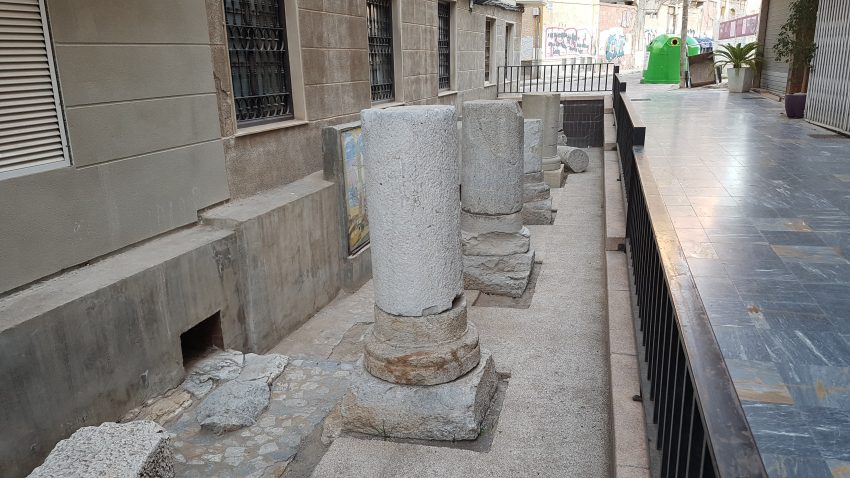
Tucked into Cartagena's historic center, the Columnata Romana is a compact set of Roman-era remains embedded right into the modern streetscape. You'll find it on Calle Morería Baja, where fragments of a porticoed street and stone paving hint at the scale and sophistication of ancient Carthago Nova.
This is the kind of stop that shines on a self-guided walking tour: you can drift from landmark to landmark, then suddenly “trip over” two-thousand-year-old urban planning. The best way to see it is to slow down, look for the columns and paving details, and imagine the covered walkway that once lined this route.
Table of Contents
- History and Significance of the Columnata Romana
- Things to See and Do in the Columnata Romana
- How to Get to the Columnata Romana
- Practical Tips on Visiting the Columnata Romana
- Where to Stay Close to the Columnata Romana
- Is the Columnata Romana Worth Visiting?
- For Different Travelers
- FAQs for Visiting Columnata Romana
- Nearby Attractions to the Columnata Romana
History and Significance of the Columnata Romana
The Columnata Romana preserves part of a Roman porticoed street, a type of covered pedestrian corridor that helped organize movement through busy civic and commercial zones. In Cartagena (ancient Carthago Nova), these streets connected key areas of the city, including the port district, and formed the backbone of daily life.
What makes this spot special is how “street-level” the history feels. Instead of being behind museum walls, the remains sit in the open urban fabric, reinforcing Cartagena’s reputation as a city where archaeology regularly appears during public works and restoration.
Look closely at the stone paving: the worn surface and layout help convey how traffic and transport once moved through the city. Even if you’re not a specialist, the site offers an immediate, tactile sense of Roman infrastructure and the rhythm of an ancient Mediterranean port city.
Things to See and Do in the Columnata Romana
Start by locating the aligned column bases and the surviving stretch of paving that marks the old street line. The best “activity” here is simply observation: step to the side, let foot traffic pass, and take a minute to read the space like an archaeologist-what’s original, what’s been stabilized, and how the modern street wraps around it.
Because it's small, it pairs perfectly with a broader old-town loop. Use it as a connective stop between bigger-ticket sites like the Roman Theatre Museum area and the harborfront, or as a quick detour when you're exploring the lanes around Calle Mayor.
For photography, the most rewarding angles are low and slightly diagonal, so the stones and column line create depth. If you visit early or near sunset, the softer light helps the textures stand out and makes the scene feel less like “a corner you might miss” and more like a deliberate archaeological window.
How to Get to the Columnata Romana
The nearest airports are Región de Murcia International Airport (RMU) and Alicante-Elche Airport (ALC), both of which connect you to the Murcia region and onward to Cartagena. For the best deals and a seamless booking experience, check out these flights to Cartagena on Booking.com.
If you're arriving by rail, Cartagena's train station links with regional services (often via Murcia), and from there you can walk, taxi, or take a local bus into the historic center. Train schedules and bookings can be found on Omio.
Driving is straightforward for reaching Cartagena, but the old town streets are narrow and parking is limited; aim for public car parks on the edge of the center and walk in. If you are looking to rent a car in Spain I recommend having a look at Discover Cars, first, as they compare prices and review multiple car rental agencies for you.
Practical Tips on Visiting the Columnata Romana
- Entrance fee: Free
- Opening hours: 24 Hours.
- Best time to visit: Go in the morning for quieter lanes and easier photos, or in late afternoon when the light brings out the stone textures.
- How long to spend: Plan 10-20 minutes on-site, or longer if you’re pairing it with a slow old-town stroll and photo stops.
- Accessibility: The site is at street level, but the surrounding lanes can be tight and may have uneven paving typical of historic centers.
- Facilities: There are no dedicated facilities at the remains themselves; cafés, restrooms, and services are best found along the main shopping streets nearby.
Where to Stay Close to the Columnata Romana
Base yourself in Cartagena's historic center for the easiest walking access to the Columnata Romana and the city's main Roman-era sights.
Sercotel Alfonso XIII A reliable, comfortable option with an easy walk into the old town; great if you want a classic full-service hotel feel.
Hotel Cartagena Puerto Well-placed for combining the historic center with the waterfront; ideal if you like being close to harbor walks and transport.
NH Campo Cartagena A practical choice with modern rooms and a calmer vibe; good for travelers who prioritize quiet nights and straightforward logistics.
Hotel Los Habaneros A solid mid-range base that’s convenient for walking and quick taxi rides; good value for short stays.
B&B Hotel Cartagena Cartagonova A budget-friendly, no-fuss option close to the action; great if you plan to spend most of your time out exploring.
Is the Columnata Romana Worth Visiting?
Yes-especially if you enjoy history that's woven into everyday city life. It's not a “plan your whole day around it” attraction, but it's absolutely worth a purposeful detour because it adds depth to a Cartagena walk and helps you visualize how Carthago Nova functioned as a Roman city.
Honest Pivot: If you prefer big, curated sites with signage, ticketing, and a clear visitor route, this may feel too small and easy to overlook. In that case, prioritize the Roman Theatre Museum and other larger archaeological stops, and treat the Columnata Romana as a bonus if you happen to pass nearby.
What Other Travellers Say...

Reviews are very positive overall, with visitors highlighting the thrill of encountering Roman history right underfoot in the old town. Many mention the ancient porticoed-street remains and stone paving details as the most interesting features, and several appreciate how it forms part of a “museum in the streets” feel across Cartagena. The main drawback is that it's small and located on a narrow lane, so it can be easy to miss without a map or a deliberate detour.


For Different Travelers
The Columnata Romana works best as a flexible, low-commitment stop that enriches a broader itinerary. It's quick to see, easy to combine with other landmarks, and satisfying if you like noticing details rather than following a fixed route.
Families with Kids
Kids who like “treasure hunt” moments may enjoy the challenge of spotting the remains in a real street and imagining carts and covered walkways. Keep it short and pair it with a nearby bigger site so the day still feels varied.
Because there are no on-site exhibits, it helps to bring a simple story: “This was a Roman street, and people walked under a covered portico right here.” A quick photo challenge (find the oldest-looking stone, best texture shot) can keep attention high.
Couples & Romantic Getaways
For couples, this is a charming, quiet-feeling slice of history that fits naturally into a hand-in-hand wander through the old town. It’s a nice pause between cafés, viewpoints, and the more dramatic Roman monuments.
Visit in softer light and treat it as part of a slow itinerary: a short stop, a few photos, then continue to a scenic harbor walk or a sunset viewpoint nearby.
Budget Travelers
This is an easy win for budget travelers because it’s a meaningful historical stop without needing to build your day around paid entry. It also sits in a walkable area where you can string together multiple sights on foot.
Use it as a connector between free viewpoints, street life, and one paid “anchor” attraction you really care about. That approach keeps costs down while still delivering a history-rich day.
History Buffs
History lovers will appreciate how this site illustrates everyday Roman urbanism-streets, movement, and infrastructure rather than just grand monuments. It’s a small piece, but it complements Cartagena’s larger Roman sites by filling in the “in-between” spaces.
To get more from it, visit after seeing the Roman Theatre Museum so you have context for the city's scale and importance. Then the Columnata Romana reads less like isolated stones and more like part of a coherent ancient city plan.
FAQs for Visiting Columnata Romana
Getting There
Tickets & Entry
Visiting Experience
Tours, Context & Itineraries
Photography
Accessibility & Facilities
Food & Breaks Nearby
Safety & Timing
Nearby Attractions to the Columnata Romana
- Roman Theatre Museum: Cartagena's flagship Roman site, combining museum galleries with access to the restored theatre.
- Castillo de la Concepción: A hilltop castle and viewpoint that gives you a clear sense of the city's strategic geography.
- Muralla Púnica (Punic Wall): A key archaeological stop that highlights Cartagena's pre-Roman layers.
- Calle Mayor: The city's main historic street for architecture spotting, shopping, and an easy stroll.
- Cartagena Harbourfront: A scenic waterfront walk with viewpoints and a relaxed atmosphere for breaks between sights.
The Columnata Romana appears in our Complete Guide to Visiting Cartagena!

Moira & Andy
Hey! We're Moira & Andy. From hiking the Camino to trips around Europe in Bert our campervan — we've been traveling together since retirement in 2020!
This website uses affiliate links which may earn a commission at no additional cost to you!
Planning Your Visit
24 Hours.
Free
Nearby Attractions
- Calle Mayor (0.3) km
Area and Street - Molinete Roman Forum Museum (0.3) km
Historic Site, Museum and Roman Site - Augusteum (0.4) km
Historic Site, Museum and Roman Site - Ayuntamiento Cartagena (0.4) km
Attraction, Historic Building and Town Hall - Old Cathedral of Cartagena (0.4) km
Cathedral, Historic Site and Ruins - Museo del Teatro Romano de Cartagena (0.5) km
Museum, Roman Site and Theatre - House of Fortune (0.5) km
Historic Site, Museum and Roman Site - Teatro Romano de Cartagena (0.5) km
Museum, Roman Site and Theatre - Castillo de la Concepción (0.5) km
Castle, Museum and Viewing Point - Naval Museum Cartagena (0.5) km
Museum