City of the Arts and Sciences, Valencia
Aquarium, Attraction and Museum in Valencia
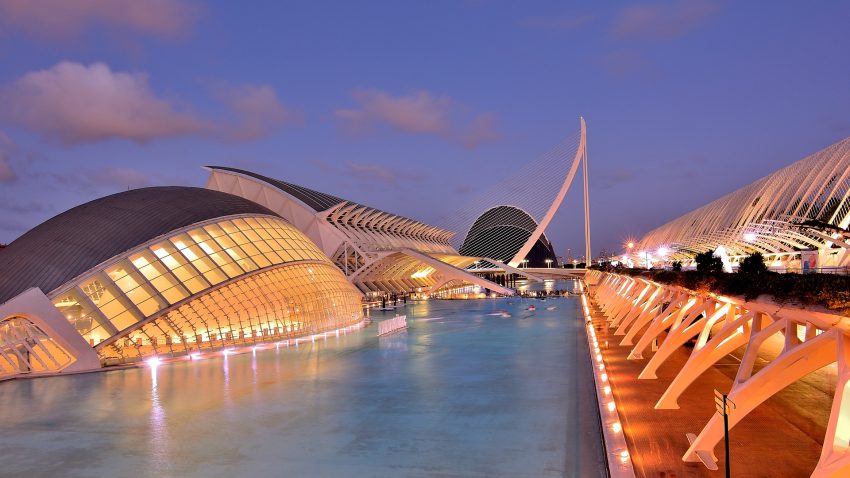
Valencia's City of the Arts and Sciences (Ciutat de les Arts i les Ciències) is the city's most futuristic landmark: a gleaming complex of white, sculptural buildings set among reflecting pools in the former Turia riverbed gardens. It's part museum district, part architectural spectacle, and part family-friendly day out—where you can pair hands-on science with an IMAX-style dome show and one of Europe's standout aquariums.
Even if you don't go inside every venue, it's worth visiting on a walking tour for the views alone: stroll the bridges and promenades, circle the water features at golden hour, and pick your best photo angles from the Umbracle's elevated walkway and the long, open plazas between buildings.
Table of Contents
- History and Significance of the City of the Arts and Sciences
- Things to See and Do in the City of the Arts and Sciences
- How to Get to the City of the Arts and Sciences
- Practical Tips on Visiting the City of the Arts and Sciences
- Where to Stay Close to the City of the Arts and Sciences
- Is the City of the Arts and Sciences Worth Visiting?
- For Different Travelers
- FAQs for Visiting City of the Arts and Sciences
- Nearby Attractions to the City of the Arts and Sciences
History and Significance of the City of the Arts and Sciences
The City of the Arts and Sciences was conceived as a bold, modern cultural corridor for Valencia, transforming the old Turia riverbed into a destination that blends leisure, learning, and design. The setting is part of what makes it special: what was once a river is now a linear park, and the complex sits like a futuristic “city within the city” along that green spine.
Architecturally, it's a signature work of late-20th/early-21st-century Valencia, defined by dramatic curves, bright white surfaces, and mirror-like pools that amplify the scale of the buildings. Even travelers who aren't “museum people” often come for the atmosphere—especially at sunrise or after dark, when the lighting and reflections make the whole area feel cinematic.
Culturally, the complex matters because it concentrates multiple big-ticket experiences in one walkable zone: science exhibitions, immersive screenings, major performances, and marine life conservation and education. It's a place where Valencia signals its modern identity as clearly as the Old Town signals its historic one.
Things to See and Do in the City of the Arts and Sciences
Start with the exteriors: the long water basins, footbridges, and open plazas are part of the experience, and you can easily spend an hour just wandering and photographing the architecture. The Umbracle (a landscaped promenade with arches and palms) is one of the best spots for a higher, more panoramic look across the complex.
For indoor highlights, the Museu de les Ciències is geared toward interactive learning, with exhibits that work especially well for families and curious adults who like hands-on displays. The Hemisfèric adds a “wow” factor with dome screenings and planetarium-style shows—great for a break from the midday sun.
If you're choosing just one ticketed venue, many visitors prioritize the Oceanogràfic, the aquarium area of the wider complex, for its large-scale habitats and full half-day potential. If you're short on time, consider a simple strategy: do a full exterior loop, then pick one indoor venue that matches your interests rather than trying to do everything at once.
How to Get to the City of the Arts and Sciences
Valencia Airport (VLC) is the closest airport for most travelers, with Alicante–Elche Airport (ALC) as a useful alternative if you're combining cities on a longer Spain itinerary. For the best deals and a seamless booking experience, check out these flights to Valencia on Booking.com.
Valencia is well connected by rail, and arriving at the city's main stations makes it easy to continue onward by taxi, bus, or a pleasant walk through central neighborhoods toward the Turia gardens.Train schedules and bookings can be found on Omio.
By car, it’s straightforward to reach the complex via Valencia’s main urban routes, and on-site parking is available in the area for those doing a day trip from the coast or nearby towns.If you are looking to rent a car in Spain I recommend having a look at Discover Cars, first, as they compare prices and review multiple car rental agencies for you.
Practical Tips on Visiting the City of the Arts and Sciences
- Official website: https://cac.es/
- Entrance fee: Outdoor areas: free. Paid entry applies to individual venues and combined tickets; check official website.
- Opening hours: Daily: 10:00 onwards (closing times vary by season and venue).
- Best time to visit: Go early for softer light and fewer crowds, or come near sunset for the best reflections and photos. If you’re visiting in summer, plan indoor venues for the hottest hours.
- How long to spend: For exteriors only, 1–2 hours is enough. For one or two venues plus a relaxed walk, plan 4–7 hours.
- Accessibility: The complex is largely flat and spacious outdoors, with wide paths that are generally easy for strollers and wheelchairs. For specific venue access and seating in screenings, check the venue details before you go.
- Facilities: You’ll find restrooms and food options within the main venues, plus plenty of open space for breaks outdoors. Bring water and sun protection—there’s a lot of exposed walking between buildings.
Where to Stay Close to the City of the Arts and Sciences
For most visitors, the best base is central Valencia near the Old Town or Ruzafa, so you can balance historic sights, dining, and easy transport to the complex.
If you want a polished, classic stay with strong service and a central address, choose a landmark hotel that makes it easy to split your time between the cathedral area and modern Valencia. The Westin Valencia
For a stylish, design-forward option that's convenient for both the City of the Arts and Sciences and the beach direction, pick a modern hotel with a sleek, contemporary feel. Barceló Valencia
If you like boutique character and being able to walk to many of Valencia’s headline sights, a well-located Old Town property is ideal for early mornings and late-night tapas. Caro Hotel
For a dependable, comfortable mid-range stay near parks and museums, look for a hotel that’s practical for families and travelers who want a quieter night’s sleep. NH Valencia Las Artes
If you want a contemporary base with easy access to both shopping and transport links, a modern central hotel is a smart pick for short stays and weekend breaks. SH Valencia Palace
Is the City of the Arts and Sciences Worth Visiting?
Yes—especially if you enjoy bold architecture, big “modern city” photo spots, or you're traveling with kids and want an easy, all-in-one day of science, shows, and sea life. Even a quick exterior walk delivers a memorable Valencia moment, and the complex is one of the best places in the city to feel the contrast between historic Valencia and its contemporary side.
Honest Pivot: If you’re expecting a dense, artifact-heavy museum experience, you may find parts of the indoor exhibits lighter than hoped, and the scale of the site can feel like a lot of walking for what you get. In that case, focus on the exteriors (free to roam) and choose just one paid venue that truly matches your interests.
What Other Travellers Say...

Travelers overwhelmingly describe the City of the Arts and Sciences as a must-see for its striking, futuristic architecture and photo-worthy setting, with many calling it a bucket-list stop in Valencia. Common highlights include the dramatic buildings and reflections, a mix of cultural and science-focused spaces, and kid-friendly elements that keep families engaged. A recurring downside is that some adults feel certain indoor exhibits can seem sparse or less substantial than expected, so choosing venues carefully (or focusing on the exteriors) helps set expectations.


For Different Travelers
The City of the Arts and Sciences can be tailored to your pace: treat it as a free architectural stroll, a single-venue visit, or a full-day “complex pass” experience. The key is deciding whether your priority is photos, hands-on exhibits, or a big-ticket aquarium day.
Families with Kids
This is one of Valencia’s easiest wins for families because there’s space to move, plenty to look at, and multiple indoor options if the weather turns. Kids who like to touch, try, and experiment tend to do best in the science-focused areas.
Plan your day with breaks: do an outdoor loop first, then a venue, then snacks, then another venue if energy allows. If you’re traveling with very young children, prioritize one main attraction and keep the rest flexible.
Couples & Romantic Getaways
For couples, the complex shines as a scenic walk—especially at golden hour when the pools reflect the buildings and the whole place feels like a film set. It’s a great “slow travel” stop between the Old Town and a dinner reservation.
If you want a shared activity beyond photos, pick a Hemisfèric show for a relaxed, air-conditioned break, then linger outside for nighttime views. The wide promenades make it easy to find quieter corners even on busy days.
Budget Travelers
You can get a lot out of the City of the Arts and Sciences without paying for multiple tickets: the outdoor spaces are the main visual payoff. Bring snacks and water, and treat it like a self-guided architecture walk.
If you do pay for one thing, choose the venue that gives you the most time value for your interests (often the aquarium for a half-day, or a single museum ticket if you prefer shorter visits). Booking ahead can help you compare options and avoid impulse purchases on-site.
FAQs for Visiting City of the Arts and Sciences
Getting There
Tickets & Entry
Visiting Experience
Tours, Context & Itineraries
Photography
Accessibility & Facilities
Food & Breaks Nearby
Safety & Timing
Nearby Attractions to the City of the Arts and Sciences
- Turia Gardens (Jardín del Turia): A long, green park in the former riverbed that's perfect for walking or cycling to and from the complex.
- Gulliver Park (Parc Gulliver): A playful, family-favorite park with a giant slide sculpture, great for kids after museum time.
- Valencia Old Town (Ciutat Vella): The historic core for cathedrals, plazas, tapas, and a totally different atmosphere from the modern complex.
- Ruzafa (Russafa): Valencia's lively dining and nightlife neighborhood, ideal for post-visit drinks or dinner.
- Malvarrosa Beach: A straightforward extension to a Valencia day—pair modern architecture with a seaside stroll and paella.
The City of the Arts and Sciences appears in our Complete Guide to Visiting Valencia!

Moira & Andy
Hey! We're Moira & Andy. From hiking the Camino to trips around Europe in Bert our campervan — we've been traveling together since retirement in 2020!
This website uses affiliate links which may earn a commission at no additional cost to you!
Planning Your Visit
Daily: 10:00 onwards (closing times vary by season and venue).
Outdoor areas: free. Paid entry applies to individual venues and combined tickets; check official website.
Nearby Attractions
- Museu Faller de Valencia (0.2) km
Attraction and Museum - L'Hemisfèric Building (0.4) km
Arts Venue, Attraction and Notable Building - Gulliver Park (0.5) km
Attraction and Park - L'Umbracle Sculpture Garden (0.5) km
Attraction, Gardens and Sculpture - Prince Philip Science Museum (0.5) km
Museum - Assut de l'Or Bridge (0.8) km
Bridge - L'Àgora (0.8) km
Arts Venue, Museum and Notable Building - L'Oceanogràfic (1.1) km
Aquarium and Attraction - Mercadillo de Ruzafa (1.3) km
Bazaar and Market - Jardines de Ayora (1.4) km
Attraction, Gardens and Park