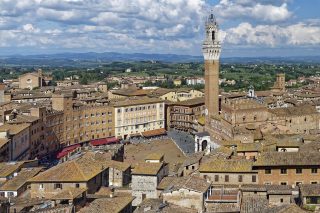
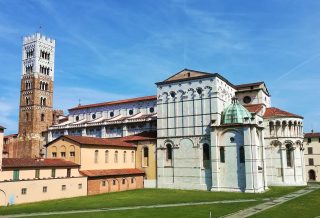
Church and Baptistery of Santi Giovanni e Reparata, Lucca
Church and Museum in Lucca
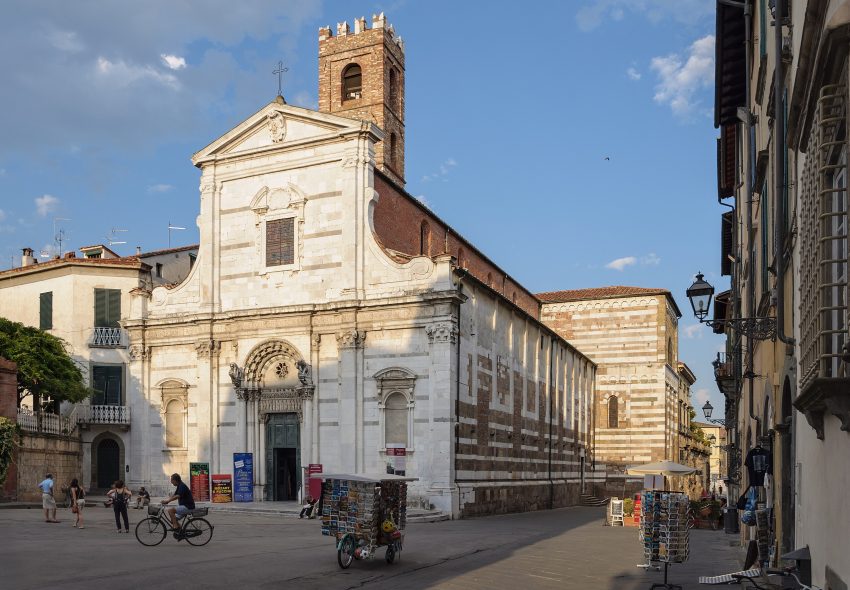
Tucked just a short stroll from Lucca's cathedral, the Church and Baptistery of Santi Giovanni e Reparata hide far more than their modest exterior suggests. What looks at first like a Romanesque church opens up into a museum, a former cathedral, and one of the city's richest archaeological sites, with remains stretching from a Roman domus to medieval structures. With a single ticket, you step through a grand portal into a layered story of Lucca's past, where each level-both literally and figuratively-reveals another chapter.
Inside, the Romanesque basilica now serves as both a sacred space and a cultural venue, with medieval volumes, frescoes, and sacred furnishings from the seventeenth century onwards displayed in a way that feels intimate rather than overwhelming. The adjacent Baptistery, with its surviving frescoes and monumental late-14th-century vault, mirrors the church's evolution, while the archaeological walkways below take you right down to a 2nd-century BC Roman house. It's a place where you can stand on metal walkways above mosaic floors, then look up to Baroque chapels-all in a single visit, making it a highlight of any walking tour of Lucca.
Table of Contents
- History and Significance of Church and Baptistery of Santi Giovanni e Reparata
- Things to See and Do in Church and Baptistery of Santi Giovanni e Reparata
- How to Get to Church and Baptistery of Santi Giovanni e Reparata
- Practical Tips on Visiting Church and Baptistery of Santi Giovanni e Reparata
- Where to Stay close to Church and Baptistery of Santi Giovanni e Reparata
- Is Church and Baptistery of Santi Giovanni e Reparata Worth Visiting?
- FAQs for Visiting Church and Baptistery of Santi Giovanni e Reparata
- Nearby Attractions to Church and Baptistery of Santi Giovanni e Reparata”
History and Significance of Church and Baptistery of Santi Giovanni e Reparata
The complex of Santi Giovanni e Reparata is one of the most important historical sites in Lucca, not only because of its age, but because it preserves an almost continuous record of the city's evolution from Roman times to the present. Extensive excavations and restorations, carried out from the late 1970s through the 1990s, transformed what was once simply a church into a full archaeological and museum complex. The result is a carefully interpreted space where visitors can literally walk above the city's past.
The Romanesque basilica you enter today stands on the site of Lucca’s earlier cathedral, dedicated to Santa Reparata. Over the centuries, the building was rebuilt and modified, with its façade reconstructed in 1622; only one part of that façade survives intact today, greeting you as you step through the portal. Inside, the church reflects layers of devotion and decoration: medieval elements coexist with frescoes and sacred furnishings added in later centuries, especially after the seventeenth century, when tastes and liturgical needs changed.
The Baptistery, closely tied to the church both architecturally and liturgically, has evolved in parallel. Its monumental late-14th-century vault and surviving frescoes speak to the importance of baptism in community life and to the artistic ambitions of the patrons who commissioned its decoration. Below both structures, the foundations reveal a stratified history of building and rebuilding-from Roman domestic architecture to late antique and medieval ecclesiastical phases-making the complex one of the must-see places in Lucca for anyone interested in how cities grow over time.
Things to See and Do in Church and Baptistery of Santi Giovanni e Reparata
Start your visit in the Romanesque basilica, entering through the grand portal and pausing to notice the last intact vestige of the 1622 façade. Inside, the space is calm and quietly atmospheric, used today as both a museum and a venue for cultural events. Display cases and installations present medieval volumes, sacred furnishings, and fresco fragments, allowing you to see up close details that often lie high on church walls elsewhere. This blend of devotional space and exhibition makes it one of the top sights in Lucca if you enjoy art and history presented in a manageable, human-scale setting.
From there, move into the Baptistery, where the contrast between modern furnishings and historic fabric is striking. The surviving frescoes and the grand late-14th-century vault give you a sense of how important baptism once was as a public ritual, while the building’s layout shows how closely linked it is to the main church. Within the complex, don’t miss the Chapel of Sant’Ignazio, a Baroque gem by Domenico Martinelli dating from the late seventeenth century, where rich decoration and dramatic forms encapsulate an entirely different artistic mood. Nearby, a Roman sarcophagus from the 2nd century AD anchors the space in an even deeper antiquity.
The real revelation, however, lies beneath your feet. Follow the metal walkways into the archaeological area under the church and Baptistery, where the remains of earlier structures are clearly visible. Here, you can see the stratigraphic succession of buildings associated with the old cathedral of Santa Reparata and its Baptistery, as well as the oldest layer: a late-Republican Roman domus from the 2nd century BC, with portions of mosaic flooring still visible, particularly in the area beneath the Baptistery. This underground route offers a vivid, three-dimensional lesson in urban archaeology and makes the complex one of the things to do in Lucca that genuinely changes how you see the city above ground.
How to Get to Church and Baptistery of Santi Giovanni e Reparata
The Church and Baptistery of Santi Giovanni e Reparata are located in Lucca's historic centre, very close to the Cathedral of San Martino and within the line of the Renaissance walls. Once you're inside the city walls, it's an easy walk from the main squares and streets: simply head toward the cathedral district, and you'll find the complex signposted and nestled among the surrounding historic buildings.
If you are arriving by air, the most convenient airports are Pisa International Airport and Florence Airport, both of which offer frequent connections to Tuscany and beyond. For the best deals and a seamless booking experience, check out these flights to Lucca on Booking.com. From there, you can travel on to Lucca and walk from your accommodation or the city gates to the complex.
Lucca's train station lies just outside the southern side of the walls, near Porta San Pietro, and is linked by regular regional trains to Pisa, Florence, and other Tuscan towns.Use Omnio to easily compare schedules, book train tickets, and find the best prices all in one place for a hassle-free journey across Italy. From the station, walk through the gate and follow signs toward the cathedral; the Church and Baptistery of Santi Giovanni e Reparata are only a few minutes' walk from the duomo, making them very easy to reach on foot.
If you are travelling by car, Lucca is accessible via the A11 motorway and local roads, but the historic centre is a limited traffic zone.If you are looking to rent a car in Italy I recommend having a look at Discover Cars, first, as they compare prices and review multiple car rental agencies for you. Park in one of the car parks outside or just inside the walls and enjoy the short walk through the old streets to the cathedral district, where the complex is clearly signposted and close to other major sights.
Practical Tips on Visiting Church and Baptistery of Santi Giovanni e Reparata
- Suggested tips: Wear comfortable shoes-the metal walkways and archaeological areas involve some steps and uneven surfaces, and you’ll want to move slowly to take everything in.
- Best time to visit: Late morning or mid-afternoon are ideal for combining a visit here with the nearby cathedral; quieter shoulder-season days can make the underground areas feel especially atmospheric.
- Entrance fee: Church of Santi Giovanni e Reparata Church + Archaeological area + Baptistery + bell tower of San Giovanni Full price: €4.00
- Opening hours: Monday - Sunday: 10:00 - 18:00
- Official website: https://www.museocattedralelucca.it/san-giovanni-reparata/
- How long to spend: Plan on 60-90 minutes if you want to explore the church, Baptistery, and archaeological walkways carefully without rushing.
- Accessibility: The upper church and Baptistery are relatively easy to access, but the underground archaeological areas include stairs and may not be suitable for all visitors with reduced mobility.
- Facilities: Basic visitor facilities and restrooms are usually available nearby in the cathedral area; cafés and shops are only a short walk away in the surrounding streets.
- Photography tip: The underground spaces can be dim, so a camera that performs well in low light is useful; avoid flash where possible to preserve the atmosphere and respect conservation rules.
- Guided tours: When available, guided visits help explain the archaeological layers and historical phases, making sense of what you see beneath the floors of the church and Baptistery.
- Nearby food options: After your visit, you’ll find plenty of cafés and trattorie in the streets around the cathedral where you can sit down for a coffee, gelato, or a leisurely meal.
Where to Stay close to Church and Baptistery of Santi Giovanni e Reparata
Staying near the cathedral district puts the Church and Baptistery of Santi Giovanni e Reparata, as well as many of Lucca's key sights, right on your doorstep. A welcoming option just a short walk away is Albergo San Martino, which offers a cosy base close to both the duomo and this archaeological complex. For travellers who prefer a slightly quieter setting while remaining central, Hotel Ilaria provides easy access across the historic centre, making it simple to reach Santi Giovanni e Reparata on foot. If you’d like to immerse yourself in a historic building, Palazzo Alexander combines period charm with a central location, ideal for exploring the city’s churches, museums, and walls.
Is Church and Baptistery of Santi Giovanni e Reparata Worth Visiting?
The Church and Baptistery of Santi Giovanni e Reparata are absolutely worth visiting, especially if you're interested in how a city's history can be read through its stones. Few places in Lucca offer such a clear, tangible sequence from Roman domus to medieval cathedral and beyond, all within a single, compact complex. The combination of Roman mosaics, early Christian and medieval structures, Baroque chapels, and museum displays makes this site unusually rich, without feeling overwhelming. For many visitors, it becomes one of the best places to visit in Lucca precisely because it ties together art, archaeology, and architecture in such an accessible and memorable way.
What Other Travellers Say...

Chiesa dei Santi Giovanni e Reparata on Piazza S. Giovanni in Lucca is an imposing church near the cathedral, noted for a large brick cupola, bright acoustics and an atmospheric interior that hosts short Puccini-inspired concerts popular with visitors; performances are concise and accessible for newcomers to opera, the singers and accompanists are praised, and programs offer an optional libretto in Italian and English for a small extra fee. Visitors can climb its tower and explore underground Roman-era excavations and early worship levels, and a combined ticket covering the cathedral, museum and church (valid for a week) lets you split visits and climb the church and cathedral towers on different days.


FAQs for Visiting Church and Baptistery of Santi Giovanni e Reparata
Nearby Attractions to Church and Baptistery of Santi Giovanni e Reparata”
- Cathedral of San Martino - Lucca's duomo, home to the Volto Santo and the exquisite tomb of Ilaria del Carretto, just a few steps away.
- Piazza Napoleone - A broad, tree-framed square dominated by Palazzo Ducale, often used for festivals and concerts in summer.
- Palazzo Ducale - Historic seat of Lucca's rulers, now hosting exhibitions and administrative offices, overlooking Piazza Napoleone.
- Via Fillungo - The city's main shopping street, lined with medieval houses, palazzi, boutiques, and cafés, a short walk through the old town.
- Basilica of San Frediano - Romanesque church famous for its golden mosaic façade and impressive interior chapels, easily reached on foot from the cathedral area.
The Church and Baptistery of Santi Giovanni e Reparata appears in our Complete Guide to Visiting Lucca!

Moira & Andy
Hey! We're Moira & Andy. From hiking the Camino to trips around Europe in Bert our campervan — we've been traveling together since retirement in 2020!
This website uses affiliate links which may earn a commission at no additional cost to you!
Planning Your Visit
Monday – Sunday: 10:00 – 18:00
Church of Santi Giovanni e Reparata Church + Archaeological area + Baptistery + bell tower of San Giovanni Full price: €4.00
Nearby Attractions
- Teatro del Giglio (0.1) km
Theatre - Cathedral of San Martino (0.1) km
Cathedral - Piazza Napoleone (0.2) km
Square - Palazzo Ducale in Lucca (0.2) km
Historic Building and Museum - Torre delle Ore (0.2) km
Tower - Church of St Maria della Rosa (0.2) km
Church - San Michele in Foro (0.3) km
Basilica - Risorgimento Museum in Lucca (0.3) km
Museum - Puccini Museum (0.3) km
Historic Building and Museum - Guinigi Tower (0.4) km
Tower