Chiostro di San Francesco, Sorrento
Church in Sorrento
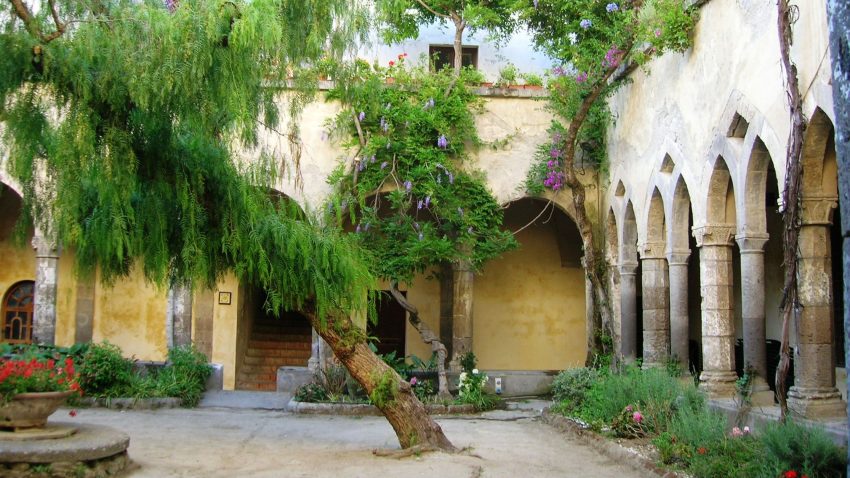
Tucked beside Sorrento's Villa Comunale gardens, the Chiostro di San Francesco feels like a secret pocket of quiet just a few steps from the town's busiest lanes. The moment you pass through, the sound drops away and you're surrounded by a graceful square of arches and columns, with greenery softening the stone and the Gulf of Naples shimmering close by.
It's an easy stop to weave into a walking tour of Sorrento, and genuinely one of the top sights in Sorrento for travellers who love places that are beautiful without trying too hard. Pair it with the adjacent Church of San Francesco for a quick dose of local history, then let yourself linger in the cloister's calm before heading back into the buzz of the historic centre.
Table of Contents
- History and Significance of the Chiostro di San Francesco
- Things to See and Do in the Chiostro di San Francesco
- How to Get to the Chiostro di San Francesco
- Practical Tips on Visiting the Chiostro di San Francesco
- Where to Stay Close to the Chiostro di San Francesco
- Is the Chiostro di San Francesco Worth Visiting?
- For Different Travelers
- FAQs for Visiting Chiostro di San Francesco
- Nearby Attractions to the Chiostro di San Francesco
History and Significance of the Chiostro di San Francesco
The complex is rooted in Sorrento’s early Christian history, beginning as an oratory tradition linked to Saint Antonino and dedicated to Saint Martin of Tours, before the Franciscans reshaped the site over the centuries. By the 14th century, the Franciscans rebuilt key elements, giving the church its later character while the cloister developed into the layered, hybrid space visitors see today.
What makes the cloister especially fascinating is its mix of architectural languages. You’ll notice different arch shapes and column styles within the same courtyard, a visual record of how the site was adapted rather than rebuilt from scratch in a single era. In places, older fragments and reused elements appear as if the past has been quietly folded into the present.
In modern Sorrento, the cloister is also a living civic space. It regularly hosts small art exhibitions and musical events, and it's famously popular for weddings, which adds a contemporary rhythm to a place that otherwise feels timeless and contemplative.
Things to See and Do in the Chiostro di San Francesco
Start in the cloister itself, walking slowly around the arcades to appreciate how every side feels slightly different. The crossed tuff arches on some sides contrast with rounded arches and octagonal columns on others, and that subtle irregularity is exactly what gives the space its charm.
Then step into the Church of San Francesco next door for a quick interior look. The single nave and side chapels are simple but atmospheric, and the church’s calm, white-toned character complements the cloister perfectly, especially if you’re visiting during quieter hours.
Finally, treat the visit as part of a small, satisfying mini-route. From the cloister, it's an easy move into the Villa Comunale gardens for sea views, or back into the old town for cafés-meaning you can enjoy the calm without losing momentum in your day.
How to Get to the Chiostro di San Francesco
The closest major airport is Naples International Airport (NAP), with Rome Fiumicino (FCO) also used if you are combining Sorrento with a longer Italy itinerary. For the best deals and a seamless booking experience, check out these flights to Sorrento on Booking.com.
From Naples, the most common rail option is the Circumvesuviana line to Sorrento, which puts you within an easy walk or short taxi ride of the historic centre. Use Omnio to easily compare schedules, book train tickets, and find the best prices all in one place for a hassle-free journey across Italy.
If you are travelling by car, plan to park once in Sorrento and walk, because the streets around the old town are tight, pedestrian-heavy, and not designed for stress-free driving. If you are looking to rent a car in Italy I recommend having a look at Discover Cars, first, as they compare prices and review multiple car rental agencies for you.
Practical Tips on Visiting the Chiostro di San Francesco
- Entrance fee: Free entry (some exhibitions may charge a small fee).
- Opening hours: Daily: 07:00–19:00.
- Best time to visit: Visit early in the morning for the quietest atmosphere, or late afternoon when the light softens and the courtyard feels especially photogenic.
- How long to spend: 15-30 minutes is perfect for the cloister and church, or up to an hour if you want to linger and combine it with the gardens next door.
- Accessibility: The courtyard is generally manageable, but expect historic surfaces and occasional uneven thresholds around the complex.
- Facilities: There are plenty of cafés and restrooms nearby in the historic centre, so it works best as a short, easy stop rather than a long on-site visit.
Where to Stay Close to the Chiostro di San Francesco
For a culture-heavy itinerary, base yourself in Sorrento's historic centre around Piazza Tasso so you can walk to sights, dinners, and evening strolls; if your focus is a quieter stay with easier parking and transport links, Sant'Agnello is often the most practical alternative while still being close to everything. Grand Hotel La Favorita is a strong central option when you want classic Sorrento style and easy access on foot. Bellevue Syrene suits travellers who want a more luxurious, sea-facing feel close to the viewpoints. For a comfortable, well-located base that keeps logistics simple, Hotel Continental puts you right near the gardens and the old town lanes.
Is the Chiostro di San Francesco Worth Visiting?
Yes, because it delivers something rare in a busy destination: a genuine pause. The cloister is quick to visit, free to enter most of the time, and memorable precisely because it feels like a quiet sanctuary rather than a headline attraction built around queues.
It’s also an ideal “in-between” stop that improves the flow of your day. Whether you’re moving between viewpoints, churches, or the café streets, the cloister gives you a beautiful reset without requiring a major time commitment.
What Other Travellers Say...

Chiostro di San Francesco, on Via S. Francesco in Sorrento, is a tranquil, greenery-filled cloister dating from the 14th century that now hosts concerts and other activities; visitors praise its peaceful, well preserved courtyards and covered walkways, note the adjacent Villa Comunale and excellent views toward Vesuvius, and often mention the beautiful church with a single nave and six chapels where intimate weddings commonly take place — entrance is free and exploring the quieter corner left of the main doors is recommended to escape the busy beachfront.


For Different Travelers
Families with Kids
This is a good stop for families because it’s short, calm, and visually interesting without needing lots of explanation. Kids often enjoy spotting the different columns and arches, and it’s easy to follow the visit with time in the nearby gardens for space and views.
If you’re travelling with a stroller, keep the visit flexible and be prepared for occasional uneven surfaces. It works best as a gentle break rather than a “must-do” that needs strict timing.
Couples & Romantic Getaways
For couples, the cloister is one of Sorrento’s most naturally romantic spaces, especially when it’s quiet and you can hear the ambient hush of the courtyard. It’s also an ideal place for a slow moment before sunset viewpoints, when the town begins to feel softer and more atmospheric.
If there’s a small exhibition or a live music event on, it can be a lovely low-effort highlight that feels spontaneous. Even without an event, the setting is enough to make it memorable.
Budget Travelers
Budget travellers will appreciate that the cloister is typically free and genuinely worth the stop, making it one of the easiest wins in Sorrento. Because it's central, you can also fold it into a walking day without spending on transport.
To get the most value, pair it with the Villa Comunale viewpoints and a wander through the old town lanes. That combination gives you history, atmosphere, and scenery with minimal cost.
History Buffs
History buffs will enjoy the layered identity of the complex, where early religious roots, medieval rebuilding, and later stylistic changes sit side by side. The cloister’s architectural mash-up is the point, because it shows how Sorrento’s sacred spaces evolved rather than being frozen in one era.
The adjacent church adds extra context, especially if you pay attention to the chapels and devotional details. It’s a compact visit that still feels historically textured.
FAQs for Visiting Chiostro di San Francesco
Getting There
Tickets & Entry
Visiting Experience
Tours, Context & Itineraries
Photography
Accessibility & Facilities
Food & Breaks Nearby
Safety & Timing
Nearby Attractions to the Chiostro di San Francesco
- Villa Comunale di Sorrento: A seaside garden promenade with some of the town's best Gulf of Naples viewpoints.
- Piazza Tasso: The lively central square that anchors Sorrento's café life and makes a natural starting point for exploring.
- Basilica di Sant'Antonino: A historic basilica dedicated to Sorrento's patron saint, with a calm interior and local devotion.
- Museo Correale di Terranova: A refined museum of art and decorative pieces that adds cultural depth beyond the viewpoints.
- Marina Grande: A photogenic old fishing harbour area that's perfect for a slower stroll and a seafood-focused break.
The Chiostro di San Francesco appears in our Complete Guide to Visiting Sorrento!

Moira & Andy
Hey! We're Moira & Andy. From hiking the Camino to trips around Europe in Bert our campervan — we've been traveling together since retirement in 2020!
This website uses affiliate links which may earn a commission at no additional cost to you!
Planning Your Visit
Daily: 07:00-19:00.
Free entry (some exhibitions may charge a small fee).
Nearby Attractions
- Villa Comunale Park (0.0) km
Gardens, Park and Viewing Point - Teatro Tasso (0.2) km
Arts Venue and Theatre - Piazza Sant'Antonino (0.2) km
Attraction and Square - Chiesa di Sant'Antonino (0.2) km
Church - Piazza della Vittoria (0.2) km
Square - Chiesa Del Rosario (0.2) km
Church and Religious Building - Sedile Dominova (0.2) km
Historic Building, Historic Site and Monument - Via San Cesareo (0.3) km
Area, Shop and Street - Cathedral Bell Tower (0.3) km
Cathedral, Religious Building and Tower - Piazza Tasso (0.3) km
Square