Chiesa di Santa Maria Maggiore, Assisi
Basilica, Historic Building and Historic Site in Assisi

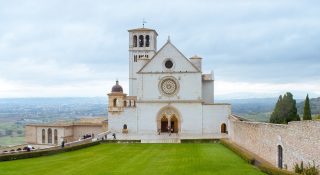
On Piazza del Vescovado, Chiesa di Santa Maria Maggiore is one of those Assisi churches that rewards curiosity. It is Romanesque in feel and human in scale, yet it sits on top of far older strata, and that “stacked” character is exactly what makes it memorable: you're not just visiting a church, you're visiting a site where Assisi has been building, worshipping, and reinterpreting itself for centuries.
It is also a landmark in the Franciscan narrative. This is where Francis was baptised, and it stands next to the episcopal world that shaped key episodes of his early years. Today, as the Santuario della Spogliazione, it continues to draw visitors who want a quieter, more intimate Assisi experience-one that connects theology, archaeology, and local history without needing the scale of the major basilicas.
Table of Contents
- History and Significance of the Chiesa di Santa Maria Maggiore
- Things to See and Do in the Chiesa di Santa Maria Maggiore
- How to Get to the Chiesa di Santa Maria Maggiore
- Practical Tips on Visiting the Chiesa di Santa Maria Maggiore
- Where to Stay Close to the Chiesa di Santa Maria Maggiore
- Is the Chiesa di Santa Maria Maggiore Worth Visiting?
- For Different Travelers
- FAQs for Visiting the Chiesa di Santa Maria Maggiore
- Nearby Attractions to the Chiesa di Santa Maria Maggiore
History and Significance of the Chiesa di Santa Maria Maggiore
The church's roots reach back to the medieval period, but its foundations speak to a much longer timeline. Beneath the Romanesque structure are earlier sacred layers: a Palaeo-Christian sanctuary and, below that, Roman remains associated with the area traditionally linked to “Domus Propertii,” giving the site an archaeological depth that is unusual for a central Assisi church.
Civically, Santa Maria Maggiore matters because it was once the city’s cathedral before that role moved to San Rufino. That change marks a shift in Assisi’s ecclesiastical geography, and it helps explain why this piazza-so close to the bishop’s sphere-keeps turning up in the story of Francis, especially in the years when he moved between family life, civic authority, and spiritual rupture.
As the Sanctuary of the Spoliation, it carries a modern devotional identity that sits naturally on top of the older church. The result is a site that feels simultaneously local and international: a quiet parish-scale interior that nevertheless draws pilgrims and visitors who are tracing Franciscan turning points through real streets and real stone.
Things to See and Do in the Chiesa di Santa Maria Maggiore
Start by taking in the setting on Piazza del Vescovado. This is one of Assisi’s most “story-rich” squares, and even before you enter the church, you can feel how the episcopal neighbourhood shaped Franciscan history: power, witness, and public gesture all belong to this part of town.
Inside, look for the fragments that hint at what was once a fully decorated medieval interior. The surviving fresco remnants and painted works don’t overwhelm the space; instead they reward slow looking, especially if you enjoy noticing how devotional art survives in partial, timeworn form rather than as pristine museum pieces.
Do not skip the crypt if it is accessible during your visit. It is the most tangible way to experience the site’s Roman underlayer-architectural fragments, reused elements, and the sense that the church is literally built as a continuation of the city’s earlier life. If you want the most structured visit, time your arrival so you can combine the church above with the archaeological layer below in the same stop.
How to Get to the Chiesa di Santa Maria Maggiore
The most convenient airports are Perugia San Francesco d'Assisi (PEG) for proximity and Rome Fiumicino (FCO) for wider international routes. For the best deals and a seamless booking experience, check out these flights to Assisi on Booking.com.
By train, arrive at Assisi station (in Santa Maria degli Angeli) and continue uphill by local bus or taxi to the historic centre, then walk to Piazza del Vescovado via Piazza del Comune and the central lanes. Use Omnio to easily compare schedules, book train tickets, and find the best prices all in one place for a hassle-free journey across Italy.
By bus, the simplest approach is to ride up to the historic centre and then walk the final stretch, since the last streets into the piazza are best done on foot in Assisi’s ZTL core.
If you are driving, use the main parking areas outside the historic centre and walk in, because access near Piazza del Vescovado is restricted and the lanes are not designed for through-traffic. If you are looking to rent a car in Italy I recommend having a look at Discover Cars, first, as they compare prices and review multiple car rental agencies for you.
Practical Tips on Visiting the Chiesa di Santa Maria Maggiore
- Entrance fee: Free.
- Opening hours: (Summer) April – October: Monday & Thursday: 08:00–19:00; Tuesday – Wednesday & Friday – Sunday: 07:00–19:00. (Winter) November – March: Daily: 08:00–19:00.
- Official website: https://www.assisisantuariospogliazione.it/
- Best time to visit: Late morning on a weekday, when the piazza is active but the interior often feels calm, or late afternoon when the light softens the Romanesque stone.
- How long to spend: 30-60 minutes for the church and a slower look at the crypt if it’s open, longer if you like reading context panels carefully.
- Accessibility: Expect steps and uneven historic paving, and note that crypt access can be more challenging than the main nave.
- Facilities: There are no extensive on-site facilities; plan rest breaks and cafés around Piazza del Comune, which is close and more practical.
Where to Stay Close to the Chiesa di Santa Maria Maggiore
For a culture-heavy itinerary, base yourself inside Assisi's historic centre near Piazza del Comune so you can reach key churches early and late without relying on transport; if your priority is easy arrivals, train connections, and day trips, stay in Santa Maria degli Angeli and treat the upper town as your daily walkable circuit.
For a central stay that puts you within easy walking distance of Piazza del Vescovado, Dei Priori Boutique Hotel is a strong option right in the historic centre. If you prefer a classic Assisi setting along the basilica-side streets while still keeping the central piazzas walkable, Fontebella Palace Hotel works well for a culture-first itinerary. For travellers who want a quieter, greener setting just outside the busiest lanes, Hotel La Terrazza RESTAURANT & SPA offers a calmer base with straightforward access into town.
Is the Chiesa di Santa Maria Maggiore Worth Visiting?
Yes, particularly if you want an Assisi stop that feels layered rather than monumental. Santa Maria Maggiore gives you Roman archaeology, a Romanesque church interior, and a piazza that sits close to the city's power-and-faith crossroads, all in one compact visit.
Honest pivot: if your time is extremely limited and you only want Assisi’s biggest headline interiors (San Francesco and Santa Chiara), you can skip this without missing the core “must-sees.” You should prioritise it if you enjoy archaeology, quieter churches, or places where the city’s timeline is visible under your feet.
What Other Travellers Say...


For Different Travelers
Families with Kids
This works best for families when you keep it concrete: a church built on top of much older Roman remains, with a “downstairs” element that feels like discovery. The piazza setting also helps-kids often engage more when the visit is part of moving through lively streets rather than another long, silent interior.
If you do the crypt, treat it as the highlight and keep the church visit shorter. The combination of stairs, uneven surfaces, and attention span makes a focused 30-minute stop more successful than trying to stretch it.
Couples & Romantic Getaways
For couples, this is one of the most satisfying “small” Assisi stops because it feels intimate and rooted in place. The piazza has a quieter elegance compared with the busiest basilica approaches, and the church's scale encourages a slower, more reflective visit.
It also pairs well with an unhurried wander through the lanes afterward. Use it as a pivot point: church and crypt, then drift toward Piazza del Comune for a café, keeping the day more about atmosphere than checklists.
Budget Travelers
Santa Maria Maggiore is excellent value because it is typically free and centrally placed, so it adds substance without adding cost or complexity. If you're building a strong Assisi day on foot, it's an efficient “depth stop” between larger sights that might otherwise dominate your schedule.
Treat it as a way to diversify your itinerary beyond the major basilicas. One compact church-with-crypt visit can make the whole day feel more varied without requiring tickets or tours.
History Buffs
History-focused travellers will get the most from this site because it collapses multiple eras into a single address: Roman remains, early Christian continuity, Romanesque structure, medieval art fragments, and later Franciscan significance tied to the episcopal quarter. It's one of the clearest examples in Assisi of how sacred places are rarely “one period” if you look closely enough.
If you enjoy reading a city through its building layers, linger in the crypt and then return upstairs to reframe what you’ve just seen. The above-and-below contrast is the point.
FAQs for Visiting the Chiesa di Santa Maria Maggiore
Getting There
Tickets & Entry
Visiting Experience
Tours, Context & Itineraries
Photography
Accessibility & Facilities
Safety & Timing
Nearby Attractions to the Chiesa di Santa Maria Maggiore
- Rocca Maggiore: The hilltop fortress with the best panoramic views, perfect for closing a day once you've covered the central churches.
- Basilica di Santa Chiara: A key Assisi basilica tied to Clare's life, with a strong devotional focus and a dramatic setting on the slope.
- Piazza del Comune and the Temple of Minerva: Assisi's civic heart, ideal for cafés and for seeing how Roman and medieval layers coexist in the open.
- Cattedrale di San Rufino: The city's cathedral, central to Assisi's religious identity and an easy walk from Piazza del Vescovado.
- Basilica di San Francesco d'Assisi: The essential Assisi complex for frescoes, pilgrimage atmosphere, and the town's most famous art.
The Chiesa di Santa Maria Maggiore appears in our Complete Guide to Visiting Assisi!

Moira & Andy
Hey! We're Moira & Andy. From hiking the Camino to trips around Europe in Bert our campervan — we've been traveling together since retirement in 2020!
This website uses affiliate links which may earn a commission at no additional cost to you!
Planning Your Visit
(Summer) April - October: Monday & Thursday: 08:00-19:00; Tuesday - Wednesday & Friday - Sunday: 07:00-19:00.
(Winter) November - March: Daily: 08:00-19:00.
Free.
Nearby Attractions
- Chiesa Nuova (0.1) km
Church - Palazzo dei Priori (0.2) km
Palace - Casa natale di San Francesco (0.2) km
Historic Site - Oratorio di San Francesco Piccolino (0.2) km
Religious Building - Piazza del Comune (0.2) km
Square - Roman Forum and Archaeological Museum (0.2) km
Roman Site - Palazzo del Capitano del Popolo (0.2) km
Palace - Temple of Minerva (0.2) km
Roman Site - Basilica di Santa Chiara (0.3) km
Basilica - Teatro Metastasio in Assisi (0.3) km
Theatre