Château Fougères, Rennes
Castle near Rennes

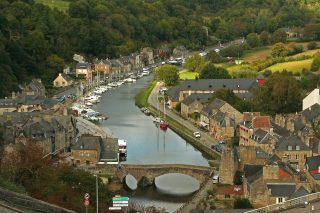
Château de Fougères is the defining landmark of Fougères: a vast medieval fortress perched on a rocky outcrop above the Nançon River, with natural moats and steep slopes doing much of the defensive work. From the moment you see its ring of towers and thick curtain walls rising from the valley, it’s clear this was built for real frontier pressure, not romantic ruin-chasing.
The castle and town feel inseparable here. The lower streets cluster beneath the fortifications in a tight medieval weave of lanes and half-timbered houses, while the higher parts of town open out into broader streets and viewpoints. It's one of the top sights in Fougères, and it naturally anchors a walking tour of Fougères because nearly every scenic route seems to lead you back to the ramparts.
Table of Contents
- History and Significance of the Château de Fougères
- Things to See and Do in the Château de Fougères
- How to Get to the Château de Fougères
- Practical Tips on Visiting the Château de Fougères
- Where to Stay Close to the Château de Fougères
- Is the Château de Fougères Worth Visiting?
- For Different Travelers
- FAQs for Visiting Château de Fougères
- Nearby Attractions to the Château de Fougères
History and Significance of the Château de Fougères
Château de Fougères began as an 11th-century stronghold and was repeatedly strengthened as Brittany's borders and allegiances shifted. Its position mattered: perched above the river and protected on three sides by natural terrain, it was a strategic defensive key in northeastern Brittany, designed to control access and deter incursions from rival powers.
The fortress you see today reflects several centuries of military evolution. Major rebuilding phases in the 12th and 15th centuries produced a layered defensive system, where towers, walls, and gate areas were adapted to changing siege tactics and new weapons. The result is a castle that reads like a timeline of medieval fortification rather than a single uniform design.
Fougères grew in the castle’s shadow, developing two complementary faces: an atmospheric lower town shaped by medieval street patterns and craftsmanship, and an upper town with later rebuilding that feels more spacious and civic. Together, they create one of Brittany’s most complete “castle town” experiences, where defensive architecture, urban life, and landscape all combine into a coherent story.
Things to See and Do in the Château de Fougères
Start with the ramparts and towers, because the scale is best understood from above. The viewpoints reveal how the castle uses the valley as a defensive ally, and they give you a strong sense of why this site mattered so much for centuries. As you walk, look for the transitions between older and later sections, where stonework and tower forms subtly change across time.
Spend time in the lower town immediately after your castle visit. The best rhythm is castle first for the big-picture drama, then down into the cobbled lanes for the human-scale atmosphere-half-timbered façades, small bridges, and the feeling of a settlement that lived with the fortress as a daily presence rather than an abstract monument.
If you want a calmer contrast, connect your route to the Public Garden that links different levels of the town. It’s a scenic “breathing space” between historic zones and a good place to slow down, especially if you’re building a half-day itinerary and want your visit to feel immersive rather than rushed.
How to Get to the Château de Fougères
For flights, the most convenient airports are Rennes-Saint-Jacques Airport and Nantes Atlantique Airport, depending on your route and onward plans. For the best deals and a seamless booking experience, check out these flights to Rennes on Booking.com. From either airport, continue to Fougères by coach, car, or a combination of regional transport connections.
If you prefer rail, travel to Rennes as the main regional hub and then connect onward to Fougères by bus, since the final stretch is typically done overland rather than by train. You can use SNCF Connect to check schedules, compare routes, and purchase tickets for National (SNCF ) and regional trains (TER). For a more streamlined experience, we recommend using Omio, which allows you to easily compare prices, schedules, and book tickets for both National and Regional travel across all of Europe, all in one place. This approach is straightforward and works well for day trips if you time your connections sensibly.
Driving is often the simplest option for flexibility, especially if you want to combine Fougères with other Brittany stops or countryside detours. If you are looking to rent a car in France I recommend having a look at Discover Cars, first, as they compare prices and review multiple car rental agencies for you.
Practical Tips on Visiting the Château de Fougères
- Entrance fee: Adults: €10
- Opening hours: June to September: Daily 10am – 7pm; May: Tues - Sun, 10am – 7pm; Oct - Apr : Tuesday - Sunday, 10h00 – 12h30 / 14h00 – 17h30
- Official website: https://chateau-fougeres.com/en/
- Best time to visit: Late spring and early autumn are ideal for comfortable walking and clearer views over the valley without peak-season crowding. In summer, aim for an earlier start so you can enjoy the ramparts before the day warms up and tour groups arrive.
- How long to spend: Plan 2-3 hours for the castle plus a relaxed wander through the lower town, which is where the visit becomes truly memorable. If you’re short on time, 90 minutes can still work if you focus on the ramparts and one loop through the streets below.
- Accessibility: Expect uneven surfaces, steps, and changes in level typical of a large medieval fortress and hillside town setting. If mobility is a concern, prioritize viewpoints that are easiest to reach and build in more rest stops rather than trying to cover every section.
- Facilities: The town center has plenty of cafés, bakeries, and practical services within easy walking distance of the castle area. Treat the visit as castle exploration plus a food break in town, rather than relying on on-site amenities alone.
Where to Stay Close to the Château de Fougères
For a culture-heavy itinerary, the best area to base yourself is the central town area near the historic core so you can walk to the castle and the lower medieval streets; if your trip is focused on day trips and transport convenience, staying nearer the main access roads and bus connections can make arrivals and departures easier.
If you want to be close enough to wander the old streets in the evening without planning logistics, choose a central stay like Best Western Hôtel des Voyageurs for easy walkability. For a practical, comfortable base with simple access to the historic center, Brit Hotel Piscine & Spa - Fougères is a good option. If you prefer a smaller, more local-feeling stay where you can step straight into the medieval atmosphere, Hôtel de Bretagne is worth considering.
Is the Château de Fougères Worth Visiting?
Yes, especially if you want a castle that feels monumental and strategic rather than purely decorative. The fortress is large enough to keep your visit varied-towers, walls, viewpoints, and shifting elevations-and the river valley setting gives it a dramatic, real-world defensive logic you can still read today.
It’s also worth it because the town completes the experience. Fougères isn’t just “a castle with a town attached”; the lower streets and hillside transitions are part of what makes the visit feel like a full medieval environment rather than a single-site stop.
What Other Travellers Say...

Château de Fougères sits on a rocky outcrop above the town and offers extensive medieval ramparts, towers to climb (access involves many steps), a museum housed in a tower, working waterwheels and sweeping views over the pretty town with its bars, restaurants and historic buildings; visitor information boards, audio guides and family-friendly interactive activities are available, parking nearby is straightforward and there’s a municipal motorhome area (noted to fill up early).


For Different Travelers
Families with Kids
This is a strong family visit because the castle has a clear “adventure” structure: towers to spot, walls to follow, and a sense of exploration that doesn’t require deep historical background. Kids often engage naturally with the idea of a fortress that used the landscape as part of its defense, especially once they see how steep the valley sides are.
To keep the day smooth, plan your route with breaks in mind. Do a focused ramparts loop first, then reward everyone with a snack stop in the lower town before continuing with a gentler wander through the streets and gardens.
Couples & Romantic Getaways
For couples, Château de Fougères works beautifully as a slow, atmospheric half-day: dramatic views from the ramparts, then a relaxed drift into the medieval lanes below. The contrast between big defensive architecture and intimate streets makes the experience feel varied without needing a packed itinerary.
The best approach is to avoid rushing. Build in time for café stops, pause at viewpoints, and let the town provide the romance-cobbled lanes, quiet corners, and that satisfying feeling of being somewhere shaped by centuries.
Budget Travelers
This is a high-value stop because a lot of the enjoyment comes from the setting and the town itself: viewpoints, street wandering, and the overall medieval atmosphere. Even if you keep spending minimal, you can still build a rich experience around walking routes and scenic pauses.
To stretch value, combine the castle visit with a self-guided loop through the lower town and the public garden rather than adding multiple paid attractions. A simple picnic-style lunch from a bakery also fits the mood and keeps costs predictable.
History Buffs
History-focused travelers will appreciate that the castle is not a single-era snapshot but a layered defensive system shaped by real border tensions. The changes across centuries are part of the interest, and the setting makes the strategic logic feel tangible rather than theoretical.
To deepen the experience, pay attention to how towers and walls respond to terrain and how the town developed around protection and trade routes. The castle becomes more compelling when you read it as a working military landscape that shaped urban life for generations.
FAQs for Visiting Château de Fougères
Getting There
Tickets & Entry
Visiting Experience
Tours, Context & Itineraries
Photography
Accessibility & Facilities
Food & Breaks Nearby
Safety & Timing
Nearby Attractions to the Château de Fougères
- Mont Saint-Michel: A world-famous day trip option that pairs well with Fougères for a two-stop historic itinerary in this part of France.
- Lower Town of Fougères: A medieval network of lanes and half-timbered houses directly beneath the fortress, perfect for atmospheric wandering.
- Jardin Public de Fougères: A landscaped garden link between town levels, ideal for a scenic breather after ramparts walking.
- Church of Saint-Léonard: A striking upper-town church with a terrace area that gives rewarding views over the town’s rooftops.
- Église Saint-Sulpice: A historic church that adds depth to a town walk and complements the fortress with a different architectural mood.
The Château Fougères appears in our Complete Guide to Visiting Rennes!

Moira & Andy
Hey! We're Moira & Andy. From hiking the Camino to trips around Europe in Bert our campervan — we've been traveling together since retirement in 2020!
This website uses affiliate links which may earn a commission at no additional cost to you!
Planning Your Visit
June to September: Daily 10am - 7pm; May: Tues – Sun, 10am - 7pm; Oct – Apr : Tuesday – Sunday, 10h00 - 12h30 / 14h00 - 17h30
Adults: €10
Nearby Attractions
- Château de Vitré (25.6) km
Castle - Château de Combourg (40.7) km
Castle - Parc du Thabor (Park of Thabor) (43.3) km
Park - Saint George Palace (43.8) km
Palace - Parlement de Bretagne (43.9) km
Historic Building - Museum of Fine Arts of Rennes (44.0) km
Museum - Place Sainte-Anne (44.0) km
Square - Lycée Émile-Zola (44.0) km
Historic Building - Couvent des Jacobins (44.0) km
Convent - Place du Champ-Jacquet (44.0) km
Square