Château et Remparts, Carcassonne
Castle, City Walls and Historic Site in Carcassonne
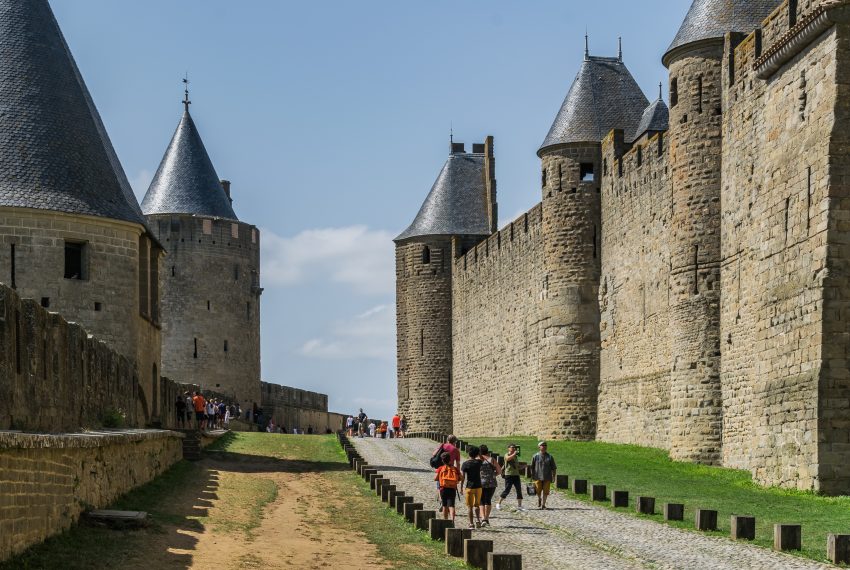
Château et Remparts (often referred to as the castle and ramparts of the Cité de Carcassonne) is the paid-entry heart of Carcassonne's famous medieval citadel: a fortified hilltop “city within a city” of towers, gates, and double walls. Inside, you'll find the castle complex and access to sections of the ramparts, where the views stretch over the modern lower town (the Bastide) and the surrounding Aude countryside.
It's an ideal anchor stop on a walking tour of the Cité: start at the main gates, wander the lanes early, then time your castle-and-walls entry for when the light is best and crowds are thinner. For the best viewpoints, prioritize the wall-walk sections that look out over the outer defenses and the landscape beyond the city.
History and Significance of the Château et Remparts
Carcassonne’s fortified hill has been defended in one form or another since antiquity, but the monument you see today is most strongly associated with the medieval period, when the city’s strategic position made it a prize worth fortifying. The château (castle) and its surrounding ramparts were designed to control access, withstand sieges, and project power through an unmistakable skyline of towers and crenellations.
Over the centuries, the fortress evolved as military technology and political realities changed, leaving behind layers of construction that you can still read in the stonework, gates, and defensive features. Walking the ramparts is one of the best ways to understand how the city functioned as a machine of defense, with sightlines, choke points, and multiple lines of walls.
Today, the Château et Remparts are celebrated as a landmark of medieval military architecture and a defining symbol of Carcassonne. Visiting isn't just about “seeing a castle”; it's about stepping into a preserved fortified world where the scale of the defenses becomes real only when you're up on the walls.
Things to See and Do in the Château et Remparts
The main highlight is the rampart walk: a sequence of elevated paths, towers, and viewpoints that let you trace the fortress’s defensive logic while enjoying sweeping panoramas. Go slowly and look outward as much as inward; the best moments are often the unexpected angles on the double walls and the countryside beyond.
Inside the castle area, you’ll find interpretive displays that help connect what you’re seeing to the site’s long timeline. Even without an audio guide, many visitors find the on-site explanations sufficient to follow the story and understand key features.
If you’re short on time, focus on a “best-of” loop: enter early, head straight to the walls for the quietest stretch, then return through the castle spaces at a relaxed pace. If you have more time, pair the visit with a longer stroll through the Cité’s lanes and viewpoints outside the paid area.
How to Get to the Château et Remparts
The nearest airports are Carcassonne Airport (Salvaza) for limited routes, plus Toulouse-Blagnac for the widest choice of flights and onward connections. For the best deals and a seamless booking experience, check out these flights to Carcassonne on Booking.com.
Carcassonne is easy to reach by train via Carcassonne station, with connections that make a day trip or short break straightforward from larger cities in the region. You can use SNCF Connect to check schedules, compare routes, and purchase tickets for National (SNCF ) and regional trains (TER). For a more streamlined experience, we recommend using Omio, which allows you to easily compare prices, schedules, and book tickets for both National and Regional travel across all of Europe, all in one place.
If you’re driving, follow signs for La Cité and use one of the paid car parks near the medieval city, then walk uphill to the entrance gates. If you are looking to rent a car in France I recommend having a look at Discover Cars, first, as they compare prices and review multiple car rental agencies for you.
Practical Tips on Visiting the Château et Remparts
- Official website: https://www.remparts-carcassonne.fr/
- Entrance fee: Adults: €19 (June 2 – September 30) or €13 (October 1 – March 31); Under 18: free; Ages 18–25 (EU nationals and regular non-EU residents in France): free.
- Opening hours: (Summer) April 1 – September 30: 10:00–18:30. (Winter) October 1 – March 31: 09:30–17:00.
- Best time to visit: Arrive at opening time for the calmest rampart walk and the best photos before day-trippers fill the lanes. Sunny, clear days make the wall views especially rewarding.
- How long to spend: Plan about 1.5–2.5 hours for the castle and ramparts at a comfortable pace, longer if you like reading every panel and lingering at viewpoints.
- Accessibility: Expect uneven stone surfaces, steps, and narrow passages; some rampart sections can be challenging for wheelchairs and strollers. If mobility is a concern, consider focusing on the most accessible castle areas and viewpoints in the Cité.
- Facilities: There’s typically a ticketing area and visitor services on-site; for the widest choice of cafés, restrooms, and breaks, use the surrounding streets of the Cité just outside the monument route.
Where to Stay Close to the Château et Remparts
Base yourself inside the Cité de Carcassonne if you want the most atmospheric mornings and evenings, when the day crowds thin and the stone streets feel timeless.
For a classic, splurge-worthy stay steps from the ramparts, consider: [hotel name=
What Other Travellers Say...

Google reviewers rate the experience very highly overall (4.6/5 from a large number of visitors). Common highlights include the rampart walk with panoramic views, the sense of stepping into a well-preserved medieval fortress, and a visit flow that feels “essential” to completing the Cité experience. A few practical downsides come up repeatedly: it can get crowded later in the day, and some visitors mention the cost (especially in high season) or choosing to skip add-ons like audio guides because the on-site information is already clear.


The Château et Remparts appears in our Complete Guide to Visiting Carcassonne!

Moira & Andy
Hey! We're Moira & Andy. From hiking the Camino to trips around Europe in Bert our campervan — we've been traveling together since retirement in 2020!
This website uses affiliate links which may earn a commission at no additional cost to you!
Planning Your Visit
(Summer) April 1 - September 30: 10:00-18:30.
(Winter) October 1 - March 31: 09:30-17:00.
Adults: €19 (June 2 - September 30) or €13 (October 1 - March 31); Under 18: free; Ages 18-25 (EU nationals and regular non-EU residents in France): free.
Nearby Attractions
- Cité de Carcassonne (0.1) km
Ancient City, Castle and City Walls - La Grand Puit (0.1) km
Historic Site and Monument - Jean-Pierre Cros-Mayrevieille Monument (0.1) km
Memorial, Monument and Statue - Musee de L'Inquisition (0.1) km
Attraction and Museum - Porte de l'Aude (0.1) km
City Gate, City Walls and Historic Site - Eglise Saint-Gimer (0.2) km
Church and Religious Building - Porte Narbonnaise (0.2) km
Attraction, City Gate and Historic Site - Basilique Saint-Nazaire (0.2) km
Basilica, Church and Religious Building - Dame Carcas (0.2) km
Statue - Musée de l'Ecole (0.2) km
Museum