Castillo de San Juan Bautista, Santa Cruz de Tenerife
Castle, Historic Building and Historic Site in Santa Cruz de Tenerife
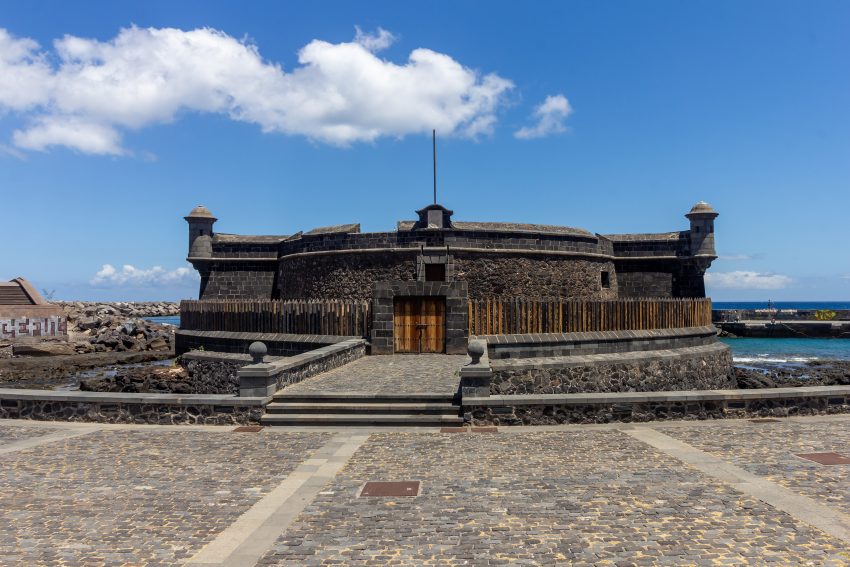
The Castillo de San Juan Bautista (Castle of St John the Baptist), often nicknamed Castillo Negro or the Black Castle, is a compact 17th-century coastal fort set right on Santa Cruz de Tenerife's waterfront. You'll spot it easily near the Auditorio de Tenerife and the Parque Marítimo César Manrique, where the dark volcanic stone contrasts sharply with the modern architecture around it.
It's best experienced as a short stop on a seaside walking tour rather than a standalone “big-ticket” sight: stroll the promenade, circle the fort for different angles, and pair it with nearby landmarks like the Auditorio and the palm-filled Palmetum for a satisfying half-day route.
Table of Contents
- History and Significance of the Castillo de San Juan Bautista
- Things to See and Do in the Castillo de San Juan Bautista
- How to Get to the Castillo de San Juan Bautista
- Practical Tips on Visiting the Castillo de San Juan Bautista
- Where to Stay Close to the Castillo de San Juan Bautista
- Is the Castillo de San Juan Bautista Worth Visiting?
- For Different Travelers
- FAQs for Visiting Castillo de San Juan Bautista
- Nearby Attractions to the Castillo de San Juan Bautista
History and Significance of the Castillo de San Juan Bautista
Built in the mid-1600s, the Castle of St John the Baptist formed part of Santa Cruz de Tenerife's coastal defense system at a time when maritime attacks and rival European powers were a real threat. Its position on the shoreline helped protect this stretch of the bay and supported a wider network of fortifications around the city.
Over time, the fort was reshaped and reinforced, taking on much of the appearance visitors recognize today. Even though it’s small, it’s an important reminder that Santa Cruz was once a strategic Atlantic port that needed serious defenses.
Today, the castle’s significance is as much about context as scale: it’s a surviving piece of the city’s military past, now surrounded by contemporary cultural icons. Seeing it in person helps you understand how the coastline and the city’s priorities have evolved.
Things to See and Do in the Castillo de San Juan Bautista
The main experience here is exterior-focused: walk the perimeter to appreciate the rounded, sturdy profile and the distinctive dark stonework that earned it the “Black Castle” nickname. The best views are from the waterside angles, where you can frame the fort with the ocean and the Auditorio in the background.
Bring a camera and take your time with details like the masonry, the compact defensive footprint, and the way the structure sits at the edge of the sea. It’s also a great spot to pause and watch local life on the waterfront-joggers, families, and people heading to the pools and promenades nearby.
To make the visit feel fuller, treat it as a “cluster stop” with nearby attractions: the Auditorio for architecture lovers, the Parque Marítimo for a swim break, and the Palmetum for a green, elevated viewpoint over the harbor.
How to Get to the Castillo de San Juan Bautista
The nearest airports are Tenerife North Airport (TFN) and Tenerife South Airport (TFS), with TFN typically being closer to Santa Cruz de Tenerife for a quick transfer into the city. For the best deals and a seamless booking experience, check out these flights to Santa Cruz de Tenerife on Booking.com.
Santa Cruz de Tenerife does not have mainland-style intercity rail connections, so travelers usually arrive by bus (guagua) from other parts of Tenerife or by ferry from other Canary Islands rather than by train. Train schedules and bookings can be found on Omio..
If you’re driving, you can reach the waterfront area via the city’s main roads and follow signs toward the Auditorio/Parque Marítimo zone, where parking is often available nearby. If you are looking to rent a car in Spain I recommend having a look at Discover Cars, first, as they compare prices and review multiple car rental agencies for you.
Practical Tips on Visiting the Castillo de San Juan Bautista
- Entrance fee: Free.
- Opening hours: 10:00 AM to 6:00 PM, Tuesday through Sunday. Closed on Mondays and major public holidays.
- Best time to visit: Go in the morning for softer light on the stone and fewer people on the promenade; sunset is excellent for photos with the ocean backdrop.
- How long to spend: Plan 15-30 minutes for a quick loop and photos, or 60-90 minutes if you combine it with the Auditorio area and a waterfront stroll.
- Accessibility: The surrounding promenade is generally flat and easy for most visitors, though surfaces near the water can be uneven in spots.
- Facilities: There are typically restrooms, cafés, and services in the nearby Auditorio/Parque Marítimo area rather than at the fort itself.
Where to Stay Close to the Castillo de San Juan Bautista
Base yourself in central Santa Cruz near Plaza de España and the main shopping streets for the easiest walking access to sights, dining, and transport.
Iberostar Heritage Grand Mencey A classic, upscale choice with resort-like comfort in the city-great if you want a polished stay and easy taxi/bus access to the waterfront.
Hotel Taburiente Well-located for parks and central Santa Cruz, with a reliable, comfortable feel that suits couples and business travelers alike.
Silken Atlántida Santa Cruz A modern high-rise option that’s convenient for the Auditorio side of town and good if you like contemporary rooms and quick access to main roads.
NH Tenerife Right in the center for walking to restaurants and shopping-ideal if you want to explore Santa Cruz on foot and keep logistics simple.
Hotel Adonis Plaza A practical, central base near a major square, handy for short stays and travelers who prioritize location over resort amenities.
Is the Castillo de San Juan Bautista Worth Visiting?
Yes-if you treat it as a quick, atmospheric stop. The castle is small, but it delivers a strong sense of place: historic stonework, sea air, and a prime location beside some of Santa Cruz’s most striking modern landmarks.
Honest Pivot: if you’re expecting a fully open interior, museum-style exhibits, or a long, content-heavy visit, you may be disappointed. It’s best for walkers, photographers, and travelers building a waterfront itinerary rather than those seeking an in-depth castle tour.
What Other Travellers Say...

Reviews are strongly positive overall, with many visitors praising the castle's historic character, distinctive dark stone, and photogenic waterfront setting near the Auditorio. Travelers also like that it's an easy stop on a walking route and pairs well with nearby sights and parking. The most common downside is that the experience can feel brief, with limited to do beyond viewing the exterior, and some visitors wish it offered more museum-style access or interpretation.


For Different Travelers
Different travelers will get different value from Castillo Negro, largely depending on whether you enjoy quick “micro-sights” that add texture to a city walk. Think of it as a scenic historical punctuation mark on the waterfront.
Families with Kids
Kids often enjoy the simple “fort by the sea” vibe and the open space around it, especially if you combine it with a walk and a nearby treat stop. The short visit length is also a plus for families who don’t want a long museum commitment.
To keep it fun, make it part of a bigger outing: a promenade stroll, a look at the Auditorio, and then a break at the Parque Marítimo area. That way the castle becomes a highlight on a varied route rather than the whole plan.
Couples & Romantic Getaways
For couples, the appeal is the setting: ocean views, dramatic stone textures, and excellent photo angles with the Auditorio nearby. It’s an easy, low-effort stop that still feels special, especially in late afternoon light.
Pair it with a waterfront walk and a dinner reservation in central Santa Cruz to turn a simple sightseeing moment into a relaxed date-style itinerary.
Budget Travelers
This is a strong budget-friendly stop because the experience is largely about walking, views, and atmosphere. You can build a satisfying self-guided route around it without paying for tickets.
If you’re watching spending, combine the castle with other nearby outdoor sights and save paid attractions for days when you want a deeper, indoor experience.
History Buffs
History lovers will appreciate the castle most when viewing it as part of Santa Cruz’s broader defensive network rather than as a standalone monument. It’s a tangible link to the era when coastal fortifications shaped the city’s survival and growth.
To deepen the context, plan a “fortifications theme” day: see this castle, then add other historic defense-related sites in Santa Cruz to connect the dots across centuries.
FAQs for Visiting Castillo de San Juan Bautista
Getting There
Tickets & Entry
Visiting Experience
Tours, Context & Itineraries
Photography
Accessibility & Facilities
Food & Breaks Nearby
Safety & Timing
Nearby Attractions to the Castillo de San Juan Bautista
- Auditorio de Tenerife: A landmark modern concert hall with striking architecture right next to the castle.
- Parque Marítimo César Manrique: A popular seawater pool complex that's perfect for a swim-and-sun break.
- Palmetum de Santa Cruz de Tenerife: A botanical garden with palms and elevated viewpoints over the city and harbor.
- Plaza de España: The city's central square area, great for a stroll and a natural hub for sightseeing.
- Mercado de Nuestra Señora de África: A lively market for local produce and snacks, ideal for a food-focused detour.
The Castillo de San Juan Bautista appears in our Complete Guide to Visiting Santa Cruz de Tenerife!

Moira & Andy
Hey! We're Moira & Andy. From hiking the Camino to trips around Europe in Bert our campervan — we've been traveling together since retirement in 2020!
This website uses affiliate links which may earn a commission at no additional cost to you!
Planning Your Visit
10:00 AM to 6:00 PM, Tuesday through Sunday. Closed on Mondays and major public holidays.
Free.
Nearby Attractions
- Casa de la Pólvora (0.1) km
Historic Building, Historic Site and Monument - Ermita de Nuestra Señora de Regla (0.1) km
Church and Religious Building - Auditorio de Tenerife (0.2) km
Arts Venue, Opera House and Theatre - Las Torres De Santa Cruz (0.2) km
Attraction, Notable Building and Tower - Parque Marítimo César Manrique (0.3) km
Baths, Park and Pool - Palmetum (0.5) km
Attraction and Gardens - Centro Comercial Meridiano (0.6) km
Shopping Centre - Mercado Nuestra Señora de Africa (0.9) km
Market - TEA Tenerife Espacio de las Artes (0.9) km
Arts Venue, Gallery and Museum - Museum of Nature and Archaeology (1.0) km
Attraction and Museum