Castelo de Numão, Vila Real
Castle near Vila Real
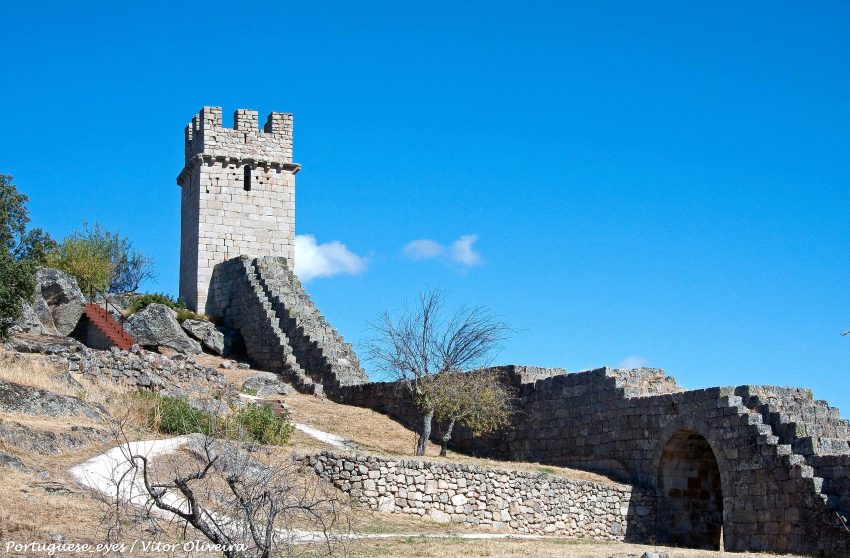
Castelo de Numão is the kind of place you come to for the feeling as much as the ruins: a walled hilltop above a small village in the Douro's upper reaches, where wind, stone, and open sky do most of the storytelling. The approach is part of the charm-once you leave the last houses behind, the path climbs into wide views, and the remaining walls and towers begin to appear like a crown on the ridge.
Up here, it's easy to see why this spot is one of the must-see places in Vila Nova de Foz Côa: the panorama stretches across layered hills and valleys, and the silence feels a world away from the Douro's busier viewpoints. It also fits beautifully into a walking tour of Vila Nova de Foz Côa if you're building a day around heritage stops, viewpoints, and the region's deep-time landscapes.
Table of Contents
- History and Significance of the Castelo de Numão
- Things to See and Do in the Castelo de Numão
- How to Get to the Castelo de Numão
- Practical Tips on Visiting the Castelo de Numão
- Where to Stay Close to the Castelo de Numão
- Is the Castelo de Numão Worth Visiting?
- For Different Travelers
- FAQs for Visiting Castelo de Numão
- Nearby Attractions to the Castelo de Numão
History and Significance of the Castelo de Numão
The site’s story runs far deeper than the medieval walls you see today. Archaeological evidence points to human occupation going back to Prehistory, with identified levels from the Chalcolithic and Bronze Age, and later activity that some authors connect to the Roman period (even if that remains debated by excavations within the medieval enclosure).
The first documentary reference to a fortification here dates to 960, linking Numão to a list of strongholds associated with a donation by D. Flâmula to the Monastery of Guimarães-clear evidence that the hilltop already hosted a military structure, even if its early form is unknown. Over the following centuries, Numão became part of the evolving frontier organisation of northern Portugal, receiving medieval charters and later seeing major works that shaped the castle into a fully Gothic-style fortified complex.
What survives today hints at a once-formidable perimeter: historical descriptions note four gates and a large number of towers, with only a handful still standing, plus key “siege logic” features like a substantial cistern inside the walls. Outside the enclosure, the surrounding religious and funerary landscape adds texture-most memorably the pre-Romanesque chapel of São Pedro and nearby anthropomorphic tombs that make the approach feel like you’re walking through layers of settlement, not just toward a single monument.
Things to See and Do in the Castelo de Numão
Start with a slow circuit of the walls to get your bearings. The best experience here is unhurried: follow the lines of surviving ramparts, pause at the gates, and look outward to understand the castle’s strategic advantage-this is a viewpoint designed by history, not by a tourism board.
Seek out the interior traces that bring daily life into focus. The cistern is the most evocative, especially if you imagine the practical realities of holding a fortified hilltop through dry seasons or periods of tension, while scattered remains of buildings hint at a once-busy enclosed village space rather than an isolated military outpost.
Then make time for the “extra” details that turn a quick visit into a memorable one. The anthropomorphic tombs near the site and the nearby chapel ruins outside the walls add a proto-archaeological feel to your walk, and the shifting light-especially early or late-can make the stonework look suddenly sculptural, almost modern against the landscape.
How to Get to the Castelo de Numão
Numão sits in Portugal's Douro Superior hinterland, so the simplest plan is to base yourself in Vila Nova de Foz Côa and treat the castle as a scenic side-trip rather than a standalone “pop-in” stop. The final approach is on foot via a path from the village, so even if you arrive by vehicle, expect a short uphill walk at the end.
The nearest major airport is Porto Airport (OPO), with Lisbon Airport (LIS) as a workable alternative if you're already building a longer northern road trip. For the best deals and a seamless booking experience, check out these flights to Vila Real on Booking.com. From either airport, you'll typically head toward Vila Nova de Foz Côa first, then continue to Numão for the last leg.
If you prefer to travel by train, the nearest practical railheads tend to be on the Douro Line (often via Pocinho) or inland hubs like Guarda, and you’ll need a bus, taxi, or pre-arranged transfer onward to Numão.Train schedules and bookings can be found on Omio. Regional and intercity coaches can get you to Vila Nova de Foz Côa, but local connections become sparse outside peak times, so check schedules carefully and keep a taxi number handy for the return.
Driving is the most flexible option for this area, especially if you want to pair the castle with viewpoints, wineries, or the Côa Valley sites in the same day.If you are looking to rent a car in Portugal I recommend having a look at Discover Cars, first, as they compare prices and review multiple car rental agencies for you. Aim to arrive with daylight to spare, since rural roads are slower than distances suggest and the last stretch feels more relaxed when you’re not rushing.
Practical Tips on Visiting the Castelo de Numão
- Entrance fee: Free.
- Opening hours: 24 Hours
- Official website: https://culturaportugal.gov.pt/pt/conhecer/local/_drcnorte/castelo-e-vila-muralhada-de-numao/
- Best time to visit: Early morning or late afternoon gives the most dramatic light and the calmest atmosphere, with fewer people on the path.
- How long to spend: Plan for 45-90 minutes on-site so you can walk the walls slowly, pause for views, and explore the approach without hurrying.
- Accessibility: Expect uneven ground, steps, and exposed rocky sections; this is an atmospheric ruin rather than a smoothed, ramped monument.
- Facilities: There are no guaranteed on-site facilities at the walls, so bring water and use cafés or services in Numão or Vila Nova de Foz Côa beforehand.
Where to Stay Close to the Castelo de Numão
For a culture-heavy itinerary, base yourself in Vila Nova de Foz Côa for easy access to museums and dining; for a landscape-and-wine focused trip, choose a countryside stay closer to the Douro viewpoints and estates.
If you want a special stay that feels woven into the valley, Casa do Rio Wine Hotel - Vallado is a strong pick for views and a quiet, grown-up atmosphere. For an easy, comfortable base with wellness appeal, Longroiva Hotel Rural works well-especially if you like the idea of pairing hilltop ruins with a thermal spa wind-down. If you’re travelling on a tighter budget or simply want a practical home base near the main services, HI Foz Côa - Pousada de Juventude keeps you close to the region’s hubs while still being a short drive from Numão.
Is the Castelo de Numão Worth Visiting?
Yes-if you like places that feel discovered rather than staged. Castelo de Numão is less about “must photograph” set-pieces and more about standing inside a real defensive landscape, reading the terrain, and enjoying one of the region's most expansive natural panoramas with remarkably little noise around you.
It’s especially worthwhile if you’re already exploring the Côa and Douro Superior area, because it complements the region’s rock-art and wine-country identity with a strong medieval layer. Treat it as a slow stop-walk, look outward, and let the scale of the setting do the work.
What Other Travellers Say...

Castelo de Numão, located on R. Direita 5155-619, is a hilltop castle ruin reached via a small village with narrow but passable streets; visitors praise the sweeping valley views, quiet atmosphere and surprising features like tombs carved into the rock, though some note much of the walls are gone and the interior is overgrown with almond trees, so wear sturdy shoes for the climbs.


For Different Travelers
Families with Kids
This can be a fun “explorer” stop for kids who like climbing and castle walls, because the site feels like a real adventure rather than a museum visit. The sense of discovery on the approach path is often the highlight, especially if you frame it as a mini-hike with a big reward at the top.
That said, it’s best for families with older children who are steady on uneven ground. Bring snacks and water, set clear boundaries near edges and drops, and keep expectations simple: this is about running the walls and spotting landmarks, not interactive displays.
Couples & Romantic Getaways
For couples, the appeal is the atmosphere-quiet stonework, wide horizons, and the kind of scenery that makes you slow down without trying. Arrive late in the day, linger for the shifting light, and you’ll get a naturally cinematic feel with very little effort.
It also pairs well with a “two-stop” plan: castle first, then a relaxed dinner in Vila Nova de Foz Côa or a countryside stay nearby. If you're doing the Douro as a romantic trip, this is a refreshing detour away from the most trafficked viewpoints.
Budget Travelers
This is an excellent value stop because it’s open-access and naturally scenic, so you can build a strong half-day itinerary without paying entry fees. Combine it with free village wandering in Numão and a picnic, and you’ve got a memorable day at minimal cost.
The main budget factor is transport, since rural connections can be limited. If you’re relying on buses, plan around fixed schedules and consider grouping nearby stops to make a single taxi ride stretch further.
History Buffs
History lovers will appreciate how clearly the site ties landscape to strategy: the walls make immediate sense once you look outward and read the approaches. The surrounding chapels and tombs also add a satisfying “long timeline” feel, turning a castle visit into a broader story of settlement and belief.
To get the most out of it, do a quick pre-read on Numão’s medieval charters and frontier role, then walk the enclosure imagining gates, towers, and sightlines as a working system. It’s a place where a little context makes every stone feel more legible.
FAQs for Visiting Castelo de Numão
Getting There
Tickets & Entry
Visiting Experience
Tours, Context & Itineraries
Photography
Food & Breaks Nearby
Safety & Timing
Nearby Attractions to the Castelo de Numão
- Museu do Côa (Vila Nova de Foz Côa): A striking museum that gives essential context for the region's prehistoric art and landscape.
- Parque Arqueológico do Vale do Côa: Join a guided visit to open-air rock engravings that make this valley globally significant.
- Castelo Melhor: A scenic riverside-area village and viewpoint zone that pairs beautifully with Douro Superior landscapes.
- Termas de Longroiva: A thermal spa stop that’s ideal after walking and exploring hilltop sites.
- Linha do Douro at Pocinho: A classic Douro rail-and-river setting, great for slow travel vibes and river scenery.
The Castelo de Numão appears in our Complete Guide to Visiting Vila Real!

Moira & Andy
Hey! We're Moira & Andy. From hiking the Camino to trips around Europe in Bert our campervan — we've been traveling together since retirement in 2020!
This website uses affiliate links which may earn a commission at no additional cost to you!
Nearby Attractions
- Mosteiro de Santa Maria de Salzedas (36.7) km
Monastery - Capela de São Pedro de Balsemão (41.2) km
Church - Casa de Mateus (41.6) km
Palace - Museu do Douro (42.3) km
Museum - Museu de Lamego (43.1) km
Museum - Lamego Cathedral (43.2) km
Cathedral - Castelo de Lamego (43.3) km
Castle - Santuário de Nossa Senhora dos Remédios (44.0) km
Church - Castro de Avelãs Monastery (87.7) km
Monastery - Monte da Penha (89.6) km
Religious Building and Viewing Point