Bronze Gate, Split
Attraction, City Gate and Historic Site in Split
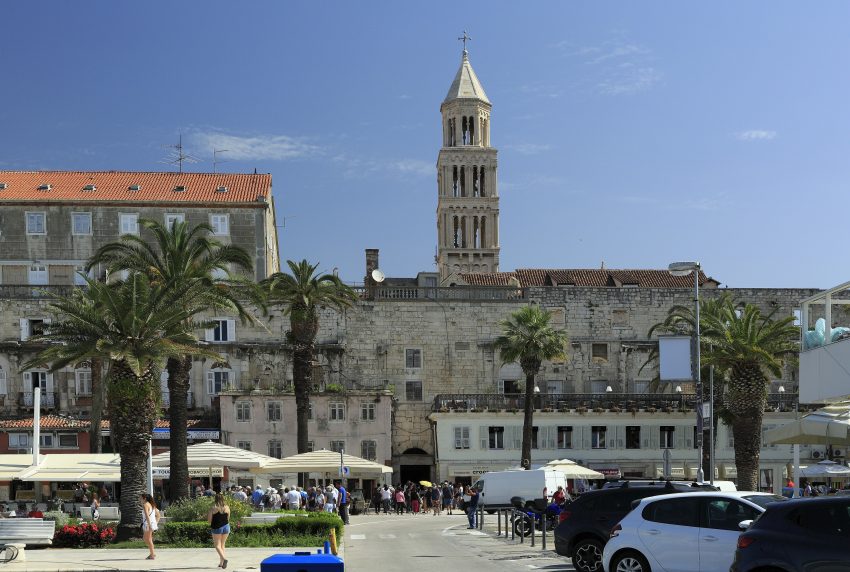
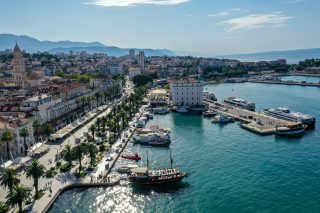
The Bronze Gate (often called the Brass Gate) is the southern entrance of Diocletian's Palace in Split, Croatia, opening right by the Riva waterfront and leading into the palace's famous substructures (basements). It's not a “standalone monument” you visit in isolation so much as a living passageway that links the sea-facing side of the palace to the heart of the Old Town.
Most travelers experience the Bronze Gate as part of a walking tour of Diocletian's Palace, or as the most natural way to enter the palace area from the ferry port and promenade. For the best views, pair it with a stroll along the Riva, a quick detour into the cool underground halls, and then pop up toward the Peristyle and the Cathedral of Saint Domnius.
Table of Contents
- History and Significance of the Bronze Gate
- Things to See and Do in the Bronze Gate
- How to Get to the Bronze Gate
- Practical Tips on Visiting the Bronze Gate
- Where to Stay Close to the Bronze Gate
- Is the Bronze Gate Worth Visiting?
- For Different Travelers
- FAQs for Visiting Bronze Gate
- Nearby Attractions to the Bronze Gate
History and Significance of the Bronze Gate
The Bronze Gate dates back to the Roman era, when Diocletian's Palace was built in the early 4th century as a fortified imperial residence. Unlike the grander northern entrance (the Golden Gate), the Bronze Gate served a more practical purpose: it was the palace's sea-facing access point, closely tied to supply routes and the waterfront.
Over centuries, Split grew within and around the palace walls, turning the complex into a true “city within a city.” The Bronze Gate remained an important connector between the southern wall and the harbor-side life of Split, which is why it still feels like a working doorway rather than a museum piece.
Today, the gate’s significance is also about what it leads to: the palace substructures. These underground spaces mirror the layout of the imperial apartments above and are among the most atmospheric places to understand how massive and engineered the palace complex really was.
Things to See and Do in the Bronze Gate
Start by appreciating the setting: you're standing at the palace's southern wall with the Riva just outside, one of the most pleasant promenades in Dalmatia for a pre- or post-visit coffee. From the outside, the Bronze Gate is a great “orientation point” for the palace, especially if you're arriving from the port.
The main experience is walking through the gate into the substructures. The temperature drop, the stone vaults, and the scale of the underground halls make this one of the most memorable transitions in Split. Depending on the day, you may also find small stalls or exhibits in the basement area, which can add context without requiring a long stop.
To round it out, use the Bronze Gate as the first step of a simple palace loop: Bronze Gate to the basements, up to the Peristyle, then onward to nearby lanes, courtyards, and viewpoints. If you're on a guided walking tour, this is often the most logical entry sequence because it builds from “foundations” to “upper city.”
How to Get to the Bronze Gate
The nearest airports are Split Airport (SPU), which is the main gateway for international and seasonal flights, and Zadar Airport (ZAD) as a secondary option if you're combining destinations along the coast. For the best deals and a seamless booking experience, check out these flights to Split on Booking.com.
Split is connected by rail within Croatia, and you can reach the city by train (often via Zagreb), then continue on foot or by local transport to the Old Town area near the Riva. Train schedules and bookings can be found on Omio.
If you’re driving, aim for parking outside the tight Old Town zone and walk in, since the palace streets are pedestrian-focused and navigation inside the historic core is not car-friendly.
Once you're in central Split, the Bronze Gate is easiest to reach from the Riva promenade; it's also a quick walk from the ferry port and main bus/train area.
Practical Tips on Visiting the Bronze Gate
- Entrance fee: Free.
- Opening hours: 24 Hours.
- Best time to visit: Go early morning for the calmest walk-through and softer light on the south wall, or in the evening when the Riva atmosphere is at its best.
- How long to spend: Plan 10–20 minutes for the gate itself, or 45–90 minutes if you're pairing it with the basements and a self-guided loop through Diocletian's Palace.
- Accessibility: The surrounding streets are stone and can be uneven; the basements may involve steps and slick patches, so sturdy shoes help.
- Facilities: You’ll find plenty of cafés, gelato spots, and restrooms in the wider palace/Riva area, but facilities are not “at the gate” in the way they are at a ticketed museum.
Where to Stay Close to the Bronze Gate
Stay inside or immediately beside Diocletian's Palace and the Riva area for the easiest early starts, late-night strolls, and the most walkable access to everything.
Cornaro Hotel A polished, full-service option close to the palace lanes, great if you want comfort, wellness facilities, and an easy walk to the Bronze Gate without being right on the noisiest stretch of the promenade.
Hotel Park Split A classic choice near Bačvice Beach, ideal if you want a resort-like feel while still being within a manageable walk to the palace and the Bronze Gate.
Heritage Hotel Antique Split A character-rich stay right in the historic core, perfect for travelers who want to step out the door into palace history and reach the Bronze Gate in minutes.
Hotel Vestibul Palace A boutique, romantic-feeling pick embedded in the palace fabric, chosen for atmosphere and the “you’re sleeping inside history” experience.
Marmont Heritage Hotel A stylish heritage property near the Riva, great for couples and first-timers who want a central base with easy access to the Bronze Gate and evening dining.
Is the Bronze Gate Worth Visiting?
Yes, it's worth visiting, especially because it's one of the most atmospheric ways to enter Diocletian's Palace and it naturally fits into how you'll move through Split anyway. The Bronze Gate is less about a single “wow” façade and more about the feeling of stepping from the modern waterfront into the ancient underbelly of the palace.
Honest Pivot: If you're short on time and not planning to explore the palace substructures or the Old Town on foot, the Bronze Gate alone may feel like a quick pass-through rather than a destination. In that case, prioritize a viewpoint (like Marjan) or a focused ticketed site, and just enjoy the palace streets as you wander.
What Other Travellers Say...


For Different Travelers
The Bronze Gate works best when you treat it as a gateway experience: a short, high-impact transition that anchors a larger Old Town walk. Because it's central and easy to combine with other highlights, it's one of the simplest “yes” stops in Split.
Families with Kids
Kids often enjoy the sense of discovery here, especially if you enter through the gate and head straight into the cooler underground spaces. It can feel like a mini-adventure without requiring a long attention span.
To keep it smooth, make the Bronze Gate a quick win: walk in, explore a few dramatic arches, then pop up toward open squares for snacks and space to move around.
Couples & Romantic Getaways
For couples, the best pairing is Bronze Gate at golden hour followed by a slow Riva stroll and a dinner reservation in the palace lanes. The contrast between sea air and ancient stone makes the whole area feel cinematic.
If you like photography, aim for quieter moments when the passage isn’t crowded, then continue into the palace for intimate courtyards and lantern-lit alleys.
Budget Travelers
This is an easy budget-friendly highlight because it's part of the public fabric of the Old Town and doesn't require a dedicated ticket just to appreciate the gate and its setting. It's also a great “orientation landmark” if you're navigating Split on foot.
Use it as the start of a self-guided route: Bronze Gate to basements (if open), up to the Peristyle, then wander the palace streets and finish with a sunset on the Riva.
History Buffs
History lovers will appreciate the Bronze Gate as a functional piece of Roman urban design, not just a decorative portal. It helps you understand how the palace related to the sea and how supplies and movement likely flowed.
For deeper context, connect the gate to the palace substructures and then seek out interpretive details elsewhere in the complex, where the layers of Roman, medieval, and modern Split become clearer.
FAQs for Visiting Bronze Gate
Getting There
Tickets & Entry
Visiting Experience
Tours, Context & Itineraries
Photography
Accessibility & Facilities
Food & Breaks Nearby
Safety & Timing
Nearby Attractions to the Bronze Gate
- Diocletian's Palace Substructures: The atmospheric underground halls directly connected to the Bronze Gate.
- Riva Promenade: Split's waterfront walkway for cafés, sunset strolls, and easy people-watching.
- Peristyle Square: The palace’s central ceremonial courtyard and a classic spot to pause and look up.
- Cathedral of Saint Domnius: A landmark complex that layers Roman origins with medieval and later additions.
- Marjan Hill: A green escape with viewpoints over Split and the islands, great for a longer walk.
The Bronze Gate appears in our Complete Guide to Visiting Split!

Moira & Andy
Hey! We're Moira & Andy. From hiking the Camino to trips around Europe in Bert our campervan — we've been traveling together since retirement in 2020!
This website uses affiliate links which may earn a commission at no additional cost to you!
Nearby Attractions
- Ethnographic Museum (0) km
Attraction, Historic Building and Museum - Riva Harbor (0) km
Area, Harbour and Promenade - Vestibule (0.1) km
Courtyard, Historic Room and Historic Site - Podrum (0.1) km
Historic Room, Historic Site and Roman Site - Diocletian's Palace (0.1) km
Historic Building, Historic Site and Palace - Cathedral of St. Domnius (0.1) km
Cathedral and Religious Building - Temple of Jupiter (0.1) km
Historic Site, Religious Building and Roman Site - Fruit's Square (0.1) km
Historic Site, Monument and Square - Silver Gate (0.1) km
City Gate, City Walls and Historic Site - Iron Gate and Church of Our Lady of the Bell Tower (0.1) km
Church, City Gate and Historic Site