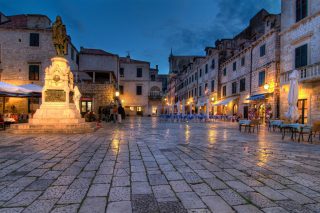
Zadar, Croatia: The Ultimate Travel Guide 2026
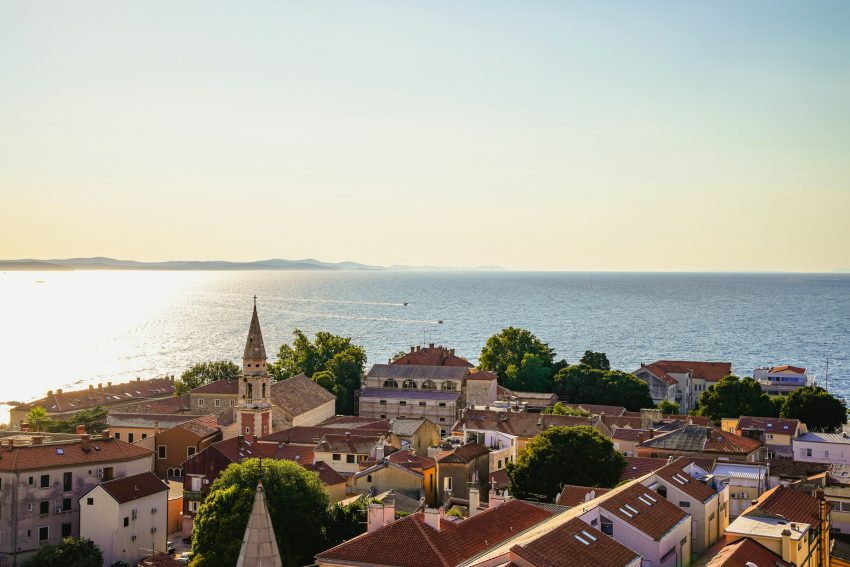
The Complete Guide to Zadar

Zadar is a relaxed Adriatic city in northern Dalmatia, set on a compact peninsula where Roman-era streets meet lively café terraces and a long seaside promenade. It's an easy place to enjoy at your own pace: wander the old town lanes, pause for gelato in sunlit squares, then drift toward the waterfront as the light turns golden. The city's scale is a big part of its appeal-most highlights are walkable, and the atmosphere stays local even in peak season.

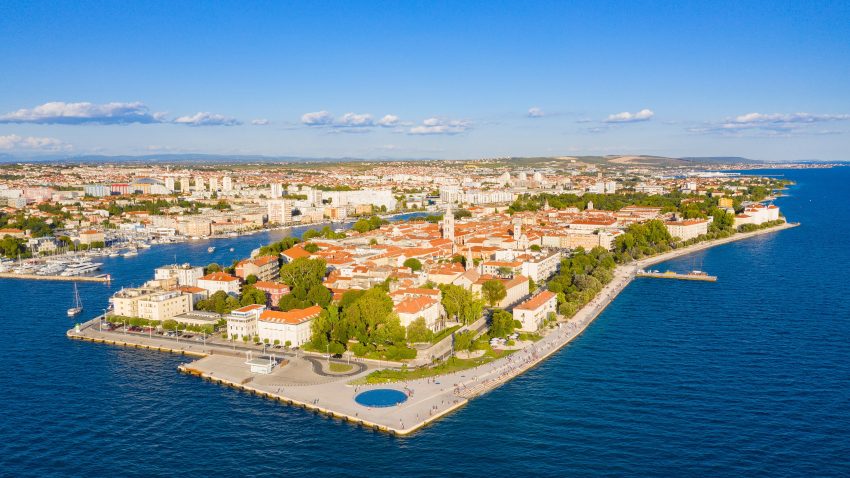
The waterfront is Zadar’s signature stage, especially around sunset when people gather to watch the sky change over the islands. Between swims, strolls, and market browsing, you can mix simple pleasures with standout modern attractions that turn the sea and wind into sound and light. Food is another reason to come-expect Dalmatian seafood, seasonal produce, and excellent regional wines, with plenty of casual konobas alongside smarter dining.

Zadar also works brilliantly as a base for short trips: island-hopping, national parks, and small coastal villages are all within reach for day adventures. If you want a city break that blends beach time, culture, and easy logistics-without feeling oversized-Zadar delivers, especially in the shoulder seasons when the weather is warm and the streets feel unhurried.

History of Zadar

Zadar in Antiquity (Illyrians, Greeks, and Rome)

Zadar’s earliest roots lie in a pre-Roman settlement that grew into a significant Adriatic port. Under Roman rule it developed into a planned urban center, with a forum, temples, and a street grid that still shapes the old town today. Trade and maritime connections helped the city prosper, and many of its foundational urban layers date to this period.

Zadar in the Early Middle Ages (Byzantine and Croatian Realms)

After the Western Roman Empire’s decline, Zadar became a strategic prize in the Adriatic. The city experienced shifting influence between Byzantine authority and emerging local powers, while Christianity and ecclesiastical institutions strengthened. Churches and monastic communities expanded, and Zadar’s role as a coastal stronghold grew.

Zadar under Venetian Influence (1409–1797)

Venice’s long rule left a deep imprint on Zadar’s architecture, defenses, and civic life. The city became a key Venetian administrative and military center, leading to major fortification works and a distinctive blend of Gothic and Renaissance elements. Maritime commerce remained central, and the city’s cultural life reflected its position between Italian and Slavic worlds.

Zadar in the Habsburg and Napoleonic Era (1797–1918)

Following the fall of Venice, Zadar passed through rapid political changes, including Napoleonic administration and then Habsburg rule. Modernization accelerated: institutions, infrastructure, and education expanded, while national movements and linguistic politics increasingly shaped public life. The city’s identity continued to evolve amid broader imperial transformations.

Zadar in the 20th Century (World Wars and Yugoslavia)

The 20th century brought dramatic upheaval, including wartime destruction and population shifts. After World War II, Zadar became part of socialist Yugoslavia and underwent reconstruction and urban development. New neighborhoods expanded beyond the historic core, while the old town was gradually restored and reactivated as a cultural and social center.

Zadar in Modern Croatia (1991–Present)

In the post-independence period, Zadar rebuilt its economy around services, education, and tourism while continuing heritage restoration. The city gained international attention for contemporary waterfront installations and a renewed focus on public spaces. Today, Zadar balances daily local life with a growing visitor scene, anchored by its historic peninsula and coastal setting.

Moira & Andy
Moira & Andy

Hey! We're Moira & Andy. From hiking the Camino to trips around Europe in Bert our campervan — we've been traveling together since retirement in 2020!

Read our full story here

Visiting Zadar for the first time and wondering what are the top places to see in the city? In this complete guide, I share the best things to do in Zadar on the first visit. To help you plan your trip, I have also included an interactive map and practical tips for visiting!

This website uses affiliate links which earn a small commission at no additional cost to you.
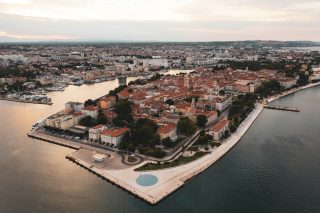
Powered by GetYourGuide

15 Best places to See in Zadar

This complete guide to Zadar not only tells you about the very best sights and tourist attractions for first-time visitors to the city but also provide insights into a few of our personal favorite things to do.

This is a practical guide to visiting the best places to see in Zadar and is filled with tips and info that should answer all your questions!

1. Church of St. Chrysogonus
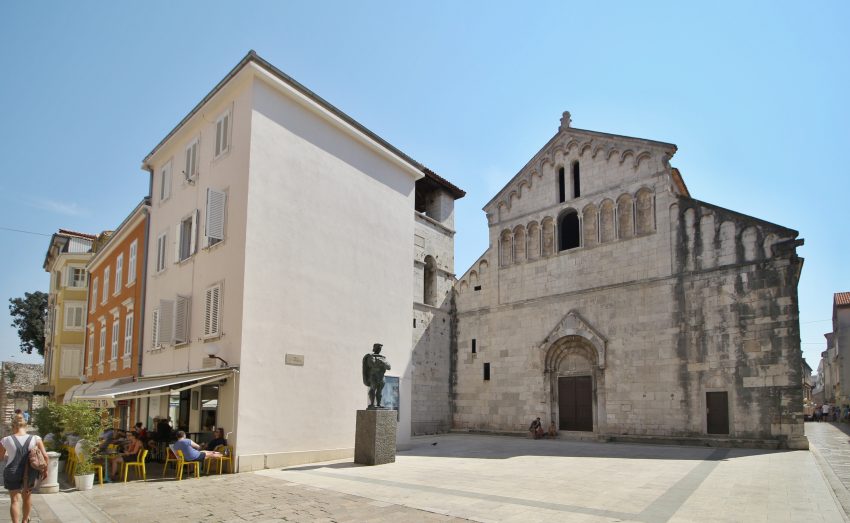
Church of St. Chrysogonus
CC BY-SA 4.0 / VitVit
In Zadar’s Old Town, the Church of St. Chrysogonus is a 12th-century Romanesque basilica dedicated to the city’s patron saint and the lone surviving remnant of a medieval Benedictine abbey. Built on the site of a Roman emporium and consecrated in 1175, it’s best remembered for its restrained façade and the back end’s three apses, where blind arches rhythmically break up the stonework. Inside, when access is possible, visitors look for frescoes and the high altar, along with figures of local patron saints. A bell tower project begun in 1485 was abandoned in 1546, leaving the church with an unfinished footnote. Because it’s rarely open, many people only catch the exterior, though summer concerts sometimes unlock the interior.
Location: 23000, Zadar, Croatia | Hours: Check official website. | Price: Free; donations appreciated. | Distance: 0.5km


Here is a complete selection of hotel options in Zadar. Feel free to review each one and choose the stay that best suits your needs.

2. People's Square

People’s Square
People’s Square
CC BY-SA 2.5 / Böhringer Friedrich
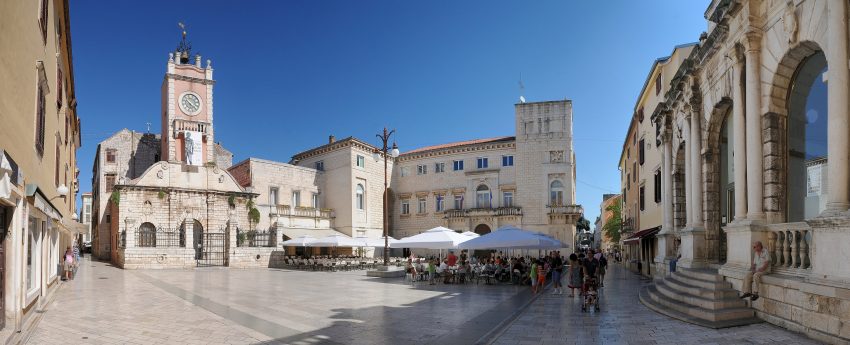
People’s Square (Narodni trg) is Zadar’s long-running civic living room, a broad pedestrian square in the Old Town where public life has played out since the Middle Ages. In the 1500s, Venetian rule reshaped it into a stage for authority: the City Guardhouse (1562) faced the City Cloister, and this was where laws and proclamations were read aloud and posted. Today, the same stone space is framed by elegant façades and busy café terraces, with conversations and coffee replacing decrees. Look for carved stone details and coats of arms as you circle the square, and notice how the small Church of Saint Lawrence sits almost hidden behind modern seating.
Location: Narodni trg, 23000, Zadar, Croatia | Hours: 24 Hours. | Price: Free. | Distance: 0.6km

Traveling to a country with a different currency? Avoid ATM transaction fees and pay in local currency with a Wise Card. Having used it for over 5 years, we've saved loads on fees!

3. Bell Tower

Bell Tower
Bell Tower
Zadar’s Bell Tower rises beside the Cathedral of St. Anastasia and doubles as a steep, stair-filled climb to one of the Old Town’s clearest viewpoints. Built in stages, its lower levels date to 1452 under Archbishop Vallares, while the upper floors were added in 1890–1894 by English architect Thomas Graham Jackson, modeled on the bell tower in Rab. Visitors notice the newer section’s double biforas and flat surfaces decorated with stylized plant mosaics, broken by cornices with fine mesh-like detailing. At the summit, an eight-sided pyramid is topped by a brass angel, with wide views over terracotta roofs and the Adriatic. It holds a modest 4/5 rating from early reviews.
Location: Trg tri bunara 5-4, 23000, Zadar, Croatia | Hours: Daily: 08:00–18:00. | Price: Check official website. | Distance: 0.6km

Explore Zadar at your own pace with our self-guided walking tour! Follow our curated route to discover must-see sights and local secrets that makes Zadar one of the best places to visit in Croatia.

4. The Roman Forum

The Roman Forum
The Roman Forum
CC BY-SA 2.0 / dronepicr
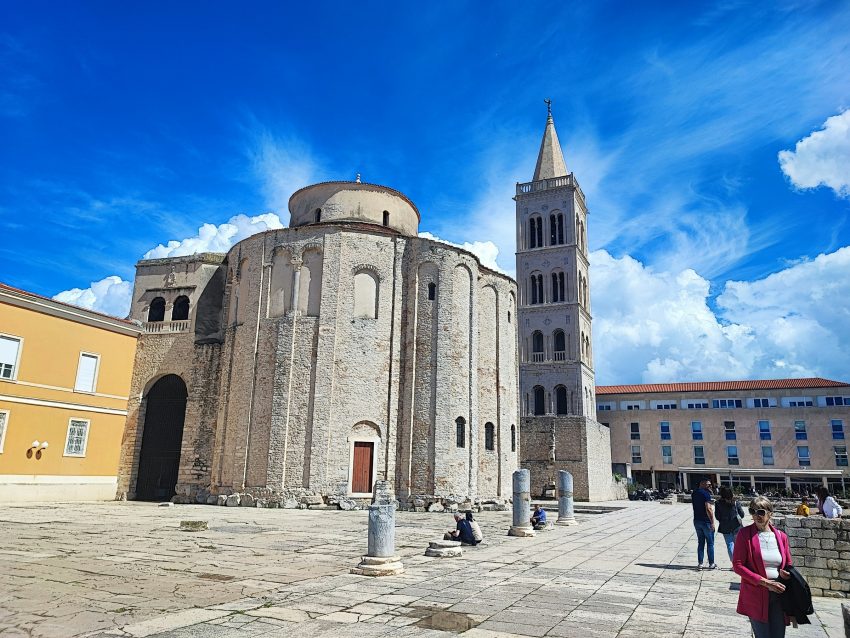
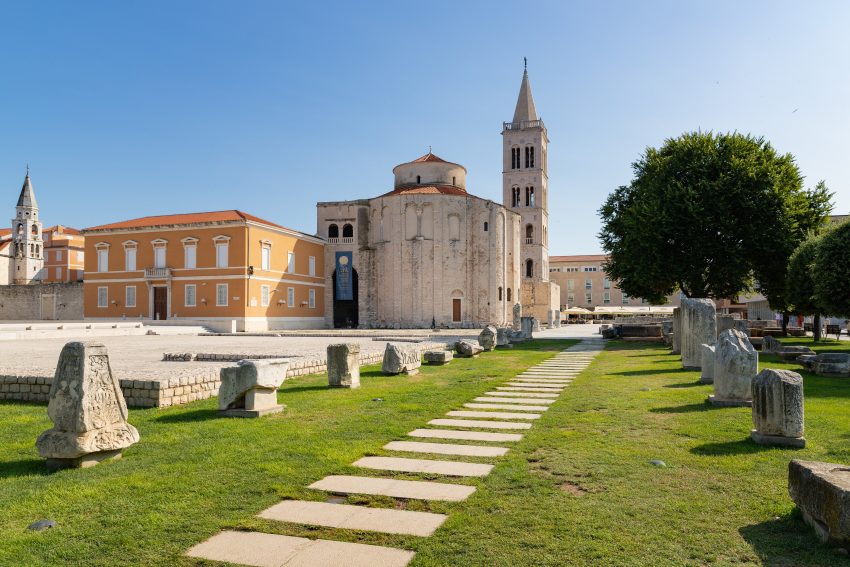
The Roman Forum in Zadar, Croatia is an open-air archaeological square in the Old Town where modern café life brushes up against the footprint of Roman Jadera. Laid out in the 1st century BC under Augustus, it once held the city’s debates, trade, and public rituals, framed by temples and colonnades. What visitors remember now is the layered afterlife: broken columns and wall fragments scattered across paving stones, and the way later builders reused the same blocks as the empire faded. The most striking example is how the Church of St. Donatus rises right at the Forum’s edge, tying pagan Rome to the early medieval city in one glance.
Location: 23000, Zadar, Croatia | Hours: 24 Hours. | Price: Free. | Distance: 0.7km

5. City Sentinel
City Sentinel
City Sentinel
CC BY-SA 4.0 / H.Helmlechner
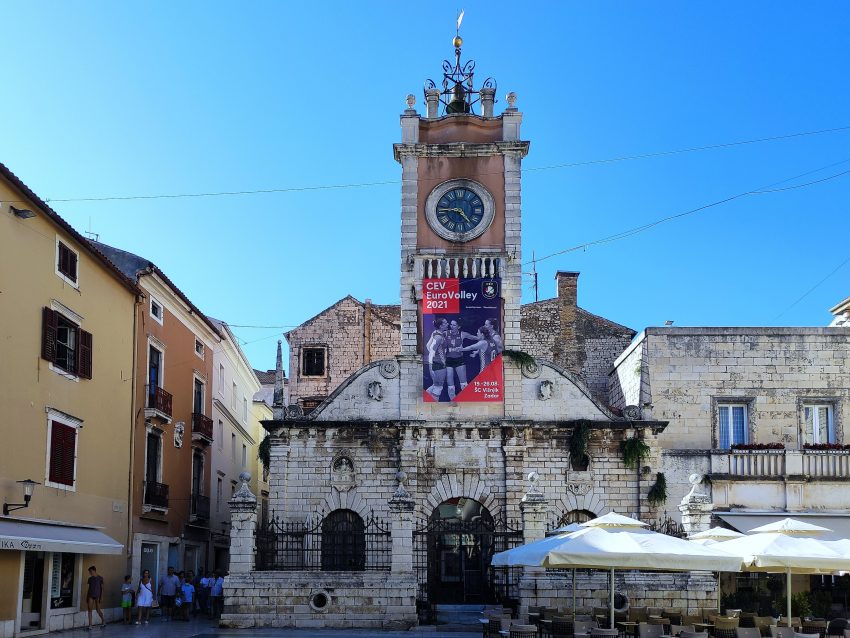
City Sentinel is a late-Renaissance Venetian-designed clock tower on Zadar’s Old Town peninsula, set beside Narodni trg (People’s Square) where the city’s daily rhythm once revolved around public timekeeping. Look for the prominent central clock and later defensive additions, including a stone barrier and a railing pierced with openings for cannons. For a period it housed the National Museum’s Ethnographic Section, known for displays of local dress, textiles such as weaving and lace, jewelry, and everyday fishing and household tools. The setting is a lively pedestrian zone, and visitors often remember pausing here to orient themselves before continuing through the surrounding lanes.
Location: Bedemi zadarskih pobuna, 23000, Zadar, Croatia | Hours: 24 Hours. | Price: Free. | Distance: 0.7km

6. Archaeological Museum of Zadar

Archaeological Museum of Zadar
CC BY-SA 3.0 / AnatolyPm
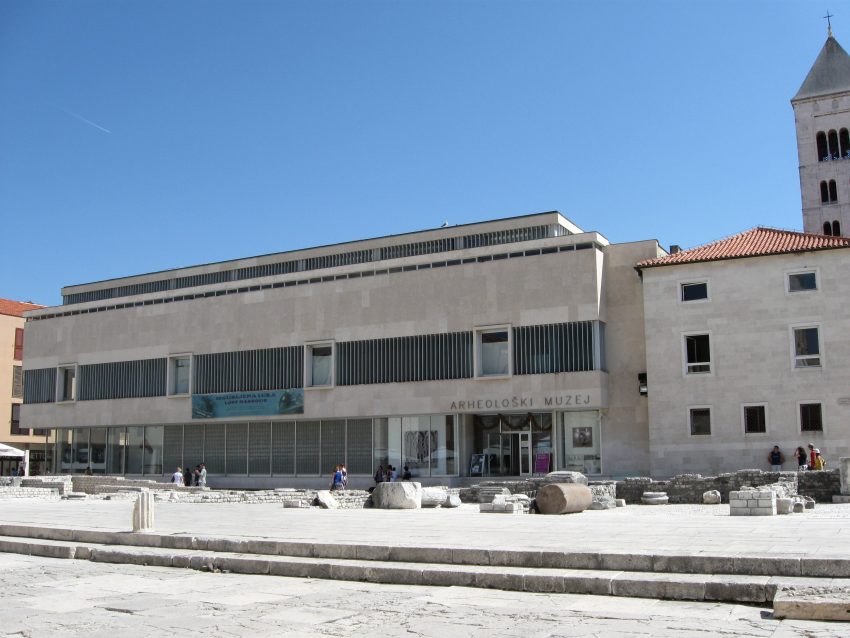
The Archaeological Museum of Zadar, founded in 1832, traces more than 3,000 years of life on Croatia’s Adriatic coast in a compact, three-level space beside Zadar’s Roman Forum. Its galleries move from prehistoric pottery, tools, and jewelry to the Roman city of Jadera, where inscriptions, mosaics, and Forum fragments reveal civic life as well as daily routines. Look for statues associated with emperors such as Caesar and Tiberius, then follow the story into early Christianity and the Middle Ages through carved stone church furnishings, liturgical pieces, and grave goods. Visitors often remember the human-scale objects—fine personal jewelry and small items—alongside the heavier stone sculpture.
Location: Arheološki muzej, Trg opatice Čike 1, 23000, Zadar, Croatia | Hours: January 1 – March 31: Monday – Friday: 09:00–14:00; Saturday: 09:00–13:00. April 1 – April 30: Monday – Saturday: 09:00–15:00. May 1 – May 31: Monday – Saturday: 09:00–17:00. June 1 – June 30: Daily: 09:00–20:00. July 1 – August 31: Daily: 09:00–21:00. September 1 – September 30: Daily: 09:00–20:00. October 1 – October 15: Daily: 09:00–19:00. October 16 – October 31: Daily: 09:00–17:00. November 1 – December 31: Monday – Friday: 09:00–14:00; Saturday: 09:00–13:00. | Price: Adults and children (10+): €5; Students & seniors (groups): €2; Under 10: free. | Website | Distance: 0.7km

7. Church of St. Donatus

Church of St. Donatus
CC BY-SA 4.0 / Lessormore
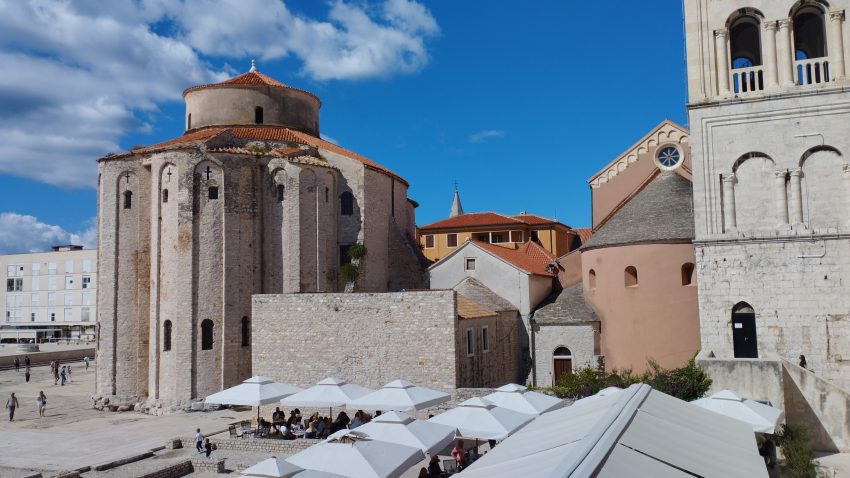
The Church of St. Donatus is a pre-Romanesque rotunda on Zadar’s Roman Forum, built in the 8th–9th centuries under Bishop Donatus, once dedicated to the Holy Trinity. Its circular mass and two concentric galleries wrap around a stark central space, where the plain stone and powerful acoustics make every footstep and voice linger. Look closely at the walls and base: blocks and fragments from Roman temples and colonnades were reused, stitching ancient Zadar directly into the church’s fabric. After surviving centuries of upheaval, it was later repurposed as a warehouse and even an archaeological museum, and today it’s a cultural monument that sometimes hosts concerts.
Location: Grgura Mrganića, 23000, Zadar, Croatia | Hours: (Summer) April 1 – October 31; Daily: 09:00–17:00 (April 1 – May 31) & 09:00–19:00 (June 1 – July 12) & 09:00–21:00 (July 13 – August 31) & 09:00–19:00 (September 1 – October 15) & 09:00–17:00 (October 16 – October 31). (Winter) November 1 – March 31; Closed (open by prior arrangement). (Winter) January 1 – March 31; Closed (open by prior arrangement). | Price: Individual ticket: €5.00; Croatia pensioners: €3.50; Groups (students/pensioners): €3.00; Other groups: €4.00; Combined Archaeological Museum + St. Donatus: €10.00 (individual) or €6.00 (group); Free for children under 10 and some eligible groups. | Website | Distance: 0.7km

8. Zadar Cathedral

Zadar Cathedral
Zadar Cathedral
CC BY-SA 4.0 / Berthold Werner
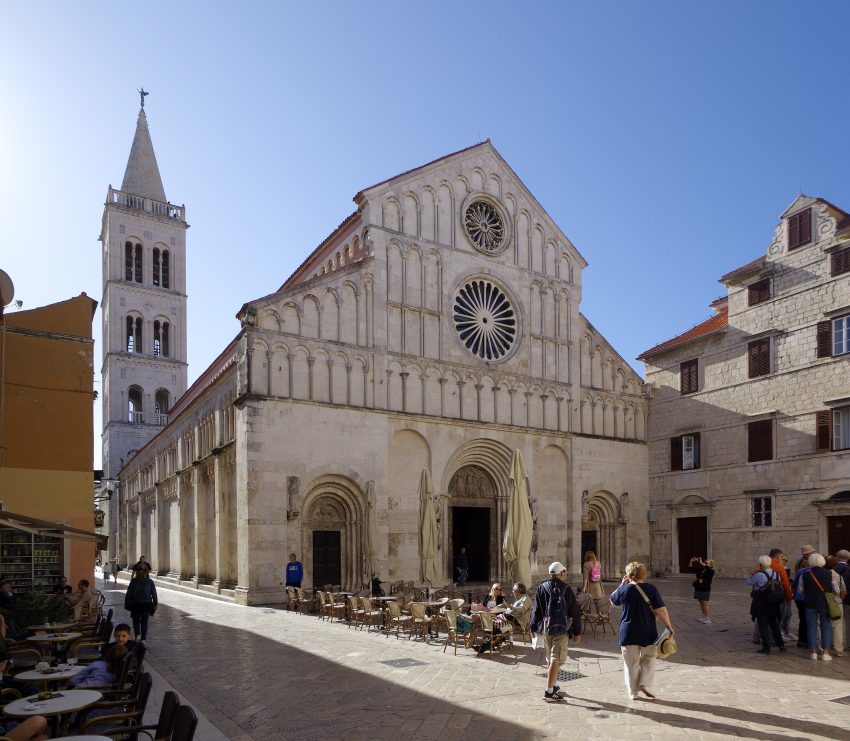
Zadar Cathedral (Cathedral of St. Anastasia) is the city’s main church, a Romanesque building shaped in the 12th–13th centuries on a much older Christian site, set beside the Roman Forum in Zadar’s Old Town. Inside, the marble sarcophagus holding St. Anastasia’s relics—brought to Zadar in the 9th century after Bishop Donatus received them from Emperor Nikephoros I—gives the space a tangible center of devotion. Look for carved stonework, mosaics, and later altars that show how the interior kept changing through damage and restoration, from the 1202 Fourth Crusade to WWII bombing. If the 19th-century bell tower is open, the climb rewards you with wide views over rooftops, harbor, and islands; some visitors also remember the choir during Mass.
Location: Trg Svete Stošije 2, 23000, Zadar, Croatia | Hours: Check official website. | Price: Free; donations appreciated. | Website | Distance: 0.7km

9. Monastery of St. Francis of Assisi
Monastery of St. Francis of Assisi
CC BY-SA 3.0 / Ziegler175
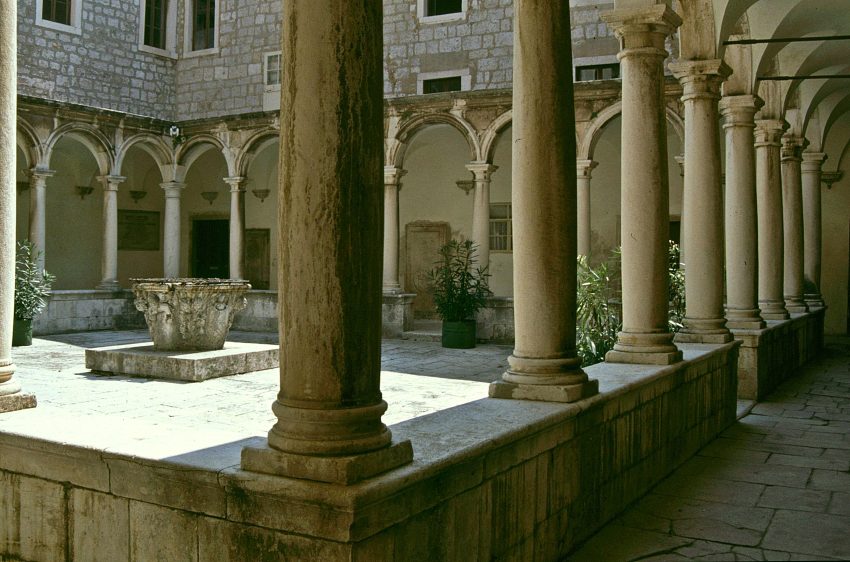
The Franciscan Monastery of St. Francis of Assisi in Zadar is a 13th-century Roman Catholic complex with a church and cloister that still feels quietly lived-in. Founded in 1221 and consecrated in 1282, it holds the oldest Gothic church of its kind in Dalmatia, where visitors can study the contrast between austere stonework and later additions like the 1672 main altar. Inside, look for the finely carved Gothic choir stalls dated 1394, an unusually intimate detail that draws you close. The sacristy is remembered as the room where the 1358 Treaty of Zadar was signed, ending Venetian rule over Dalmatia. It’s a calm pause within the Old Town’s bustle.
Location: Ul. fra Donata Fabijanića, 23000, Zadar, Croatia | Hours: Monday – Friday: 10:00–14:00. | Price: Adults: €5; Groups (adults): €4; Children/Students: €2.50; Groups (children/students): €2. | Website | Distance: 0.8km

10. Captain's Tower
Captain’s Tower
Captain’s Tower
CC BY-SA 4.0 / Américo Toledano
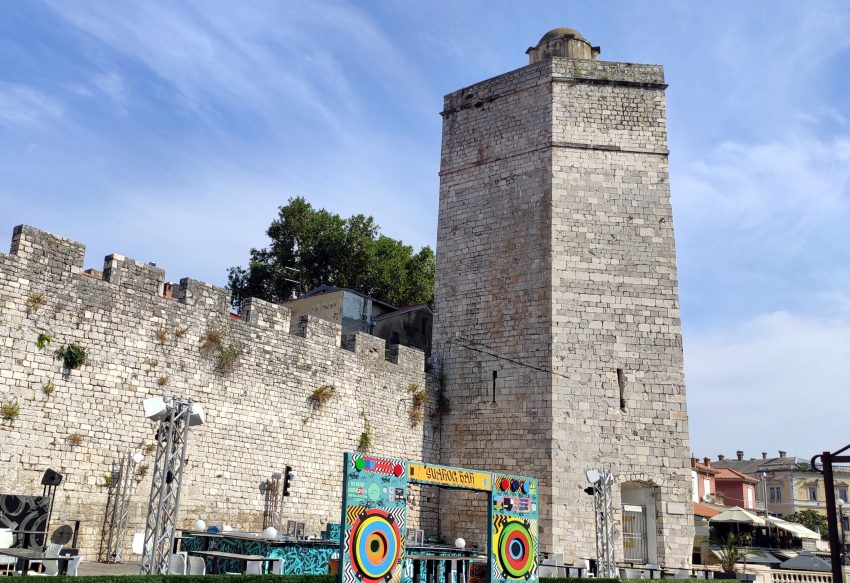
Captain’s Tower (Kapetanova kula) is a Venetian-built defensive tower in Zadar, erected in the 16th century as part of the city’s fortification system against Ottoman threats and named for the nearby residence of the Venetian city captain. Its distinctive pentagonal plan reflects Renaissance-era military design, and the interior reveals multiple levels that feel like they belong to different building phases. Today the stone tower doubles as an exhibition space, so you’ll likely move from small gallery rooms to a stair climb. The real payoff is the rooftop view across Old Town rooftops and out to the Adriatic, a quick ascent that many visitors remember for its “small climb, big view” feel.
Location: Trg pet bunara 1, 23000, Zadar, Croatia | Hours: Monday – Friday: 10:00–12:00 & 17:00–20:00. Saturday: 10:00–13:00. Closed on Sunday. | Price: Viewpoint climb: €3; Exhibition area: free. | Distance: 0.8km

11. Five Wells Square

Five Wells Square
Five Wells Square
CC BY-SA 3.0 / Mietek Ł
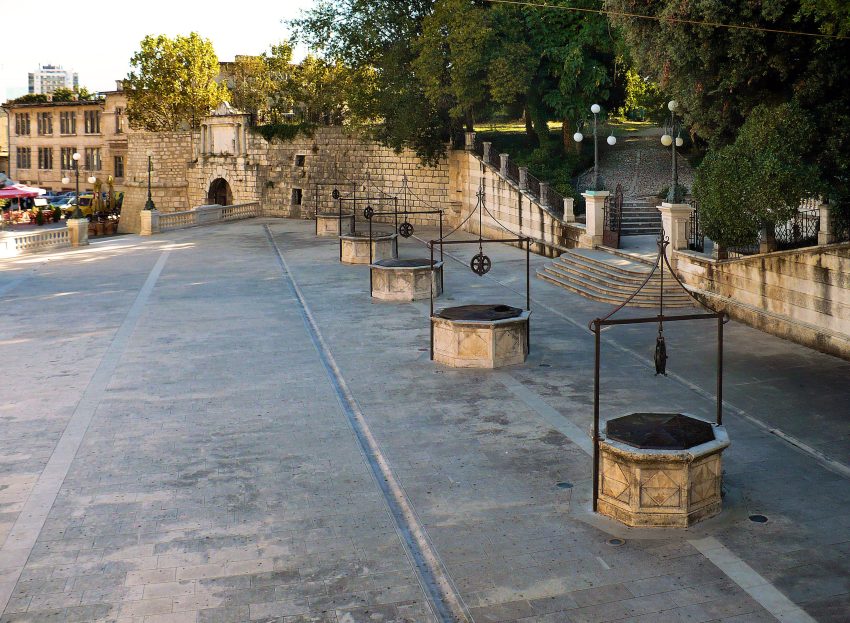
Five Wells Square (Trg pet bunara) is a small stone-paved square in Zadar’s Old Town, built around a 16th-century survival system designed for siege conditions. In 1574, Venetian authorities created a large underground cistern and set five aligned stone wellheads above it, turning water access into part of the city’s defenses. The wells still sit in a neat row, with carved stone details and a calm, enclosed feel against remnants of walls. Steps behind the wells lead up toward the ramparts, where you can look out over the fortifications and the approach into the old center. Nearby, the Captain’s Tower and the greenery of Queen Jelena Madije Park add a contrasting, everyday atmosphere.
Location: Trg pet bunara 1, 23000, Zadar, Croatia | Hours: 24 Hours. | Price: Free. | Distance: 0.8km

12. Land Gate

Land Gate
Land Gate
CC BY-SA 2.5 / Böhringer Friedrich
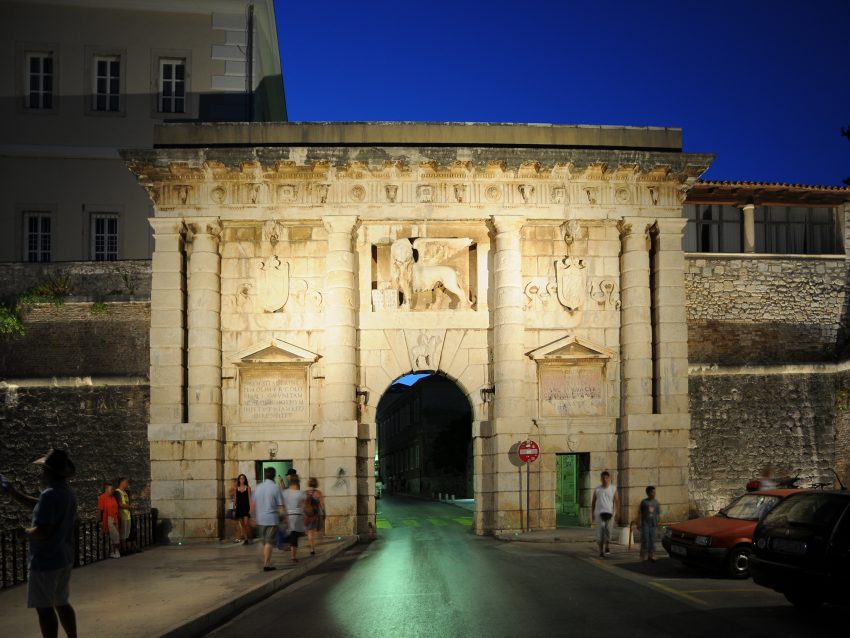
Zadar’s Land Gate (Kopnena vrata) is the monumental stone entrance cut into the Old Town’s southern fortifications, marking the threshold from the mainland into the peninsula city. Completed in 1543 by Venetian military architect Michele Sanmicheli, it was designed as both checkpoint and proclamation, with a triumphal-arch form that still feels ceremonial as you pass through. On the façade, the winged lion of St. Mark asserts Venetian rule, while reliefs of local saints add a Dalmatian counterpoint. Standing above the former Foša harbor, the gate’s carved coats of arms and crisp stonework reward close looking, and the arch neatly frames your first view into Zadar’s tight lanes.
Location: Foša - The Land Gate, Ul. Među bedemima, 23000, Zadar, Croatia | Hours: 24 Hours. | Price: Free. | Distance: 0.8km

13. Sea Organ
Sea Organ
Sea Organ
CC BY-SA 4.0 / LBM1948
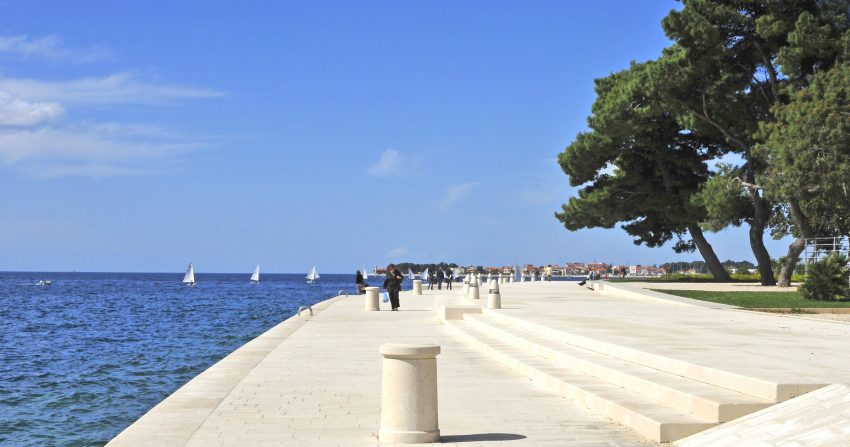
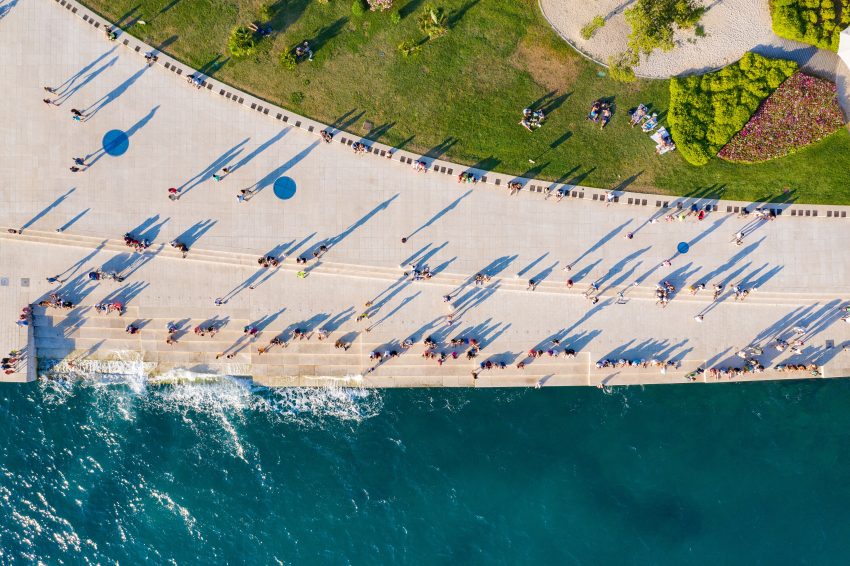
Zadar’s Sea Organ (Morske orgulje) is a waterfront sound sculpture: broad pale steps that descend into the Adriatic, hiding tuned pipes and resonating chambers beneath. Designed by Croatian architect Nikola Bašić in 2005 as part of rebuilding a once-bleak seawall, it turned a hard edge of stone into a place with a voice and won the European Prize for Urban Public Space. Sit on the steps and you’ll hear low, shifting chords as waves compress air through the tubes—sometimes a soft lullaby, sometimes a sudden swell, never repeating the same way twice. Locals linger here at sunset, listening as the sea “plays” underfoot.
Location: Obala kralja Petra Krešimira IV, 23000, Zadar, Croatia | Hours: 24 Hours. | Price: Free. | Distance: 0.9km

14. Greeting to the Sun
Greeting to the Sun
Greeting to the Sun
CC BY-SA 2.0 / dronepicr
Greeting to the Sun (Pozdrav Suncu) is Nikola Bašić’s solar-powered installation set into Zadar’s stone waterfront at the tip of the Old Town peninsula. In daylight it reads as a wide circle of glass plates, but after sunset it turns stored energy into a shifting carpet of color underfoot, drawing people to linger as twilight deepens. Smaller surrounding discs allude to the solar system, and inscriptions around the edge tie the cosmic theme to Zadar’s local calendar of saints’ days. The experience is tactile and communal: children sprint across the glowing surface, couples stop for photos, and the light pulses seem to answer the sea’s rhythm nearby.
Location: Istarska obala, 23000, Zadar, Croatia | Hours: 24 Hours. | Price: Free. | Distance: 0.9km

15. The Promenade
The Promenade
The Promenade
CC BY-SA 2.0 / dronepicr
The Promenade (the Riva) is Zadar’s waterfront walk along the Old Town seawall, where the peninsula’s “stone vessel” shape feels most tangible as you pace the edge of the Adriatic. Built in 1871–1874 after Austria removed the old southern ramparts, it turned a former defensive line into a broad public stage for daily life—strollers, sailors returning to shore, and evenings spent watching the islands across the channel. Palms, cafés, and benches frame long sightlines to the fortifications, with occasional elevated stretches above the city for wide views. Near the end, wave-driven pipes of the Sea Organ add a low, shifting soundtrack, and after dark the solar Greeting to the Sun turns the pavement into a quiet light display.
Location: Bedemi zadarskih pobuna, 23000, Zadar, Croatia | Hours: 24 Hours. | Price: Free. | Distance: 0.9km

Best Day Trips from Zadar

A day trip from Zadar offers the perfect opportunity to escape the urban rhythm and discover the surrounding region's charm. Whether you're drawn to scenic countryside, historic villages, or cultural landmarks, the area around Zadar provides a variety of easy-to-reach destinations ideal for a one-day itinerary.

1. Trogir
The Complete Guide to Trogir
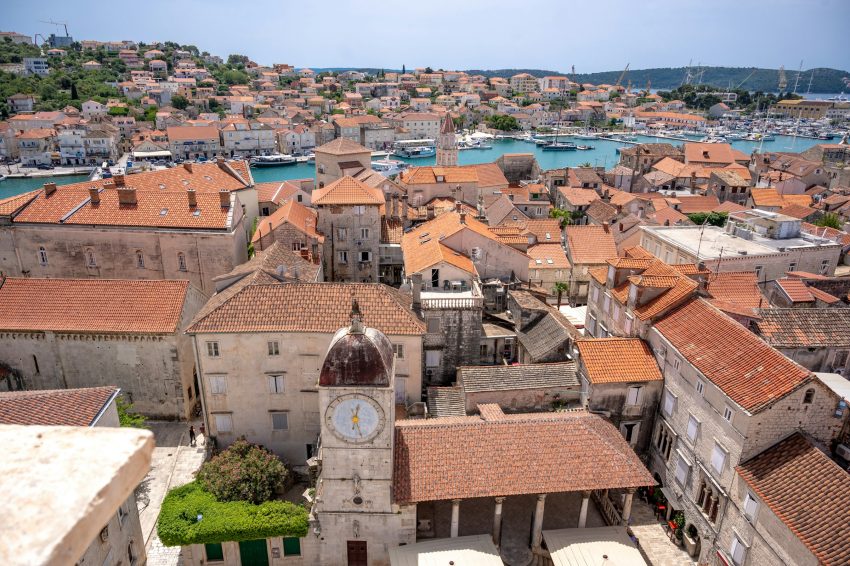
Trogir is a compact, walkable coastal town that rewards slow wandering: stone lanes, lively waterfront cafés, and viewpoints that seem to appear around every corner. The old town sits on a small island connected by bridges, so it’s easy to combine sightseeing with relaxed breaks by the sea. It’s especially enjoyable in the early morning and at sunset, when the…
Visiting Trogir
Powered by GetYourGuide

2. Split

The Complete Guide to Split
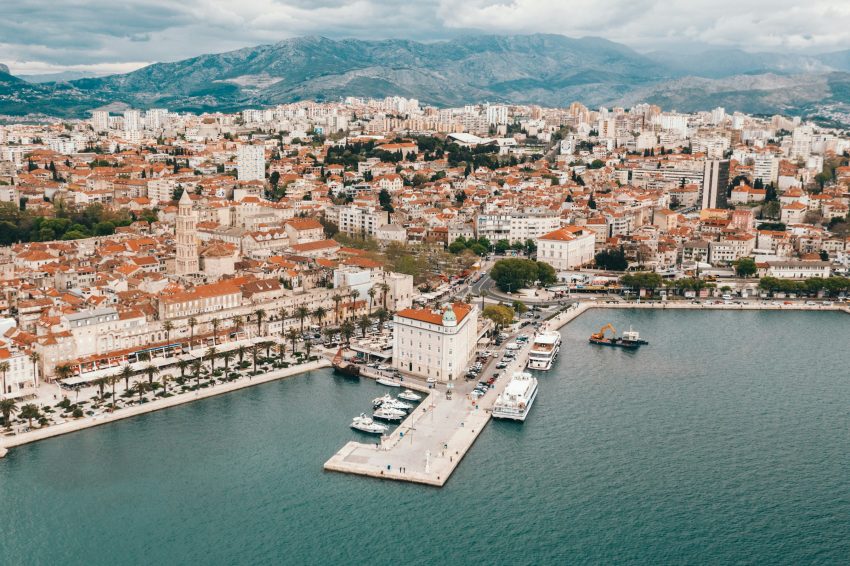
Split is a lively coastal city on Croatia’s Dalmatian coast, set along the Adriatic Sea with mountains rising just behind the waterfront. It’s a place where everyday life unfolds inside and around ancient stone streets, yet the mood is modern—cafés spill onto promenades, ferries come and go, and the city stays active well into the evening. A visit to Split…
Visiting Split
Powered by GetYourGuide

3. Pula

The Complete Guide to Pula
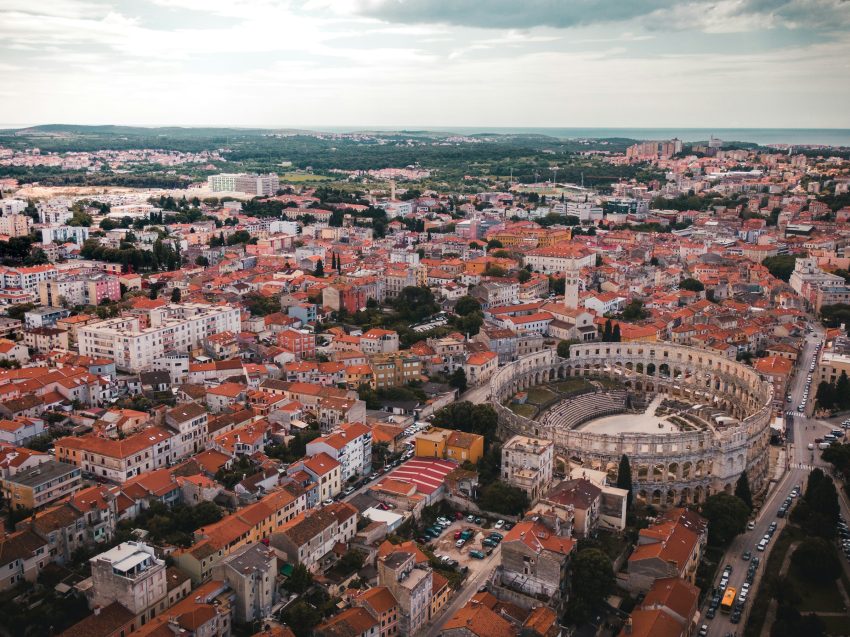
Pula is a laid-back coastal city at the southern tip of the Istrian Peninsula, where Roman-era landmarks sit alongside working harbors, café-lined streets, and easy access to beaches and pine-fringed coves. It’s compact enough to explore on foot, yet surrounded by small seaside neighborhoods and nature spots that make it feel like a base for both culture and swimming days.…
Visiting Pula
Powered by GetYourGuide

4. Hvar

The Complete Guide to Hvar
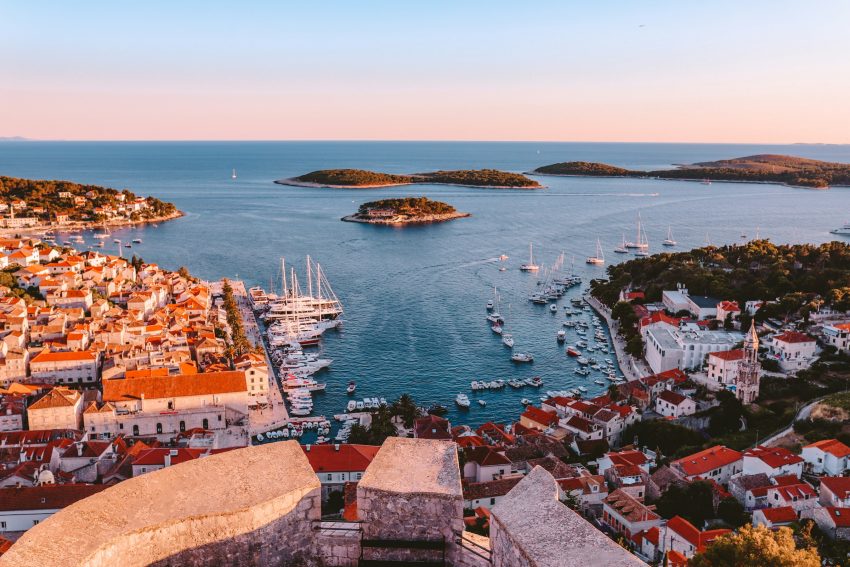
Hvar is a sun-soaked island town in Croatia’s Dalmatia region, known for its polished waterfront, honey-colored stone streets, and a social scene that shifts effortlessly from lazy café mornings to lively evenings. The old town is compact and walkable, with viewpoints, small museums, and a harbor lined with boats that make it feel both historic and effortlessly modern. If you…
Visiting Hvar
Powered by GetYourGuide

Where to Stay in Zadar

For first-time visitors, staying on Zadar’s Old Town peninsula is the most rewarding choice because you can walk to the waterfront (Sea Organ and Greeting to the Sun), the main squares, museums, and restaurants in minutes, and you’ll feel the city’s evening atmosphere without needing transport. A strong option here is Bastion Heritage Hotel, which suits travelers who want a boutique, historic setting close to the sights while still feeling quiet and polished at night. Another convenient Old Town base is Art Hotel Kalelarga, a good pick if you want modern comfort right by the main pedestrian street for effortless dining and strolling.

If you prefer easier parking, a bit more space, and quick access to beaches while still being close to the center, look at the Borik area; it’s practical for families and anyone planning beach-heavy days. Falkensteiner Club Funimation Borik works well for travelers who want resort-style facilities and a straightforward beach setup. For a quieter, upscale stay with sea views and a more relaxed pace, Hotel Niko is a solid choice, especially if you like being near the water while keeping the Old Town within an easy ride or longer walk.

Using the our Hotel and Accomodation map, you can compare hotels and short-term rental accommodations in Zadar. Simply insert your travel dates and group size, and you’ll see the best deals for your stay.

Zadar Accommodation Map

Best Time to Visit Zadar

Zadar in Spring (March–May)

Spring is one of the most comfortable times to visit: mild temperatures, longer days, and fewer crowds than summer. It’s ideal for walking the old town, cycling along the coast, and taking early-season boat trips when the sea is starting to warm. Cultural calendars often begin to pick up, and you’ll find a pleasant, local feel in cafés and markets.

Zadar in Summer (June–August)

Summer brings hot, sunny weather and the liveliest atmosphere, with long evenings on the promenade and plenty of swimming and island excursions. This is peak season, so expect higher prices and busier streets, especially around sunset at the waterfront. Festival highlights often include open-air concerts and events connected to the Zadar Summer Theatre Festival, which adds extra energy to the old town.

Zadar in Autumn (September–November) (Best)

Early autumn is a sweet spot: the sea stays warm, the light is beautiful, and the crowds thin noticeably after August. It’s excellent for combining beach time with sightseeing, and restaurants tend to showcase seasonal ingredients. If you want the best balance of weather, value, and atmosphere, September and early October are standout choices.

Zadar in Winter (December–February)

Winter is cooler and quieter, with a more local rhythm and occasional windy days. It’s a good time for museum visits, relaxed dining, and enjoying the city without queues, though some tourism services run reduced schedules. Seasonal festivities and holiday markets can add charm, especially in December, while day trips depend more on weather conditions.

Annual Weather Overview

  • January 10°C
  • February 11°C
  • March 14°C
  • April 17°C
  • May 21°C
  • June 26°C
  • July 29°C
  • August 29°C
  • September 25°C
  • October 20°C
  • November 15°C
  • December 11°C

How to get to Zadar

Getting to Zadar by air

Nearest airports: Zadar Airport (ZAD) is the closest, with seasonal and year-round routes; Split Airport (SPU) and Zagreb Airport (ZAG) are useful alternatives for wider connections.
From Zadar Airport to the city: Use airport buses/shuttles timed to flights when available, or take a taxi/ride service for the fastest transfer.
Tips: In summer, book flights and airport transfers early; in shoulder seasons, you’ll often find better fares and easier logistics.

Getting to Zadar by train

Important note: Rail connections to Zadar are limited compared with buses and driving, and routes/timetables can be indirect.
Train operators and planning: Check Croatian Railways for schedules and tickets: https://www.hzpp.hr/en
How to combine train + bus: Many travelers use trains to reach larger hubs and then continue by intercity bus to Zadar for more frequent departures.

Getting to Zadar by Car

Driving routes: The A1 motorway is the main north–south artery, making road travel straightforward from major Croatian cities. Coastal roads can be slower but scenic.
Parking: In the old town area, parking is limited; use paid lots/garages near the peninsula and walk in.
Border/season notes: In peak summer, allow extra time for traffic and toll queues; keep coins/cards ready for tolls and parking meters.

Travelling around Zadar

On foot: The historic peninsula is best explored walking—most sights are close together.
Local buses: City buses connect neighborhoods, beaches, and the main bus station.
Taxis and ride services: Handy for late evenings or airport transfers.
Boats and ferries: Use the port for island day trips and coastal connections; schedules vary by season, so check times in advance.
More from this area