Split, Croatia: The Ultimate Travel Guide 2026
The Complete Guide to Split

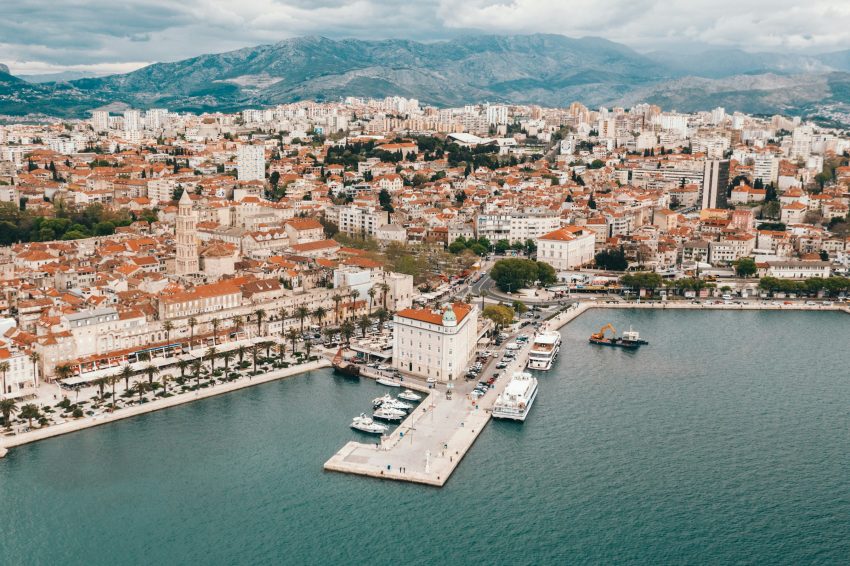
Split is a lively coastal city on Croatia's Dalmatian coast, set along the Adriatic Sea with mountains rising just behind the waterfront. It's a place where everyday life unfolds inside and around ancient stone streets, yet the mood is modern-cafés spill onto promenades, ferries come and go, and the city stays active well into the evening.

A visit to Split works beautifully as both a city break and a base for exploring the surrounding Dalmatian islands and nearby towns. You can spend mornings wandering atmospheric lanes and markets, afternoons swimming at local beaches, and evenings enjoying seafood and wine along the Riva promenade as the sun drops behind the harbor.

What makes Split especially rewarding is how easy it is to mix slow sightseeing with simple pleasures: a short climb for panoramic views, a quick bus ride to a beach, or a ferry hop for a day trip. Whether you're traveling for culture, food, or the sea, Split delivers a balanced, walkable experience with plenty to do without feeling overwhelming.

History of Split

Split in Antiquity: The Rise of Diocletian’s Palace

Split’s story is inseparable from the construction of Diocletian’s Palace at the turn of the 4th century. Built as a fortified imperial residence, the complex combined military walls, ceremonial spaces, temples, and living quarters. Over time, what began as a palace evolved into the structural core of an urban settlement, with streets and buildings adapting to the palace’s grid.

Split in the Early Middle Ages: From Palace to City

After the decline of Roman authority, the palace’s strong walls offered security and attracted inhabitants. As populations shifted and regional power structures changed, the palace’s interior gradually filled with homes, workshops, and places of worship. This period laid the foundations for Split as a living city rather than a preserved monument, with layers of daily life built directly into Roman stone.

Split under Medieval and Renaissance Influences

Across the medieval centuries, Split developed civic institutions and expanded beyond the palace walls. Religious architecture and public buildings reshaped parts of the urban fabric, while trade and maritime connections supported growth. Renaissance-era additions and renovations introduced new stylistic elements, creating the distinctive blend of Roman, medieval, and later forms that still defines the old core.

Split in the Venetian Era and Early Modern Period

As regional politics shifted, Split experienced periods of external influence that affected fortifications, commerce, and cultural life. Maritime trade remained central, and the city’s waterfront and defenses evolved in response to changing military and economic realities. The urban landscape continued to densify, with older structures repurposed and rebuilt rather than replaced.

Split in the 19th and 20th Centuries: Modernization and Expansion

The modern era brought new infrastructure, neighborhoods, and a growing port economy. Split expanded well beyond its historic core, developing broader boulevards and residential districts. In the 20th century, the city’s identity as a major coastal hub strengthened, and the old center increasingly became both a lived-in district and a focal point for visitors.

Split Today: Heritage as a Living City

In contemporary times, Split balances preservation with everyday urban life. The palace and surrounding old town remain active neighborhoods with shops, apartments, cafés, and cultural venues. This continuity—ancient spaces still used for modern routines—is one of Split’s defining characteristics and a key reason its heritage feels immediate rather than museum-like.

Moira & Andy
Moira & Andy

Hey! We're Moira & Andy. From hiking the Camino to trips around Europe in Bert our campervan — we've been traveling together since retirement in 2020!

Read our full story here

Visiting Split for the first time and wondering what are the top places to see in the city? In this complete guide, I share the best things to do in Split on the first visit. To help you plan your trip, I have also included an interactive map and practical tips for visiting!

This website uses affiliate links which earn a small commission at no additional cost to you.
Powered by GetYourGuide

21 Best places to See in Split

This complete guide to Split not only tells you about the very best sights and tourist attractions for first-time visitors to the city but also provide insights into a few of our personal favorite things to do.

This is a practical guide to visiting the best places to see in Split and is filled with tips and info that should answer all your questions!

1. Grgur Ninski Statue
Grgur Ninski Statue
Grgur Ninski Statue
CC BY-SA 4.0 / Zvone00
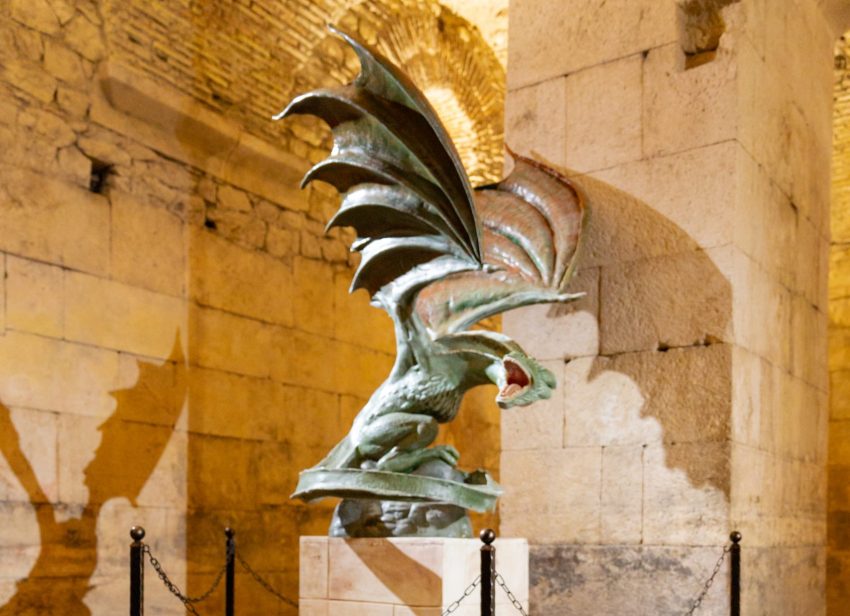
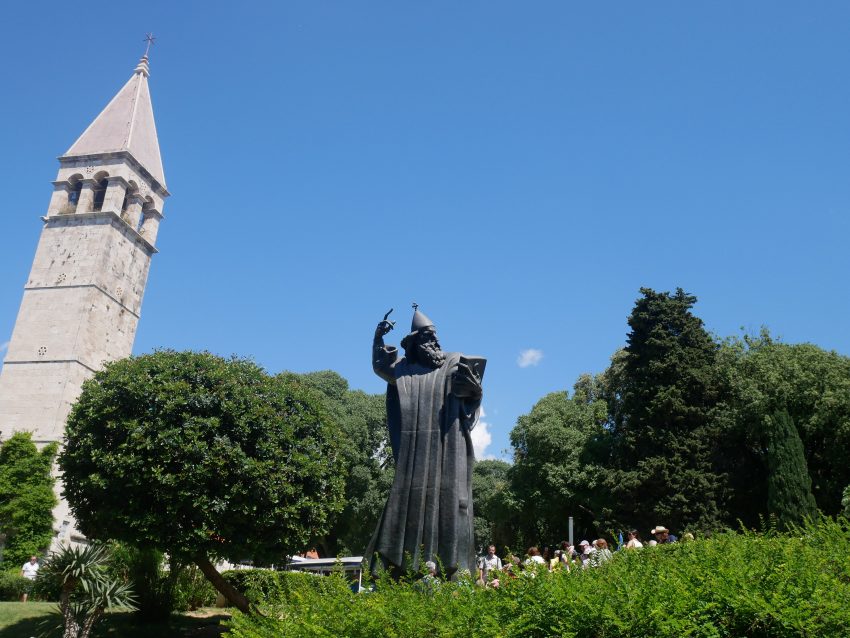
Just outside Split’s Golden Gate by Diocletian’s Palace, the Grgur Ninski Statue is a 28‑foot (over 8 m) bronze bishop with a stern, guardian-like stance. It portrays Gregory of Nin, appointed in 926 and remembered for pushing to preach in the people’s language rather than Latin—an act Croatians link to defending their language and culture. Sculpted in 1929 by Ivan Meštrović, the monument has had a restless past: it stood inside the palace until 1941, was displaced during the Italian occupation, and was set here in 1954. Visitors crowd around one detail—the big toe, rubbed so often for luck it gleams smooth and golden against the dark metal.
Location: Ul. kralja Tomislava 12, 21000, Splitska, Croatia | Hours: 24 Hours. | Price: Free. | Distance: 0.6km


Here is a complete selection of hotel options in Split. Feel free to review each one and choose the stay that best suits your needs.

2. Archaeological Museum

Archaeological Museum
CC BY-SA 2.0 / TimeTravelRome
Split’s Archaeological Museum, founded in 1820, is Croatia’s oldest museum and a key place to understand the wider Roman world around ancient Salona. Its collection runs to roughly 150,000 objects spanning prehistory, Greek settlement on the Adriatic, the Roman provincial and Early Christian period, and the early Middle Ages. Visitors tend to remember the lapidarium: arcaded corridors and a courtyard garden crowded with inscribed stones, sarcophagi, and carved architectural fragments that read like a public record in marble. Inside, smaller finds—Graeco-Hellenistic ceramics, Roman glass, clay lamps, coins, and gems—add texture, though some travelers note the indoor displays can feel lightly explained.
Location: Ul. Zrinsko Frankopanska 25, 21000, Split, Croatia | Hours: (Summer) June 1 – September 30; Monday – Saturday: 09:00–14:00 & 15:00–20:00. Closed on Sunday. (Winter) October 1 – May 31; Monday – Friday: 09:00–14:00 & 15:00–20:00. Saturday: 09:00–14:00. Closed on Sunday. | Price: Adults: €8; Children/Students/Persons with disabilities/Retirees: €4; Family ticket: €15; Combined ticket with Salona (within 7 days): Adults €10, Children €5. | Website | Distance: 0.7km

Traveling to a country with a different currency? Avoid ATM transaction fees and pay in local currency with a Wise Card. Having used it for over 5 years, we've saved loads on fees!

3. City Museum of Split

City Museum of Split
CC BY-SA 3.0 / JoJan
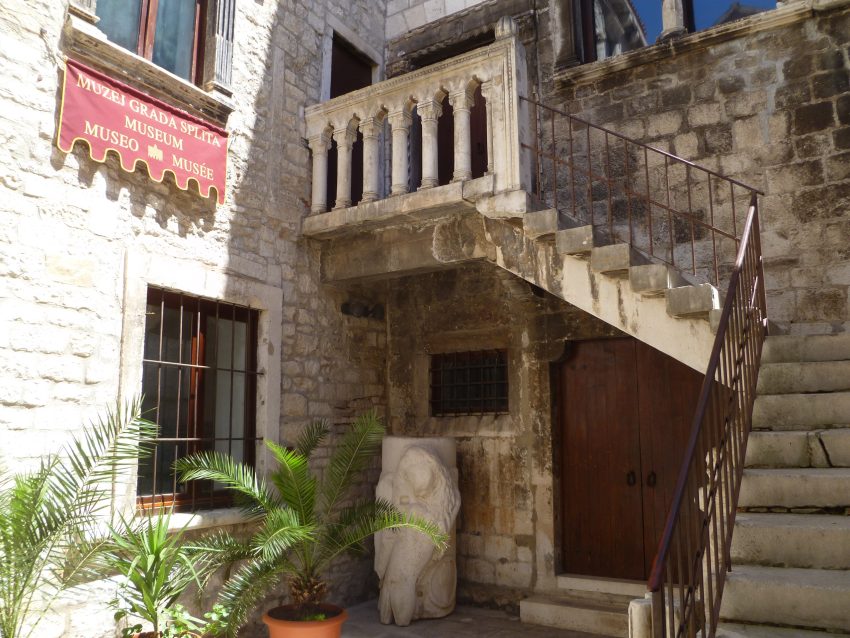
The City Museum of Split is housed in the Gothic Papalić family palace, a medieval residence tucked within Diocletian’s ancient walls in Split’s UNESCO-listed core. Its centerpiece is Dmine Papalić’s trove of stone monuments gathered from the ruins of nearby Salona, later expanded with paintings, sculpture fragments, statues salvaged from Split buildings, and city documents, photographs, and charts. Founded in 1946 and shaped by early director Marko Uvodić, the museum developed into a full permanent display by 1992. Visitors often linger over the excavations and in-situ layers that make Roman-era life feel close at hand, and the compact layout suits a focused 30–60 minute visit.
Location: Papalićeva ul. 1, 21000, Split, Croatia | Hours: Tuesday – Sunday: 09:00–20:00. Closed on Monday. | Price: Adults: €10; Concessions: €8; Family: €18; Under 7: free. | Website | Distance: 0.7km

Explore Split at your own pace with our self-guided walking tour! Follow our curated route to discover must-see sights and local secrets that makes Split one of the best places to visit in Croatia.

4. Church of Saint Martin

Church of Saint Martin
CC BY-SA 4.0 / Yamen
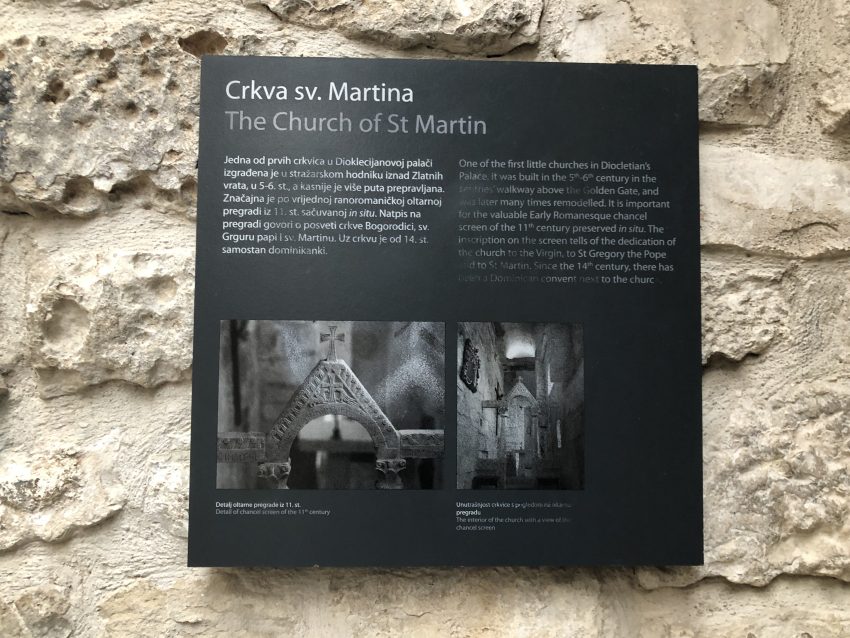
The Church of Saint Martin in Split is a tiny chapel tucked into a former guard space in the walls above the Golden Gate of Diocletian’s Palace, showing how Roman defenses were repurposed for worship. It became a small church around the 6th century as refugees reshaped spaces inside the palace complex, and it has been cared for by Dominican sisters since a 14th-century settlement. Inside, look for the marble chancel screen carved with grapevines and griffins, and the main altar dating to the 9th century. The narrow stone stair and corridor-like room make it feel like a secret, with small window openings that give a peek down toward the gate.
Location: Dioklecijanova ul. 10, 21000, Split, Croatia | Hours: Check official website. | Price: From €1 (small on-site contribution commonly requested). | Distance: 0.7km

5. Golden Gate

Golden Gate
Golden Gate
CC BY-SA 2.0 / dronepicr
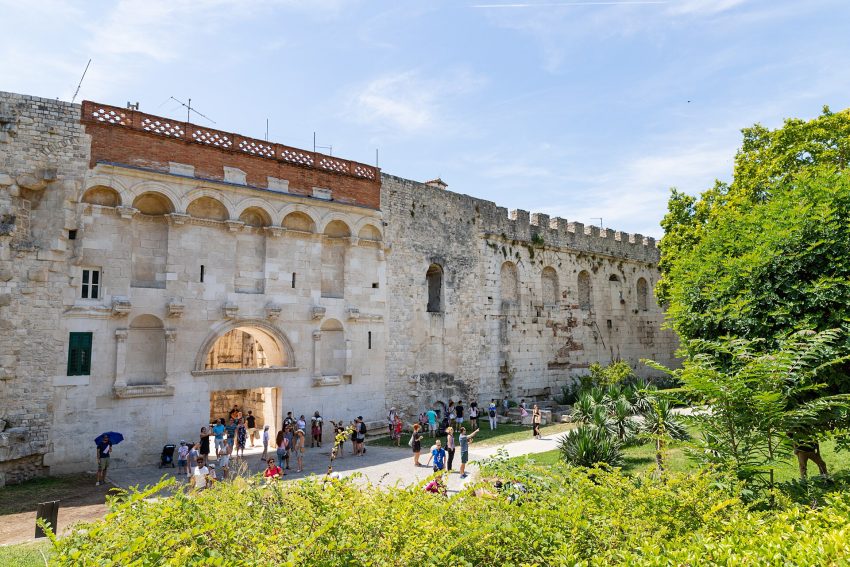
Golden Gate (Zlatna vrata) is the northern Roman entrance to Diocletian’s Palace in Split, built in the 4th century as the emperor’s ceremonial way in from the direction of Salona. Passing through its hefty stone arch feels like stepping across a hard boundary between modern streets and the palace’s tight grid. Look for the deep niches flanking the gateway, made for statues of the Tetrarchs—Diocletian and his co-rulers—hinting at the propaganda once on display. Above the outer side, the tiny 6th-century Church of Saint Martin is tucked into the structure, a surprising medieval layer. Just outside stands Ivan Meštrović’s 28‑foot statue of Grgur Ninski, looming over the approach.
Location: Dioklecijanova 7, 21000, Split, Croatia | Hours: 24 Hours. | Price: Free. | Distance: 0.7km

6. Iron Gate

Iron Gate and Church of Our Lady of the Bell Tower
CC BY-SA 2.0 / Fred Romero
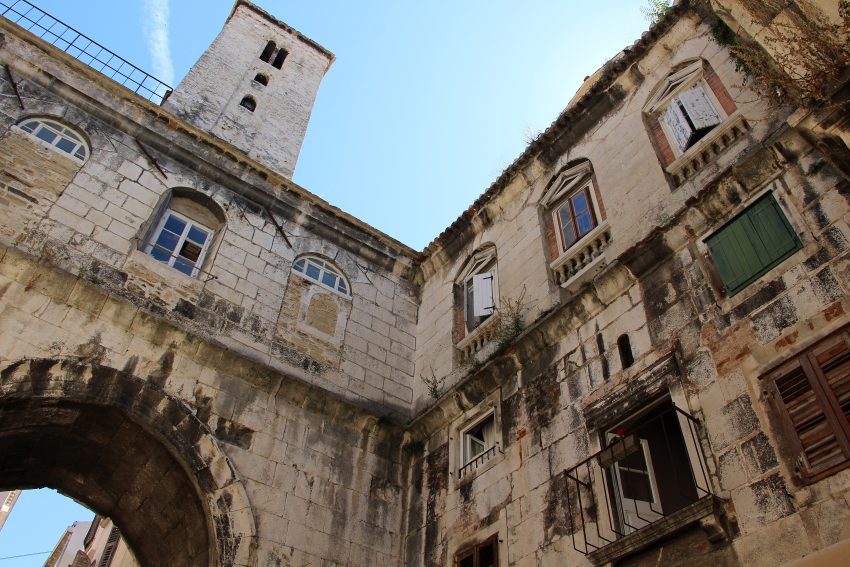
The Iron Gate (West Gate) is one of Diocletian’s Palace’s four original entrances, where Roman fortifications still function as a busy passage in Split’s Old Town. It sits within a tight urban cluster near People’s Square (Pjaca), alongside the old City Hall, a clock tower, and several patrician palaces (Nakić, Karepić, Cambi, and Cipriani). Look closely at the rampart: the gate’s defensive setup once included a double-door “safety chamber,” and on the north wall a sealed medieval niche later revealed a relief of hands holding a crown, now restored to its spot. Tucked into the structure is the tiny Church of Our Lady of the Bell Tower, renovated when its bell tower was added in the 11th century.
Location: Peristil ul. 2, 21000, Split, Croatia | Hours: Check official website. | Price: Check official website. | Distance: 0.7km

7. Game of Thrones Museum

Game of Thrones Museum
CC BY-SA 2.0 / dronepicr
The Game of Thrones Museum in Split is a small, fan-built exhibition in the Old Town that gathers the city’s on-screen connection to the series into one stop. It sits at 9 Bosanska Street, a short walk from several real filming spots, and leans into mood with dark walls and a deliberately grim atmosphere. Inside, visitors browse photos from the production alongside replicas of weapons and costumes, then move through character-themed rooms dedicated to figures such as Khaleesi, Tyrion, Hodor, and Jon Snow. An unexpected touch is the scent design—cedar, jasmine, lavender, and essential oils—meant to make the space feel more immersive than a standard display room.
Location: Bosanska ul. 9, 21000, Split, Croatia | Hours: Monday: 09:00–24:00. Tuesday: 09:00–24:00. Wednesday: 09:00–24:00. Thursday: 09:00–24:00. Friday: 09:00–24:00. Saturday: 09:00–24:00. Closed on Sunday. | Price: Check official website. | Distance: 0.7km

8. People's Square
People’s Square
People’s Square
CC BY-SA 4.0 / Liilia Moroz
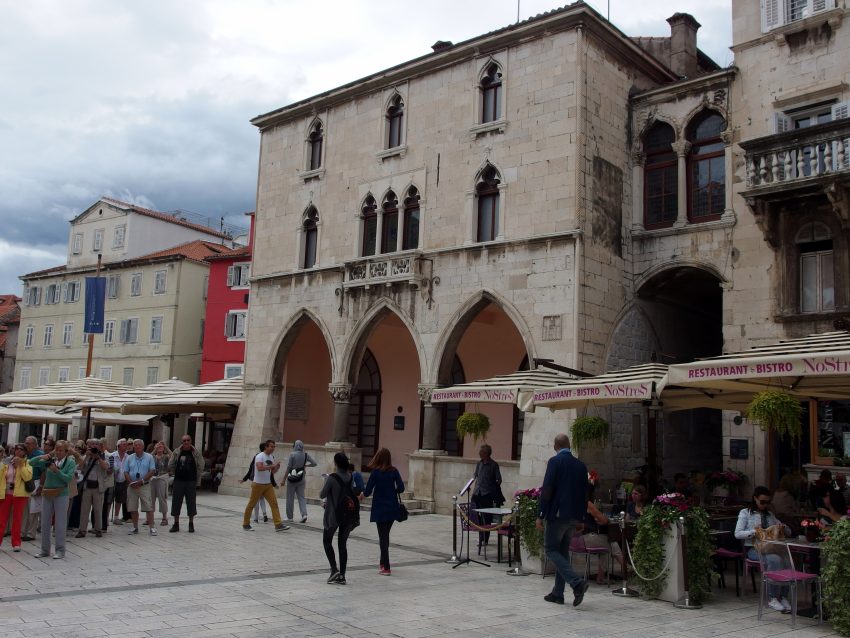
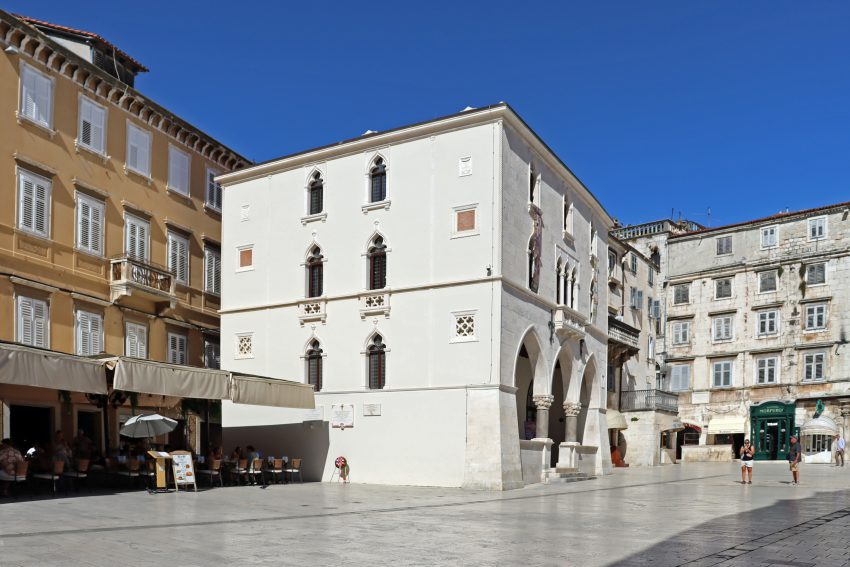
People’s Square (Narodni trg, or Pjaca) is Split’s long-running civic meeting place and the first settled area that grew beyond the walls of Diocletian’s Palace. It’s an intimate stone square where café tables spill out beneath a mix of Renaissance, Venetian, and Gothic façades, so you’re always close enough to hear conversations and watch the lanes funnel in and out. Look for the Old Town Hall on the north side, a 15th-century building that still hosts exhibitions, and the unusual town clock marked with 24 numerals instead of 12. The Morpurgo Bookstore, trading since 1860, adds a lived-in feel, and the square stays lively from morning coffee to evening socializing.
Location: 21000, Grad, Split, Croatia | Hours: 24 Hours. | Price: Free. | Distance: 0.7km

9. Cathedral of St. Domnius

Cathedral of St. Domnius
CC BY-SA 3.0 / Mattias Hill
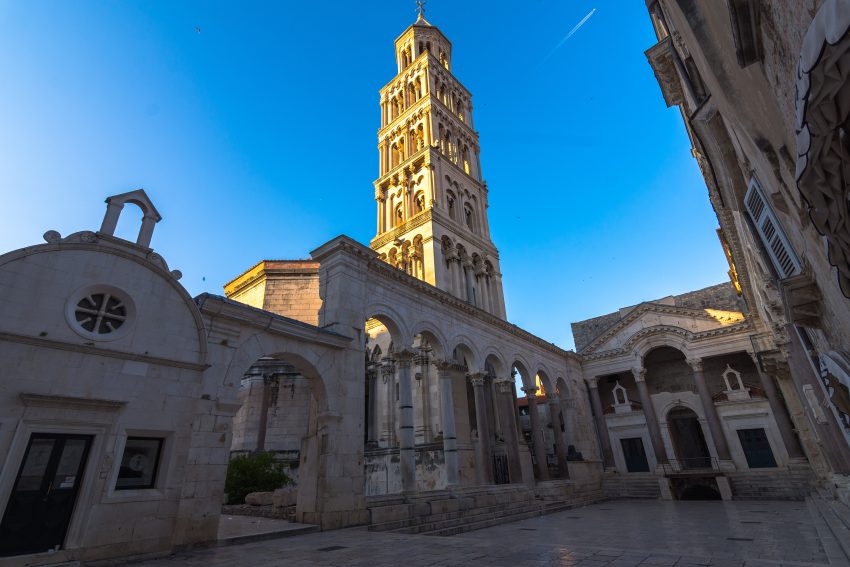
The Cathedral of St. Domnius in Split is a working cathedral built inside Emperor Diocletian’s 3rd-century mausoleum, turning a Roman tomb into a Christian sanctuary by the 7th century. You enter from the Peristyle, where the palace’s old street grid still converges, and the circular core shows off pale marble, limestone, and brick. The complex grew in layers: a choir was added after consecration, and the bell tower—begun around 1100—was dedicated to St. Domnius, the city’s patron bishop from Salona who was executed in 304. Inside, visitors notice a compact treasury of medieval art and objects, including a 13th-century Madonna and Child panel and a library holding a 6th-century book of gospels.
Location: Ul. Kraj Svetog Duje 3, 21000, Split, Croatia | Hours: Check official website. | Price: Check official website. | Website | Distance: 0.8km

10. Podrum

Podrum
Podrum
CC BY-SA 4.0 / Gaius Cornelius
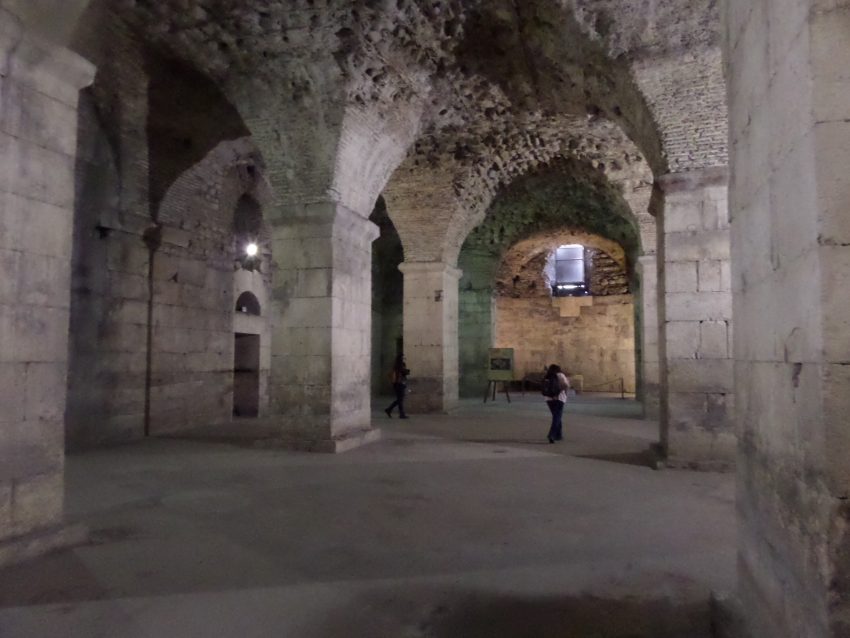
Podrum in Split, Croatia is the underground cellar complex beneath Diocletian’s Palace, built as heavy-duty substructures to support the emperor’s apartments above and to store supplies like wine and food. The stone halls echo the layout of the rooms overhead, so walking the barrel-vaulted corridors feels like tracing a blueprint in reverse. Look for the nymphaeum, a small shrine linked to a freshwater source, and notice how the cool air and acoustics change from narrow passages to broad chambers. You can enter via the Bronze Gate or stairs from the Peristyle, and the preserved western section doubles as a space for fairs and exhibitions. Parts to the east collapsed and are still being restored.
Location: Ul. Iza Vestibula 3, 21000, Split, Croatia | Hours: Daily: 08:30–20:00. | Price: Adults: €10; Concessions: €8; Family ticket: €18. | Website | Distance: 0.8km

11. Ethnographic Museum

Ethnographic Museum
Ethnographic Museum
CC BY-SA 3.0 / Mark Ahsmann
Split’s Ethnographic Museum (Etnografski muzej), founded in 1910, is a compact collection devoted to everyday life in Dalmatia, set within rooms of Diocletian’s Palace beside the Peristyle. Displays linger on what people wore and made: regional costumes, intricate embroidery and knitting, trade goods, plus wood carving, pottery, weapons, and jewelry, including delicate lace from the islands of Pag and Hvar. The ground floor incorporates the 7th‑century Church of Saint Andrew de Fenestris, adding an unexpected archaeological layer to the visit. A staircase also leads up to a Renaissance terrace above the Vestibule, where many visitors pause for wide, rooftop views of the old town. Labels are often bilingual, and the galleries tend to feel calm.
Location: Ul. Iza Vestibula 4, 21000, Split, Croatia | Hours: (Summer) June 1 – August 31; Monday – Friday: 09:00–19:00. Saturday: 10:00–17:00. Sunday: 10:00–14:00. (Winter) November 1 – May 31; Monday – Friday: 09:00–16:00. Saturday: 10:00–14:00. (Winter) September 1 – September 30; Monday – Friday: 09:00–18:00. Saturday: 10:00–17:00. Sunday: 10:00–14:00. (Winter) October 1 – October 31; Monday – Friday: 09:00–17:00. Saturday: 10:00–14:00. Closed on public holidays. | Price: Adults: €7; Schoolchildren/Students/Seniors: €4; Groups (10+): €4 per person; Family ticket: €15; Split Card: free admission. | Website | Distance: 0.8km

12. Temple of Jupiter
Temple of Jupiter
Temple of Jupiter
CC BY-SA 3.0 / Ratomir Wilkowski
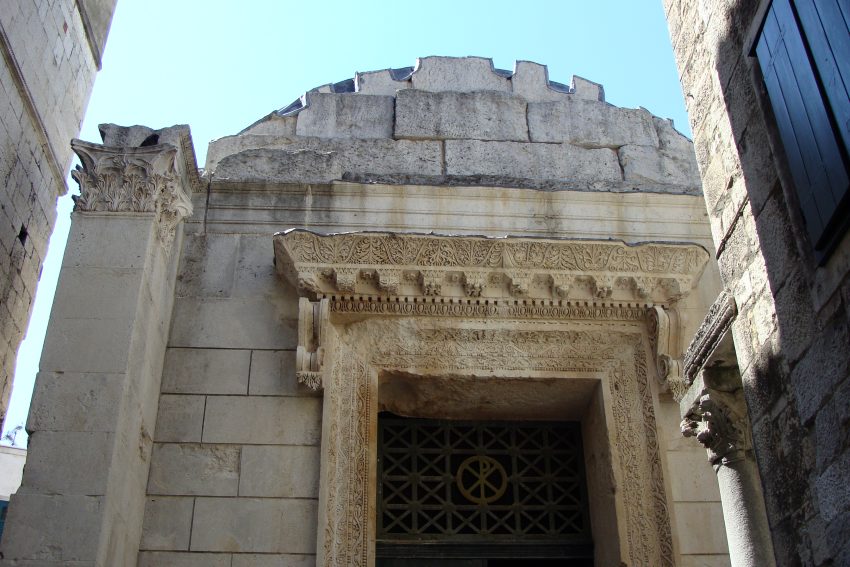
Hidden in a narrow lane off Split’s Peristyle inside Diocletian’s Palace, the Temple of Jupiter is a compact Roman sanctuary built around AD 300 and later converted into the baptistery of Saint John the Baptist. At the entrance, you’ll spot an Egyptian sphinx brought to the palace by Emperor Diocletian, a startling detail in this tight stone setting. Look up for carved figures over the doorway—Victoria, Triton, Helios, Hercules, and Apollo—before stepping into the dim interior where early archbishops’ sarcophagi rest. A large bronze Saint John by Ivan Meštrović anchors the space, and a Romanesque bell tower was added above the vault in the 11th century.
Location: Ul. Kraj Svetog Ivana 2, 21000, Split, Croatia | Hours: Check official website. | Price: Check official website. | Distance: 0.8km

13. Vestibule
Vestibule
Vestibule
CC BY-SA 4.0 / Sumitsurai
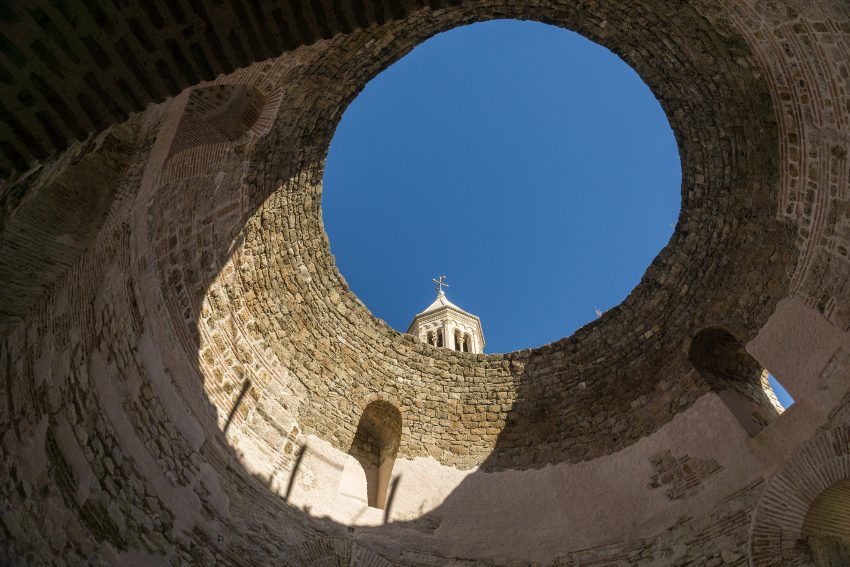
Inside Diocletian’s Palace in Split, the Vestibule is a circular Roman antechamber that once staged the transition from the Peristyle to the emperor’s private apartments. Its most striking feature is what’s missing: the dome is gone, leaving a clean round opening that frames a disk of blue sky like an ancient smoke hole. The rotunda’s stone walls rise like a drum, and the acoustics can turn ordinary footsteps into echoes. If you’re lucky, a klapa a cappella group will be practicing here, their harmonies swirling upward and spilling out through the open roof. The space still functions as a lived-through passageway, not a sealed-off relic.
Location: Ul. Iza Vestibula 1, 21000, Split, Croatia | Hours: 24 Hours. | Price: Free. | Distance: 0.8km

14. Fruit's Square
Fruit’s Square
Fruit’s Square
CC BY-SA 4.0 / Falk2
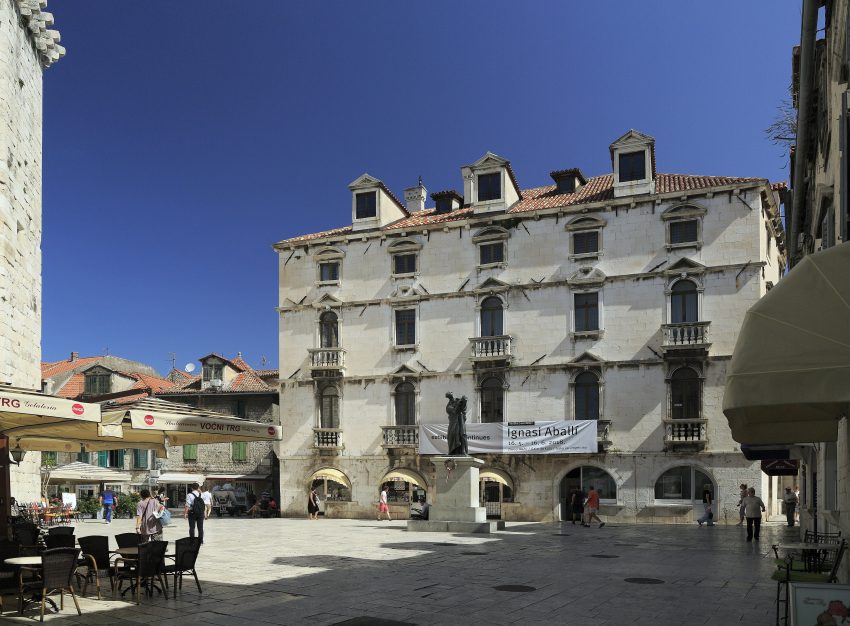
Fruit’s Square (Trg Braće Radić) is a small plaza in Split’s old town, long known by its market nickname from the days when villagers came here to sell fruit. Today it’s a compact pause in the stone lanes, with shade, cafés, and a steady flow of people passing through. The square’s standout sights are the octagonal Venetian tower, a surviving piece of the 15th‑century fortifications, and the 17th‑century Milesi Palace with one of Croatia’s strongest Baroque façades. At the center, the statue of Marko Marulić—Renaissance thinker and “father” of Croatian literature—makes an easy meeting point and photo stop.
Location: Trg Braće Radić 5, 21000, Split, Croatia | Hours: 24 Hours. | Price: Free. | Distance: 0.8km

15. Silver Gate
Silver Gate
Silver Gate
Public Domain / Kev Bourne
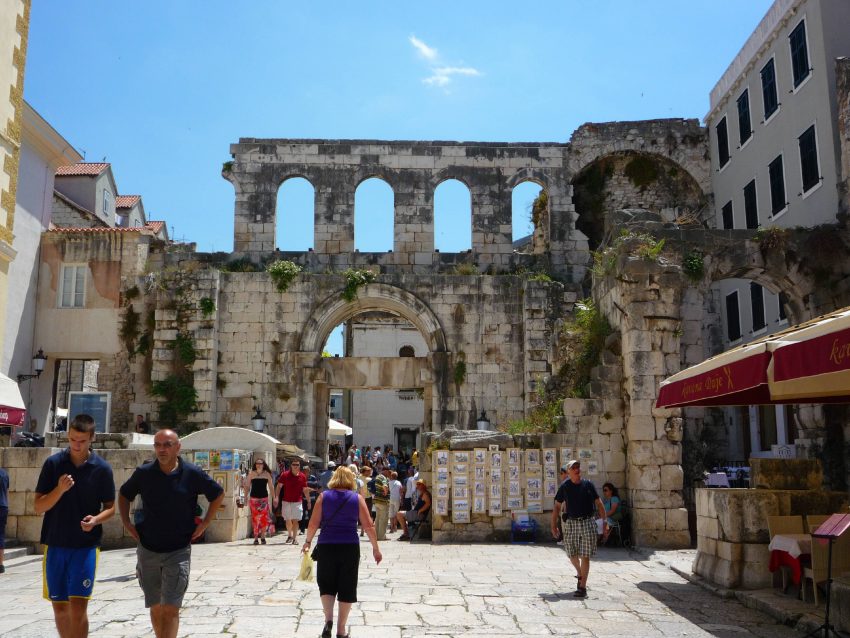
Split’s Silver Gate is the eastern entrance through the walls of Diocletian’s Palace, still functioning as a daily passage between modern streets and the Roman-era grid inside the Old Town. Built to face east toward the Roman settlement of Epetia, it was known in antiquity as the Porta Orientalis, one of four main gates alongside the Golden, Iron, and Bronze gates. Look up to imagine the small corridor where a tiny Church of Saint Apolinar was added around the 6th century when refugees crowded into the palace. You can also spot traces of later changes, including a smaller opening cut beside it under Venetian rule in the 18th century. The pale stonework and constant foot traffic make it feel alive rather than museum-like.
Location: Poljana kraljice Jelene 5, 21000, Split, Croatia | Hours: 24 Hours. | Price: Free. | Distance: 0.8km

16. Diocletian's Palace
Diocletian’s Palace
Diocletian’s Palace
CC BY-SA 4.0 / RajashreeTalukdar
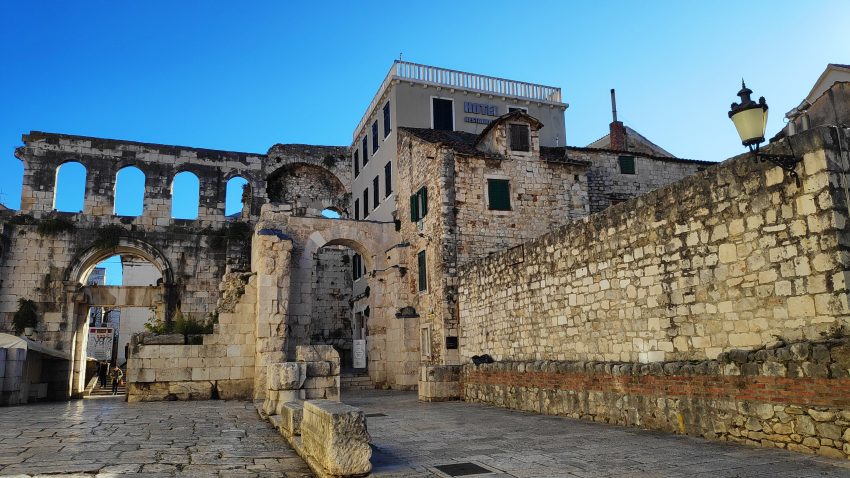
Diocletian’s Palace in Split, Croatia is less a single monument than a still-inhabited Roman fortress that became the city’s Old Town. Built around the start of the 4th century as Emperor Diocletian’s retirement residence and garrison, its irregular rectangle once bristled with 16 towers, with the unfortified southern side opening straight to the sea for unloading through the Sea Gate. After Salona fell to Avars and Slavs in the 7th century, refugees moved inside the walls and the complex never stopped being lived in. You’ll notice how later layers sit on Roman bones—Diocletian’s mausoleum is now the Cathedral of Saint Domnius, and the West Gate still serves as a working entrance amid narrow, maze-like lanes.
Location: 21000, Grad, Split, Croatia | Hours: Daily: Open 24 hours. | Price: Free to wander the palace area; paid entry applies to specific sites inside (e.g., Substructures of Diocletian’s Palace: €10; concessions: €8). | Website | Distance: 0.8km

17. Prokurative
Prokurative
Prokurative
CC BY-SA 4.0 / Berthold Werner
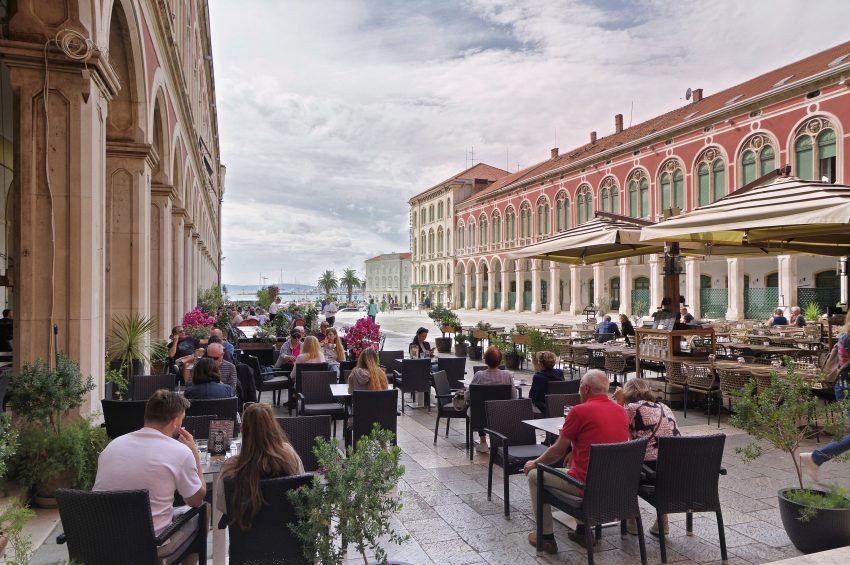
Prokurative (Republic Square, Trg Republike) is Split’s grand 19th-century plaza, created under mayor Antonio Bajamonti as the city expanded beyond its medieval core. Three sides are wrapped by a monumental U of Italianate, Venetian-leaning arcades and columns, with the open end pulling your eye toward the sea and the Riva promenade. Look closely at the façades: neo-Renaissance bas-reliefs sit beneath the windows on the left side, while the right side is notably plain—locals blame a Venetian architect who left for home before finishing the carvings. With cafés under the colonnades and a broad stage-like center, it stays busy in good weather and sometimes turns into an event venue, including the Split Music Festival.
Location: Prokurative, 21000, Split, Croatia | Hours: 24 Hours. | Price: Free. | Distance: 0.9km

18. Riva Harbor

Riva Harbor
Riva Harbor
CC BY-SA 3.0 / Hedwig Storch
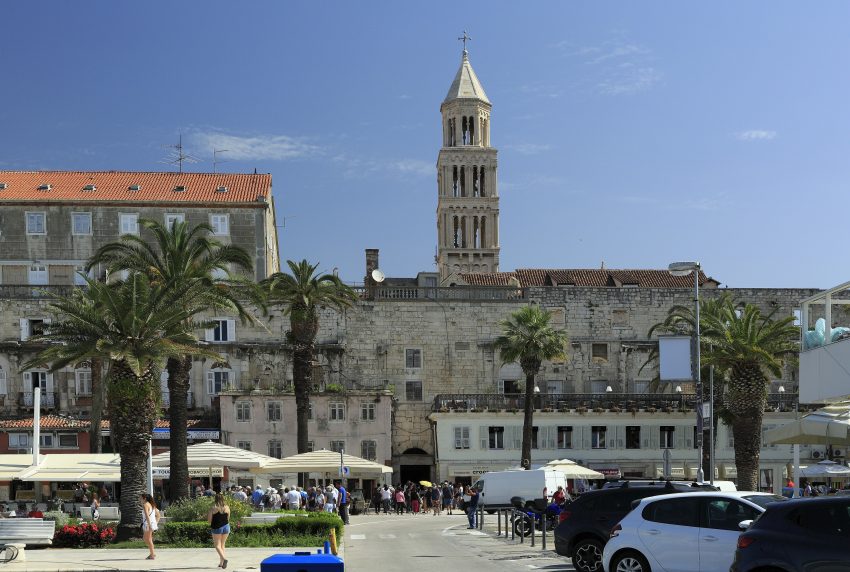
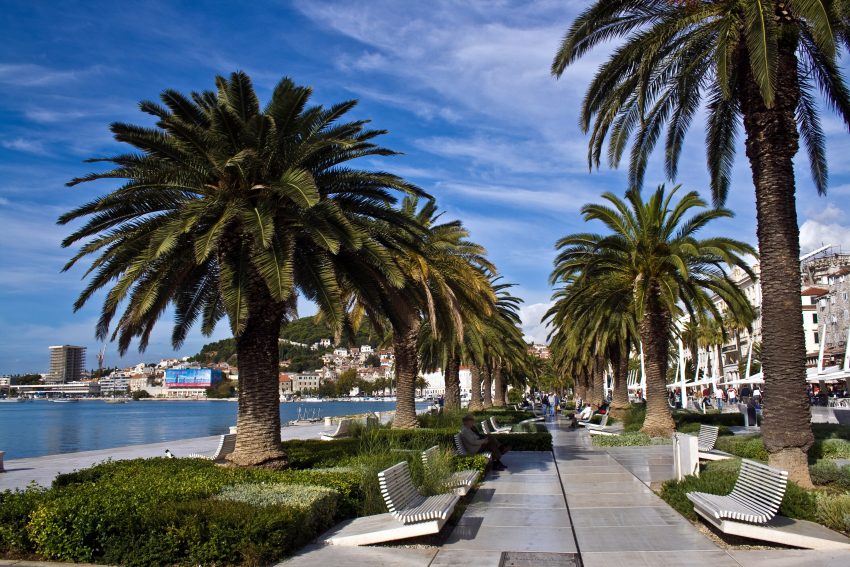
Riva Harbor is Split’s waterfront promenade, a long, palm-lined strip where the Old Town meets the Adriatic and the city’s port life stays in view. It’s built for lingering: rows of benches invite you to sit, watch the sea shift from deep blue to silver, and take in the steady choreography of ferries and cruise ships at the Riva Pier. Cafés and restaurants run almost the entire length, so a quick espresso can easily turn into an hour of people-watching in the sea breeze. As evening arrives, the walkway fills up and the light over the harbor makes sunset feel like the day’s natural finale.
Location: 21.000, Obala Hrvatskog narodnog preporoda 23, 21000, Split, Croatia | Hours: 24 Hours. | Price: Free. | Distance: 0.9km

19. Bronze Gate

Bronze Gate
Bronze Gate
CC BY-SA 4.0 / Falk2
Bronze Gate (Mjedena vrata), once the Porta Meridionalis, is Diocletian’s Palace’s modest southern entrance in Split, opening straight onto today’s Riva waterfront. Unlike the palace’s showier gates, it’s small and unadorned, with no flanking gatehouses—built for function, including quick access to the sea and even an emergency way out if danger came from inland. In Diocletian’s time the water reached the south wall, letting the emperor arrive by ship to the private apartments that occupied the palace’s more luxurious southern half. Stepping through now, you feel the shift from bright promenade to cool stone passages that lead into the palace substructures.
Location: Obala Hrvatskog narodnog preporoda 22, 21000, Split, Croatia | Hours: 24 Hours. | Price: Free. | Distance: 0.9km

20. Natural History Museum and the Zoological Garden
Natural History Museum and the Zoological Garden
CC BY-SA 3.0 / Smooth_O
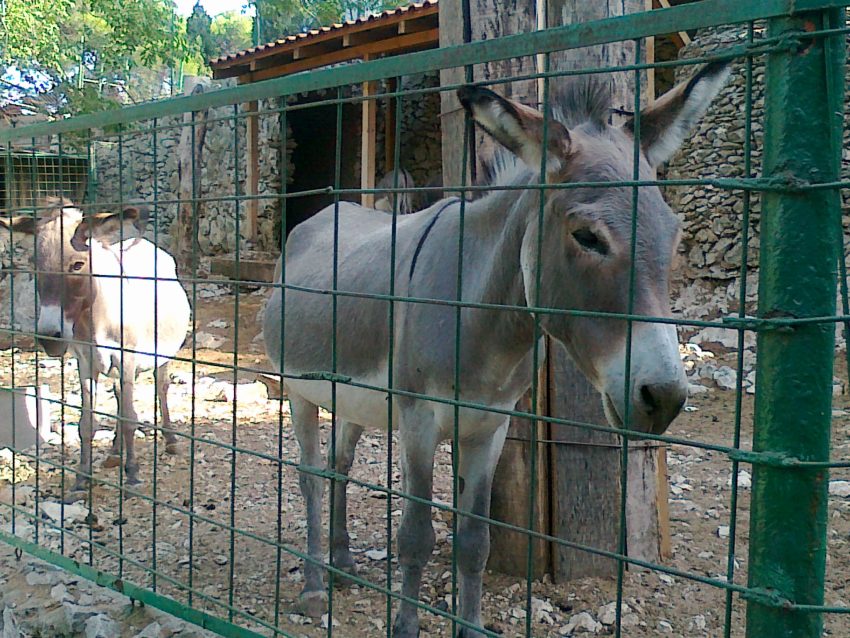
On Split’s Marjan hillside, the Natural History Museum and former Zoological Garden is now primarily a natural-history museum, after the zoo’s 2014 closure following ecological protests. Its collections are vast—spanning mineralogy, geology, paleontology, botany, and zoology—and the museum’s shell holdings (nearly 7,000 specimens) are a standout for anyone curious about Adriatic marine life. Another memorable room is the Croatian coastal-forest fauna display, arranged as dioramas with taxidermied mammals, reptiles, amphibians, and birds. A small animal area has persisted in some form, where visitors often encounter domestic animals such as donkeys, goats, rabbits, tortoises, and chickens, with feeding sometimes available.
Location: Kolombatovićevo šetalište 2, 21000, Split, Croatia | Hours: (Summer) Monday – Friday: 10:00–20:00; Saturday: 09:00–13:00; Closed on Sunday. (Winter) Monday – Friday: 10:00–18:00; Saturday: 09:00–13:00; Closed on Sunday. | Price: Adults: €3; Children (over 5), students & seniors: €1.50; Family ticket (parents with children under 15): €4.50. | Website | Distance: 1.6km

21. Museum of Croatian Archaeological Monuments
Museum of Croatian Archaeological Monuments
CC BY-SA 4.0 / Argo Navis
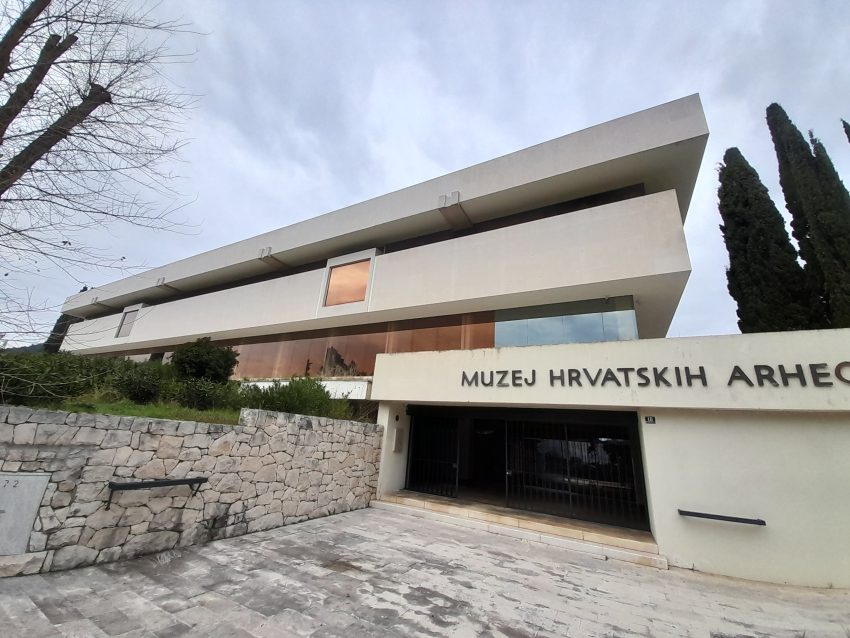
The Museum of Croatian Archaeological Monuments in Split is Croatia’s only museum dedicated to medieval Croatian material culture, tracing the period from the 7th to 15th centuries with a strong focus on the early Croatian state (9th–12th). Opened in a purpose-built complex in 1976 after earlier moves from Knin, Sinj, and Klis, it’s a calm, spacious place where visitors linger over stone church furnishings and carved fragments that once filled medieval interiors. Look for Latin epigraphic monuments—inscriptions that preserve names and power in stone—alongside jewelry, weapons, and everyday objects. Many people remember the coin displays and the feeling of a quieter, less crowded museum experience.
Location: Šetalište Ivana Meštrovića 18, 21000, Split, Croatia | Hours: Monday – Friday: 09:00–13:00 & 17:00–20:00. Saturday: 09:00–13:00. Closed on Sunday. Note: Temporarily closed due to energy renovation works (from November 12, 2024, until further notice). | Price: Free. | Website | Distance: 2.1km

Best Day Trips from Split

A day trip from Split offers the perfect opportunity to escape the urban rhythm and discover the surrounding region's charm. Whether you're drawn to scenic countryside, historic villages, or cultural landmarks, the area around Split provides a variety of easy-to-reach destinations ideal for a one-day itinerary.

1. Trogir
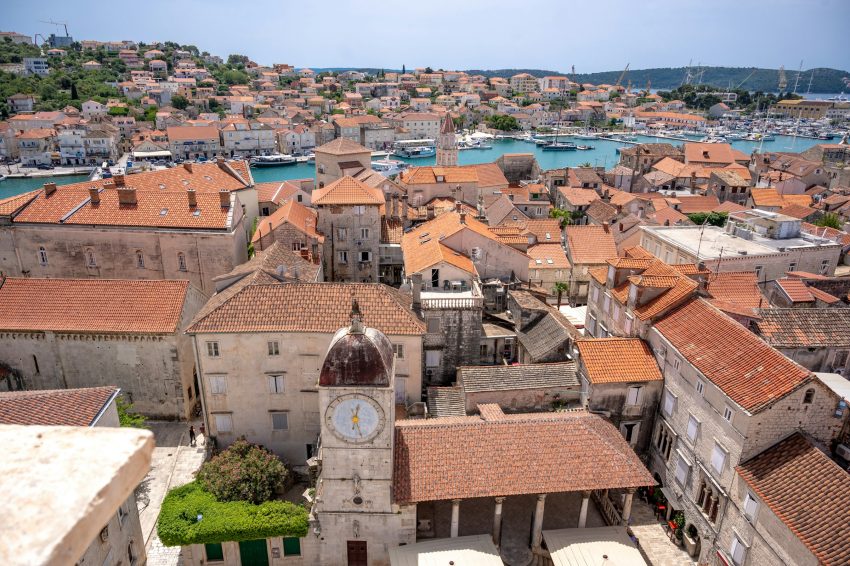
The Complete Guide to Trogir
Trogir is a compact, walkable coastal town that rewards slow wandering: stone lanes, lively waterfront cafés, and viewpoints that seem to appear around every corner. The old town sits on a small island connected by bridges, so it’s easy to combine sightseeing with relaxed breaks by the sea. It’s especially enjoyable in the early morning and at sunset, when the…
Visiting Trogir
Powered by GetYourGuide

2. Hvar

The Complete Guide to Hvar
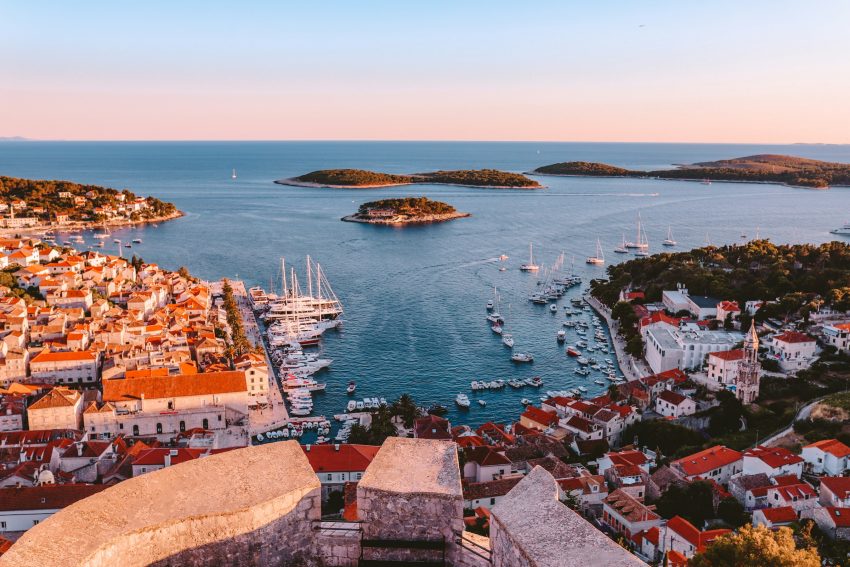
Hvar is a sun-soaked island town in Croatia’s Dalmatia region, known for its polished waterfront, honey-colored stone streets, and a social scene that shifts effortlessly from lazy café mornings to lively evenings. The old town is compact and walkable, with viewpoints, small museums, and a harbor lined with boats that make it feel both historic and effortlessly modern. If you…
Visiting Hvar
Powered by GetYourGuide

3. Korcula

The Complete Guide to Korcula
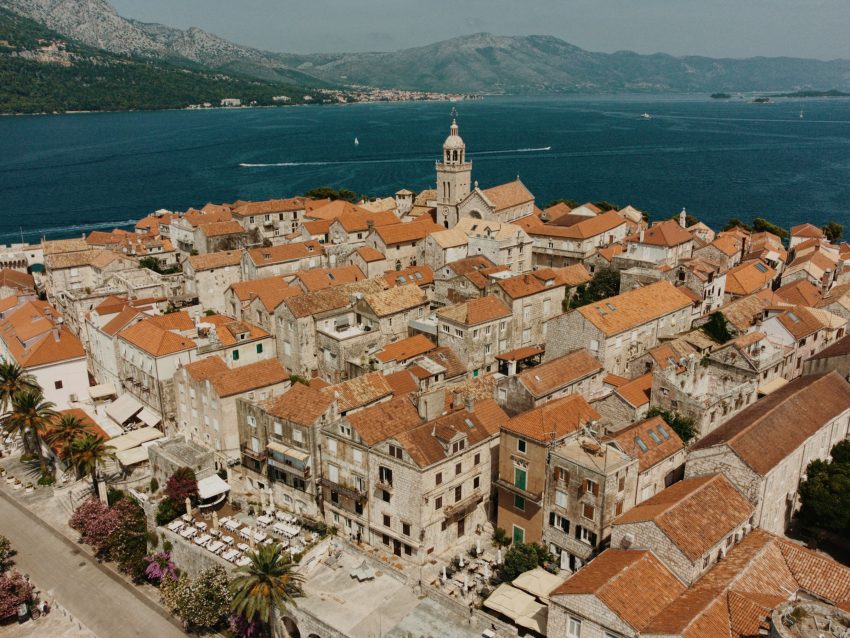
Korčula is a relaxed Adriatic island destination in southern Dalmatia, known for a beautifully preserved old town, clear coves, and a food-and-wine scene that rewards slow travel. The compact medieval core is ideal for wandering on foot, with stone lanes that open onto sea views, small squares, and waterfront promenades. If you want a trip that mixes beach time with…
Visiting Korcula
Powered by GetYourGuide

4. Zadar

The Complete Guide to Zadar
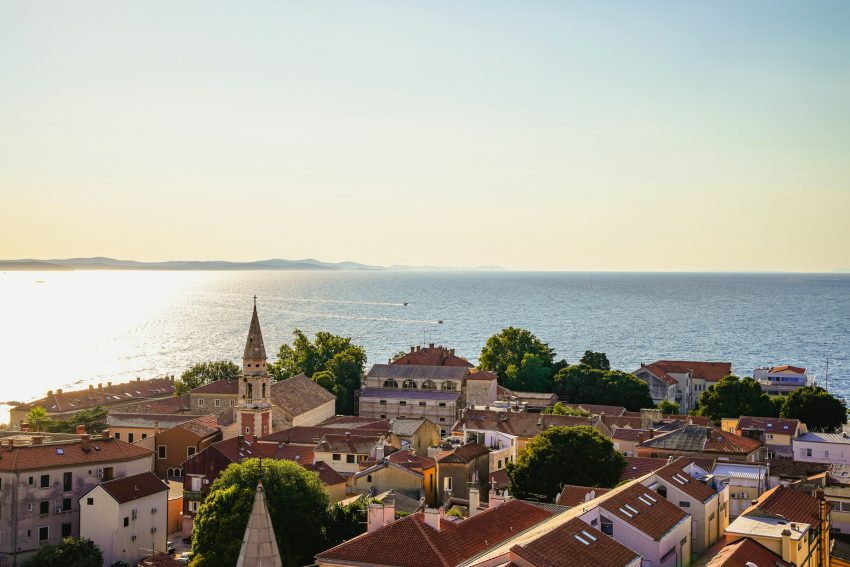
Zadar is a relaxed Adriatic city in northern Dalmatia, set on a compact peninsula where Roman-era streets meet lively café terraces and a long seaside promenade. It’s an easy place to enjoy at your own pace: wander the old town lanes, pause for gelato in sunlit squares, then drift toward the waterfront as the light turns golden. The city’s scale…
Visiting Zadar
Powered by GetYourGuide

Where to Stay in Split

For a first-time visit, staying inside or right next to the Old Town/Diocletian’s Palace area is the most convenient choice in Split because you can walk to the main sights, the Riva promenade, restaurants, and the port for ferries and day trips. If you want that doorstep-to-everything feel with a boutique atmosphere, consider Cornaro Hotel, which is well placed for exploring on foot and is a strong pick for comfort and service. For a stylish stay that keeps you close to the palace lanes and evening energy, Hotel Park Split offers an upscale experience near Bačvice and the waterfront, making it easy to combine city time with beach breaks.

If you prefer a calmer base with greenery and easy access to walks and viewpoints, the Marjan area is ideal; it’s quieter than the center but still close enough for quick trips into town. A good option here is Hotel Cvita, which suits travelers who want a more relaxed atmosphere while staying within easy reach of the old town. For travelers focused on swimming and a classic seaside rhythm, the Bačvice neighborhood works well—close to the beach and still walkable to the center—while Radisson Blu Resort & Spa, Split is a strong choice if you want resort-style amenities, sea views, and an on-site spa after busy sightseeing days.

Using the our Hotel and Accomodation map, you can compare hotels and short-term rental accommodations in Split. Simply insert your travel dates and group size, and you’ll see the best deals for your stay.

Split Accommodation Map

Best Time to Visit Split

Split in Spring (March–May)

Spring is a comfortable time to visit Split for walking the old town, climbing viewpoints, and enjoying the waterfront before peak crowds arrive. Days are generally mild, evenings can be cool, and the city feels energetic as terraces and seasonal tours ramp up. It’s also a good shoulder-season choice if you want a balance of pleasant weather and better availability.

Split in Summer (June–August) (Best)

Summer is the classic Split season: long sunny days, warm sea temperatures, and a lively atmosphere from morning to late night. Expect the busiest streets and the highest accommodation demand, but also the fullest schedule of events and open-air life. Festival highlights often include the Split Summer Festival (theatre, music, and performances in atmospheric outdoor settings) and a packed calendar of concerts and nightlife.

Split in Autumn (September–November)

Autumn starts with warm sea conditions and gradually cools into a calmer city rhythm. Early autumn is excellent for swimming and boat trips with fewer crowds than midsummer, while later months suit food-focused travel and relaxed sightseeing. It’s a strong option if you want a quieter Split while still enjoying plenty of open restaurants and tours.

Split in Winter (December–February)

Winter is the most low-key season in Split, with cooler temperatures and a slower pace, though the city remains very much lived-in. It’s a good time for travelers who prefer uncrowded streets, local cafés, and a more residential feel in the historic center. Seasonal festivities and holiday markets can add atmosphere, but some beach-oriented services and island excursions run on reduced schedules.

Annual Weather Overview

  • January 10°C
  • February 12°C
  • March 14°C
  • April 18°C
  • May 22°C
  • June 27°C
  • July 29°C
  • August 29°C
  • September 26°C
  • October 21°C
  • November 15°C
  • December 12°C

How to get to Split

Getting to Split by air

Nearest airports: Split Airport (SPU) is the main gateway, with seasonal and year-round flights depending on routes.
Airport to city: You can reach the city by airport shuttle bus, taxi, or app-based transfers; in summer, allow extra time for traffic.

Getting to Split by train

Train services: Split is connected by rail to other Croatian cities, with services that can be slower than driving but scenic in parts.
Train operator links: Croatian Railways (HŽPP): https://www.hzpp.hr/en

Getting to Split by Car

Driving routes: Split is well connected by major roads, and driving can be convenient if you plan to explore nearby coastal towns and inland viewpoints.
Parking: Parking in and around the old town can be limited and expensive in peak season; consider garages or accommodations with reserved spaces.

Travelling around Split

On foot: The historic core is best explored walking—many lanes are narrow and pedestrian-focused.
Local buses: City buses are useful for beaches and neighborhoods beyond the center.
Ferries and catamarans: The port is a major hub for island day trips and onward travel.
Useful ferry operator: Jadrolinija: https://www.jadrolinija.hr/en
More from this area