Borgo Stretto, Pisa
Street in Pisa
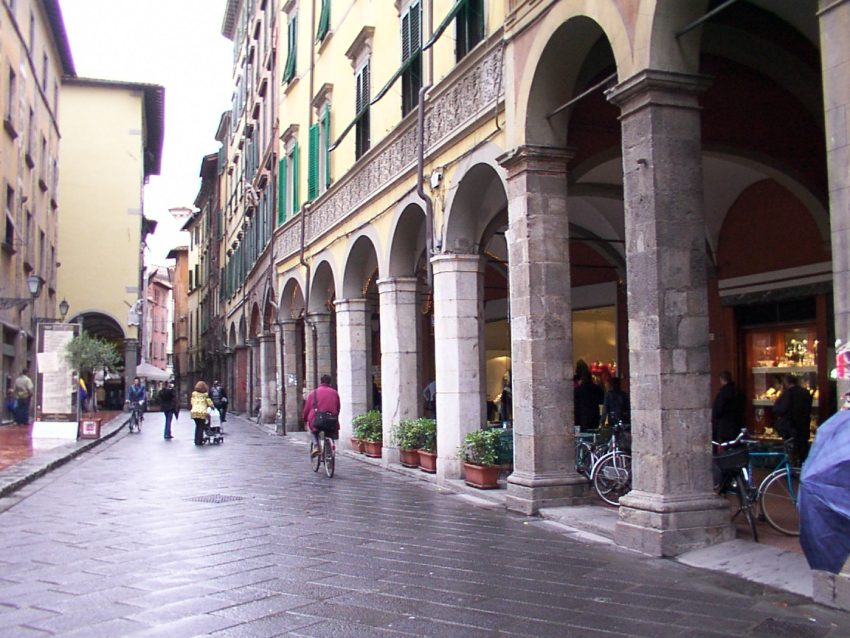
If you fancy some shopping or simply want to wander through the historic heart of Pisa, Narrow Street - known locally as Borgo Stretto - is where the medieval city feels most alive. This long, mostly pedestrianized street winds through the old centre, flanked by elegant two- and three-storey houses that once belonged to wealthy merchant families. Today those same buildings shelter everything from little bookshops and souvenir stalls to smart fashion boutiques, creating a blend of everyday life and old-world charm that makes the street one of the best places to visit in Pisa when you are ready to step away from the Piazza dei Miracoli.
On both sides of Narrow Street, handsome arcades supported by Corinthian columns create a sheltered walkway lined with bars, restaurants and shops. As you stroll, look out for Café Settimelli, which proudly claims to occupy the former home of the Galilei family and the birthplace of Galileo himself. At the San Francesco end of the street, the 15th-century Poschi Palace catches the eye with its graceful façade, while small side alleys peel off towards open-air markets piled high with fresh flowers, fruit and vegetables. The mix of arcades, markets and merchant houses makes this a highlight of any walking tour of Pisa that wants to balance famous monuments with everyday local life.
Table of Contents
- History and Significance of the Narrow Street
- Things to See and Do in the Narrow Street
- How to Get to the Narrow Street
- Practical Tips on Visiting the Narrow Street
- Where to Stay close to the Narrow Street
- Is the Narrow Street Worth Visiting
- FAQs for Visiting Narrow Street
- Nearby Attractions to the Narrow Street
History and Significance of the Narrow Street
Narrow Street traces its origins back to medieval Pisa, when it formed one of the main commercial spines of the town. Merchants built their houses here to be close to the flow of trade and traffic, adding arcades at ground level so that customers could browse goods in shade and shelter. Those same arcades, carried on Corinthian columns, still define the street today; above them, the façades may have changed colour or detail over time, but the basic pattern of two- and three-storey houses remains much as it would have appeared centuries ago.
The street's position between important religious and civic landmarks made it a natural place for both commerce and social life. Locals would shop and trade under the arcades, then step into nearby churches and squares for worship and public events. Over time, some of the palazzi, such as the Poschi Palace near via San Francesco, became statements of family prestige, with refined architectural details that signalled wealth and influence. Even now, walking the length of Narrow Street gives a strong impression of how Pisa's merchant elite once lived above their shops, with business on the ground floor and family life upstairs.
Café Settimelli adds another layer of significance. The claim that it occupies a former Galilei home and the birthplace of Galileo has helped turn this café into a small pilgrimage point for science enthusiasts, even if the exact historical details are hard to verify in every respect. Whether or not Galileo truly first opened his eyes here, the association underlines how deeply the city's academic heritage is woven into its urban fabric. Narrow Street isn't just about shopping; it is a corridor where stories of trade, scholarship and everyday life have overlapped for centuries.
Things to See and Do in the Narrow Street
Start at one end of Narrow Street and give yourself permission to stroll slowly rather than march from A to B. Under the arcades you will find independent bookshops, artisan boutiques, jewellery stores and small fashion outlets, as well as stalls selling souvenirs and locally themed gifts. It is a good place to pick up something more original than the standard Leaning Tower trinkets, especially if you duck into side streets and smaller courtyards off the main thoroughfare.
Make a point of pausing at Café Settimelli, even if only to see the sign that references the Galilei family and Galileo’s supposed birthplace. It is an atmospheric spot for a coffee or quick snack, and sitting here gives you time to watch the stream of locals and visitors passing beneath the arcades. Further along, keep an eye out for the Poschi Palace as you approach via San Francesco; this 15th-century building adds a refined, Renaissance note to the sequence of medieval houses, and its presence reminds you how wealthy families once shaped the character of the street.
Away from the shopfronts, follow some of the narrow side streets that branch off like tributaries. Many of them lead to open-air markets where stalls overflow with fresh flowers, seasonal fruit and vegetables - a reminder that this is still a lived-in neighbourhood, not just a tourist corridor. In the evenings, the bars and restaurants under the arcades fill up, making Narrow Street a pleasant place for an aperitivo or relaxed dinner after a day of sightseeing. If you have already visited the Piazza dei Miracoli, coming here rounds out your understanding of Pisa as a real city, not just a postcard backdrop.
How to Get to the Narrow Street
If you are arriving from abroad, you will most likely land at Pisa International Airport Galileo Galilei, a short distance from the city centre; from there, regular buses, a tram link, trains and taxis connect you quickly to the historic core, from which it is an easy walk to Narrow Street in the medieval quarter. For the best deals and a seamless booking experience, check out these flights to Pisa on Booking.com.
Within Italy, many travellers come by train, arriving at Pisa Centrale and then walking towards the river and into the old town; from the station, it typically takes around 15-20 minutes on foot to reach Narrow Street, or you can take a local bus or taxi if you prefer a quicker ride. Use Omnio to easily compare schedules, book train tickets, and find the best prices all in one place for a hassle-free journey across Italy.
For those travelling by car, you can follow major routes such as the A12 or Florence-Pisa connections to reach the outskirts of the city, then park in one of the designated car parks outside the restricted traffic zone before walking into the medieval centre to find Narrow Street running parallel to some of the main shopping and café-lined lanes. If you are looking to rent a car in Italy I recommend having a look at Discover Cars, first, as they compare prices and review multiple car rental agencies for you.
Practical Tips on Visiting the Narrow Street
- Suggested tips: Wear comfortable shoes so you can explore not just the main arcaded stretch but also the side alleys and markets; combine your visit with a coffee or aperitivo stop to soak up the local atmosphere.
- Best time to visit: Late morning and early evening are especially pleasant, with shops open, cafés busy and the light slanting nicely along the arcades; early mornings are quieter if you prefer fewer crowds.
- Entrance fee: Free to visit, as it is a public street with shops, cafés and arcades open to pedestrians.
- Opening hours: Open at all times as a public thoroughfare, though individual shops and cafés generally follow standard daytime and early-evening opening hours.
- How long to spend: Allow at least an hour to walk the length of the street, browse the shops and perhaps detour into a side market; more if you plan to stop for a meal or coffee.
- Accessibility: The street is mostly flat and pedestrianized under the arcades, but some paving stones are uneven and occasional steps or kerbs may appear at side alleys.
- Facilities: You will find restrooms in some cafés and bars, as well as plenty of places to sit, eat and drink along the street and nearby squares.
- Photography tip: Step back to capture the rhythm of the arcades and columns, then move in for details such as shop signs, balconies and café terraces; night-time shots with the arcades lit can be especially atmospheric.
- Guided tours: Many city walking tours naturally include Narrow Street as they move between major sights and the river, so joining one is a good way to hear more about its merchant history and notable buildings.
- Nearby food options: Take advantage of the bars and trattorias directly under the arcades for a convenient meal, or explore the side streets for quieter local favourites.
Where to Stay close to the Narrow Street
Staying near Narrow Street puts you right in the heart of medieval Pisa, with shops, cafés and major sights within easy walking distance. A characterful option is Hotel Bologna Pisa, which sits within strolling distance of the old centre and gives quick access to both the river and the main pedestrian lanes. If you prefer to be closer to the Leaning Tower and cathedral while still reaching Narrow Street in a short walk, Grand Hotel Duomo places you near the Piazza dei Miracoli and the northern end of the historic core. Travellers arriving by train who want a practical base near Pisa Centrale but still easy access to the medieval streets might consider NH Pisa, from which you can wander into the centre and reach Narrow Street in around 15-20 minutes.
Is the Narrow Street Worth Visiting
Narrow Street is very much worth visiting if you want to experience Pisa as more than just its famous tower. Here you get a sense of the city's medieval merchant past in the arcaded houses and palazzi, but also its contemporary rhythm in the cafés, boutiques and markets that still draw locals every day. It is one of the things to do in Pisa that helps you connect the dots between monumental squares and lived-in neighbourhoods, and because it is largely pedestrianized, it is a relaxed place to wander, shop and people-watch at your own pace.
What Other Travellers Say...

Chiesa di San Michele in Borgo on Borgo Stretto is a Romanesque church with an arcaded façade and interior frescoes, built over an earlier Roman temple; visitors say it's free to enter and worth a quick stop for its architecture, though some find the interior simpler or partially stripped with frescoes in poor repair—reviews also note the church was bombed and rebuilt during WWII, and it offers a quiet spot to pause while exploring Pisa.


FAQs for Visiting Narrow Street
Nearby Attractions to the Narrow Street
- Corso Italia: Another of Pisa's main shopping streets, linking the station area to the river with plenty of cafés and boutiques.
- Piazza dei Miracoli: The famous square home to the Leaning Tower, cathedral, baptistery and Camposanto, reachable on foot from the medieval centre.
- Tuttomondo mural: Keith Haring's colourful public artwork near Pisa Centrale, offering a modern contrast to the city's medieval streets.
- Lungarni of Pisa: The scenic embankments along the Arno, ideal for a relaxed stroll before or after exploring Narrow Street.
- Museo Nazionale di San Matteo: A major art museum showcasing sculptures and paintings from Pisan churches and monasteries, located a short walk from the main shopping area.
The Borgo Stretto appears in our Complete Guide to Visiting Pisa!

Moira & Andy
Hey! We're Moira & Andy. From hiking the Camino to trips around Europe in Bert our campervan — we've been traveling together since retirement in 2020!
This website uses affiliate links which may earn a commission at no additional cost to you!
Planning Your Visit
Open at all times as a public thoroughfare, though individual shops and cafés generally follow standard daytime and early-evening opening hours.
Free to visit, as it is a public street with shops, cafés and arcades open to pedestrians.
Nearby Attractions
- Santo Stefano dei Cavalieri (0.2) km
Church - Logge di Banchi (0.2) km
Historic Building - Palazzo Blu (0.3) km
Gallery and Palace - Palazzo dei Cavalieri (0.3) km
Palace - Church of Santa Maria della Spina (0.3) km
Church - Palazzo Vecchio de Palazzo Medici (0.5) km
Historic Building and Palace - Santa Maria della Spina (0.5) km
Church - Orto Botanico dell’Università di Pisa (0.5) km
Gardens - Museo Nazionale di San Matteo (0.5) km
Museum - Baths of Nero (0.5) km
Historic Site