Baux-de-Provence
Castle and Village in Saint-Rémy-de-Provence
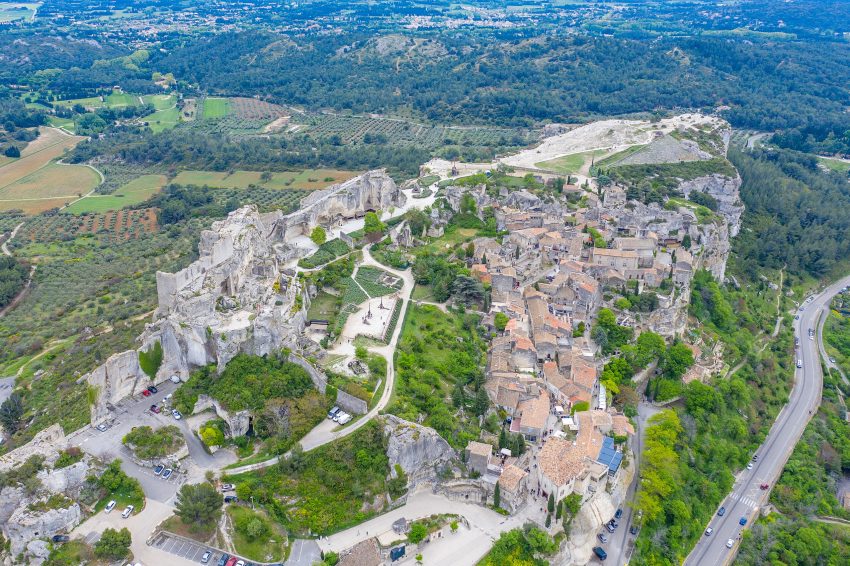
Perched high on a rocky outcrop in the Alpilles, Les Baux-de-Provence is a compact, pedestrianised village of pale stone streets, viewpoints, and medieval character that feels made for wandering. The approach road alone is part of the experience, with the landscape opening into wide Provençal views before you park below and walk up through the Porte Mage gate. Once you're inside, it's easy to see why it's considered one of the best places to visit in Les Baux-de-Provence: almost every lane ends in a terrace, a chapel door, or a sudden frame of olive groves and limestone ridges.
Although the village is small, it rewards a slow pace, and it fits naturally into a walking tour of Les Baux-de-Provence that links the lanes, churches, and viewpoints with the climb to the fortress ruins above. The streets you'll explore today largely date from the 15th and 16th centuries, and the atmosphere is shaped by stonework, shuttered façades, and the steady pull of the castle skyline. It can get busy, but even on a crowded day there are quiet corners if you step slightly off the main line and let the village unfold in layers.
Table of Contents
- History and Significance of the Les Baux-de-Provence
- Things to See and Do in the Les Baux-de-Provence
- How to Get to the Les Baux-de-Provence
- Practical Tips on Visiting the Les Baux-de-Provence
- Where to Stay Close to the Les Baux-de-Provence
- Is the Les Baux-de-Provence Worth Visiting?
- For Different Travelers
- FAQs for Visiting the Les Baux-de-Provence
- Nearby Attractions to the Les Baux-de-Provence
History and Significance of the Les Baux-de-Provence
Les Baux-de-Provence has a long human timeline, with traces of settlement in the surrounding area reaching back thousands of years, but its defining identity is medieval. This rocky perch was a strategic stronghold, and that position shaped everything: how the village grew, how it defended itself, and why its skyline still feels so fortress-like even in ruins.
In the Middle Ages, the Lords of Les Baux were powerful and often entangled in regional conflict, and the village’s defensive setting reflects centuries of tension and ambition. The castle’s later demolition, ordered as punishment during periods of unrest, left the dramatic remains you see today, turning military architecture into a landscape monument.
What makes Les Baux feel more than “pretty streets” is how clearly you can read power and geography together. The village is not simply on a hill; it is built into the hill, and the views aren’t decorative extras-they explain why this place mattered.
Things to See and Do in the Les Baux-de-Provence
Start at the entrance area near Porte Mage and the Maison du Roy, where the tourist office sits in a building that anchors the village’s civic history. Pick up a map, then let yourself drift through the lanes rather than trying to be overly efficient, because the best moments are often unplanned: a chapel doorway, a fragment of rampart, or a viewpoint that opens between buildings.
If you like small museums, the Musée des Santons near the entrance is a quick, characterful stop, especially if you’re curious about Provençal traditions and figurines. As you continue, look for the Church of Saint-Vincent, which blends different architectural periods, and the Chapel of the Pénitents Blancs, known for its interior decoration, both of which add quiet depth to the village’s more “scenic” reputation.
The main climb is up to the Château des Baux-de-Provence, where ruins spread across the rocky crest and the views go wide in every direction. Even if you're not usually drawn to fortifications, the setting is the point, and the medieval siege machines add a playful, visual element that helps the site feel alive rather than purely archaeological. To finish on a completely different note, build in time for the Carrières de Lumières nearby, where immersive art and music installations fill a former quarry and create one of the most memorable cultural experiences in the Alpilles.
How to Get to the Les Baux-de-Provence
The nearest airports are Avignon-Provence Airport (AVN) and Marseille Provence Airport (MRS). For the best deals and a seamless booking experience, check out these flights to Saint-Rémy-de-Provence on Booking.com. From either airport, the simplest onward plan is to continue by road toward the Alpilles, with Les Baux-de-Provence well signposted from the surrounding towns.
For train arrivals, Avignon TGV is the most convenient hub for high-speed services, then you continue by regional connections into the Alpilles area. You can use SNCF Connect to check schedules, compare routes, and purchase tickets for National (SNCF ) and regional trains (TER). For a more streamlined experience, we recommend using Omio, which allows you to easily compare prices, schedules, and book tickets for both National and Regional travel across all of Europe, all in one place. Public transport can work if you’re patient and flexible, but services vary by season and day, so many travellers use a taxi for the final stretch from a nearby town.
Driving is the easiest option for timing, comfort, and flexibility, especially if you want to arrive early, leave before peak congestion, or combine multiple Alpilles stops in one loop. If you are looking to rent a car in France I recommend having a look at Discover Cars, first, as they compare prices and review multiple car rental agencies for you.
Practical Tips on Visiting the Les Baux-de-Provence
- Entrance fee: Entrance fee: Free to explore the village; tickets required for attractions such as the Château des Baux-de-Provence and Carrières de Lumières.
- Opening hours: 24 Hours
- Official website: https://www.lesbauxdeprovence.com/en/
- Best time to visit: Arrive early for calmer lanes and clearer viewpoints, or visit later in the afternoon for warmer light on the stone.
- How long to spend: 2-4 hours covers the village well, with extra time if you add the castle ruins and the quarry experience without rushing.
- Accessibility: Expect steep gradients, steps, and uneven historic paving, so pacing matters more than distance.
- Facilities: You’ll find cafés, small shops, and rest stops inside the village, but it helps to carry water in warmer months and plan breaks around quieter side lanes.
Where to Stay Close to the Les Baux-de-Provence
For a culture-heavy itinerary, stay in or just below the village so you can enjoy early and late hours when it's quieter; for a wider Provençal trip focused on day trips and easy logistics, base in nearby Saint-Rémy-de-Provence or Maussane-les-Alpilles for simpler access and parking.
If you want a destination-hotel experience with classic Provençal elegance close to the village atmosphere, Baumanière Les Baux-de-Provence is a standout choice. For a refined stay that balances countryside calm with quick access back to the village, Domaine de Manville suits travellers who like a resort rhythm without feeling detached from the Alpilles. If you prefer something comfortable and practical for exploring by car, Hôtel Benvengudo is a solid base with an easygoing, nature-forward feel.
Is the Les Baux-de-Provence Worth Visiting?
Yes, because it delivers a rare combination of dramatic setting and walkable charm in a compact footprint. Even if you’ve seen other hilltop villages, Les Baux stands out for how the landscape and the built environment work together, with stone lanes leading naturally to viewpoints and the castle crest pulling you upward.
It’s most rewarding when you manage timing. Arrive early or stay later, and the village feels atmospheric and intimate; arrive mid-day in peak season, and it can feel crowded, but the views and the character still tend to justify the trip.
What Other Travellers Say...

Château des Baux-de-Provence is a ruined medieval fortress perched above a compact village of cobbled streets lined with quaint shops and a few restaurants; visitors praise the dramatic, wide-reaching views from the ramparts and replica siege engines on site, and report that exploring the site takes about 1–2 hours if you include the higher, steeper sections which can be uneven and challenging for those with mobility issues—so wear sturdy shoes, go early to avoid crowds, bring water in hot weather, and expect parking to be difficult in summer or busy weekends.


For Different Travelers
Families with Kids
Les Baux-de-Provence is a strong family stop because it's naturally exploratory: short lanes, frequent “reward moments” at viewpoints, and a clear goal in the castle ruins above. The siege machines at the château are especially helpful for keeping children engaged because they turn medieval history into something visual and immediate.
To keep the day smooth, treat the visit as a sequence of short wins rather than one long uphill push. Build in a snack break before the castle climb or right after it, and you’ll usually find everyone’s energy resets for the rest of the village.
Couples & Romantic Getaways
For couples, Les Baux is at its best when you slow down and let the village do what it does naturally: invite pauses. The lanes feel more romantic when you’re not rushing, and the viewpoints create easy moments to stop, talk, and enjoy the Alpilles panorama without needing a plan.
Pairing the medieval atmosphere with the Carrières de Lumières adds a memorable contrast, especially if you like mixing heritage with contemporary culture. It’s a simple way to make the day feel curated rather than like a checklist.
Budget Travelers
Budget travellers can enjoy Les Baux-de-Provence without paying for every headline attraction, because the village itself is the main event. Wandering the lanes, finding viewpoints, and soaking up the setting delivers most of what makes the place special.
If you choose just one ticketed experience, pick based on what you value more: history and views (the castle) or immersive art and atmosphere (the quarry). Either way, the best budget strategy is timing, because the quiet hours make the village feel richer.
History Buffs
History lovers will appreciate that Les Baux is not a museum village; it’s a strategic site written into stone and topography. The castle ruins make more sense when you think like a defender, noticing sightlines, approaches, and how the rocky ridge itself acts like a wall.
To deepen the historical day, pair Les Baux with nearby Roman sites around Saint-Rémy-de-Provence. Seeing classical urban life and medieval fortification in the same landscape makes Provence's layered history feel unusually tangible.
FAQs for Visiting the Les Baux-de-Provence
Getting There
Tickets & Entry
Visiting Experience
Tours, Context & Itineraries
Photography
Accessibility & Facilities
Food & Breaks Nearby
Safety & Timing
Nearby Attractions to the Les Baux-de-Provence
- Carrières de Lumières: A spectacular immersive art-and-music experience inside a former quarry at the foot of the village.
- Saint-Rémy-de-Provence: A stylish market town nearby, ideal for cafés, museums, and a relaxed Provençal base.
- Site Archéologique de Glanum: A fascinating Greek-and-Roman city ruin that adds deep history to an Alpilles itinerary.
- Les Antiques de Glanum: A striking Roman arch and mausoleum standing at the ancient gateway to Glanum, perfect for a quick stop.
- Arles: A UNESCO-listed city of Roman monuments and Provençal culture, excellent for a fuller day trip beyond the Alpilles.
The Baux-de-Provence appears in our Complete Guide to Visiting Saint-Rémy-de-Provence!

Moira & Andy
Hey! We're Moira & Andy. From hiking the Camino to trips around Europe in Bert our campervan — we've been traveling together since retirement in 2020!
This website uses affiliate links which may earn a commission at no additional cost to you!
Planning Your Visit
24 Hours
Entrance fee: Free to explore the village; tickets required for attractions such as the Château des Baux-de-Provence and Carrières de Lumières.
Nearby Attractions
- Les Antiques de Glanum (4.6) km
Roman Site - St-Paul-de-Mausole (4.7) km
Monastery - Musée des Alpilles (5.8) km
Museum - Musée Estrine (5.8) km
Museum - Barbegal Aqueduct and Mills (7.4) km
Aqueduct - Montmajour Abbey (11.4) km
Abbey - Arles Arena (15.1) km
Amphitheatre and Roman Site - Alyscamps (15.2) km
Historic Site - Roman Theatre in Arles (15.3) km
Historic Site and Roman Site - Musée Réattu (Musée des Beaux-Arts d'Arles) (15.3) km
Museum