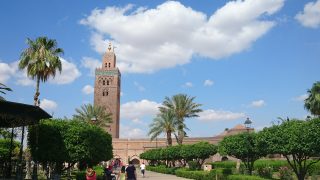
Bahia Palace, Marrakesh
Palace in Marrakesh

Bahia Palace is a place where you feel like you are slipping quietly into the private world of Morocco's 19th-century elite. Built in stages by two powerful grand viziers, Si Musa and his son Ba Ahmed, this sprawling complex of courtyards, riad gardens, and painted salons reflects the tastes, ambitions, and intrigues of the people who effectively ran the country from behind the scenes. Even though the rooms are now empty of furniture, the cedar ceilings, zellij floors, and carved stucco still create a sense of layered luxury.
Wandering through its tiled corridors and sunlit courts, you start to understand why this palace has become one of the top attractions in Marrakech. The lack of furnishings lets your eye travel to the details: the sheen of Carrara marble in the Grand Courtyard, the cool shade of the Grand Riad's trees, and the delicate patterns painted on wood above your head. The palace's maze-like layout and shifting scales-from tiny private rooms to vast ceremonial spaces-make it a highlight of any walking tour of Marrakech, especially if you enjoy imagining the lives that once unfolded here.
Table of Contents
History and Significance of the Bahia Palace
Bahia Palace was not built in a single burst of construction, but rather grown piece by piece as its owners' power and ambitions expanded. The story begins with Si Musa, a former slave who rose through the makhzen (royal administration) to become hajib and then grand vizier under Sultan Muhammad ibn Abd al-Rahman. In 1859 he began building a residence on the northern edge of what would become the palace, centred on a large riad garden and adjoining reception halls. This early section, now known as the Grand Riad or Dar Si Moussa, set the tone: richly decorated rooms arranged around a symmetrical garden, with inscriptions dating its main halls to 1866-67.
The palace truly blossomed under his son, Ba Ahmed ibn Musa, who effectively governed Morocco between 1894 and 1900 while Sultan Moulay Abdelaziz was still a teenager. As grand vizier, Ba Ahmed used his position to buy up plots of land around his father’s house, steadily enlarging the complex and reshaping the surrounding neighbourhood north of the Mellah. He added new riads, intimate courtyards, a mosque, stables, and an extensive private park with a large water basin to the east. According to tradition, the name “Bahia” (“the Brilliant”) was taken from his favourite wife, and the entire palace was built on one level, perhaps in deference to Ba Ahmed’s stout build and preference for avoiding stairs.
After Ba Ahmed's death in 1900, the palace's role shifted. Sultan Abdelaziz is said to have ordered the immediate looting of its treasures, stripping out furniture, carpets, and artworks to decorate other residences. In 1908, Madani el-Glaoui took control and used the palace to host foreign guests, adding a first floor to some sections. With the arrival of the French Protectorate in 1912, Bahia Palace became the residence of the resident-general in Marrakech. After independence, it briefly returned to royal use under King Mohammed V before passing to the Ministry of Culture, which opened it to visitors. Today it is not only one of Morocco's busiest heritage sites, but also occasionally still used by the king to receive dignitaries and host official events.
Things to See and Do in the Bahia Palace
The experience of Bahia Palace is all about moving from space to space and watching the atmosphere shift. After entering through a modest horseshoe-arched doorway from the street, you follow a garden path that gradually screens out the noise of the medina. You arrive first at the Small Riad, a charming courtyard garden with cross-shaped paths and orange trees, surrounded by rooms with carved plaster, painted cedar, and colourful tiles. One of these chambers once served as Ba Ahmed's diwan or council chamber, where key decisions about Morocco's politics and diplomacy were made.
From here, a series of smaller courtyards and corridors leads you to the Grand Courtyard (Cour d’Honneur), the palace’s most theatrical space. Measuring around 50 by 30 metres and paved in gleaming Carrara marble, it is framed by a low, pillared gallery of painted wood that gives access to a warren of some 80 rooms. These were believed to be the quarters of Ba Ahmed’s harem and concubines, and while they are now empty, the blend of light, shadow, and pattern is still striking. At the eastern end of the courtyard, the long Salle d’Honneur (Hall of Honour) showcases some of the finest painted ceilings in the palace, with richly layered floral motifs and geometric designs.
Do not miss the Grand Riad to the north, the oldest part of the palace. Its large garden, still planted with mature trees from the 19th century, feels like a green lung in the middle of the complex. The halls flanking it on east and west carry inscriptions from the 1860s and display beautiful examples of zellij, stucco, and woodwork. As you explore, keep an eye out for the subtle differences between areas built by Si Musa and those added by Ba Ahmed, as well as for the traces of later modifications by the Glaoui and French residents. Even without furnishings, the textures of cedar, marble, and tile-and the way the palace frames patches of sky-give a vivid sense of its former splendour.
How to Get to the Bahia Palace
To visit Bahia Palace, you will first need to reach Marrakech. Most international visitors arrive via Marrakech Menara Airport, which is only a short drive from the historic centre and is well served by flights from major European cities and other Moroccan hubs. For the best deals and a seamless booking experience, check out these flights to Marrakesh on Booking.com. From the airport, taxis and pre-booked transfers can bring you towards the medina; ask to be dropped near Bahia Palace or the Mellah district, and you will be a short walk from the entrance.
If you are travelling within Morocco, trains connect Marrakech with Casablanca, Rabat, Tangier, and other key cities, terminating at the main railway station in the modern part of town.Train schedules and bookings can be found on Omio. From there, petit taxis are plentiful and can take you directly to the palace area in around 10-15 minutes depending on traffic; some city buses also run to stops within walking distance of the medina’s eastern edge. Long-distance buses from other regions arrive at various stations around the city, from which taxis can again bring you into the old town.
Driving into the heart of the medina is not possible, but Bahia Palace lies relatively close to the eastern city walls, making access simpler than for some deeper alleyway addresses. You can park in one of the guarded car parks near the Mellah or Badi Palace and then walk through the neighbourhood to the palace entrance, following signs or the flow of other visitors. Many people combine Bahia Palace with nearby sites such as the Mellah, El Badi Palace, and the Saadian Tombs in a single half-day.
Practical Tips on Visiting the Bahia Palace
- Suggested tips: Because the rooms are unfurnished and signage is limited, consider hiring a licensed guide or joining a small-group tour to bring the spaces and stories to life.
- Best time to visit: Mornings and late afternoons are best for softer light in the courtyards and slightly fewer crowds; midday can be hot and busy, especially in high season.
- Entrance fee: Adults: 110DH
- Opening hours: Friday: 8am to 5pm Rest of the week: 9am to 4:30pm.
- Official website: https://bahiapalace.com/tickets/
- How long to spend: Plan for 60-90 minutes to explore the main courtyards, riads, and halls without rushing, longer if you are with a guide or keen on photography.
- Accessibility: Surfaces can be uneven and there are small steps and narrow thresholds; access may be challenging for visitors with limited mobility.
- Facilities: Basic facilities such as ticket office and toilets are available; for cafés and restaurants you will need to step back out into the surrounding streets.
- Photography tip: Look for reflections of arches and columns in the polished marble of the Grand Courtyard, and tilt your camera up to capture the painted cedar ceilings.
- Guided tours: A guided visit can help you understand the palace’s piecemeal growth, its political context, and the symbolism behind its decorative programmes.
- Nearby food options: The Mellah and surrounding medina streets offer simple cafés, juice stalls, and restaurants where you can pause for a snack or meal after your visit.
Where to Stay close to the Bahia Palace
Staying near Bahia Palace puts you in a fascinating corner of the medina close to the Mellah, El Badi Palace, and Jemaa el-Fnaa. For a comfortable riad with traditional charm, Riad Bahia Salam is just a short walk away and offers a relaxing base with a rooftop terrace. A slightly more intimate option is Riad Dar Anika, which sits between Bahia Palace and El Badi Palace and is known for warm hospitality and easy access to the main sights. Travellers looking for a stylish retreat with a lush garden atmosphere might consider Les Jardins de la Médina, a little further south in the kasbah district but still a convenient taxi or longer walk from the palace.
Is the Bahia Palace Worth Visiting?
Bahia Palace is definitely worth visiting, especially if you enjoy architecture and the feel of lived-in spaces stripped back to their bones. You will not see original furniture or lavishly set-up rooms, but you will walk through some of Marrakech's finest 19th-century interiors, with exquisite ceilings, carved stucco, and cool marble underfoot. Combined with its rich backstory of powerful viziers, royal intrigue, and colonial adaptation, the palace offers a vivid window into Morocco's more recent past and comfortably ranks as one of the best places to visit in Marrakech for curious travellers.
What Other Travellers Say...

Bahia Palace in Marrakesh is a vast, intricately designed palace with about 160 rooms, courtyards and several acres of gardens, where visitors praise richly patterned zellige tiles, carved wood ceilings, decorated doors and peaceful courtyards that create a calm, dreamlike atmosphere; many recommend arriving early to avoid crowds, note that some areas can feel worn or empty and parts may be under renovation at times, and entry involves on-site ticketing (cash has been reported as the only option).


FAQs for Visiting Bahia Palace
Nearby Attractions to the Bahia Palace
- El Badi Palace: Evocative ruins of a once-sumptuous Saadian palace, with vast courtyards and ramparts offering great views over the kasbah.
- Mellah (Jewish Quarter): The historic Jewish district of Marrakech, with narrow streets, markets, and the Lazama Synagogue, just a short walk away.
- Jemaa el-Fnaa: The city's legendary main square, filled with food stalls, performers, and market life, easily reached on foot through the medina.
- Saadian Tombs: A richly decorated royal necropolis behind the Kasbah Mosque, showcasing some of the finest Saadian-era craftsmanship.
- Dar Si Saïd Museum: A former palace built by Ba Ahmed's brother, now a museum of Moroccan arts and crafts, offering another glimpse of 19th-century elite architecture.
The Bahia Palace appears in our Complete Guide to Visiting Marrakesh!

Moira & Andy
Hey! We're Moira & Andy. From hiking the Camino to trips around Europe in Bert our campervan — we've been traveling together since retirement in 2020!
This website uses affiliate links which may earn a commission at no additional cost to you!
Planning Your Visit
Friday: 8am to 5pm
Rest of the week: 9am to 4:30pm.
Adults: 110DH
Nearby Attractions
- Tiskiwin Museum (0.2) km
Museum - Dar Si Said (0.3) km
Historic Building and Museum - El Badi Palace (0.3) km
Palace - Saadian Tombs (0.6) km
Palace - Jemaa el-Fnaa (0.7) km
Market and Square - Walls of Marrakesh (0.7) km
City Gate and City Walls - Souks of Marrakesh (0.8) km
Market - Kasbah Mosque (1.0) km
Mosque - Koutoubia Mosque (1.0) km
Mosque - Koutoubia Gardens (Lalla Hassna Park) (1.1) km
Gardens