Ayuntamiento de Pamplona
Town Hall in Pamplona
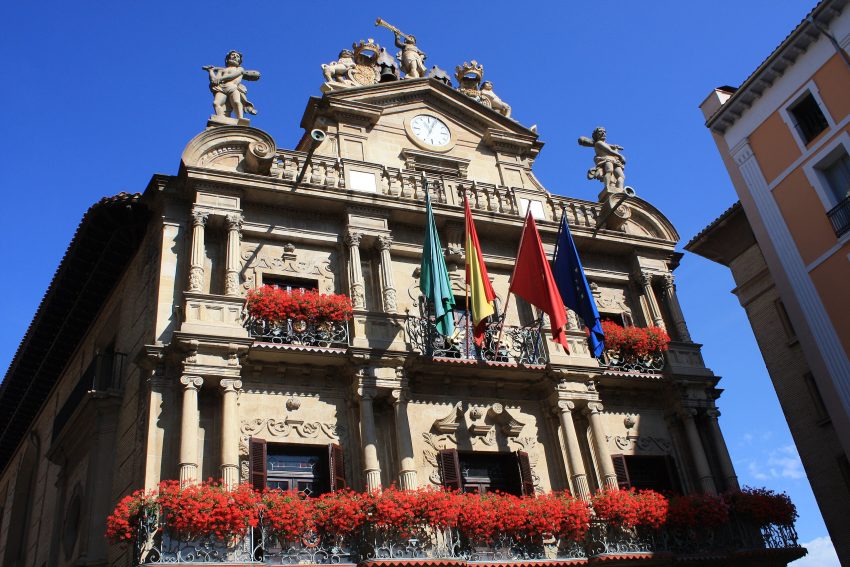
Right in the compact old town square, Pamplona Town Hall is the ornate backdrop to some of the city's most photographed moments. The origins of the building date back to 1423 and the Privilegio de la Unión charter, when King Carlos III ordered that a town hall be erected at the point where the three medieval boroughs of the city converged. From that moment, this spot became the symbolic heart of a newly unified Pamplona, and the town hall its official “face.” Today, it is one of the top attractions in Pamplona for anyone who wants to go beyond the running of the bulls and understand how the city has been governed for centuries.
The current façade is an 18th century showpiece, renovated between 1753 and 1759 to a design by Juan Miguel de Goyeneta, with an exuberant front by José Zay y Lorda and sculptures carved by José Jiménez. Allegorical figures of Prudence and Justice overlook the main entrance, while two statues of Hercules at the top represent civic virtues, and above them all the figure of Fame presides over the square, “announcing” the city's festivities. Every 6 July at noon, this balcony and façade become the focal point of the San Fermín festival when the ceremonial rocket is launched to start the celebrations, making the town hall a highlight of any walking tour of Pamplona.
Table of Contents
- History and Significance of the Pamplona Town Hall
- Things to See and Do in the Pamplona Town Hall
- How to Get to the Pamplona Town Hall
- Practical Tips on Visiting the Pamplona Town Hall
- Where to Stay close to the Pamplona Town Hall
- Is the Pamplona Town Hall Worth Visiting?
- FAQs for Visiting Pamplona Town Hall
- Nearby Attractions to the Pamplona Town Hall
History and Significance of the Pamplona Town Hall
The story of Pamplona Town Hall is tied directly to the moment when the city's historic divisions were finally resolved. In 1423, King Carlos III issued the Privilegio de la Unión, a charter uniting the three rival medieval boroughs that had long competed and occasionally fought with each other. As a concrete symbol of this new unity, the king decreed that a town hall should be built exactly where the three boroughs met, creating both a neutral ground and a visible centre of civic authority. The first town hall rose on this spot and has anchored the square ever since.
By the 18th century, Pamplona wanted a façade that reflected its status and ambitions. Between 1753 and 1759 the building was remodelled under master Juan Miguel de Goyeneta, with a richly decorated front designed by José Zay y Lorda and sculptural work by José Jiménez. The resulting façade, which you see today, blends late Baroque movement and ornament with emerging Neoclassical balance and order. Allegorical figures were chosen carefully: Prudence and Justice above the main entrance underline the expected virtues of municipal government, while Hercules embodies strength and civic virtues higher up.
The figure of Fame crowning the building is particularly appropriate in a city whose international image now revolves around San Fermín. Each year on 6 July at noon, the famous rocket that signals the start of the festival is launched from this façade, with thousands of people packed into the square below. Although most of the rest of the building was rebuilt in the 20th century, the façade continues to represent Pamplona around the world, appearing in news broadcasts, travel photos and festival coverage, and giving the town hall a significance far beyond its administrative role.
Things to See and Do in the Pamplona Town Hall
Start by standing back in the old town square to take in the entire façade. From a distance, you can appreciate the mix of late Baroque curves and Neoclassical structure that makes the building feel both dramatic and balanced. Look up to pick out the key sculptural elements: the allegories of Prudence and Justice over the main entrance, the powerful figures of Hercules higher still, and the crowning statue of Fame that seems to watch over the celebrations below.
Move closer to explore the details of the stonework and carving around the doors and windows. The façade was designed to impress anyone entering the square, from local councillors to visiting dignitaries, and it still works today. If you have seen images of the San Fermín rocket launch on television or in photos, try to match the balcony and angles you recognise with the real-life view in front of you; it is surprising how small the balcony looks compared to the sea of people that fills the square in July.
When possible, check whether there are any opportunities to visit the interior, such as open days or guided tours. Even if you remain outside, the square itself is a pleasant spot to linger, surrounded by narrow streets, bars and shops that capture the feel of the Casco Viejo. From here, you can easily continue towards Plaza del Castillo, the cathedral or the route of the Running of the Bulls, with the town hall as your mental landmark for the city's civic heart.
How to Get to the Pamplona Town Hall
Most visitors reach Pamplona via Pamplona Airport or larger regional airports such as Bilbao or San Sebastián, then continue into the city by bus, taxi or hire car. For the best deals and a seamless booking experience, check out these flights to Pamplona on Booking.com. Once in the centre, it is a short and straightforward walk through the Old Quarter to the town hall square, which is well signposted and sits close to key streets and plazas.
If you are travelling by train, Pamplona's main station connects with Madrid, Barcelona and other Spanish cities.Train schedules and bookings can be found on Omio. From the station, take a local bus or taxi into the Casco Viejo, then walk a few minutes through the narrow streets to the town hall, using Plaza del Castillo or the cathedral as reference points on your way.
Arriving by car, follow the main routes into Pamplona and park in a central car park near the edge of the Old Quarter, as the streets around the town hall are largely pedestrian.If you are looking to rent a car in Spain I recommend having a look at Discover Cars, first, as they compare prices and review multiple car rental agencies for you. From there, stroll through the historic lanes until you emerge into the small square dominated by the ornate façade of Pamplona Town Hall.
Practical Tips on Visiting the Pamplona Town Hall
- Suggested tips: Visit once in the daytime to appreciate the details of the façade and again in the evening when the square’s atmosphere changes with locals filling nearby bars and cafés.
- Best time to visit: Outside of San Fermín, late morning or early evening offer good light for photos and a lively yet manageable crowd; during the festival, arrive very early if you want a view of the rocket launch.
- Entrance fee: Viewing the exterior is free.
- Opening hours: The exterior square is always accessible; interior access follows municipal schedules or specific guided visit times.
- How long to spend: Allow 20-40 minutes to study the façade, enjoy the square and take photos; longer if you join a tour or linger at a nearby terrace.
- Accessibility: The square around the town hall is largely flat and pedestrian, making it easy to access for most visitors, though surrounding streets can be narrow and cobbled.
- Facilities: There are no specific visitor facilities in the square itself, but plenty of nearby cafés, bars and shops provide toilets and refreshments.
- Photography tip: Stand at different corners of the square to capture the façade front-on and at slight angles; zoom in on the allegorical statues and the balcony used for the San Fermín rocket.
- Guided tours: Consider a city walking tour that includes the town hall to hear more about the Privilegio de la Unión and the symbolism of the sculptures.
- Nearby food options: Use the visit as an excuse to sit at a terrace in or near the square, or head to Plaza del Castillo and the surrounding streets for pintxos and full meals.
Where to Stay close to the Pamplona Town Hall
Staying near the old town squares puts Pamplona Town Hall right on your doorstep. For a classic experience overlooking Plaza del Castillo, choose Gran Hotel La Perla, an easy stroll from the town hall and perfectly placed for exploring the Casco Viejo and San Fermín route. If you prefer to be nearer the cathedral and historic walls while still close to the main squares, Pamplona Catedral Hotel offers a quieter, atmospheric base within walking distance of the town hall. Another good option is Hotel Tres Reyes Pamplona, which sits beside green parkland yet keeps you only a short walk away from the old town streets and the town hall square.
Is the Pamplona Town Hall Worth Visiting?
Pamplona Town Hall is absolutely worth visiting, even if only from the outside. It stands at the historic crossroads where the city's three medieval boroughs were united, and its richly decorated façade tells a story of civic pride, power and symbolism. Add to that its starring role in the annual San Fermín rocket launch and its position in a charming old town square, and you have a site that captures both the political and festive heart of Pamplona in a single glance.
What Other Travellers Say...

Pamplona City Hall, on Plaza Consistorial, is a striking Baroque building with a richly decorated ochre sandstone façade, sculpted stonework, painted metalwork and flags; the entrance features sculptures symbolizing Justice and Prudence and a central balcony from which the San Fermín festival is announced with the chupinazo rocket, and visitors report you can enter to see the entrance hall and view historic items on the ground floor (interior visits may require requesting a tour).


FAQs for Visiting Pamplona Town Hall
Nearby Attractions to the Pamplona Town Hall
- Plaza del Castillo: The main city square and social hub of Pamplona, lined with cafés and historic buildings, just a short stroll away.
- Pamplona Cathedral: The Gothic cathedral with Neoclassical façade, cloister and royal tombs, located in the nearby Old Quarter.
- Church of San Saturnino San Cernin: Fortress-like medieval church with twin towers, closely linked to Pamplona's history and the San Fermín festival.
- Museum of Navarra: Regional museum housed in a former pilgrims' hospital, tracing Navarre's story from prehistory to modern art.
- Bullring of Pamplona: The large arena at the end of the Running of the Bulls route, now also used for concerts and major events.
The Ayuntamiento de Pamplona appears in our Complete Guide to Visiting Pamplona!

Moira & Andy
Hey! We're Moira & Andy. From hiking the Camino to trips around Europe in Bert our campervan — we've been traveling together since retirement in 2020!
This website uses affiliate links which may earn a commission at no additional cost to you!
Planning Your Visit
The exterior square is always accessible; interior access follows municipal schedules or specific guided visit times.
Viewing the exterior is free.
Nearby Attractions
- Iglesia de San Saturnino (San Cernin) (0.1) km
Church - San Fermín de Aldapa (0.2) km
Church - Royal and General Archive of Navarra (0.2) km
Archive and Palace - Albergue de Jesús y María (0.2) km
Church and Hostel - Museo Universidad de Navarra (0.2) km
Museum - Museum of Navarre (0.2) km
Museum - Calle Estafeta (0.2) km
Street - Plaza del Castillo (0.2) km
Square - Catedral de Pamplona (0.3) km
Cathedral - Iglesia De San Nicolas (0.3) km
Church