Assut de l'Or Bridge, Valencia
Bridge in Valencia
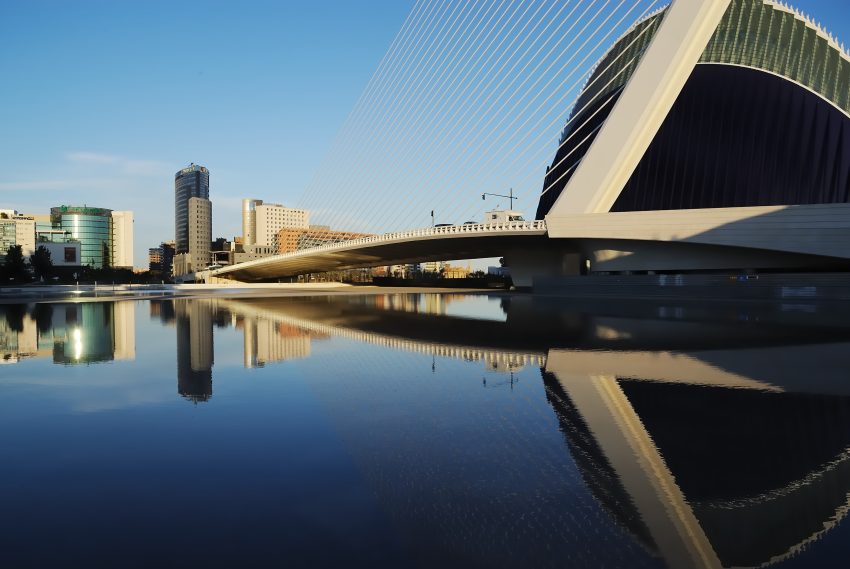
Assut de l'Or Bridge (often nicknamed the “harp bridge”) is one of Valencia's most eye-catching modern landmarks, a white cable-stayed span with a soaring, curved pylon rising above the former Turia riverbed. It sits beside the City of Arts and Sciences, linking key roads while also welcoming pedestrians and cyclists across the Jardín del Turia.
Even if you're not an architecture fan, it's an easy add-on to a walking tour of the Turia Gardens and the City of Arts and Sciences. For the best views, approach it from the park paths below for dramatic angles of the pylon and cables, then cross on foot to appreciate the details up close.
Table of Contents
- History and Significance of the Assut de l’Or Bridge
- Things to See and Do in the Assut de l’Or Bridge
- How to Get to the Assut de l’Or Bridge
- Practical Tips on Visiting the Assut de l’Or Bridge
- Where to Stay Close to the Assut de l’Or Bridge
- Is the Assut de l’Or Bridge Worth Visiting?
- For Different Travelers
- FAQs for Visiting Assut de l’Or Bridge
- Nearby Attractions to the Assut de l’Or Bridge
History and Significance of the Assut de l’Or Bridge
The bridge was designed by Valencian architect-engineer Santiago Calatrava as part of the broader transformation of this area into a contemporary cultural district anchored by the City of Arts and Sciences. Its clean, sculptural lines fit the complex's futuristic aesthetic, turning a piece of transport infrastructure into a recognizable city symbol.
Construction took place in the mid-2000s, and the bridge was completed in 2008. Its name references an old “assut” (a small dam or weir) that historically existed nearby, connecting the new landmark to the area’s older relationship with water management.
Beyond its looks, the bridge is significant for how it stitches together neighborhoods and traffic routes around the City of Arts and Sciences while keeping the Turia Gardens' long green corridor visually open. The tall pylon has also become a defining element of Valencia's skyline, especially when seen from the park.
Things to See and Do in the Assut de l’Or Bridge
Start by viewing the bridge from below in the Jardín del Turia: the perspective from the park emphasizes the “harp” effect of the cables and makes the structure feel even more monumental. If you enjoy architectural photography, walk around both sides of the span to compare the symmetry of the deck with the dramatic curve of the pylon.
Crossing the bridge on foot is part of the experience. You'll notice how the pedestrian and cycling routes are integrated into the design, and you'll get elevated views toward the City of Arts and Sciences—great for orienting yourself before continuing to the science museum, Hemisfèric, or the surrounding gardens.
For atmosphere, come twice if you can: once near golden hour for softer light on the white structure, and again after dark when the bridge reads as a luminous line in the cityscape. It's also a satisfying stop on a longer walk or bike ride through the Turia Gardens.
How to Get to the Assut de l’Or Bridge
Valencia Airport (VLC) is the closest airport for most travelers, with Alicante–Elche Airport (ALC) as a common alternative if you're combining destinations along Spain's east coast. For the best deals and a seamless booking experience, check out these flights to Valencia on Booking.com.
Valencia is well connected by train, and arriving at Estació del Nord or Joaquín Sorolla makes it straightforward to continue by taxi, bus, or metro toward the City of Arts and Sciences area. Train schedules and bookings can be found on Omio.
If you're traveling by car, aim for parking options around the City of Arts and Sciences and then finish on foot via the Turia Gardens paths for a more scenic approach. If you are looking to rent a car in Spain I recommend having a look at Discover Cars, first, as they compare prices and review multiple car rental agencies for you.
Practical Tips on Visiting the Assut de l’Or Bridge
- Entrance fee: Free.
- Opening hours: 24 Hours.
- Best time to visit: Sunset into early evening is ideal for softer light and a more dramatic skyline feel, especially if you plan to photograph it.
- How long to spend: 15–30 minutes is enough for a quick look and crossing; budget 45–60 minutes if you want multiple photo angles from the park below.
- Accessibility: The bridge is a public thoroughfare with step-free access, suitable for wheelchairs and strollers, though it can feel busy at peak times.
- Facilities: There are no dedicated facilities on the bridge itself, but cafés, restrooms, and services are available within the City of Arts and Sciences complex nearby.
Where to Stay Close to the Assut de l’Or Bridge
Base yourself in the City of Arts and Sciences / Turia Gardens area if you want an easy, walkable stay near modern architecture, parks, and a calmer evening vibe than the Old Town.
INNSiDE by Meliá Valencia Oceanic A practical pick for being close to the City of Arts and Sciences, with a modern feel that matches the neighborhood and an easy walk to the bridge.
Barceló Valencia A reliable, full-service option near the complex, good if you want comfort and quick access to both the bridge and the surrounding attractions.
Ilunion Aqua 4 Convenient for travelers who like having shopping and dining close by, with straightforward access to the Turia Gardens and the bridge.
NH Valencia Las Artes A solid mid-range choice that's especially handy if you're planning early visits to the City of Arts and Sciences and want a short commute on foot.
Hotel Primus Valencia A comfortable base with a resort-like feel for this part of the city, ideal if you want to mix sightseeing with downtime near the gardens.
Is the Assut de l’Or Bridge Worth Visiting?
Yes—especially if you're already exploring the City of Arts and Sciences or walking the Turia Gardens. It's one of those places where the “wow” factor comes from angles and scale: seeing the pylon rise above the park, then crossing on foot, makes it feel like a piece of urban sculpture you can actually use.
Honest Pivot: if you're short on time and not interested in modern architecture or photography, you can skip a dedicated visit and simply admire it in passing while heading between the City of Arts and Sciences buildings. It's a quick stop, but it won't replace a museum visit or a deep Old Town wander.
What Other Travellers Say...

Travelers rate the Assut de l'Or Bridge very highly overall, praising its bold, futuristic design and the striking “harp-like” pylon and cable lines. Many visitors enjoy spotting Calatrava's signature details and recommend it as a memorable photo stop, especially when combined with a walk through the Turia Gardens and the City of Arts and Sciences. A recurring downside is that the pedestrian/cycling layout and traffic-light waits can feel inconvenient when the area is busy.


For Different Travelers
The bridge works best as a flexible, low-commitment stop you can tailor to your pace. Pair it with a longer Turia Gardens walk, a City of Arts and Sciences visit, or a sunset photo loop.
Families with Kids
For families, it’s an easy “big structure” moment that doesn’t require tickets or long attention spans. Kids often enjoy the open space and the sense of crossing a giant landmark.
Consider combining it with time in the Turia Gardens where there's room to move around before or after the crossing. If you're using scooters or bikes, keep an eye on traffic-light waits and shared-path etiquette.
Couples & Romantic Getaways
Couples will get the most out of a sunset-to-evening stroll, when the bridge and the surrounding complex feel cinematic. It’s a simple, memorable walk that pairs well with dinner nearby.
For a more romantic route, approach through the Turia Gardens paths rather than arriving directly by road. The gradual reveal of the pylon and cables makes the experience feel more intentional.
Budget Travelers
This is a strong budget-friendly stop: it's outdoors, central to a lot of modern Valencia sightseeing, and easy to combine with free walking routes through the Turia Gardens. You can get great photos without paying for an attraction.
To keep costs down, plan it as part of a self-guided architecture walk around the City of Arts and Sciences and bring water/snacks. Evening visits can also help you avoid the midday heat in warmer months.
FAQs for Visiting Assut de l’Or Bridge
Getting There
Tickets & Entry
Visiting Experience
Tours, Context & Itineraries
Photography
Accessibility & Facilities
Food & Breaks Nearby
Safety & Timing
Nearby Attractions to the Assut de l’Or Bridge
- City of Arts and Sciences: Valencia's flagship modern complex with museums, architecture, and broad promenades for strolling.
- L'Umbracle: A landscaped walkway and garden structure with great angles for photos of the surrounding buildings.
- Museu de les Ciències Príncipe Felipe: A hands-on science museum that's especially good if you're traveling with kids.
- L'Oceanogràfic: One of Europe's major aquariums, easily reached from the bridge area on foot.
- Jardín del Turia: The long, linear park that runs through Valencia, perfect for walking or cycling between major sights.
The Assut de l'Or Bridge appears in our Complete Guide to Visiting Valencia!

Moira & Andy
Hey! We're Moira & Andy. From hiking the Camino to trips around Europe in Bert our campervan — we've been traveling together since retirement in 2020!
This website uses affiliate links which may earn a commission at no additional cost to you!
Planning Your Visit
24 Hours.
Free.
Nearby Attractions
- L'Àgora (0.1) km
Arts Venue, Museum and Notable Building - Prince Philip Science Museum (0.3) km
Museum - L'Umbracle Sculpture Garden (0.3) km
Attraction, Gardens and Sculpture - L'Hemisfèric Building (0.3) km
Arts Venue, Attraction and Notable Building - L'Oceanogràfic (0.3) km
Aquarium and Attraction - City of the Arts and Sciences (0.8) km
Aquarium, Attraction and Museum - Museu Faller de Valencia (0.9) km
Attraction and Museum - Gulliver Park (1.2) km
Attraction and Park - Jardines de Ayora (1.5) km
Attraction, Gardens and Park - Mercadillo de Ruzafa (2.0) km
Bazaar and Market