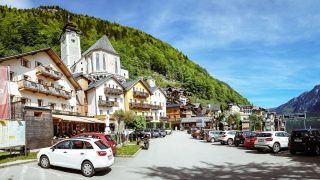
Archaeological Excavations in Hallstatt
Historic Site in Hallstatt
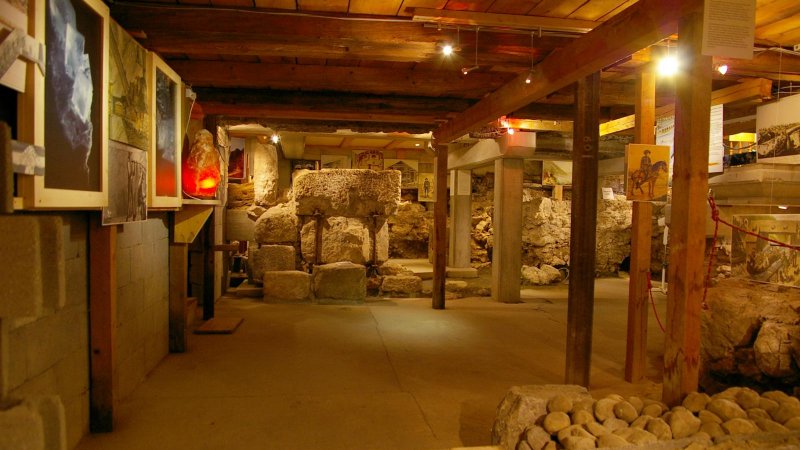
Hallstatt's beauty is famous, but its age is the real story-and the Archaeological Excavations in Hallstatt are one of the most surprising ways to feel it. Tucked beneath the Dachsteinsport Janu shop in the village centre, this small, free exhibition lets you look straight down into the layers of a settlement that long predates Rome, with stonework and foundations that make Hallstatt's “living museum” reputation feel completely earned.
It's also an ideal stop to weave into a Hallstatt walking tour: quick, atmospheric, and genuinely different from the usual viewpoints. If you're short on time, this is one of the best places to visit for a concentrated hit of “wow, people lived here when?”-and if it's raining, it's the kind of indoor detour that makes your day feel smarter, not compromised.
Table of Contents
- History and Significance of the Archaeological Excavations in Hallstatt
- Things to See and Do in the Archaeological Excavations in Hallstatt
- How to Get to the Archaeological Excavations in Hallstatt
- Practical Tips on Visiting the Archaeological Excavations in Hallstatt
- Where to Stay Close to the Archaeological Excavations in Hallstatt
- Is the Archaeological Excavations in Hallstatt Worth Visiting?
- For Different Travelers
- FAQs for Visiting Archaeological Excavations in Hallstatt
- Nearby Attractions to the Archaeological Excavations in Hallstatt
History and Significance of the Archaeological Excavations in Hallstatt
The excavations were discovered in 1990, and what makes them special is the way they compress centuries into a single glance. Instead of a curated museum display behind glass, you're seeing real structures in situ-where people actually built, worked, and rebuilt as Hallstatt evolved through different eras.
One of the most striking details is the visible “stacking” of time: older paving stones associated with early Hallstatt life, Roman-era building foundations, and later medieval elements that hint at how power and daily life shifted in the village. It's a reminder that Hallstatt wasn't just a pretty lakeside stop-it was a place with long-term economic and strategic importance.
Because Hallstatt’s identity is so tied to salt, the finds here help ground that story in the everyday. Tools, ceramics, and structural remains show how a community changed over thousands of years, while still staying rooted to the same landscape and resources.
Things to See and Do in the Archaeological Excavations in Hallstatt
Start by taking a slow lap around the viewing areas and reading the on-site context before you zoom in on the details. The stonework is the headline act-paving and foundations from different periods sit close enough together that you can compare building styles almost like flipping pages in a timeline.
Look out for the Roman-era foundation sections and the later medieval walls associated with the Habsburg period, which give a strong sense of how the village’s centre was shaped and fortified over time. Even if you’re not a history specialist, the clean lines of old construction make the past feel surprisingly “present.”
If you like artifacts, the displays of tools and ceramics are the extra payoff. The range is broad-from older pieces that hint at very early settlement life to later everyday objects-so it’s easy to connect the big historical arc to small, human-scale details.
How to Get to the Archaeological Excavations in Hallstatt
Hallstatt is easiest to reach via Salzburg Airport (W. A. Mozart Airport) or Linz Airport, then onward by public transport or car depending on your route. For the best deals and a seamless booking experience, check out these flights to Hallstatt on Booking.com. From Vienna International Airport, expect a longer but straightforward journey via rail connections and regional transfers. For the best deals and a seamless booking experience, check out these flights to Hallstatt on Booking.com.
By train, aim for Hallstatt Bahnhof (the station across the lake), then take the passenger ferry to the village and walk into the centre for the excavation entrance beneath Dachsteinsport Janu. You can easily check timetables and book train tickets through the ÖBB (Austrian Federal Railways) website. However, for a smoother experience, we recommend using Omio, which simplifies the booking process and lets you compare routes, prices, and departure times all in one place. The walk from the ferry area through the old town is short and scenic, making this an easy add-on even on a tight schedule.
If you’re driving, plan to park in Hallstatt’s designated car parks outside the car-free centre and continue on foot into town. If you are looking to rent a car in Austria I recommend having a look at Discover Cars, first, as they compare prices and review multiple car rental agencies for you. The excavation site is in the village core, so once you’re parked, it’s all about walking lanes and lakeside paths.
Practical Tips on Visiting the Archaeological Excavations in Hallstatt
- Entrance fee: Free.
- Opening hours: Daily: 09:00-17:00. In July & August: open later into the early evening (hours can vary).
- Official website: https://www.dachsteinsport.at/ausgrabungen/
- Best time to visit: Late morning or mid-afternoon is ideal, when the day-tripper rush thins and you can actually linger without feeling hurried.
- How long to spend: 15-30 minutes works well as a focused stop; allow longer if you like reading context and comparing the layers closely.
- Accessibility: Expect steps and tight spaces typical of a small historic site under a shop; it’s doable for many travelers, but not reliably barrier-free.
- Facilities: This is a compact exhibition rather than a full museum-plan for cafés and restrooms elsewhere in the village centre.
Where to Stay Close to the Archaeological Excavations in Hallstatt
For a culture-heavy itinerary, base yourself in Hallstatt’s car-free centre so you can start early and enjoy the village after the daytime crowds; if your trip is more about easy logistics, consider staying near the transport links and parking access outside the core and day-tripping in.
If you want to be steps from the lake and right in the heart of the old town, Seehotel Grüner Baum puts you on the historic square with classic views and an unbeatable location for quick, quiet evenings. For a polished, comfortable stay with a prime waterfront position, Heritage.Hotel Hallstatt is a strong choice, especially if you value easy access to the village sights without sacrificing comfort.
If you prefer something traditional and central with a long-running local feel, Seewirt Zauner is well-placed for early starts and relaxed nights, and it keeps you close enough to pop into the excavations whenever the mood (or weather) changes.
Is the Archaeological Excavations in Hallstatt Worth Visiting?
Yes-especially because it's free, central, and genuinely distinctive in a village where many highlights are views rather than “layers of time you can actually see.” It's a small stop, but it delivers a big sense of perspective: Hallstatt isn't just beautiful; it's ancient in a way that feels tangible here.
The honest pivot: if you're only in Hallstatt for a quick photo run and you're not even slightly interested in archaeology, you might prefer to spend that short window on the lakeside viewpoints. But for curious travelers-and anyone visiting on a rainy day-this is one of the most rewarding 20-minute detours in town.
For Different Travelers
Families with Kids
Kids who like “hidden places” usually enjoy the idea of going under a shop to find real ruins, and it’s short enough that you can keep it light and curiosity-led. Make it a quick treasure-hunt style stop-spot the different stone layers, then reward everyone with a warm café break nearby.
Because it’s compact, it works well between bigger activities (boat, viewpoints, salt mine) without derailing your day. If you’re visiting with a stroller, plan to park it and take turns if the access feels tight.
Couples & Romantic Getaways
This is a surprisingly good couples stop because it’s intimate and low-key-more “quiet discovery” than a formal museum. Pair it with a slow lakeside walk afterwards and it adds depth to the day without adding stress.
It’s also a smart way to dodge crowds for a bit, especially midday, and come back out feeling like you found something most people walk right past. If the weather is moody, this stop actually suits it.
Budget Travelers
Free in Hallstatt is rare, and that alone makes this worth penciling in. It's a high-value stop that adds variety to a day otherwise filled with paid attractions or transport costs.
Use it as a flexible filler: if you arrive early, visit here first; if the village is packed, duck in for a calmer moment. Either way, it’s a budget-friendly way to make your itinerary feel richer.
FAQs for Visiting Archaeological Excavations in Hallstatt
Getting There
Visiting Experience
Photography
Accessibility & Facilities
Nearby Attractions to the Archaeological Excavations in Hallstatt
- Hallstatt World Heritage Museum: A compact museum that adds context to Hallstatt's salt-driven history and local life through the ages.
- Hallstatt Skywalk Welterbeblick: A dramatic viewing platform with sweeping lake-and-mountain panoramas that feel like the “big picture” after the ruins.
- Salzwelten Hallstatt Salt Mine: A fun, immersive way to understand why Hallstatt mattered, with underground chambers and salt history brought to life.
- Hallstatt Charnel House (Beinhaus): A small but unforgettable cultural site that offers a distinctive look at local traditions around remembrance.
- Marktplatz Hallstatt: The postcard-pretty main square, perfect for photos, a quick coffee, and soaking up the village atmosphere.
The Archaeological Excavations in Hallstatt appears in our Complete Guide to Visiting Hallstatt!

Moira & Andy
Hey! We're Moira & Andy. From hiking the Camino to trips around Europe in Bert our campervan — we've been traveling together since retirement in 2020!
This website uses affiliate links which may earn a commission at no additional cost to you!
Planning Your Visit
Daily: 09:00-17:00.
In July & August: open later into the early evening (hours can vary).
Free.
Nearby Attractions
- World Heritage Museum Hallstatt (0.1) km
Museum - Hallstatt Market Square (0.1) km
Square - Christuskirche (0.2) km
Church - Hallstatt Bone House (0.3) km
Church - Hallstatt Skywalk (0.4) km
- Rudolf Tower (0.5) km
Hotel and Viewing Point - Hallstatt Salt Mine Funicular (0.5) km
Funicular - Salt Mine Visitor Center (0.7) km
- Hallstatt Salt Mine (1.1) km
Mine - Waldbachstrub Waterfall (2.8) km
Waterfalls