Amphithéâtre de Poitiers
Amphitheatre and Roman Site in Poitiers
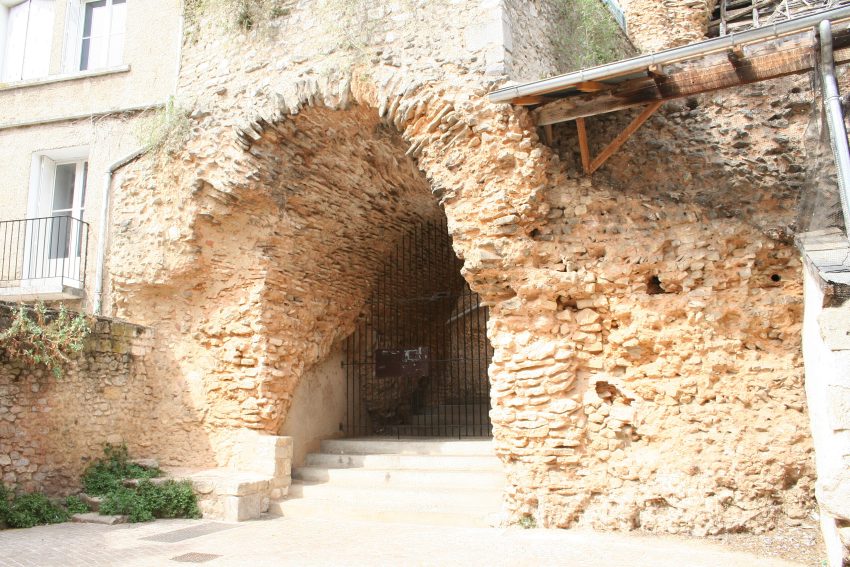
Just beyond the busy streets of central Poitiers, the Amphithéâtre de Poitiers once thundered with the roar of crowds and the clash of gladiators' weapons. Built in the 1st century AD on the outskirts of Roman Limonum, this immense arena measured roughly 155 by 130 metres and could hold thousands of spectators for spectacles ranging from gladiatorial combats to animal hunts. Today the amphitheatre is far more fragmentary, but walking the modern streets that follow its contours and exploring the surviving masonry still gives you a strong sense of its original scale and why it is one of the must-see places in Poitiers for anyone intrigued by the city's Roman past.
The site has been reused and reimagined many times over the centuries. In late antiquity it may have served as a Visigothic strongpoint, and during the Middle Ages its stone became a convenient quarry for new buildings in Poitiers, scattering pieces of the arena through the urban fabric. Yet enough of its galleries, foundations and earthworks remain to sketch out the ellipse of the original amphitheatre, now woven into streets such as Rue Magenta. Visiting today is as much about reading traces in the modern city as it is about standing in front of intact ruins, making it a great place to visit on a walking tour of Poitiers that links Roman, medieval and modern layers.
Table of Contents
- History and Significance of the Amphithéâtre de Poitiers
- Things to See and Do in the Amphithéâtre de Poitiers
- How to Get to the Amphithéâtre de Poitiers
- Practical Tips on Visiting the Amphithéâtre de Poitiers
- Where to Stay close to the Amphithéâtre de Poitiers
- Is the Amphithéâtre de Poitiers Worth Visiting
- FAQs for Visiting the Amphithéâtre de Poitiers
- Nearby Attractions to the Amphithéâtre de Poitiers
History and Significance of the Amphithéâtre de Poitiers
The amphitheatre was constructed in the 1st century AD, during the rule of the Julio Claudian emperors, when Limonum (Poitiers’ Roman name) stood as an important administrative and commercial centre in western Gaul. Its location on the edge of the settlement allowed for a large footprint with easy access from surrounding roads, and its elliptical plan followed the standard model used across the empire. For the inhabitants of Limonum, the arena would have been a central stage for public life, where imperial power, local politics and popular entertainment met in the form of games and spectacles.
As the Roman Empire weakened in the 4th and 5th centuries, the function of such large entertainment buildings changed. At Poitiers, the amphitheatre appears to have been taken over by the Visigoths and adapted as a defensive position, taking advantage of the robust outer walls and elevated setting. Over time, however, maintenance declined and the structure was gradually abandoned. Stones were reused in churches, houses and fortifications, a fate shared by many ancient monuments across Europe.
By the Middle Ages, the amphitheatre had largely disappeared above ground, but its footprint continued to shape the local street plan. In the 19th and 20th centuries, archaeological work began to uncover sections of the cavea, inner galleries and foundations, confirming its impressive original dimensions and importance. Recognition as a historic monument in 1840, with further classifications in 1935 and 1962, helped safeguard what survives and brought the amphitheatre back into public awareness as a key piece of Poitiers’ Roman heritage.
Things to See and Do in the Amphithéâtre de Poitiers
A visit here is different from more intact Roman arenas: you will not find a complete ring of seating or towering exterior walls, but rather a landscape of fragments that reward a bit of imagination. Start by locating the main surviving sections of the amphitheatre’s galleries and outer walls, where you can see the masonry that once supported the steep tiers of seating. Standing beside these remains, picture the full ellipse rising above you and the arena floor at the centre filled with sand, props and performers.
As you walk around, notice how nearby streets curve gently, especially Rue Magenta and its surroundings. These follow the line of the amphitheatre’s outer wall, turning the modern city plan into a kind of ghost map of Roman Limonum. It is worth bringing or downloading a simple plan of the ancient amphitheatre so you can overlay it mentally on the present day layout. This blend of archaeology and urban exploration is part of the site’s appeal.
Depending on current arrangements, you may find information panels or marked viewpoints that explain the structure's history, phases of use and the discoveries made during excavations. Take time to read these, then stand quietly and imagine the shift from the noise of Roman games to the tense calm of a Visigothic redoubt, and finally to the slow dismantling of the arena as its stones were carried away to build churches and houses. Even though much has vanished, the amphitheatre still offers a surprisingly vivid sense of continuity between ancient and modern Poitiers.
How to Get to the Amphithéâtre de Poitiers
If you are arriving by air, the nearest gateway is Poitiers-Biard Airport, from where you can take a taxi or local bus into the city centre and then walk or ride a short distance to the neighbourhood around Rue Magenta, where the amphitheatre remains are located. For the best deals and a seamless booking experience, check out these flights to Poitiers on Booking.com.
Poitiers’ main railway station has frequent connections to other French cities; from there, you can either walk for about 20 minutes into the centre and onwards to the amphitheatre area, or take a local bus towards the historic quarters and get off near the streets that follow the old Roman ellipse. You can use SNCF Connect to check schedules, compare routes, and purchase tickets for National (SNCF ) and regional trains (TER). For a more streamlined experience, we recommend using Omio, which allows you to easily compare prices, schedules, and book tickets for both National and Regional travel across all of Europe, all in one place.
Travelling by car, follow signs into central Poitiers and look for public parking near the old town; from your parking spot it is a short urban walk through residential and commercial streets to reach the section of town that overlays the ancient amphitheatre. If you are looking to rent a car in France I recommend having a look at Discover Cars, first, as they compare prices and review multiple car rental agencies for you.
Practical Tips on Visiting the Amphithéâtre de Poitiers
- Suggested tips: Bring a simple map or guide that shows the outline of the ancient arena to help you interpret the low remains and the curved street layout.
- Best time to visit: Daytime visits in clear weather work best, as good light helps you pick out stonework and understand the topography; early morning or late afternoon are quieter.
- Entrance fee: There is generally no formal entrance fee, as the remains are integrated into the urban fabric and viewed from public spaces.
- Opening hours: As an open archaeological area in the city, it is usually accessible in daylight hours; specific guided visits or fenced sections may follow separate schedules.
- How long to spend: Plan for 30-60 minutes to walk the area, examine the surviving structures and trace the amphitheatre’s outline via the surrounding streets.
- Accessibility: The site is partly on pavements and public streets with some uneven ground and minor slopes; most viewpoints are accessible, but certain remnants may be harder to reach with limited mobility.
- Facilities: There are no dedicated facilities at the amphitheatre itself; use cafés, shops and public amenities in the nearby streets for toilets, drinks and snacks.
- Photography tip: Use a wide angle lens or phone setting to capture the curvature of the urban blocks, and take detail shots of exposed masonry to convey the scale of the original structure.
- Guided tours: Check whether local guides or the tourist office offer Roman themed walking-tours, which often include the amphitheatre and provide plans or reconstructions to help visualise it.
- Nearby food options: You will find plenty of cafés and small restaurants within a short walk, making it easy to combine the visit with lunch or a coffee stop.
Where to Stay close to the Amphithéâtre de Poitiers
For easy access to the Amphithéâtre de Poitiers and the wider historic centre, consider staying in or near central Poitiers. A comfortable base is Hôtel de l'Europe, which places you within walking distance of the old town streets that overlay the ancient Roman city. Another convenient option is Best Western Poitiers Centre Le Grand Hôtel, offering straightforward access to both the railway station and the main sights. For a simpler stay still close to the centre and within reach of the amphitheatre area, Hotel Central works well as a practical and well located choice.
Is the Amphithéâtre de Poitiers Worth Visiting
The Amphithéâtre de Poitiers is well worth visiting if you enjoy piecing together traces of the past from what survives in the present city. Unlike more reconstructed amphitheatres elsewhere, this one asks you to look a little harder: to notice curves in the street plan, surviving walls half hidden between modern buildings and the way the ancient ellipse still shapes the neighbourhood. In return, you get a richer sense of how Roman Limonum evolved into medieval and modern Poitiers, with the amphitheatre acting as a long lasting anchor point in that story. As part of a day exploring the city's Roman, medieval and later sites, it adds an intriguing and atmospheric stop.
What Other Travellers Say...

Théâtre gallo-romain – Site archéologique du Vieux-Poitiers is a small archaeological site set among fields and trees where visitors often park in a nearby small lot and view the preserved ruins from outside the fenced area; while some find it a fascinating, well-preserved example of Gallo‑Roman remains and a neat bit of local history, others note it can be closed at posted times, which limits access, and it sits on the pilgrimage route of Saint Jacques de Compostela with a geocache reported nearby.


FAQs for Visiting the Amphithéâtre de Poitiers
Nearby Attractions to the Amphithéâtre de Poitiers
- Baptistère Saint-Jean: One of the oldest Christian buildings in France, with early baptismal remains and medieval frescoes.
- Poitiers Cathedral (Cathédrale Saint-Pierre): A major Gothic church with impressive chapels and stained glass, anchoring the city's religious landscape.
- Palace of the Counts of Poitou: Former residence of powerful counts and dukes, featuring the vast Salle des Pas Perdus.
- Church of Notre-Dame-la-Grande: A celebrated Romanesque church with a richly carved façade and a calm, atmospheric interior.
- Place du Maréchal Leclerc: A large central square framed by civic architecture, ideal for a pause between visits to Poitiers' historic sites.
The Amphithéâtre de Poitiers appears in our Complete Guide to Visiting Poitiers!

Moira & Andy
Hey! We're Moira & Andy. From hiking the Camino to trips around Europe in Bert our campervan — we've been traveling together since retirement in 2020!
This website uses affiliate links which may earn a commission at no additional cost to you!
Planning Your Visit
As an open archaeological area in the city, it is usually accessible in daylight hours; specific guided visits or fenced sections may follow separate schedules.
There is generally no formal entrance fee, as the remains are integrated into the urban fabric and viewed from public spaces.
Nearby Attractions
- Place du Maréchal Leclerc (0.2) km
Square - Poitiers Prefecture (0.4) km
Historic Building - Palace of the Counts of Poitou (0.5) km
Palace - Church of Notre-Dame-la-Grande (0.6) km
Church - City Walls of Poitiers (0.7) km
City Walls - Parc de Blossac (0.7) km
Park - Musée Sainte-Croix (0.7) km
Museum - Baptistère Saint-Jean (0.7) km
Baptistery - Cathédrale Saint-Pierre de Poitiers (0.8) km
Cathedral - Place de la Liberté (0.8) km
Square