Carnac Stones
Historic Site near Vannes
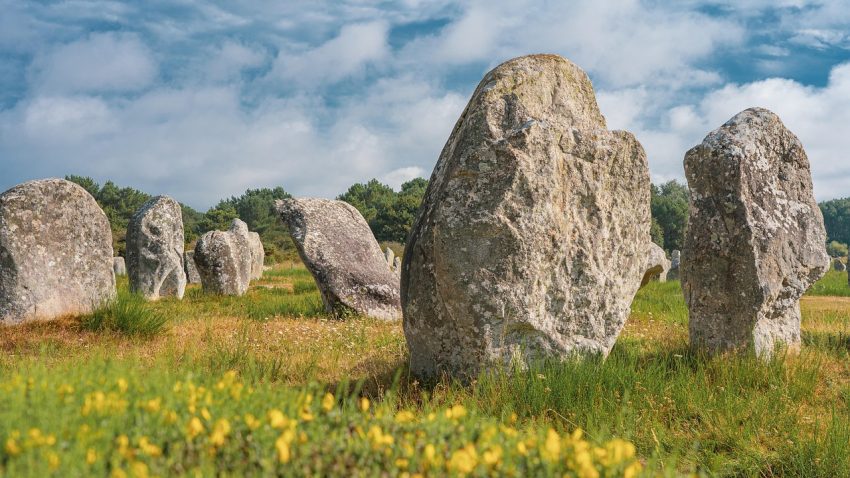
The Carnac Stones (also known as the Carnac Alignments) are one of those places that feel bigger than a single “attraction.” Stretching across fields on the edge of town, the rows of standing stones create a prehistoric landscape you can't quite process at first glance: thousands of menhirs, carefully placed, marching toward the horizon in a way that feels both ordered and deeply mysterious. It's one of the top sights in Carnac because it's not just impressive in scale, it's unsettlingly precise for something built millennia ago.
What I love most is how the visit blends awe with everyday Brittany. One moment you're among café terraces and bakeries, the next you're looking at stones that predate almost everything else in the region's story. It also fits naturally into a walking tour of Carnac, because the town is compact and the alignments are best enjoyed at a slow pace, with time to circle viewpoints and let the whole scene sink in.
Table of Contents
- History and Significance of the Carnac Stones
- Things to See and Do in the Carnac Stones
- How to Get to the Carnac Stones
- Practical Tips on Visiting the Carnac Stones
- Where to Stay Close to the Carnac Stones
- Is the Carnac Stones Worth Visiting?
- For Different Travelers
- FAQs for Visiting Carnac Stones
- Nearby Attractions to the Carnac Stones
History and Significance of the Carnac Stones
The Carnac Stones date to the Neolithic era, and their scale alone hints at a society with serious organisation, shared belief, and the ability to plan across generations. Even if you arrive knowing the headline numbers, the reality on the ground is more affecting: long parallel rows, shifting stone heights, and a sense of intention that feels unmistakable even when the purpose remains unclear.
No single explanation has won the argument, which is part of the fascination. Astronomical alignment theories, ceremonial processions, territorial marking, and community gathering functions have all been proposed, and each makes partial sense when you stand in different parts of the site. Local legends add a more mythic layer, turning the stones into a storybook reminder that people have been trying to explain Carnac for centuries.
The alignments are usually discussed in three main groups: Ménec, Kermario, and Kerlescan. Seeing them as distinct ensembles helps you read the landscape more clearly, because each area has its own “feel,” from the dense drama of Ménec to the different spacing and scale you notice as you move eastward.
Things to See and Do in the Carnac Stones
Start by deciding what kind of experience you want: a close, guided entry into the alignments, or a broader, free wander along the paths and viewpoints around them. The guided visit is the best way to understand what you’re looking at, because it gives context, routes you through key sections, and helps you notice patterns you might otherwise miss.
If you’re exploring independently, focus on the three groups as a mini-itinerary rather than trying to treat the stones as one continuous “thing.” Ménec is the classic first stop for that immediate wow factor, Kermario is often where you feel the scale most strongly, and Kerlescan can feel more intimate and easier to photograph without distractions.
Build in time for the Maison des Mégalithes as well, especially if you want a clearer story before you head out to the fields. Even a short visit helps you connect the site to the wider prehistoric landscape of Morbihan, where cairns, tumuli, and other megalithic monuments make Carnac feel like the centre of something much larger than one set of alignments.
How to Get to the Carnac Stones
The nearest useful airports are Lorient Bretagne Sud (LRT), Nantes Atlantique (NTE), and Rennes Bretagne (RNS), then you continue to Carnac by road and local connections. For the best deals and a seamless booking experience, check out these flights to Vannes on Booking.com.
By train, the most practical rail station is Auray, where you can connect onward by local bus or a short taxi ride into Carnac, especially if you want to time your arrival for a guided visit. You can use SNCF Connect to check schedules, compare routes, and purchase tickets for National (SNCF ) and regional trains (TER). For a more streamlined experience, we recommend using Omio, which allows you to easily compare prices, schedules, and book tickets for both National and Regional travel across all of Europe, all in one place. If you're staying in Vannes or on the coast, regional buses can also work, but timetables vary by season, so it's worth checking your return options before you set out.
By car, Carnac is straightforward to reach via the N165 corridor and local roads, and having your own transport makes it easy to combine the alignments with beaches, viewpoints, and other megalithic sites in Morbihan. If you are looking to rent a car in France I recommend having a look at Discover Cars, first, as they compare prices and review multiple car rental agencies for you.
Practical Tips on Visiting the Carnac Stones
- Entrance fee: Guided visit inside the alignments €13 (adult); €6 (ages 7–17); free under 7.
- Opening hours: (Summer) 01 April – 30 June: 09:30–18:00; 01 July – 31 August: 09:30–19:00; 01 September – 30 September: 09:30–18:00. (Winter) 01 October – 31 March: 10:00–13:00 & 14:00–17:00. Closed on 01 January, 01 May & 25 December.
- Official website: https://www.menhirs-carnac.fr/en/
- Best time to visit: Go early for calmer paths and clearer photos, or late afternoon for warmer light across the stones and fields. Shoulder season can feel more atmospheric, with fewer groups and a quieter landscape.
- How long to spend: Allow 2-4 hours if you want a guided visit plus time to explore viewpoints around Ménec, Kermario, and Kerlescan without rushing.
- Accessibility: The experience is mostly outdoors on natural paths and uneven ground, so sturdy shoes help and wet weather can make footing slower.
- Facilities: Use the visitor facilities around the Maison des Mégalithes as your practical base, then treat the alignments as a mostly outdoor walk with limited services once you’re out among the stones.
Where to Stay Close to the Carnac Stones
For a culture-heavy itinerary, base yourself in Carnac bourg so you can walk to restaurants, small museums, and town-life between megalith stops; for a beach-first trip, Carnac-Plage is the better base for sea views and easy coastal downtime after sightseeing.
For a comfortable stay right by the shoreline with a more “holiday” feel, Le Diana Hôtel & Spa NUXE is a strong option that keeps you close to both the beach and short drives to the stone groups. If you want a well-located seaside hotel with an easy, relaxed rhythm for mornings and evenings, Hôtel Le Churchill works well for combining Carnac-Plage atmosphere with day trips around the peninsula. For something simpler and usually more budget-friendly while still staying close to the action, Hôtel La Licorne is a practical base for a short stay built around walking and easy local access.
Is the Carnac Stones Worth Visiting?
Yes, because very few places in Europe deliver this kind of scale and mystery in such an open, landscape-driven setting. The stones feel less like a curated attraction and more like a surviving fragment of an ancient world, which makes the visit genuinely different from castles, cathedrals, or even most archaeological sites.
It's also worth it because Carnac fits easily into a wider Brittany trip. You can make it a half-day highlight or build a full day around it by pairing the alignments with beaches, coastal towns, and other megalithic monuments nearby.
What Other Travellers Say...

Alignements of Carnac in the lieu-dit le Ménec is a vast megalithic complex you can view from outside the protected fences or explore further via guided walks or a visitor-centre-led tour; expect to see thousands of menhirs and tumuli stretched across several kilometers (some even reach the shoreline), learn more in the free museum and film, and choose between walking routes, an 8 km circuit, or a small tourist train that circles the main sites while preserving the stones.


For Different Travelers
Families with Kids
For families, the key is pacing: treat the stones as a series of short “wow moments” rather than one long walk. A guided visit can work well if your kids enjoy stories and mysteries, but even without it, choosing one main group and one viewpoint loop often feels like the right amount.
Bring snacks and plan a reward stop afterward, because the setting is exciting but the history can feel abstract for younger children. If the weather is good, pairing the stones with a beach break is an easy way to keep everyone happy.
Couples & Romantic Getaways
For couples, Carnac is surprisingly romantic in a quiet, atmospheric way, especially outside peak market-season crowds. The landscape has a cinematic calm to it, and it’s the kind of place where you naturally slow down, walk side by side, and talk about what you think it all means.
To make it feel special, aim for softer light and a less rushed itinerary: stones first, then a café or seafood stop, then a sunset walk by the water. Carnac is at its best when you let it feel a little unplanned.
Budget Travelers
Carnac is a strong budget day out because you can get a lot of impact simply by walking the viewpoints and paths, then choosing whether the paid guided entry is worth it for your style of travel. If you’re watching costs, pick one guided visit as your “paid highlight” and keep the rest of the day free with walking routes and beach time.
Pack a picnic and treat the alignments as an outdoor experience rather than a ticketed schedule. The best budget luxury here is time: lingering, looping viewpoints, and letting the landscape do the work.
FAQs for Visiting Carnac Stones
Getting There
Tickets & Entry
Visiting Experience
Tours, Context & Itineraries
Photography
Accessibility & Facilities
Nearby Attractions to the Carnac Stones
- Musée de Préhistoire de Carnac: A compact, informative museum that gives the best context for what the stones are and how the region evolved.
- Tumulus Saint-Michel: A major prehistoric burial mound with elevated views that helps you understand Carnac as a wider sacred landscape.
- Locmariaquer megaliths (Grand Menhir Brisé and Table des Marchands): A short drive away, offering another “headline” megalithic stop that complements Carnac perfectly.
- La Trinité-sur-Mer: A charming harbour town nearby for an easy waterside lunch and marina stroll after a morning of archaeology.
- Carnac-Plage: Wide beaches and coastal paths that make a perfect, relaxing counterbalance to the prehistoric intensity of the alignments.
The Carnac Stones appears in our Complete Guide to Visiting Vannes!

Moira & Andy
Hey! We're Moira & Andy. From hiking the Camino to trips around Europe in Bert our campervan — we've been traveling together since retirement in 2020!
This website uses affiliate links which may earn a commission at no additional cost to you!
Planning Your Visit
(Summer) 01 April - 30 June: 09:30-18:00; 01 July - 31 August: 09:30-19:00; 01 September - 30 September: 09:30-18:00.
(Winter) 01 October - 31 March: 10:00-13:00 & 14:00-17:00.
Closed on 01 January, 01 May & 25 December.
Guided visit inside the alignments €13 (adult); €6 (ages 7-17); free under 7.
Nearby Attractions
- Conleau Peninsula (23.2) km
- Hôtel de Ville (25.3) km
Historic Building - Port of Vannes (25.4) km
Port - Porte Saint Vincent (25.4) km
City Gate - Musée d'histoire et d'archéologie de Vannes (25.5) km
Museum - Vannes et sa Femme (25.5) km
Historic Building - Place des Lices (25.5) km
Historic Site and Market - Château de l’Hermine (25.5) km
Historic Building - Musée des beaux-arts de Vannes (25.5) km
Museum - Cathédrale Saint-Pierre de Vannes (25.5) km
Cathedral