Capri, Italy: The Ultimate Travel Guide 2026
italy capri
italy capri

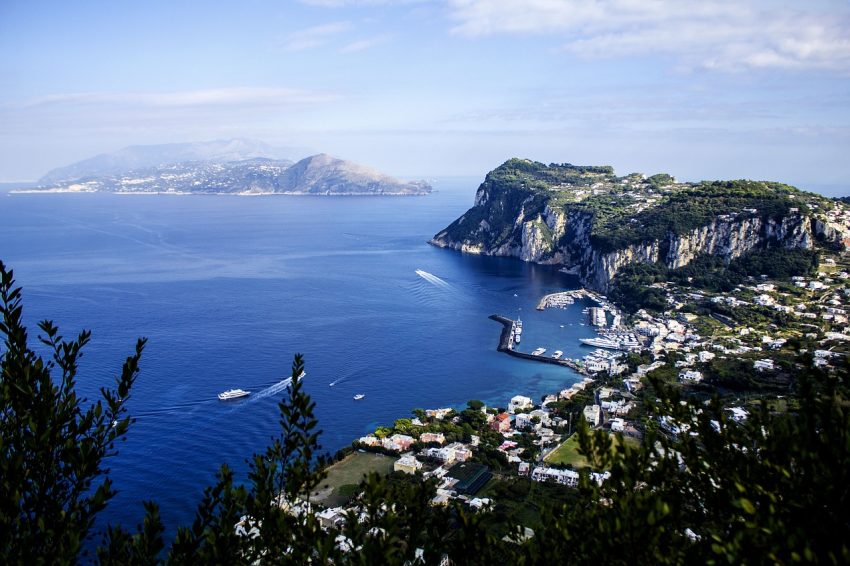
Visiting Capri, the enchanting island in the Bay of Naples, is a dreamlike experience that combines natural beauty with luxurious charm. Known for its dramatic cliffs, crystal-clear waters, and lush landscapes, Capri has long been a favored destination for travelers seeking a mix of relaxation and sophistication. The island's iconic Blue Grotto, a sea cave illuminated by an ethereal blue light, is a must-see attraction that captures the magical allure of Capri. As you explore the island, you'll find yourself captivated by its picturesque villages, winding streets lined with vibrant bougainvillea, and breathtaking views from the famous Gardens of Augustus.

Beyond its natural wonders, Capri offers a rich cultural experience, with historical sites, upscale boutiques, and elegant cafes. The Piazzetta, often referred to as the “living room of the world,” is the heart of Capri's social life, where locals and visitors alike gather to enjoy the lively atmosphere. Strolling through the town of Anacapri, you can visit the beautiful Villa San Michele or take the chairlift up to Monte Solaro, the highest point on the island, for panoramic views. Whether you're indulging in fine dining, relaxing on a secluded beach, or exploring ancient ruins, Capri offers a perfect blend of serenity and sophistication that makes it one of Italy's most beloved destinations.

History of Capri

Ancient Origins of Capri

Capri’s history dates back to ancient times, with evidence of human habitation as early as the Neolithic period. The island was originally inhabited by the Greeks, who were likely the first to establish a permanent settlement. The name “Capri” is believed to have derived from the Greek word “kapros,” meaning wild boar, which were once abundant on the island. The island’s strategic location and natural beauty made it an attractive destination even in antiquity.

Capri During the Roman Empire

Capri gained significant prominence during the Roman Empire when Emperor Augustus visited the island in 29 BC and was so captivated by its beauty that he exchanged the larger, nearby island of Ischia for it. His successor, Emperor Tiberius, further elevated Capri’s status by building twelve villas on the island, the most famous being Villa Jovis. Tiberius spent the last decade of his life on Capri, ruling the Roman Empire from his villa, making the island a center of political power and luxury in the early 1st century AD.

Medieval and Renaissance Capri

After the fall of the Roman Empire, Capri experienced a period of decline and was subjected to numerous invasions and pirate attacks. During the Middle Ages, the island was largely abandoned and fell under the control of various rulers, including the Byzantines, Lombards, and Normans. It wasn’t until the Renaissance that Capri began to recover, with the establishment of monasteries and the slow repopulation of the island. The construction of new churches and fortifications during this period laid the groundwork for the Capri that visitors see today.

Modern History of Capri

In the 19th and 20th centuries, Capri underwent a transformation into a sought-after destination for artists, writers, and the European elite. The island’s stunning scenery and mild climate attracted figures such as Axel Munthe, whose Villa San Michele became a cultural hub. The early 20th century saw the development of tourism as Capri became a popular retreat for celebrities and intellectuals. Today, Capri is known worldwide as a symbol of luxury and natural beauty, blending its rich historical heritage with a vibrant modern culture that continues to draw visitors from around the globe.

Moira & Andy
Moira & Andy

Hey! We're Moira & Andy. From hiking the Camino to trips around Europe in Bert our campervan — we've been traveling together since retirement in 2020!

Read our full story here

Visiting Capri for the first time and wondering what are the top places to see in the city? In this complete guide, I share the best things to do in Capri on the first visit. To help you plan your trip, I have also included an interactive map and practical tips for visiting!

This website uses affiliate links which earn a small commission at no additional cost to you.
Powered by GetYourGuide

20 Best places to See in Capri

This complete guide to Capri not only tells you about the very best sights and tourist attractions for first-time visitors to the city but also provide insights into a few of our personal favorite things to do.

This is a practical guide to visiting the best places to see in Capri and is filled with tips and info that should answer all your questions!

1. Torre dell'Orologio
Piazza Umberto I din Capri
CC BY-SA 4.0 / Cezar Suceveanu
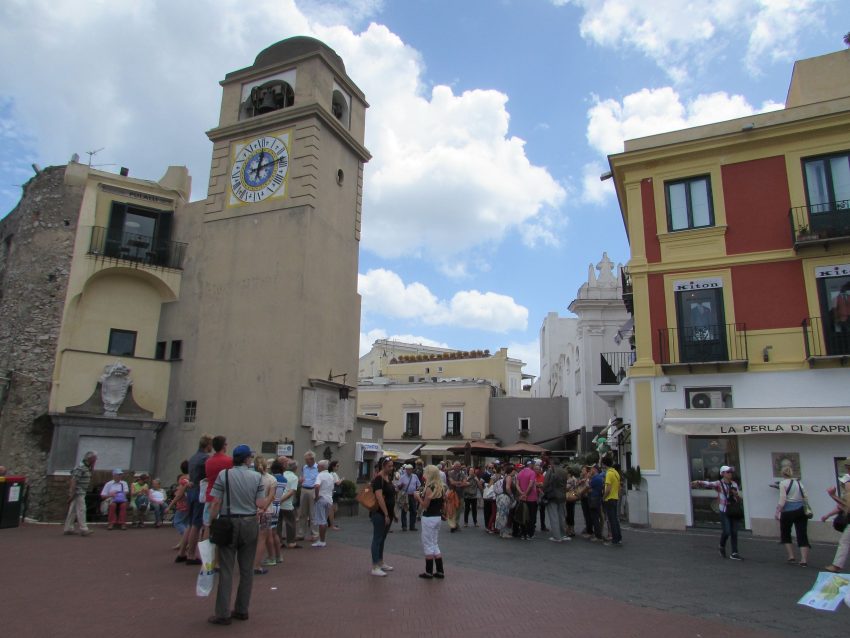
Torre dell’Orologio (also called the Campanile) rises over the Piazzetta with a sturdy square base and a distinctive, eastern-tinged dome that stands out against the surrounding café terraces. Built on remains linked to a Byzantine-era religious site and later reshaped in the 18th century, it blends older stonework with more refined later details. Look for the colorful clock face: 144 maiolica tiles in blue, yellow, and black form the dial, a small burst of pattern amid the pale buildings. The bells mark the hours above the steady churn of conversations and clinking cups, making it an easy landmark to remember and photograph from the square.
Location: Torre dell'Orologio, Via Roma, Capri, Metropolitan City of Naples, Italy | Distance: 0km

We recommend to rent a car in Italy through Discover Cars, they compare prices and review multiple car rental agencies. Book your rental car here.

2. Piazza Umberto I

Piazza Umberto I Capri
CC BY-SA 4.0 / Cezar Suceveanu
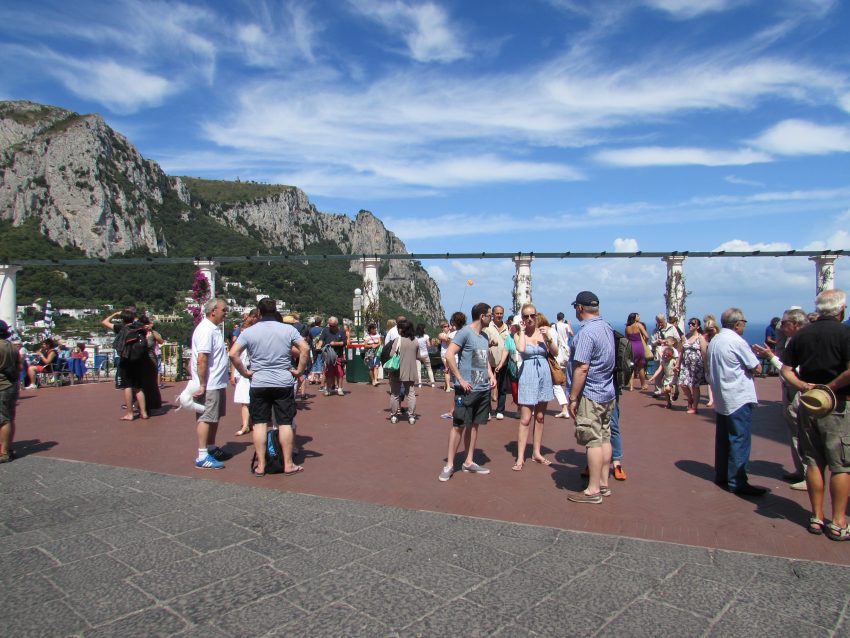
Piazza Umberto I (the Piazzetta) is a small, café-lined square that functions as the island’s social crossroads—part meeting point, part open-air stage for conversation and people-watching. Once a market where fishermen and locals traded, it shifted after WWII into a glamorous hangout for writers, artists, and the international set. The Clock Tower anchors the scene, its bells ringing out over tight lanes that spill into boutiques and hidden passageways. What visitors remember is the contrast between intimate scale and constant buzz: photo-ready façades, outdoor tables, and a crowd that can feel as dense as the pigeons in Venice. Come early for quiet, or later when the lights warm the stone.
Location: Piazzetta di Capri, Piazza Umberto I, Capri, Metropolitan City of Naples, Italy | Distance: 0km

Here is a complete selection of hotel options in Capri. Feel free to review each one and choose the stay that best suits your needs.

3. Via Camerelle, Capri

Via Camerelle din Capri
CC BY-SA 4.0 / Cezar Suceveanu
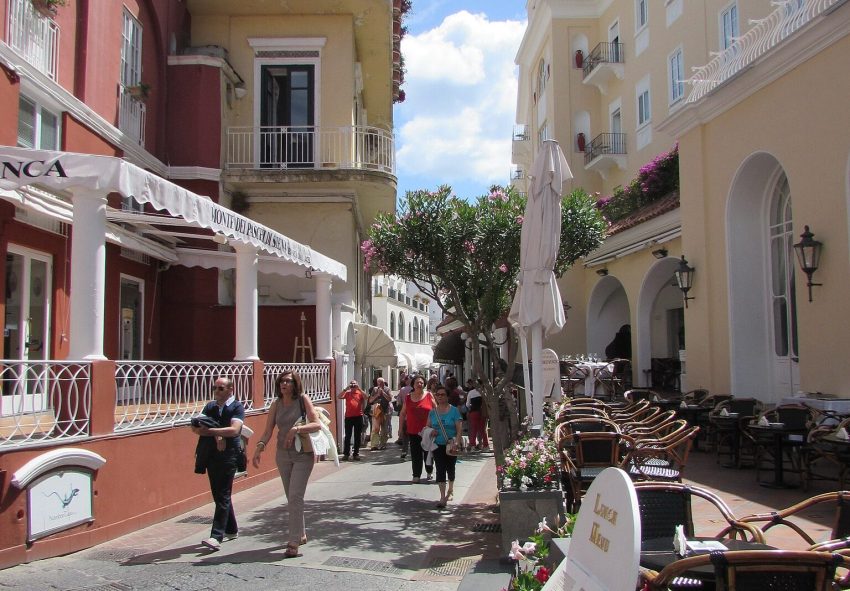
Via Camerelle is Capri Town’s polished shopping promenade, running from the Piazzetta toward the Tragara side of the island. The walk is memorable less for monuments than for its carefully composed atmosphere: palm trees, white façades, shaded terraces, and sudden slivers of blue sea between buildings. Luxury fashion houses sit next to small artisan shops selling handmade sandals, perfumes, and other crafted goods, so browsing feels like a mix of runway and workshop. Travelers often linger for a gelato or espresso and watch the steady stream of well-dressed passersby, with flowers and greenery softening the street’s glossy storefronts.
Location: Via Camerelle, Capri, Metropolitan City of Naples, Italy | Hours: Shops typically open from late morning to evening, with a midday pause | Price: Free to explore; shopping prices vary widely. | Distance: 0.2km

Traveling to a country with a different currency? Avoid ATM transaction fees and pay in local currency with a Wise Card. Having used it for over 5 years, we've saved loads on fees!

4. Belvedere di Punta Cannone

Belvedere di Punta Cannone Capri
CC BY-SA 2.0 / Marlis Börger
Belvedere di Punta Cannone is a quiet terrace-like overlook reached by a short walk through narrow residential lanes and Mediterranean greenery behind the main town. From the edge, the view drops to Marina Piccola and sweeps across the Tyrrhenian Sea, with the Faraglioni framed by rugged cliffs and Monte Solaro rising in the distance. It’s notably calmer than the busier viewpoints, so you can linger on the natural ledges and take photos without jostling for space. The name recalls a cannon once stationed here for coastal surveillance during past conflicts, but what visitors remember is the wide, uninterrupted panorama and the sense of finding a hidden corner.
Location: Belvedere di Punta Cannone, Via Castello, Capri, Metropolitan City of Naples, Italy | Distance: 0.4km

Explore Capri at your own pace with our self-guided walking tour! Follow our curated route to discover must-see sights and local secrets that makes Capri one of the best places to visit in Italy.

5. Certosa di San Giacomo

Certosa di San Giacomo
CC BY-SA 3.0 / Berthold Werner
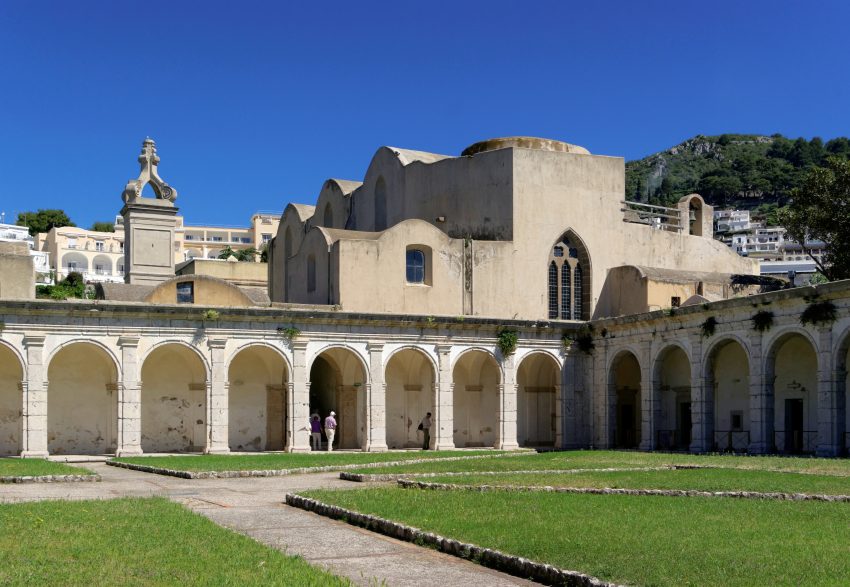
A 14th-century Carthusian monastery complex, the Certosa di San Giacomo feels like a quiet counterworld to the crowds below, with long stone corridors, two cloisters, and walled gardens. The Great Cloister stands out for its mix of Roman- and Byzantine-style columns and the ring of twelve former monastic cells around the courtyard. Look for the well set above a deep cistern believed to reach back to Roman imperial times, and the baroque clock tower with its square base and triangular spire. Inside the refectory, the Diefenbach Museum displays paintings and plaster works by Karl Wilhelm Diefenbach, adding a surprising artistic note to the austere architecture.
Location: Certosa di San Giacomo, Via Certosa, Capri, Metropolitan City of Naples, Italy | Hours: 10:00 a.m. - 6:00 p.m. July, August, September 10:00 a.m. - 4:00 p.m. April, May, October, November and December 10:00 a.m. - 2:00 p.m. January, February, March | Price: €6 | Website | Distance: 0.4km

6. Gardens of Augustus
Gardens of Augustus
Gardens of Augustus
CC BY-SA 4.0 / Mentnafunangann
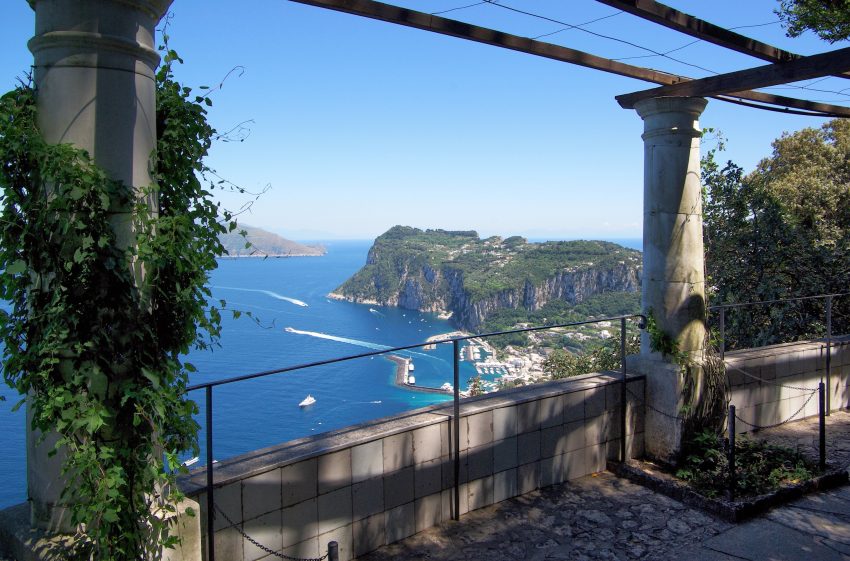
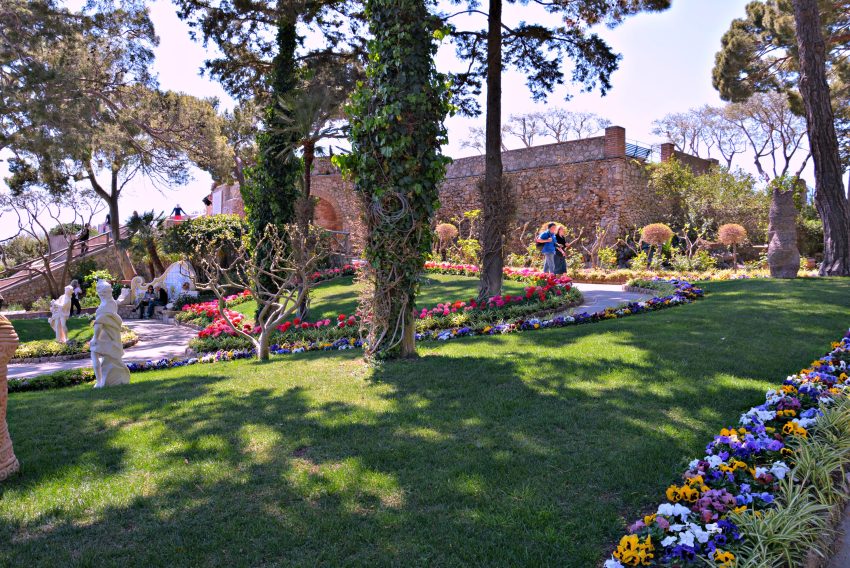
Laid out as early-20th-century terraced gardens, the Gardens of Augustus feel like a calm balcony above the sea, with neat paths threading through Mediterranean plantings such as agave, bougainvillea, and geraniums. The main reason to linger is the panorama: the Faraglioni sea stacks rise from intensely blue water, shifting color with the light. From the railings you can also look straight down onto the tight switchbacks of Via Krupp carved into the cliff, a dramatic piece of engineering that’s often closed but still mesmerizing from above. Created as a private retreat by German industrialist Friedrich Alfred Krupp and later renamed for Emperor Augustus, the site blends careful design with big, wind-swept views.
Location: Gardens of Augustus, Via Matteotti, Capri Metropolitan City of Naples, Italy | Price: €2.50 | Website | Distance: 0.4km

7. Marina Grande
Marina Grande Capri
Marina Grande Capri
CC BY-SA 3.0 / cesar.ruiz
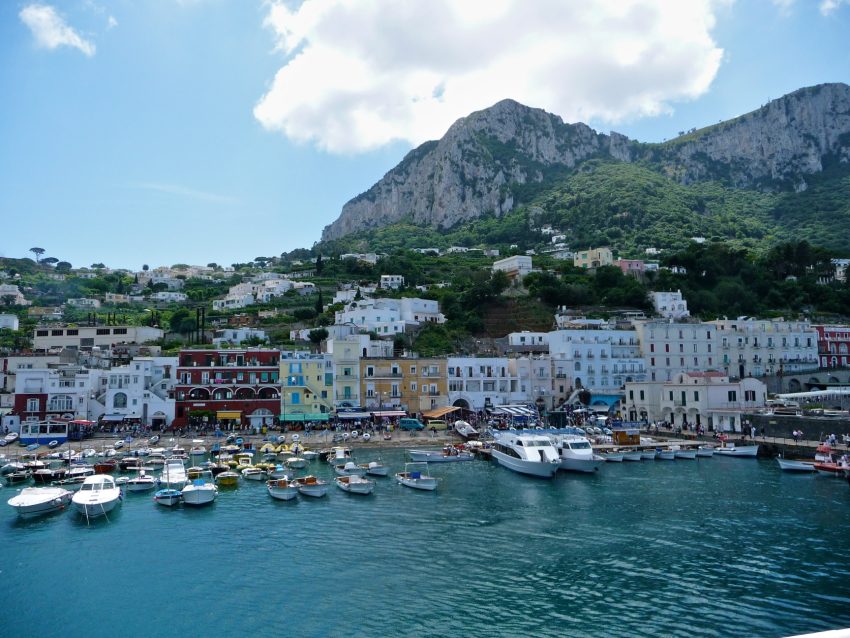
Marina Grande is the island’s working harbor and main arrival point, where ferries and hydrofoils pull in from Naples, Sorrento, and the Amalfi Coast. The first impression is all movement and color: pastel waterfront houses, cafés and trattorias along the promenade, and traditional fishing boats rocking beside modern vessels. It also has the widest beach on the island, a lively strip of pebbles and darker sand that can get crowded; the water is clear but often rocky underfoot, so sturdy sandals help. Even if you don’t linger long, watching boats glide in and out at sunset is memorable.
Location: Marina Grande, Metropolitan City of Naples, Italy | Distance: 0.5km

8. Via Krupp
Capri Via Krupp
Capri Via Krupp
CC BY-SA 3.0 / Berthold Werner
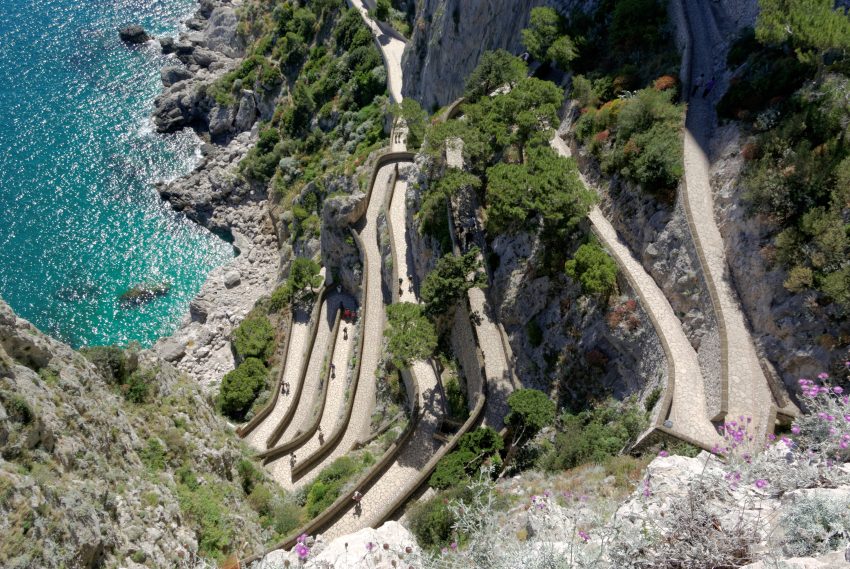
Via Krupp is a cliff-hugging switchback path carved into near-vertical rock, linking the Gardens of Augustus to Marina Piccola. Commissioned by German industrialist Friedrich Alfred Krupp and completed in 1902, it was designed as a practical route from his lodgings to a marine research vessel anchored below. From the terraces above, the tight zigzags read like a geometric ribbon against pale limestone, with wide-open views to the Faraglioni and the glittering Mediterranean. When the path is open, the descent feels theatrical—each hairpin turn reframes the bay, sea breeze, and sheer drop. Even during closures for rockfall risk, the overlook remains a memorable photo stop.
Location: Via Krupp, Capri, Metropolitan City of Naples, Italy | Distance: 0.6km

9. Funicular
Capri Furnicular
Capri Furnicular
CC BY-SA 4.0 / Argo Navis
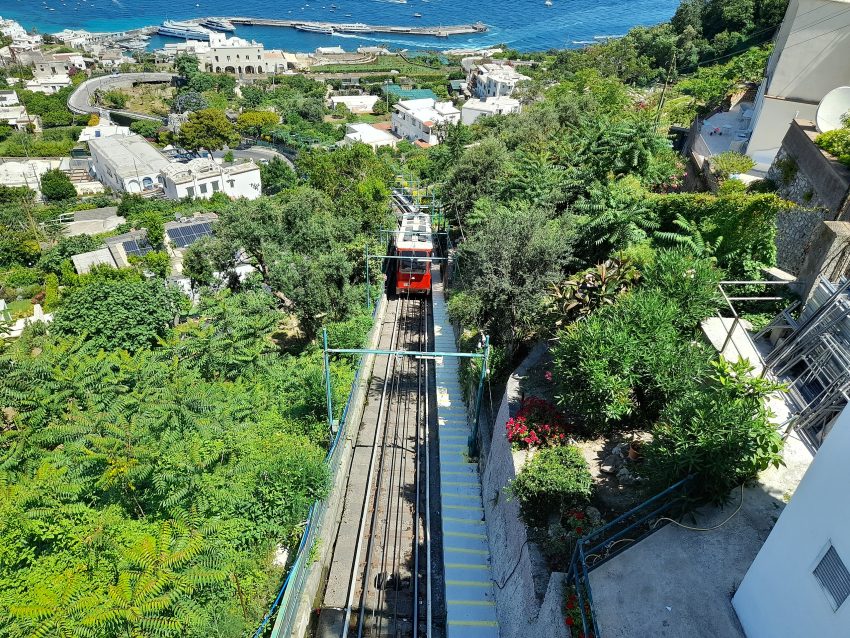
The Funicular in Capri is a short rack railway that links the ferry port at Marina Grande with Capri Town, delivering you to the Piazzetta in about 3–5 minutes instead of tackling the steep climb. As it climbs the hillside, the view widens over the harbor, the bright Tyrrhenian Sea, and terraces of Mediterranean greenery. Trains run frequently (often about every 15 minutes), and the ride is smooth and clean, making it a quick reset from the bustle of the docks to the town above. Many travelers remember the small details at the port—like grabbing a lemon sorbet—before stepping into the car and watching the waterfront shrink below.
Location: Funicolare di Capri, Stazione a Valle (Marina Grande) Via Cristoforo Colombo, 14 80076 Capri NA Italy | Price: €2.40 | Distance: 0.7km

10. Marina Piccola
Marina Piccola
Marina Piccola
CC BY-SA 3.0 / Mister No
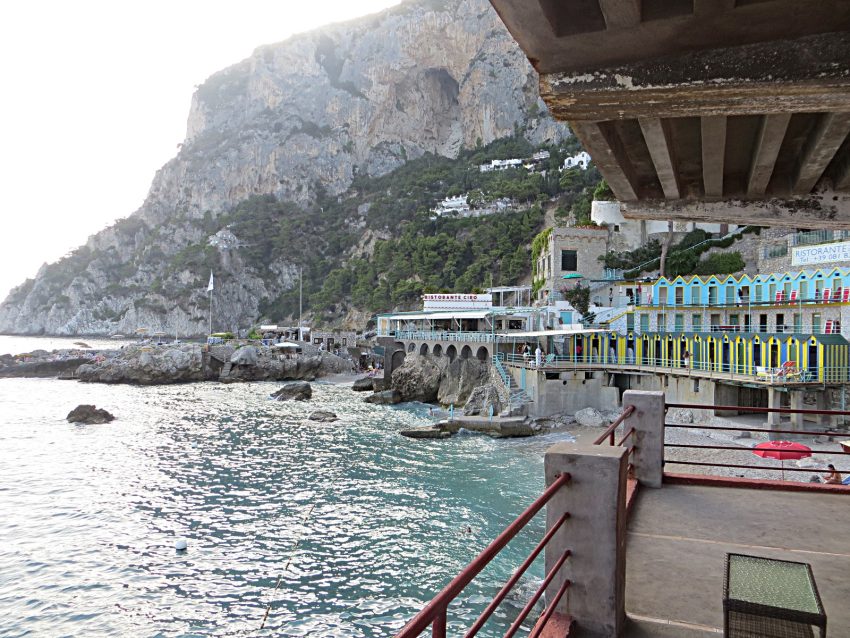
Marina Piccola is a sheltered bay on the island’s southern side, tucked below the cliffs of Monte Solaro, where the water stays calm and vividly turquoise. Visitors come for the small pebble beaches—Spiaggia di Marina Piccola and Spiaggia delle Sirene—and for the close, shifting views of the Faraglioni, especially as the light turns warm later in the day. A seaside promenade threads past beach clubs and cafés, making it easy to alternate between swimming and a long seafood lunch with a wide-open sea panorama. Its protected setting has drawn sailors since Roman times, and local legend even links these waters to Homer’s sirens.
Location: Marina Piccola, Capri, Metropolitan City of Naples, Italy | Distance: 1km

11. Punta Tragara
Punta Tragara
Punta Tragara
CC BY-SA 3.0 / Berthold Werner
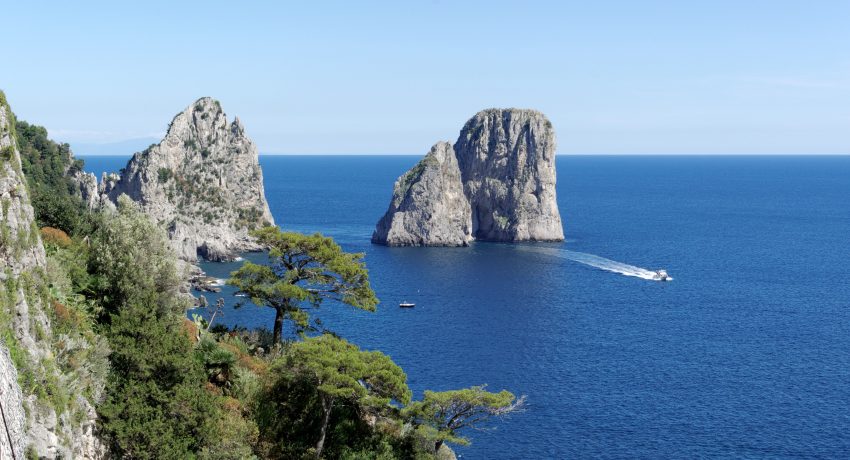
Punta Tragara is a cliff-edge promontory reached at the end of Via Tragara, a manicured walkway past elegant villas and sculpted gardens with flashes of turquoise water between the trees. The path opens onto a quiet terrace where the Faraglioni rock formations fill the horizon, with sweeping views along the island’s rugged southern coast. It’s noticeably calmer than the Piazzetta, with benches that invite a long pause for photography or simple stillness. The lookout’s commanding position once made it a practical observation point, including during World War II. Travelers often describe it as cinematic, and the relative effort of reaching it helps keep the atmosphere serene.
Location: Punta di Tragara, Capri, Metropolitan City of Naples, Italy | Distance: 1.2km

12. Arco Naturale
Natural Arch Capri
Natural Arch Capri
CC BY-SA 2.0 / zongo
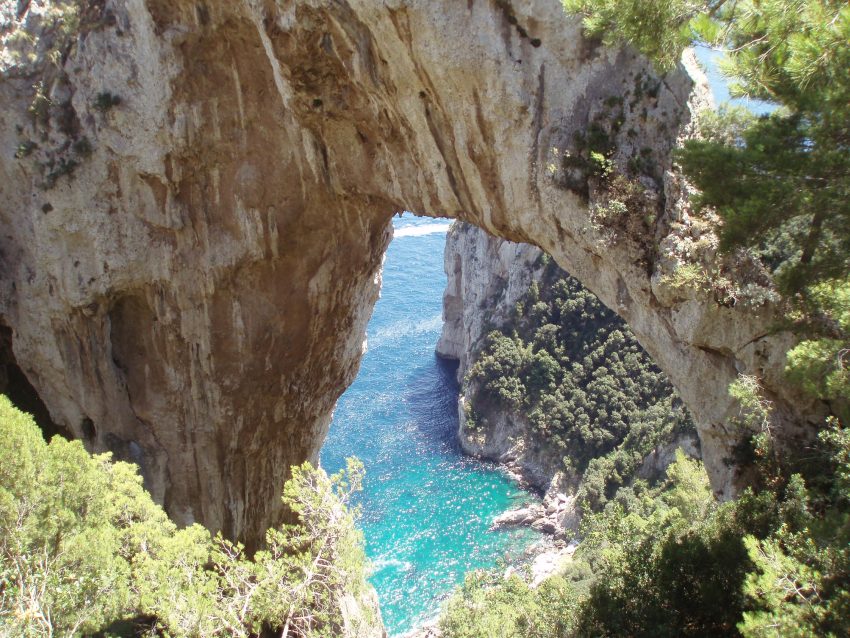
Arco Naturale is a towering limestone sea arch, the last fragment of an ancient Paleolithic cave system left standing after millennia of marine erosion. About 18 meters high and roughly 12 meters wide, it hangs above the water like a stone window, framing an intense slice of blue sea and jagged coastline. Reaching it is part of the memory: a well-signposted walk from town along concrete paths, winding lanes, and plenty of steps, ending at a viewing terrace. Up close, Mediterranean shrubs cling to the rock walls while waves echo far below, and the setting feels strikingly quiet compared with the island’s busier streets.
Location: Arco Naturale, Capri, Metropolitan City of Naples, Italy | Distance: 1.2km

13. The Faraglioni and Punta Tragara
The Faraglioni and Punta Tragara
CC BY-SA 3.0 / Berthold Werner
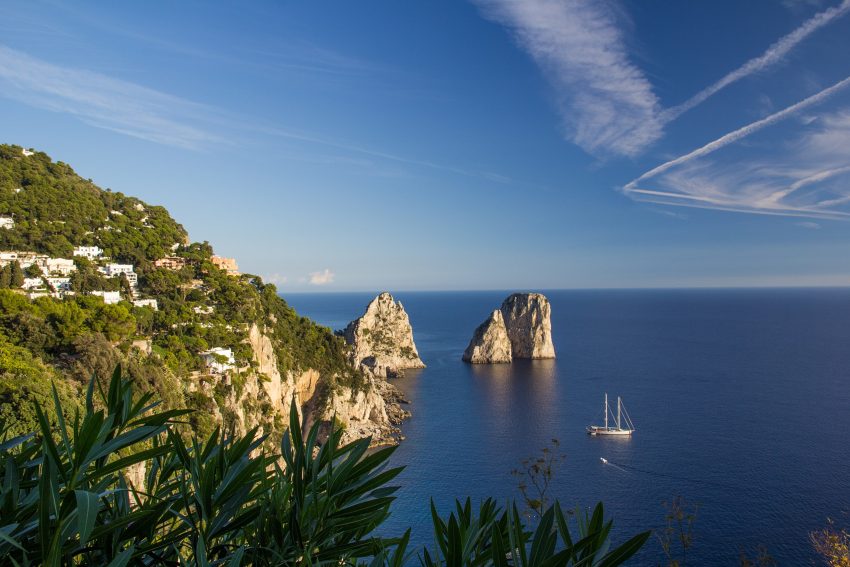
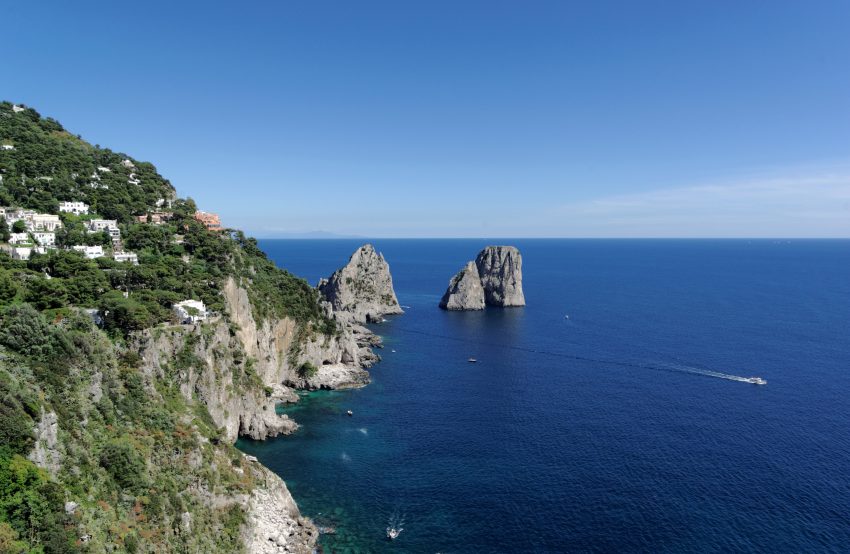
The Faraglioni are three limestone sea stacks—Stella, Mezzo, and Fuori (Scopolo)—rising from the Tyrrhenian Sea just off the southern coast, their pale rock set against intensely blue water. From the right viewpoints, you can watch boats slip through the natural arch in Faraglione di Mezzo, a passage locals link with a “lucky kiss.” Above them, Punta Tragara is a cliff-edge terrace where the stacks line up like a cinematic backdrop, reached by a steep, stair-heavy walk that keeps crowds thinner. The scene is all sharp limestone, open sky, and wind off the water, with changing light that makes the rocks shift from cool gray to warm gold.

14. Villa San Michele

Villa San Michele Capri
CC BY-SA 3.0 / Berthold Werner
Villa San Michele is Axel Munthe’s late-19th-century hilltop villa above Anacapri, built over the remains of an ancient Roman site and designed as a calm dialogue between architecture and landscape. Whitewashed rooms and open colonnades frame sea and sky, while Roman busts mingle with Etruscan fragments and Egyptian pieces as part of the home rather than a formal museum display. Outside, terraced Mediterranean gardens and pergola-shaded paths lead to quiet viewpoints. The moment most visitors remember is the marble sphinx set on a terrace, staring across the Bay of Naples as the light shifts. The approach through steep lanes can feel like a small pilgrimage, but the stillness at the top is the reward.
Location: Villa San Michele, Metropolitan City of Naples, Italy | Hours: January and February 09.00–15.30 March 09.00–16.30 April 09.00–17.00 May–September 09.00–18.00 October 09.00–17.00 November and December 09.00–15.30 | Price: €10 | Website | Distance: 1.6km

15. Villa Lysis
Villa Lysis capri
Villa Lysis capri
CC BY-SA 4.0 / Gerd Fahrenhorst
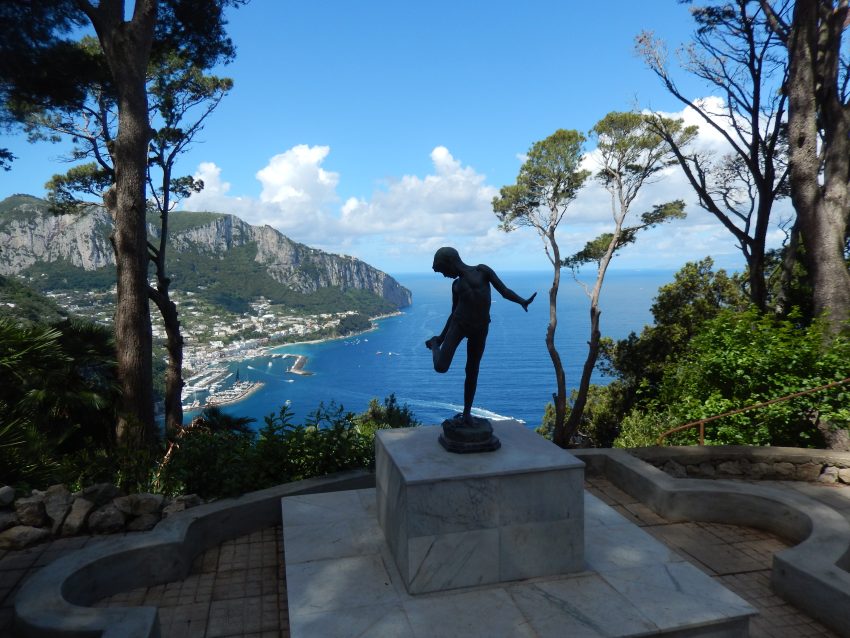
Villa Lysis is an early-1900s cliffside villa created in 1905 by French poet Jacques d’Adelswärd-Fersen as a private refuge, and it still feels like a stage set for a decadent, literary life. Neoclassical symmetry meets sinuous Art Nouveau details in rooms with marble columns, mosaics, and gilded ceilings, while windows and terraces open to wide Gulf of Naples views. The most talked-about space is the dim, oriental-leaning opium room, a rare glimpse into the villa’s more secretive rituals. Reaching it via an uphill walk adds to the sense of seclusion, and many visitors remember the quiet gardens and the almost eerie calm once the crowds fall away.
Location: Villa Lysis, Via Lo Capo, Capri, Metropolitan City of Naples, Italy | Distance: 1.7km

16. Villa Jovis
Villa Jovis
Villa Jovis
CC BY-SA 3.0 / Mister No
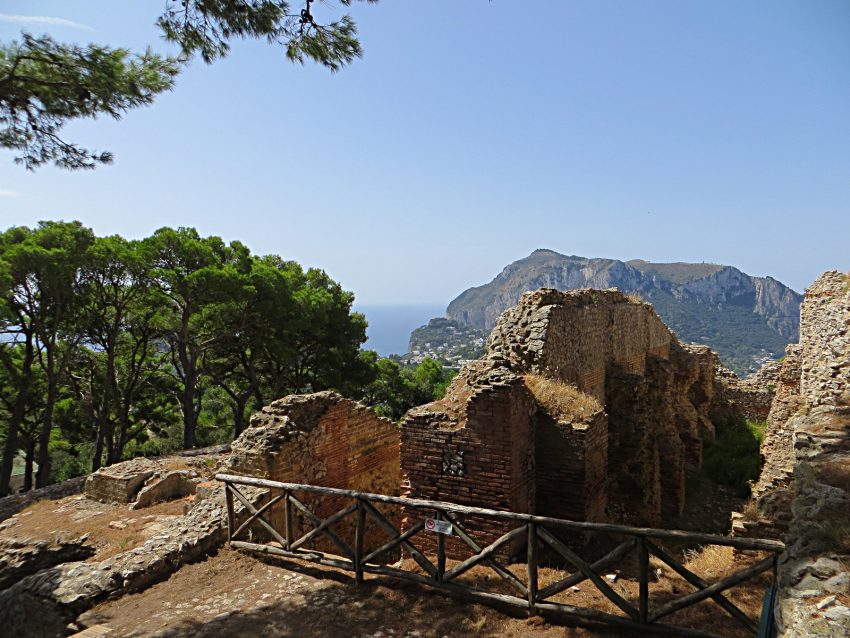
Villa Jovis is the sprawling 1st‑century AD mountaintop palace built for Emperor Tiberius, set on Monte Tiberio above sheer drops to the sea. Reached by a 30–45 minute uphill walk of lanes and long stair runs, the approach makes the silence at the ruins feel earned. Across roughly 7,000 square meters, you can trace terraces, chambers, and stairways, with interpretive signs explaining the layout and daily workings. Massive rainwater cisterns and the remains of a bath complex hint at the engineering behind an isolated imperial residence. The exposed viewpoints are unforgettable on clear days, looking toward Ischia, the Sorrentine Peninsula, and the Bay of Naples.
Location: Villa Jovis, Via Tiberio, Capri, Metropolitan City of Naples, Italy | Hours: Thursday to Sunday, at the following times: 10:00 a.M. -7:00 p.M. June, July, August, September 10:00 a.M. - 6:00 p.M. April, May and October 10:00 a.M. - 4:00 p.M. March, November and December. | Price: €6 | Website | Distance: 1.8km

17. Monte Solaro
Monte Solaro
Monte Solaro
CC BY-SA 3.0 / Mister No
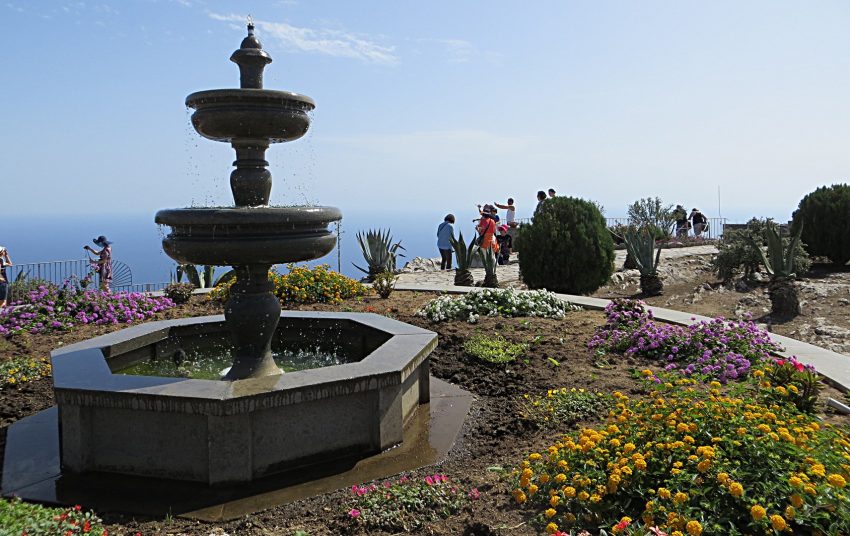
Monte Solaro is the island’s highest peak, a 589‑meter lookout that feels like a natural balcony suspended between sky and sea. Most visitors reach it via the quiet single-seat chairlift from Anacapri, a roughly 12–15 minute glide over terraced gardens and whitewashed houses before the horizon suddenly opens up. From the summit terraces, the view sweeps across the Gulf of Naples; on clear days you can pick out Mount Vesuvius, the Sorrentine Peninsula, and the islands of Ischia and Procida. A small café at the top makes it easy to linger, and the remains of the Fortino di Bruto add a stark, cliffside reminder of past defenses.
Location: Monte Solaro, Anacapri, Metropolitan City of Naples, Italy | Distance: 1.8km

18. Anacapri

Via Provinciale Anacapri
CC BY-SA 3.0 / Mister No
Perched on the island’s higher western slopes, Anacapri feels like a quieter, more traditional hill town of winding lanes, whitewashed houses, and terraces splashed with bougainvillea. Piazza Vittoria anchors daily life—an easy place to linger over coffee before browsing workshops for handmade sandals, ceramics, and bottles of local limoncello. Villa San Michele, created by Swedish doctor Axel Munthe, pairs leafy gardens and classical fragments with a terrace of marble columns facing the Gulf of Naples. From the same square, the single-seat chairlift drifts above rooftops and terraced gardens to Monte Solaro, where views reach Vesuvius, Ischia, and the Amalfi Coast.
Location: Anacapri, Metropolitan City of Naples, Italy | Distance: 2.1km

19. Grotta Azzurra
Capri  Blaue Grotte
Capri Blaue Grotte
CC BY-SA 3.0 / Colling-architektur
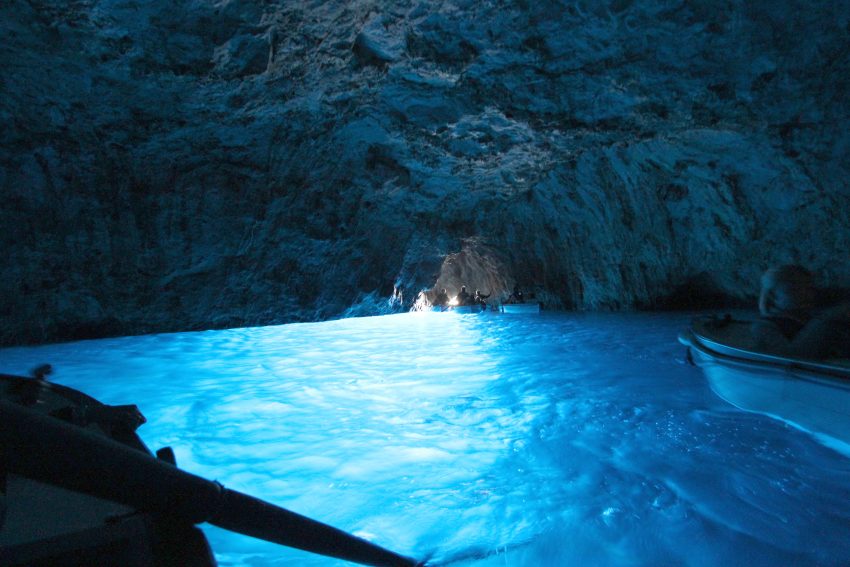
Grotta Azzurra is a sea cave entered through a slit at the waterline, where you transfer into a tiny rowboat and duck low to slip inside. The chamber opens suddenly onto water that glows an electric, almost unreal blue as sunlight refracts through the sea, washing the walls in cool light. Statues found within suggest it was used in Roman times as a marine sanctuary tied to mythic sea spirits, adding a human layer to the natural spectacle. The color shifts with sun and swell, and rough water can close the entrance altogether. Many visitors remember the long queue and the brief, minutes-long drift through the luminous interior.
Location: Grotta Azzurra, Anacapri, Metropolitan City of Naples, Italy | Distance: 3.4km

20. Sentiero dei Fortini Borbonici
Sentiero dei Fortini Borbonici
CC BY-SA 2.0 / dr_tr
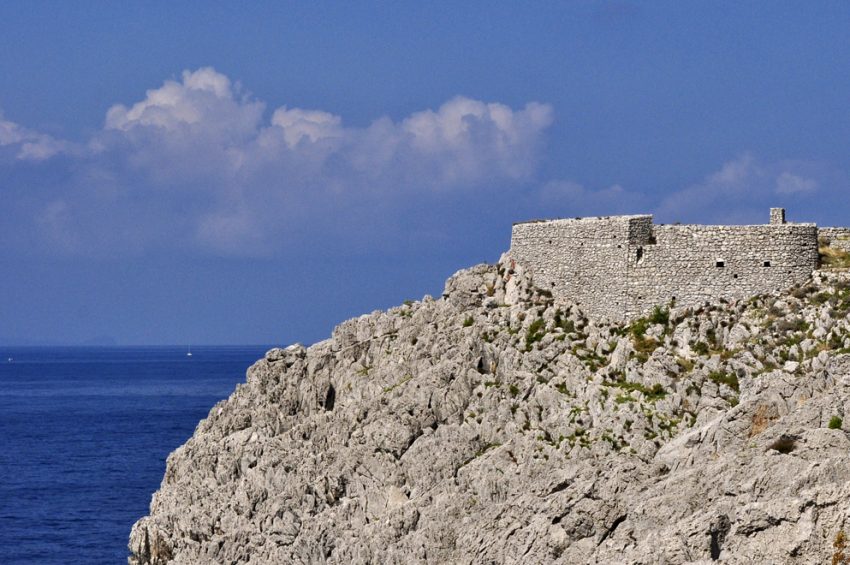
This coastal footpath traces the island’s wilder western edge between Anacapri and the Blue Grotto, skirting rocky terraces, hidden coves, and sheer cliffs above the Tyrrhenian Sea. Along the way you can wander through three early-19th-century Bourbon fortifications—Forte di Orrico, Forte di Mesola, and Forte di Pino—built as a chain of lookout posts during the Napoleonic-era struggle for control of these waters. The ruins feel stitched into the landscape: stone walls half-swallowed by rosemary and juniper, terraces where artillery once stood, and sudden viewpoints that stop you mid-step. Walkers remember the constant sea sound below and the quiet, far from the Piazzetta’s bustle.
Location: Sentiero dei Fortini Borbonici, Via Forte del Pino, Anacapri, Metropolitan City of Naples, Italy | Distance: 3.7km

Best Day Trips from Capri

A day trip from Capri offers the perfect opportunity to escape the urban rhythm and discover the surrounding region's charm. Whether you're drawn to scenic countryside, historic villages, or cultural landmarks, the area around Capri provides a variety of easy-to-reach destinations ideal for a one-day itinerary. If you are looking to rent a car in Italy I recommend having a look at Discover Cars, first, as they compare prices and review multiple car rental agencies for you.

1. Sorrento
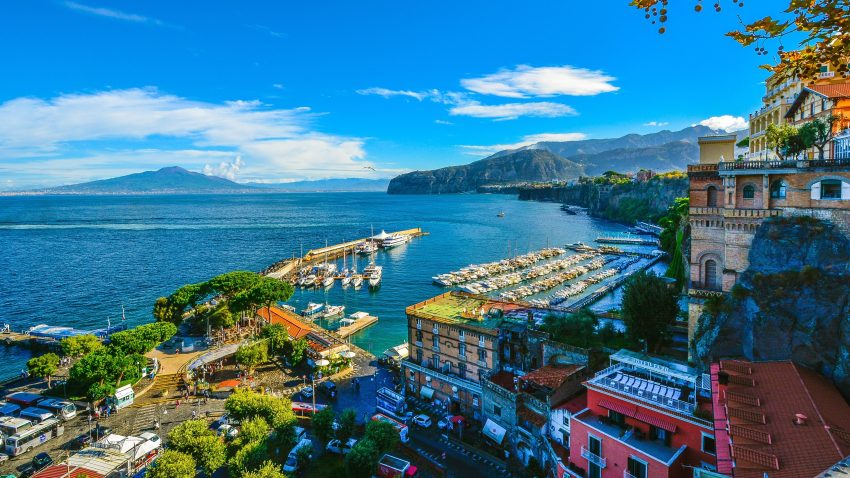
Sorrento
Sorrento
Sorrento, beautifully perched on a plateau overlooking the Bay of Naples, has been a favored tourist destination for nearly two centuries. Traditionally, it has been one of the preferred resorts for British visitors to Italy, and in recent decades, it has become Italy's leading package-holiday spot for English-speaking travelers. This historic seaside town has adeptly embraced tourism, offering a classic…
Visiting Sorrento
Powered by GetYourGuide

2. Pompeii

what to see in pompeii
The Pompeii ruins are a vast and intricate collection of ancient Roman remains, with Mount Vesuvius looming ominously in the distance. Once a thriving city of 20,000 mostly middle-class citizens, Pompeii's strategic location made it a crucial hub for trade between Rome and the broader Mediterranean. Pompeii was a bustling metropolis with chariots traversing its streets, an amphitheater hosting gladiator…
Visiting Pompeii
Powered by GetYourGuide

3. Amalfi Coast

amalfi coast
amalfi coast
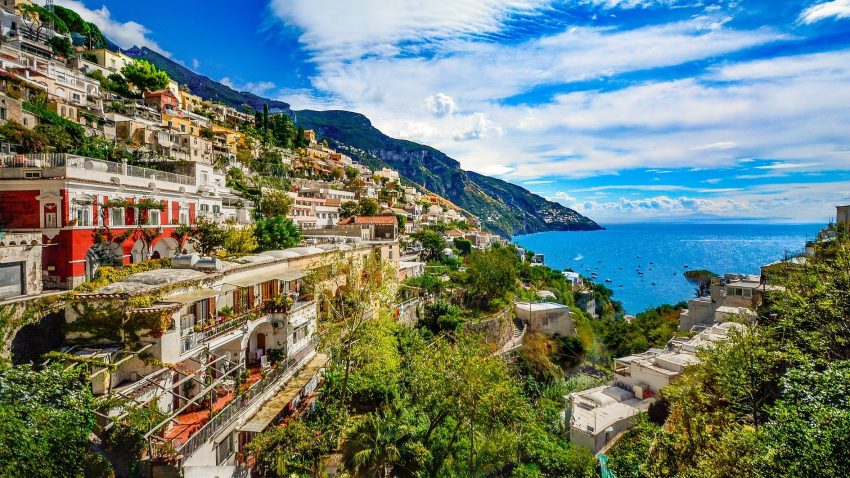
Stretching along the southern edge of Italy’s Sorrentine Peninsula in the Campania region, the Amalfi Coast is one of the most captivating coastal landscapes in the world. This UNESCO World Heritage area is celebrated for its dramatic scenery, where rugged cliffs plunge into turquoise waters and pastel-colored towns cling to steep hillsides. The region’s winding coastal road, the SS163, links…
Visiting Amalfi Coast

4. Naples

Visitng Naples
Visitng Naples
Naples, renowned for its vibrant blend of chaos and charm, stands as a testament to Italy's rich history, architectural marvels, and cultural depth, not to mention its stunning natural scenery. It ranks as Italy’s third largest city, trailing only Rome and Milan, and is nestled in the southern part of the country, within the Campania region. The city is a…
Visiting Naples
Powered by GetYourGuide

5. Salerno

Panorama of Salerno
Panorama of Salerno
CC BY-SA 4.0 / Cabalist12
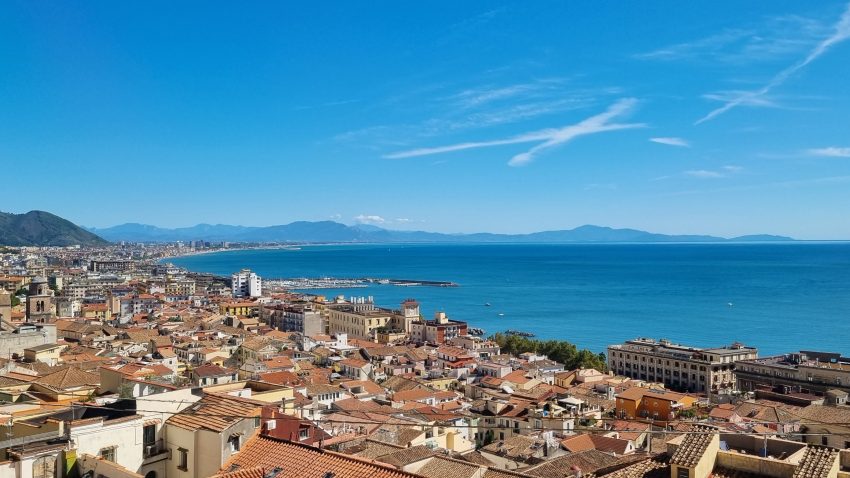
Nestled in the shadow of the soaring Sorrentine Peninsula, Salerno is one of the Campania region’s most overlooked and underrated cities. Combining the convenience of big-city life with the charm of a small town, it remains a delightful place that has yet to be discovered by mass tourism—let’s hope it stays that way! Founded by the Romans in the 2nd…
Visiting Salerno
Powered by GetYourGuide

6. Barrea

lake Barrea
lake Barrea
Visiting Barrea, a charming village nestled in the heart of Italy’s Abruzzo region, offers a tranquil escape into nature and history. Perched on a hill overlooking the stunning Lago di Barrea, this medieval village is surrounded by the rugged beauty of the Abruzzo, Lazio, and Molise National Park. The village’s narrow, winding streets lead to stone houses, ancient churches, and…
Visiting Barrea

Where to Stay in Capri

The best places to stay in Capri depend on your preferences. Capri Town offers luxury hotels, boutique stays, and easy access to designer shopping, lively nightlife, and iconic attractions like the Piazzetta. For a quieter experience, Anacapri provides more affordable accommodations, stunning panoramic views, and a more relaxed atmosphere.

A 2 to 3-day stay allows enough time to explore the island’s highlights, including the Blue Grotto, Villa San Michele, and scenic walks along the Via Krupp. A longer 4 to 5-day stay is ideal for enjoying more secluded beaches, hiking Monte Solaro, and indulging in the island’s famous cuisine without rushing.

Using the our Hotel and Accomodation map, you can compare hotels and short-term rental accommodations in Capri. Simply insert your travel dates and group size, and you’ll see the best deals for your stay.

Capri Accommodation Map

Best Time to Visit Capri

Visiting Capri in Spring (Best)

Spring, from March to May, is the best time to visit Capri. The island awakens with vibrant colors as flowers bloom and temperatures range from 15°C to 22°C (59°F to 72°F). The weather is perfect for exploring Capri’s natural beauty, hiking trails, and outdoor attractions like the Blue Grotto, without the crowds of the peak summer season.

Visiting Capri in Summer

Summer, from June to August, is the busiest time on Capri, with warm temperatures ranging from 25°C to 30°C (77°F to 86°F). The island is bustling with tourists, making it the peak season for enjoying beaches, boat tours, and Capri’s lively nightlife. However, the crowds can be overwhelming, and prices are at their highest.

Visiting Capri in Autumn

Autumn, from September to November, offers a quieter and more relaxed atmosphere as the summer crowds fade away. Temperatures range from 18°C to 25°C (64°F to 77°F), making it an excellent time for exploring the island’s historic sites, enjoying the beaches, and taking in the stunning coastal views without the summer rush.

Visiting Capri in Winter

Winter, from December to February, is the off-season for Capri, with cooler temperatures between 10°C and 15°C (50°F to 59°F). While some tourist services may be limited, this season offers a peaceful retreat with fewer visitors. It’s a great time to experience Capri’s local culture, enjoy quiet walks, and take in the island’s serene beauty.

Annual Weather Overview

  • January 13°C
  • February 13°C
  • March 14°C
  • April 16°C
  • May 20°C
  • June 26°C
  • July 28°C
  • August 28°C
  • September 25°C
  • October 21°C
  • November 18°C
  • December 15°C

How to get to Capri

Traveling to Capri by Ferry

The most common way to reach Capri is by ferry. Ferries to Capri depart regularly from several ports along the Amalfi Coast and the Bay of Naples, including Naples, Sorrento, and Positano. The journey from Naples typically takes about 50 minutes to an hour, while from Sorrento, it takes around 20 to 30 minutes. Ferries are available throughout the day, and it's recommended to check the schedule in advance, especially during the high season.

Traveling to Capri by Hydrofoil

Hydrofoils are a faster option for reaching Capri and are available from the same ports as ferries, such as Naples, Sorrento, and Amalfi. The hydrofoil ride is quicker, taking approximately 40 minutes from Naples and 20 minutes from Sorrento. This option is ideal for those who prefer a speedier journey across the water to Capri.

Traveling to Capri from the Airport

If you are arriving in Italy by air, the nearest major airport to Capri is Naples International Airport (NAP). From the airport, you can take a taxi or bus to the port of Naples, where you can catch a ferry or hydrofoil to Capri. The transfer from the airport to the port takes about 20 to 30 minutes by taxi. Alternatively, you can arrange private transfers that include both the land and sea journey to Capri.

Traveling to Capri by Private Boat

For a more luxurious and personalized experience, you can charter a private boat to travel to Capri. This option allows for a flexible schedule and the opportunity to explore the coastline at your own pace. Private boat charters can be arranged from various locations along the Amalfi Coast and the Bay of Naples, providing a scenic and exclusive way to reach the island.
Powered by GetYourGuide

More from this area