Self-Guided Walking Tour of Vienna (+Maps!)
This website uses affiliate links which earn a small commission at no additional cost to you.
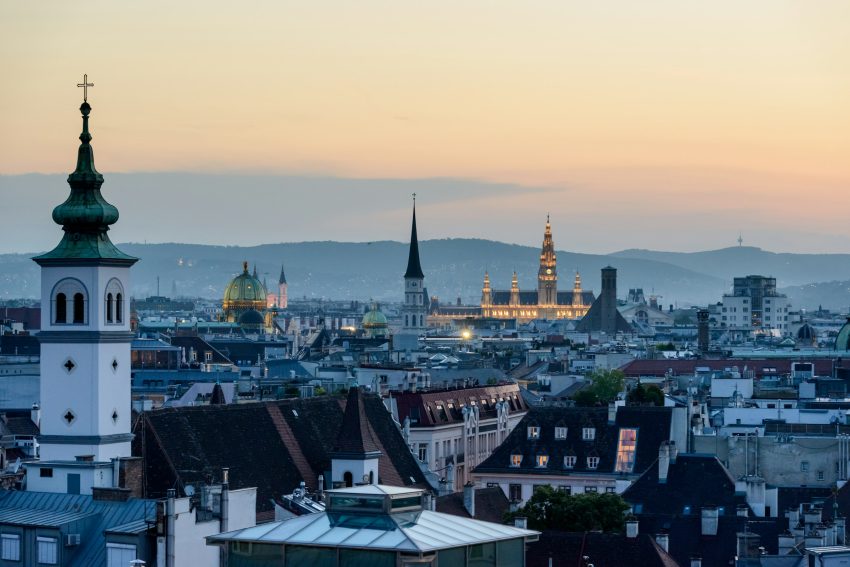
Vienna is a city that rewards walking: grand boulevards, elegant squares, hidden courtyards, and café-lined streets all stitch together into a route that feels effortless once you're on the ground. This self-guided walking tour is designed to help you connect the highlights in a logical flow, without rushing past the smaller details that make Vienna feel so distinctive.
If you're looking for the best things to see in Vienna, this route focuses on the classic core: imperial architecture, landmark churches, museum districts, and a few well-chosen pauses where the city's atmosphere really lands. Think of it as a framework you can follow closely or treat as a menu of stops.
The big advantage of going self-guided is control. You can start early for quieter streets, shift the order to suit opening times, spend longer where you're genuinely interested, and build in the kind of coffee-and-cake breaks Vienna practically invented.
Table of Contents
- How to get to Vienna
- A Short History of Vienna
- Where to Stay in Vienna
- Your Self-Guided Walking Tour of Vienna
- Michaelerplatz
- Hofburg Imperial Palace
- Spanische Reitschule
- Neue Burg
- Kunsthistorisches Museum
- Naturhistorisches Museum
- Volksgarten
- Rathaus
- Rathausplatz
- Peterskirche
- Graben Street
- Haas House
- Stephansplatz
- Stephansdom
- Mozarthaus
- Karntner Straße
- Imperial Crypt
- Belvedere Palace
- Vienna’s State Opera
- Burggarten
- Albertina Museum
- Austrian National Library
How to get to Vienna
By Air: Vienna International Airport (VIE) is the main gateway and is well connected to the city by fast rail and suburban services, making arrivals straightforward even without a car. Once you land, the simplest approach is to head straight into the centre and settle in before starting the walk. For the best deals and a seamless booking experience, check out these flights to Vienna on Booking.com.
By Train: Vienna is one of Central Europe's most convenient rail hubs, with frequent long-distance services from major cities and excellent connections into the main stations. If you're coming from within Austria or neighbouring countries, the train is often the easiest way to arrive right into the city without dealing with traffic or parking. You can easily check timetables and book train tickets through the ÖBB (Austrian Federal Railways) website. However, for a smoother experience, we recommend using Omio, which simplifies the booking process and lets you compare routes, prices, and departure times all in one place.
By Car: Driving to Vienna can work well if you're combining the city with a broader Austria road trip, but the historic centre is not the place to rely on a car day-to-day. Plan to park once (hotel garage or a secure public facility) and then do the walking tour and most sightseeing on foot and by public transport. If you are looking to rent a car in Austria I recommend having a look at Discover Cars, first, as they compare prices and review multiple car rental agencies for you.
By Bus: Long-distance coaches can be a budget-friendly option, often arriving at major transport interchanges that connect easily with the U-Bahn and trams. It’s a practical choice if you’re travelling from nearby capitals or smaller regional cities, and you can typically reach central districts quickly after arrival.
How to get around the city: Vienna’s centre is highly walkable, and the U-Bahn, trams, and buses make it easy to hop between districts when your legs need a break. For this walking tour, aim to stay central so you can start on foot, detour easily, and finish the day without a complicated return journey.
A Short History of Vienna
Vienna in the Roman and Early Medieval Era
Long before Vienna became synonymous with imperial grandeur, the area developed strategic importance through trade routes and frontier defence. The foundations of Vienna's later role as a political and cultural centre grew from this position as a place people passed through, traded in, and fortified. That sense of Vienna as a crossroads still echoes today in its layered streetscape and the way major routes funnel toward the inner city.
Vienna in the Habsburg Rise and Imperial Expansion
Vienna's identity was shaped decisively by the rise of the Habsburgs, who turned the city into a seat of power and ceremony. The Hofburg complex expanded over centuries as rulers added wings, courtyards, and institutions, and this slow accumulation is exactly why it feels like a city within a city today. Nearby, spaces like Michaelerplatz and the grand axes leading into the centre reflect a Vienna designed to project authority, permanence, and prestige.
Vienna in the Baroque City and the Age of Plague and Conflict
Some of Vienna’s most dramatic architecture grew from periods of hardship and recovery, when rebuilding became a statement of resilience. Baroque churches and monuments were not just decorative; they were visible declarations of faith, stability, and civic pride. Landmarks such as Karlskirche carry that story in stone, with an exterior that feels theatrical because it was meant to inspire confidence after difficult decades.
Vienna in the 19th Century and the Ringstrasse Transformation
Vienna's 19th-century makeover gave the city many of its most recognisable public faces, particularly along the Ringstrasse. This was urban planning as a performance: museums, parliament buildings, grand parks, and monumental façades designed to present Vienna as a modern capital. Places like the Rathaus and the great museum complexes owe their prominence to this era, and walking the broad streets today still feels like moving through a carefully staged civic gallery.
Vienna from the Early 20th Century to the Present
The 20th century brought upheaval, reinvention, and cultural momentum, and Vienna's institutions adapted rather than disappearing. Museums such as the Albertina and the cultural life around the opera and concert halls reflect a city that continually re-centres itself on music, art, and public life. Modern Vienna preserves imperial settings like Schönbrunn and the Hofburg not as relics, but as living landmarks integrated into how the city presents itself to visitors now.
Where to Stay in Vienna
To make the most of visiting Vienna and this walking tour then you consider stay overnight at the centre. The Innere Stadt (1st District) puts you within easy walking distance of many headline sights, which is ideal if you want early starts, quieter mornings, and minimal transport planning. For a classic, central base, consider Hotel Am Stephansplatz or Hotel Kaiserin Elisabeth; both keep you close to the historic core and make it easy to return for breaks. If you want something more contemporary while staying highly central, DO & CO Hotel Vienna is also well placed for a walking-first itinerary.
If you like a slightly calmer base with excellent walkability, the area around the MuseumsQuartier and Mariahilfer Straße (parts of the 6th and 7th Districts) is a strong choice, especially for museum time and evenings with restaurants and cafés. It’s close enough to walk into the centre, but with a more local rhythm once the day-trippers thin out. Options here include 25hours Hotel Vienna at MuseumsQuartier and Hotel Sans Souci Wien, both convenient for linking the museums, the Ring, and the inner city on foot.
For a neighbourhood feel with fast access to the centre, Leopoldstadt (2nd District) can work very well, particularly if you want good value and a slightly less tourist-heavy base while still being close to major sights. You’ll be a short walk or quick U-Bahn ride from the historic core, and you can start the day by crossing into the centre with a sense of “arriving” each morning. Consider SO/ Vienna for a design-led stay with easy connections, or Austria Classic Hotel Wien for a solid, practical base that suits a sightseeing-heavy itinerary.
Your Self-Guided Walking Tour of Vienna
Explore Vienna on foot with a walking tour map that guides you from stop to stop as you move through its grand streets, landmark squares, and atmospheric corners. Because this is a self-guided route, you can skip anywhere that doesn't interest you, switch the order to suit opening times, and pause for coffee whenever you feel like it-very much the Vienna way.
1. Michaelerplatz
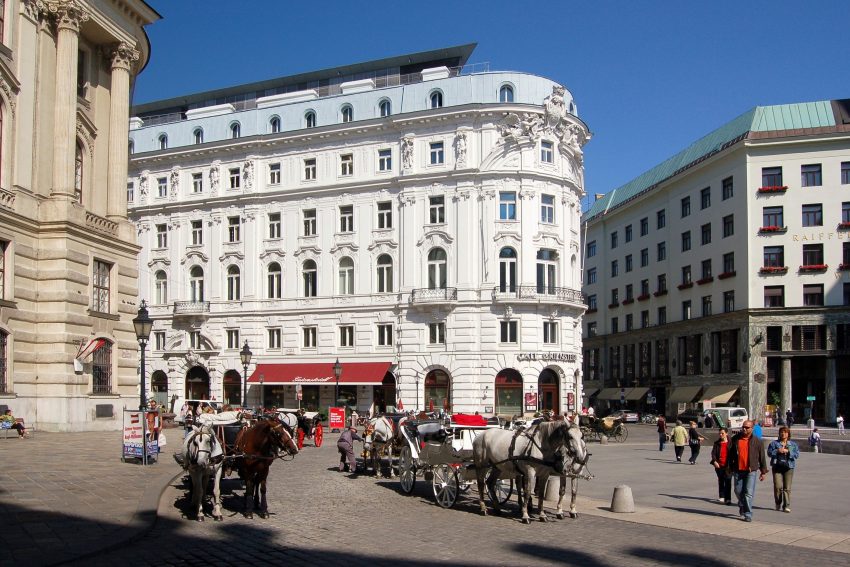
Michaelerplatz is one of Vienna’s most historically layered squares, marking a major approach to the Hofburg. It combines medieval and baroque Vienna with visible archaeological remains and striking early 20th-century architecture.
The square gained particular interest through excavations that revealed Roman-era remains associated with ancient Vindobona, as well as traces of later periods. That mix makes it a compact snapshot of how Vienna repeatedly rebuilt itself on the same ground.
When you’re there, look at the Hofburg’s Michaelertrakt entrance and then down at the archaeological windows showing ruins under glass. Also notice the contrast of architectural styles around the square, where modern interventions were deliberately placed beside imperial forms.
Location: Michaelerplatz, 1010 Wien, Austria | Hours: 24 Hours. | Price: Free.

2. Hofburg Imperial Palace
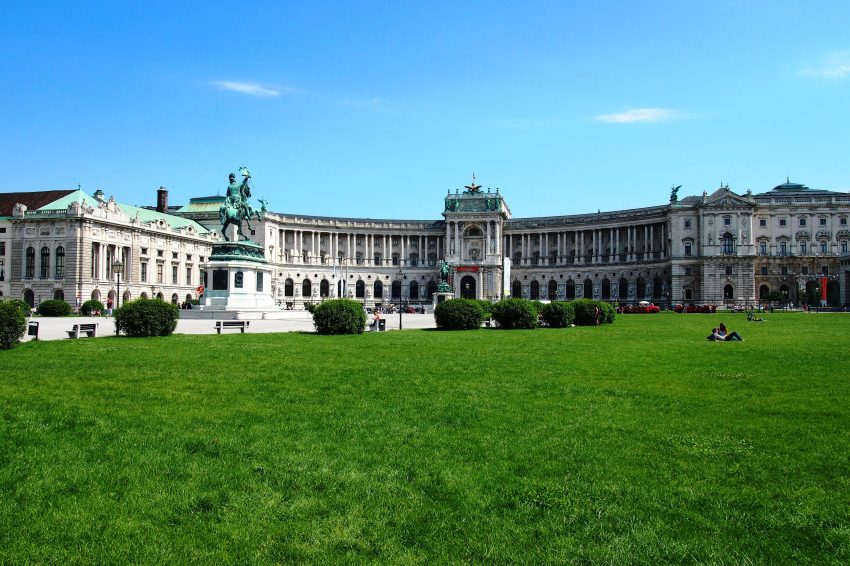
The Hofburg began as a medieval fortress complex and expanded over centuries into the principal imperial palace of the Habsburg dynasty. Its fabric spans many periods, with different wings and courtyards reflecting changing styles, needs, and political eras.
It functioned as a power center: administration, ceremonial life, and residence, shaped by rulers who repeatedly rebuilt and enlarged it. After the imperial era, the complex continued to serve state functions, which is why it still feels like working government space as well as heritage.
What to see is the cumulative effect of the place: grand courtyards, monumental gates, and the sense of an “imperial city within the city.” Choose interiors based on your interests (art collections, imperial rooms, or institutions housed here), but don’t skip the exterior transitions between courtyards, which show how the palace grew in layers.
Location: 1010 Vienna, Austria | Hours: Daily: 09:00–17:30. | Price: Adults: €20; Children (6–18): €12; Students (19–25): €18; Under 6: free. | Website
3. Spanische Reitschule
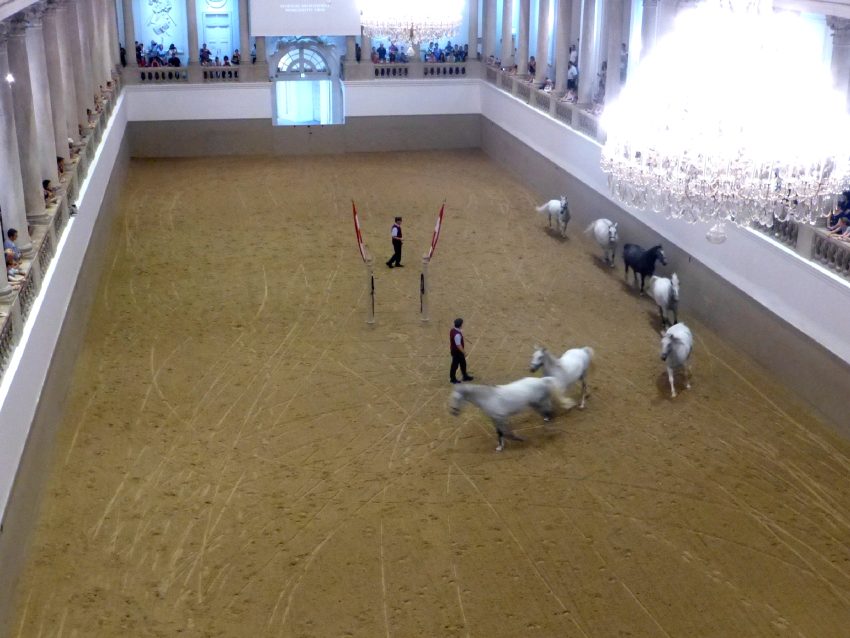
The Spanish Riding School is a historic institution dedicated to classical dressage and the Lipizzaner horses. It traces its origins to the Habsburg court riding tradition in the 16th century, while the famous baroque Winter Riding School hall was built in the 1730s under Emperor Charles VI.
It survives as a living tradition rather than a static museum, which is part of its cultural significance in Vienna. The setting inside the Hofburg reinforces that it was designed for court display as much as for training.
What to see depends on access, but the Winter Riding School itself is a highlight: a bright, formal baroque interior built for precision and spectacle. If you attend a performance or observe training, the main point is watching the discipline and choreography of the riding in a space created specifically for that purpose.
Location: Michaelerplatz 1, 1010 Wien, Austria | Hours: Monday – Sunday: 09:00–16:00. | Price: Guided tours: Adults €24; Seniors/students €19; Children (6–18) €13. Morning Exercise: Adults €17–€29 (season/category); Seniors/students €12–€21; Children (6–18) €10–€18. Performances: from €26 (varies by category). | Website
4. Neue Burg
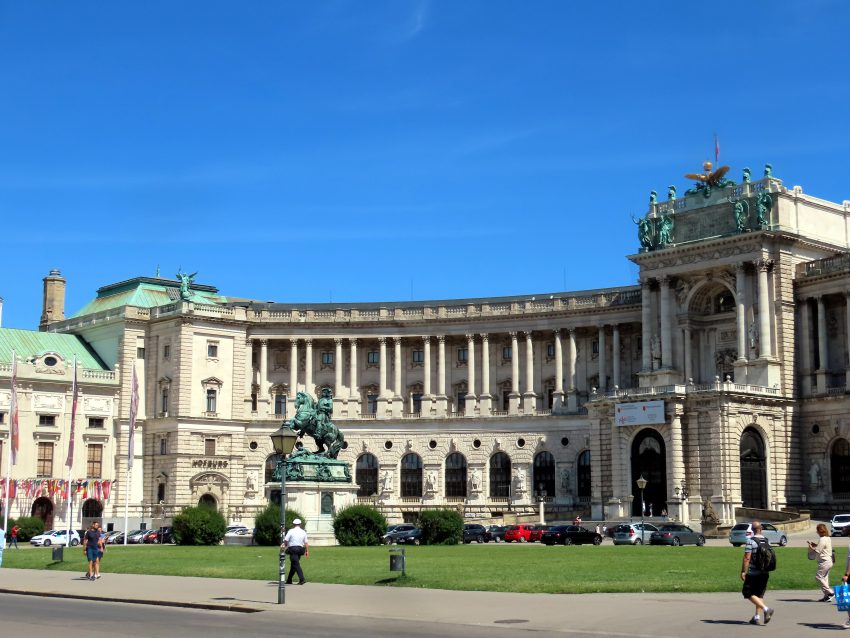
The Neue Burg is the younger, monumental wing facing Heldenplatz, built as part of late Habsburg plans to expand the Hofburg complex into an even grander imperial forum. Construction began in the late 19th century and the wing was completed in the early 20th century, after long delays and shifting political realities.
Its scale reflects the empire’s desire to present permanence and power through architecture, even as the old order was entering its final decades. The building is therefore as much a statement of ambition as it is a practical addition to the palace complex.
What to see today is largely inside: major museum collections and large ceremonial rooms (depending on which sections you enter). Outside, the main draw is the sweeping curved façade and the way it frames Heldenplatz, which is one of Vienna’s most imposing imperial set-pieces.
Location: Heldenplatz, 1010 Wien, Austria | Hours: Tuesday: 10:00–21:00. Wednesday – Sunday: 10:00–18:00. Closed on Monday. | Price: Adults: €16; Reduced: €12; Children and adolescents: free. | Website
5. Kunsthistorisches Museum
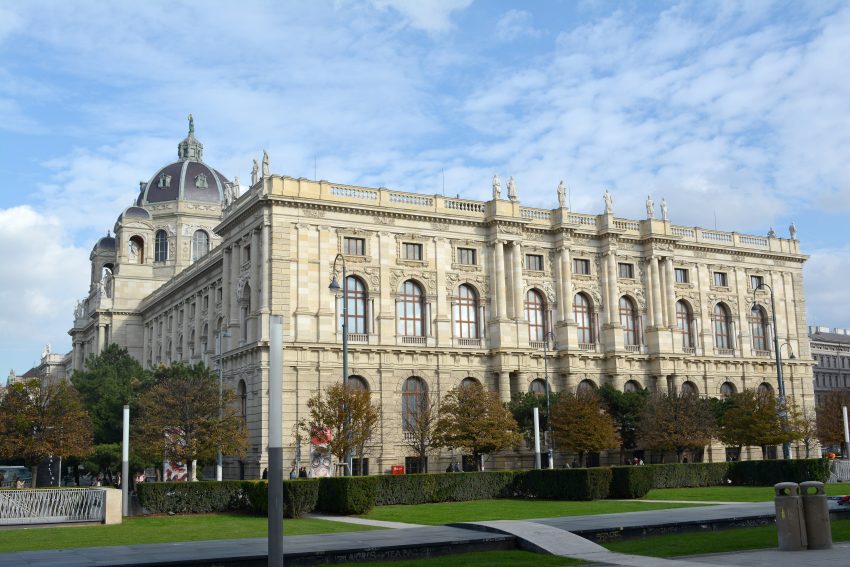
The Kunsthistorisches Museum was commissioned under Emperor Franz Joseph I to provide a public home for the Habsburgs’ art collections, and the main building was constructed between 1871 and 1891. It was designed by Gottfried Semper and Karl von Hasenauer as part of the Ringstraße-era program of monumental civic architecture.
Historically, the museum’s role is inseparable from the imperial collections it was built to display, spanning Antiquity through the Baroque. The building itself was conceived as a “total work of art,” with lavish interior decoration meant to match the prestige of the holdings.
What to see is defined by two layers: the architecture and the collections. Inside, the grand staircase and central rotunda/cupola spaces are highlights in their own right, while the galleries are known for Old Master painting and major Habsburg-era holdings (with frequent rotating exhibitions).
Location: Maria-Theresien-Platz, 1010 Wien, Austria | Hours: Tuesday – Sunday: 10:00–18:00. Thursday: 10:00–21:00. Closed on Monday. | Price: Adults: €22 online; €24 on site. Reduced: €19 online; €20 on site. Under 19: free. | Website
6. Naturhistorisches Museum
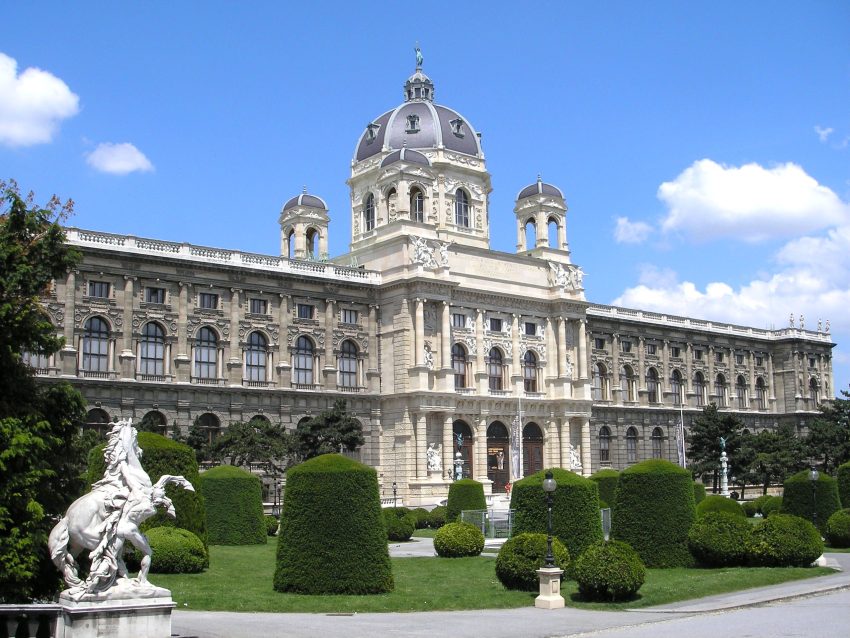
The Naturhistorisches Museum was opened on August 10, 1889 by Emperor Franz Joseph I, and it forms the architectural “twin” to the Kunsthistorisches Museum across Maria-Theresien-Platz. Like its counterpart, it was designed by Gottfried Semper and Karl von Hasenauer as a Ringstraße palace for imperial collections, built within the broader 19th-century project of making these holdings accessible to the public.
Its history is tied to the Habsburg tradition of collecting in the natural sciences, and the museum presents these collections within an emphatically “imperial” historicist setting. Even the façade program and inscriptions reflect the 19th-century confidence in scientific progress and classification.
What to see is the combination of content and setting: large, systematic displays across fields like minerals, fossils, prehistory, and zoology, framed by richly decorated interiors. Don’t miss the building details around the dome and the monumental halls, because the architecture is deliberately part of the experience, not just a container for exhibits.
Location: Burgring 7, 1010 Wien, Austria | Hours: Monday: 09:00–18:00. Tuesday: Closed. Wednesday: 09:00–20:00. Thursday: 09:00–18:00. Friday: 09:00–18:00. Saturday: 09:00–18:00. Sunday: 09:00–18:00. | Price: Adults: €18; Reduced: €14; Under 19: free. | Website
7. Volksgarten
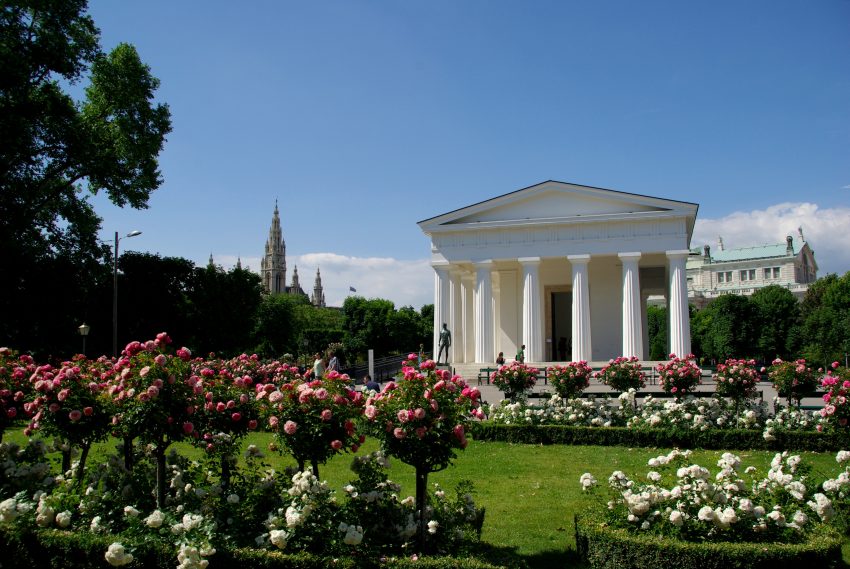
The Volksgarten opened in 1823 and is often described as Vienna’s first public park. It was created after French troops destroyed parts of the Hofburg’s defensive works in 1809, and the area was redesigned into formal public green space.
The park blends different garden styles and became a model for how Vienna could turn military-era infrastructure into civic amenities. Its layout and monuments reflect 19th-century tastes, with later layers added as the city’s relationship with its imperial past evolved.
Key things to see are the Theseustempel (a classical-style temple built to house Canova’s Theseus sculpture) and the rose garden areas that are a major feature in season. Also look out for memorials and monuments that give the park a “museum outdoors” feel rather than just a lawn-and-trees atmosphere.
Location: 1010 Vienna, Austria | Hours: (Summer) March 1 – March 31: 07:00–19:00; April 1 – October 31: 06:00–22:00. (Winter) November 1 – February 28: 07:00–17:30. | Price: Free. | Website
8. Rathaus
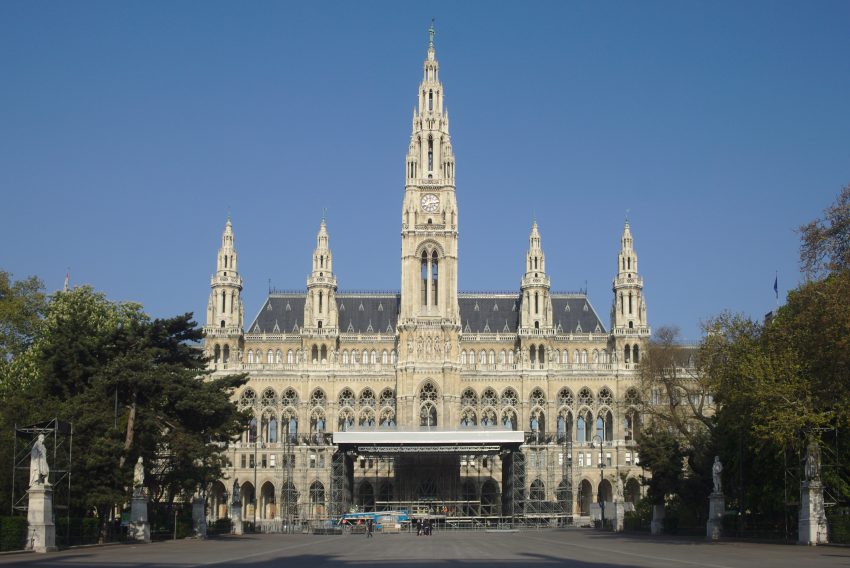
Vienna’s Rathaus (City Hall) is a major Gothic Revival landmark built between 1872 and 1883 to designs by Friedrich von Schmidt. It was part of the Ringstraße-era rebuilding that gave the city many of its grand 19th-century public buildings.
The building is still central to Vienna’s civic life, housing key municipal and state functions. Its towered façade was designed to project confidence and authority at a time when Vienna was presenting itself as a modern imperial capital.
When you visit, focus on the exterior first: the main façade, the arcaded ground level, and the overall scale of the central tower. If you go inside (when public areas are accessible), the main draw is the sense of ceremony in the interiors rather than a single “must-see” object.
Location: Friedrich-Schmidt-Platz 1, 1010 Wien, Austria | Hours: Monday: 13:00. Wednesday: 13:00. Friday: 13:00. | Price: Free. | Website
9. Rathausplatz
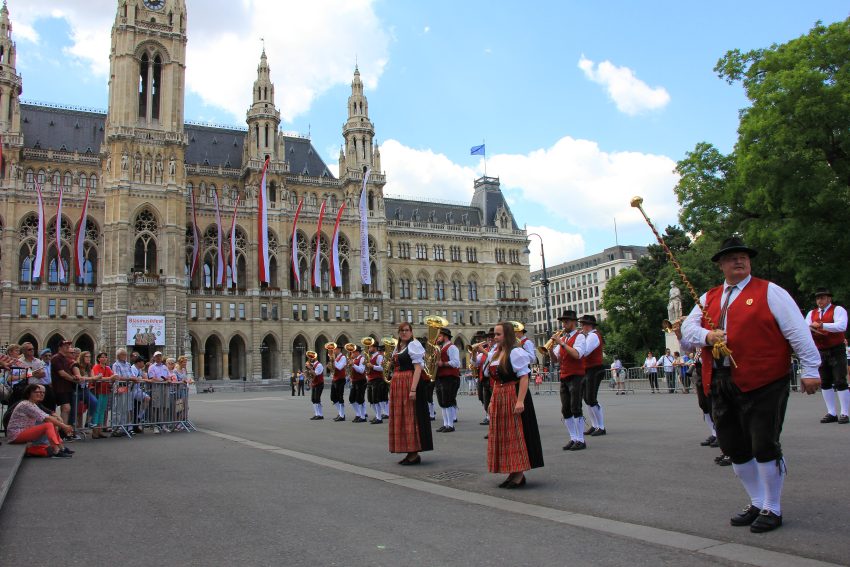
Rathausplatz is the broad square in front of City Hall, laid out as part of the Ringstraße transformation when the old fortifications and glacis zones were repurposed. Its identity is tied to Vienna’s move from a walled city to a capital with monumental public spaces.
Over time, it became a stage for public life rather than a square defined by one historic monument. Seasonal events helped cement its modern reputation, with the City Hall as a dramatic architectural backdrop.
What to see depends on timing, but the essentials are the square’s open perspective on the Rathaus and the way it connects to the surrounding Ringstraße streetscape. The best experience is often simply taking in the building’s façade from the square and noticing how the space is designed for crowds and big city moments.
Location: Rathauspl., 1010 Wien, Austria | Hours: 24 Hours. | Price: Free.
10. Peterskirche
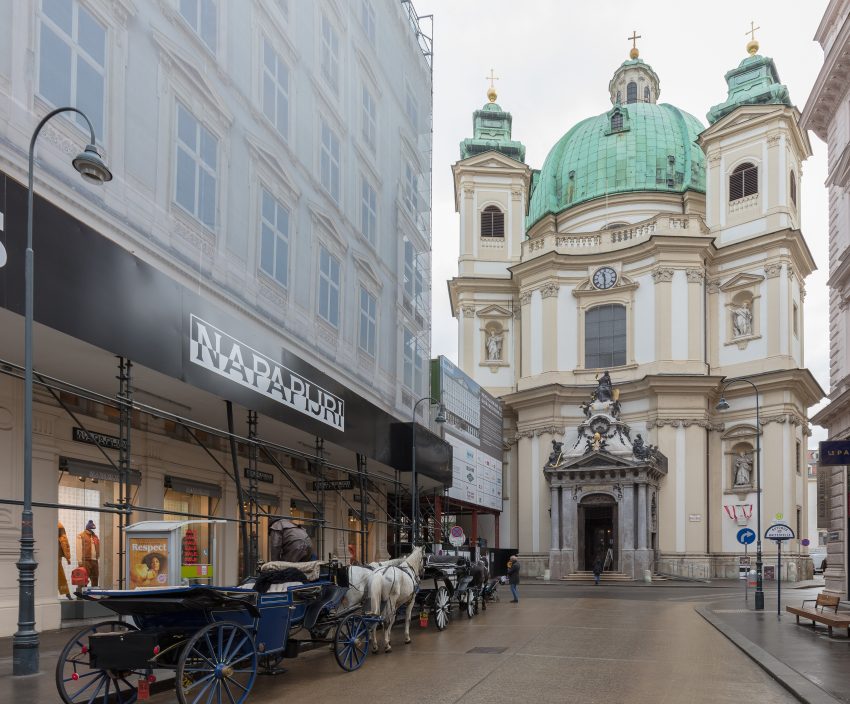
Peterskirche (St. Peter’s Church) is a baroque church built between 1701 and 1733, inspired in part by the idea of a domed church in the Roman tradition. It replaced earlier structures on the site and became one of the most recognizably baroque interiors in central Vienna.
Its construction belongs to the era when Vienna was reshaping itself architecturally after the turbulence of earlier centuries. The church’s compact exterior footprint hides an interior designed for theatrical effect—light, gilding, and curved space working together.
What to see is the interior: the dome, rich stucco and gilded decoration, and the dramatic baroque altar composition. From outside, it can feel tucked into the city fabric, so the real payoff is stepping in and looking upward.
Location: Peterspl., 1010 Wien, Austria | Hours: Monday – Friday: 08:00–19:00. Saturday – Sunday: 09:00–19:00. | Price: Free; donations appreciated. | Website
11. Graben Street
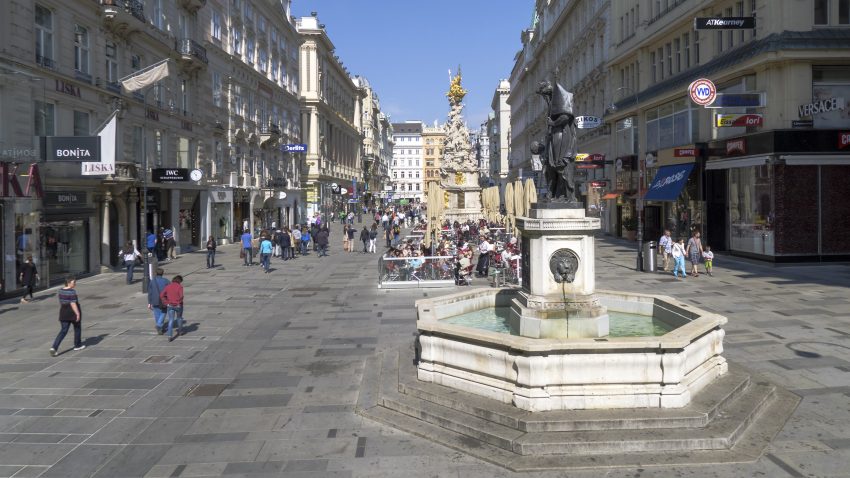
The Graben is one of Vienna’s best-known central streets, historically tied to the city’s development from medieval core to baroque and later urban showpiece. Over time it became a prestigious public space, lined with notable buildings and used as a stage for civic life.
One of its defining historical markers is the Plague Column (Pestsäule), erected in response to the 1679 plague and inaugurated later in the 17th century. That monument reflects a period when public art, religion, and imperial messaging were closely intertwined.
When you visit, the Plague Column is the key sight to stop for—look closely at the dense baroque symbolism and sculptural drama. Beyond that, the street itself is the attraction: the sense of a grand, walkable urban room where architecture and public life meet.
Location: Graben, 1010 Wien, Austria | Hours: 24 Hours. | Price: Free. | Website
12. Haas House
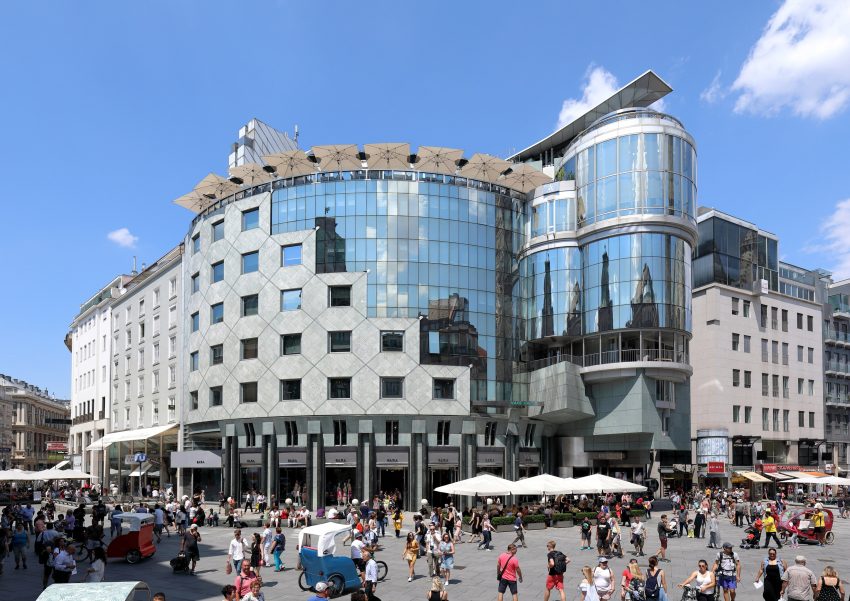
The Haas House is a postmodern building designed by Hans Hollein and completed in 1990, positioned directly near St. Stephen’s Cathedral. It replaced an earlier department store on the site, and its construction became controversial because of its modern contrast with the medieval setting.
Its importance is architectural and cultural: it marks a moment when Vienna tested how boldly it could build in the historic core. The debate around it is part of the building’s story, not just background noise.
What to see is the exterior relationship to the cathedral—angles, reflections, and the way the modern façade changes the feel of the square. Even if you don’t go inside, the building is worth viewing as a statement about late-20th-century design in a tightly protected historic environment.
Location: Goldschmiedgasse 3, 1010 Wien, Austria | Hours: 24 Hours. | Price: Free.
13. Stephansplatz
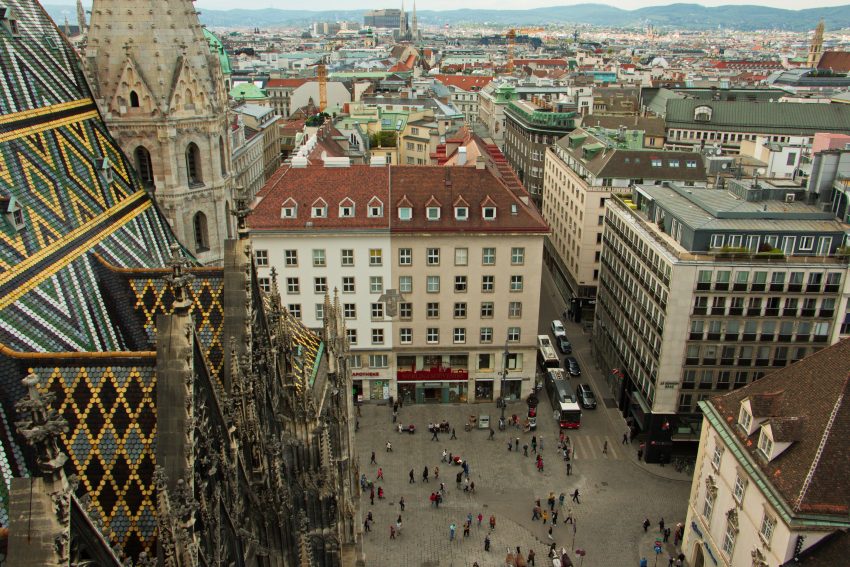
Stephansplatz is the central square around St. Stephen’s Cathedral and functions as a key civic and symbolic “center point” of Vienna. Its current character reflects rebuilding and change over time, with the cathedral as the constant anchor.
The square’s identity is shaped by the tension between preservation and modernity—especially in how later buildings relate to the medieval cathedral. This makes it a useful place to see how Vienna negotiates old and new in a highly visible setting.
What to see is primarily the cathedral itself from multiple angles, then the surrounding edges of the square that frame it. Take note of the contrast between historic stonework and later architectural interventions nearby, which are part of the story of the place.
Location: Stephansplatz, 1010 Wien, Austria | Hours: 24 Hours. | Price: Free.
14. Stephansdom
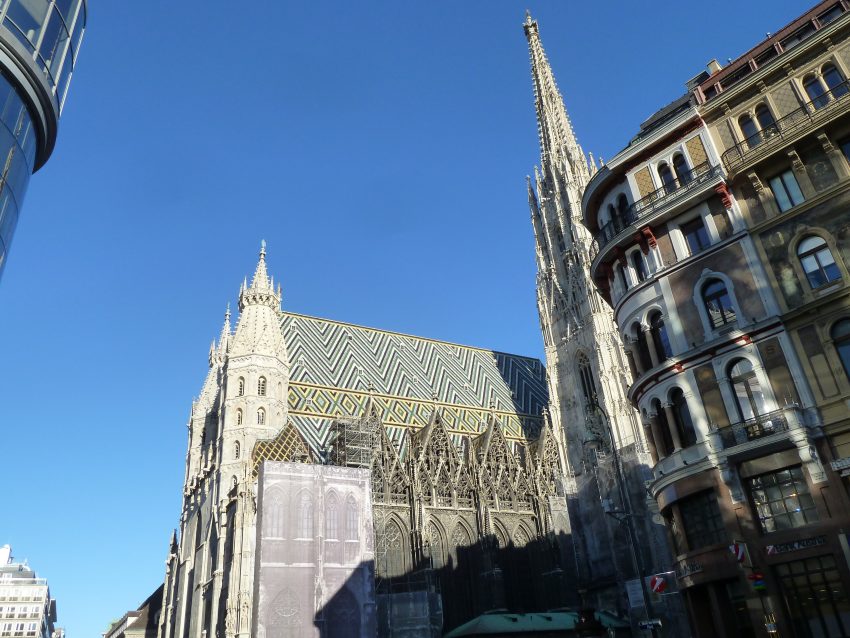
St. Stephen’s Cathedral is Vienna’s principal medieval church and its most iconic Gothic landmark, with foundations dating back to the 12th century. Over centuries it evolved from earlier Romanesque beginnings into the Gothic form that dominates the city skyline.
It has been closely tied to Vienna’s religious and civic identity through long periods of construction, alteration, and restoration. The south tower, rising to roughly 136 meters, became a defining feature of the city’s silhouette and a symbol of continuity.
What to see includes the exterior details (especially the towers and the patterned roof) and the interior’s scale and atmosphere. If you go up a tower or seek out specific features, the main draw is gaining a sense of how the building was designed to impress both spiritually and politically.
Location: Stephansplatz 3, 1010 Wien, Austria | Hours: Monday – Saturday: 09:00–11:30. Monday – Sunday: 13:00–16:30. | Price: Cathedral visit: Adults: €8; Children (up to 14): €3. All-Inclusive Ticket: Adults: €29; Children (6–14): €7. | Website
15. Mozarthaus
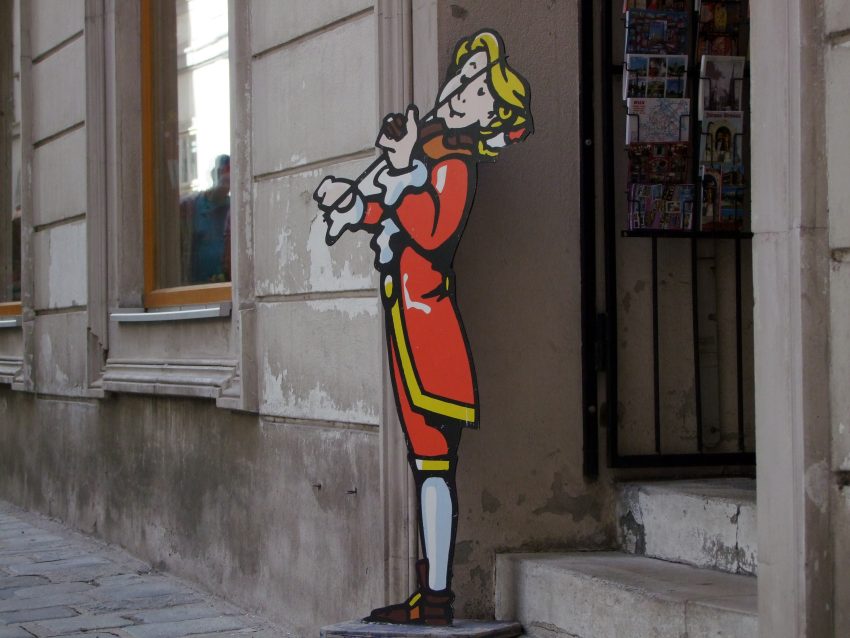
Mozarthaus Vienna is the only surviving Viennese apartment associated with Mozart, located at Domgasse 5. Mozart and his family lived there from 1784 to 1787, during a highly productive period that included work such as The Marriage of Figaro.
The apartment matters because it connects Mozart’s reputation to a real domestic setting rather than a distant concert-hall legend. It also reflects the social and economic reality that he lived, at times, in relatively prestigious accommodation in the city center.
What to see is the preserved apartment rooms and the museum interpretation around Mozart’s Vienna years. The focus is on context—how he lived and worked—rather than on a single relic, so it works best if you read the displays carefully.
Location: Mozarthaus, Domgasse 5, 1010 Wien, Austria | Hours: Daily: 10:00–19:00. | Price: Adults: €16; Reduced: €12; Children and teenagers up to 19: €4.50; Family ticket (2 adults + up to 3 children): €35. | Website
16. Karntner Straße
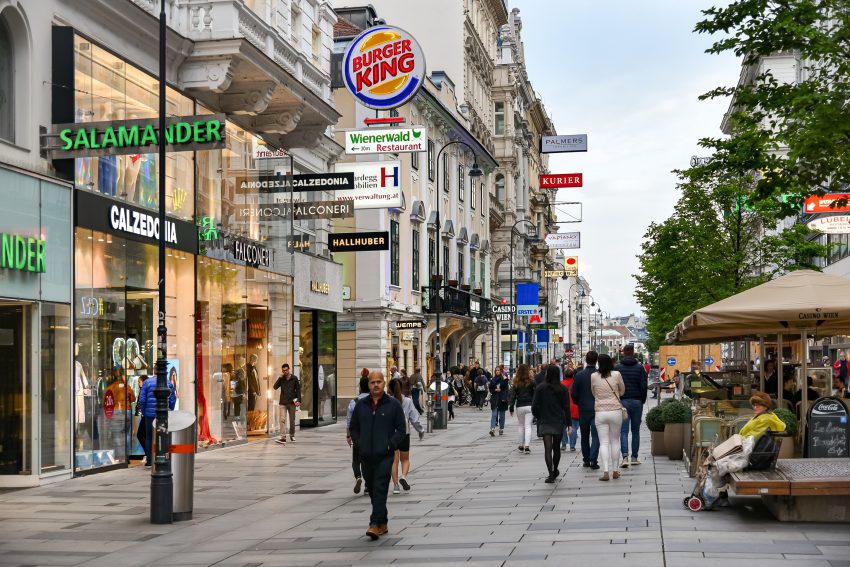
Kärntner Straße is one of Vienna’s major central streets, with roots that reach back to Roman-era routes and medieval city planning. It was first recorded in the 13th century and historically connected the city center to the Carinthian Gate.
Its importance grew because it formed part of a key commercial and travel axis, linking Vienna outward toward southern regions and major trading connections. Over time it shifted from a practical route to one of the city’s most prominent shopping and promenade streets.
What to see is less about a single monument and more about the street as an urban corridor: the transitions between major nodes (near the opera end and toward Stephansplatz) and the feel of a historic thoroughfare continually repurposed for modern city life.
Location: Kärntner Str., 1010 Wien, Austria | Hours: 24 Hours. | Price: Free.
17. Imperial Crypt
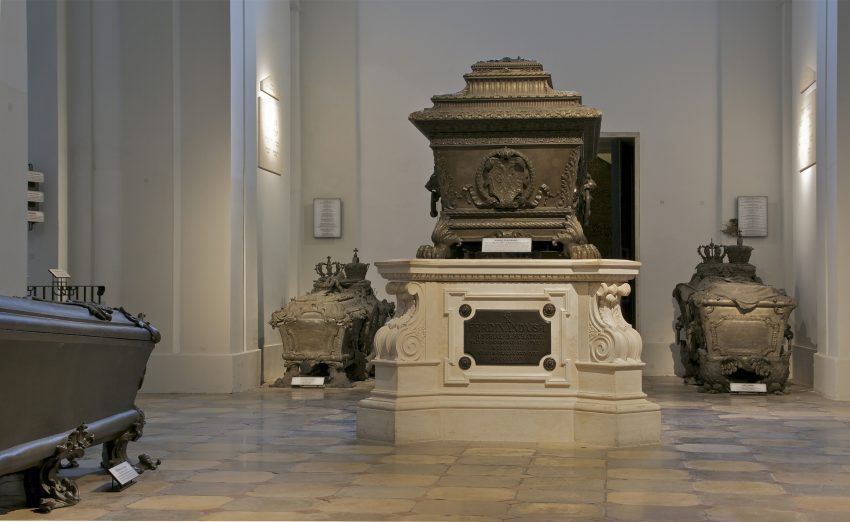
The Imperial Crypt (Kapuzinergruft) is the principal burial place of the Habsburg dynasty, founded in 1618 and in use for Habsburg entombments from 1633 onward. It sits beneath the Capuchin Church and monastery and contains a large number of Habsburg sarcophagi spanning centuries.
Its significance is historical rather than scenic: it’s a physical record of dynastic memory, ritual, and political identity. The crypt’s changing sarcophagus styles also reflect shifts in taste and self-presentation from austere to highly ornate.
What to see is the sequence of tombs and how they mark different eras of Habsburg history. Give yourself time to read names and dates carefully, because the impact comes from understanding who is buried there and how the monuments communicate status, personality, and period style.
Location: Tegetthoffstraße 2, 1010 Wien, Austria | Hours: Daily: 10:00–18:00. | Price: Adults: €15; Reduced: €13; Ages 7–18: €8. | Website
18. Belvedere Palace
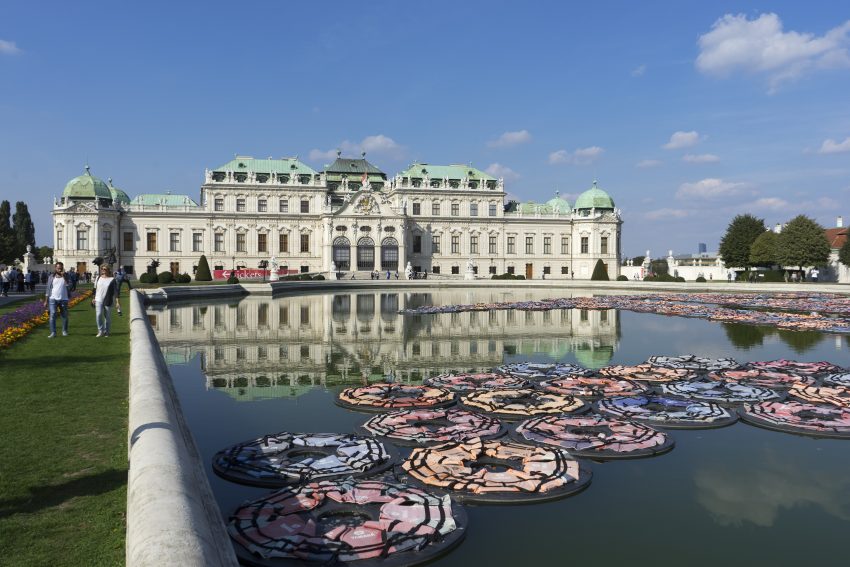
The Belvedere is a baroque palace complex built as a summer residence for Prince Eugene of Savoy in the early 18th century, designed by Johann Lukas von Hildebrandt. It consists primarily of the Lower and Upper Belvedere, linked by formal gardens.
After Prince Eugene’s death, the complex entered imperial hands and later developed a strong museum identity, becoming part of Vienna’s public cultural infrastructure. That shift—from aristocratic residence to public collection space—matters to understanding why it’s both a palace and a museum destination.
What to see is the combination of architecture and gardens: the grand palace rooms, the formal terraced views, and the ornamental details that frame the complex. If you go inside the museum areas, the experience is split between the building’s historic interiors and the art collections housed there.
Location: 1030 Vienna, Austria | Hours: Daily: 10:00–18:00. | Price: Upper Belvedere: €19,50; Lower Belvedere: €16,50; 2 in 1 day ticket (Upper + Lower): €29,00; 3 in 1 day ticket (Upper + Lower + Belvedere 21): €32,00. | Website
19. Vienna’s State Opera
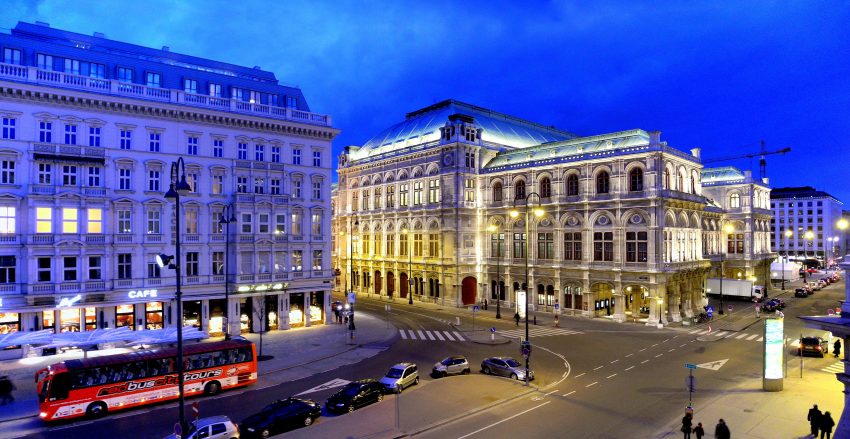
Vienna’s State Opera (Wiener Staatsoper) is a 19th-century Neo-Renaissance opera house built as one of the first major monuments on the new Ringstraße. Construction ran from 1861 to 1869, based on designs by August Sicard von Sicardsburg and Eduard van der Nüll, and the house opened on 25 May 1869.
Its early history is often told with a note of controversy: the building was criticised during construction, and the project’s reception became part of the opera’s lore. Originally inaugurated as the Vienna Court Opera, it later took on the “State Opera” name after the end of the monarchy and the establishment of the First Austrian Republic.
What to see starts with the exterior on the Ring: the arcades, loggias, and the overall Renaissance Revival composition that was meant to look “courtly” and permanent. Inside, the main draw is the sense of grand theatre architecture—foyers, staircases, auditorium proportions—rather than a single standalone object. If you attend a performance, the building itself is part of the experience, because it was designed for ceremony as much as for acoustics.
Location: Opernring 2, 1010 Wien, Austria | Hours: Monday – Saturday: 10:00–18:00. Sunday: 10:00–13:00. | Price: Guided tour prices: Adults: €15; Seniors: €11; Students/apprentices under 27: €9; Children (6+): €9; Under 6: free. | Website
20. Burggarten
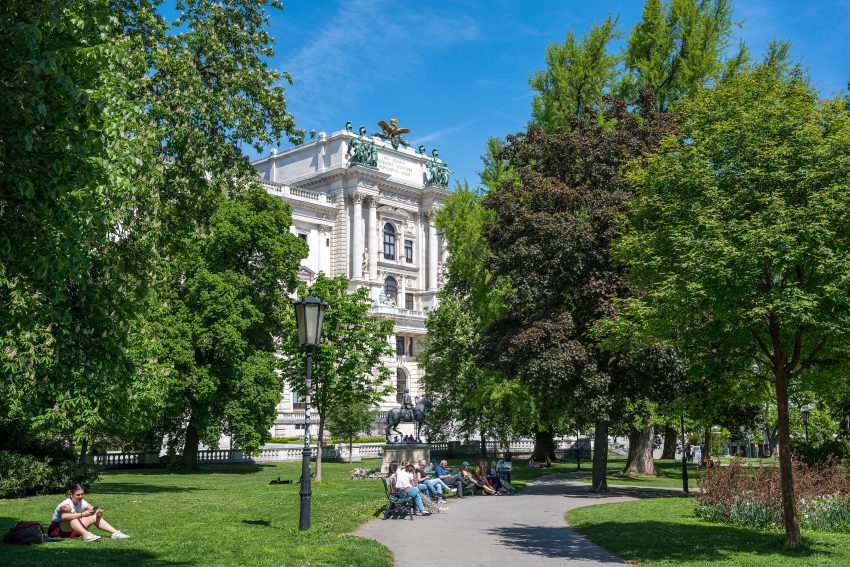
Burggarten began as an imperial private garden created after French troops destroyed parts of Vienna’s fortifications in 1809, including a bastion by the Hofburg. Court architect Ludwig Gabriel von Remy laid out the garden for Emperor Francis I, and it was developed by court gardener Franz Antoine (the Elder), with completion around 1820.
After the monarchy fell in 1918, the garden was nationalised and opened to the public, shifting it from a courtly space into a central city park. Later changes include the replacement of the earlier greenhouse with the Palmenhaus in 1901, which added a distinctive Art Nouveau-era structure to the grounds.
What to see today starts with the setting: the lawn and the close-up views of the Hofburg complex and the Neue Burg frontage. The Palmenhaus is a key landmark, and the Mozart monument in the park is one of the most photographed features (the monument itself was moved here in 1953).
Location: Josefsplatz 1, 1010 Wien, Austria | Hours: 24 Hours. | Price: Free. | Website
21. Albertina Museum
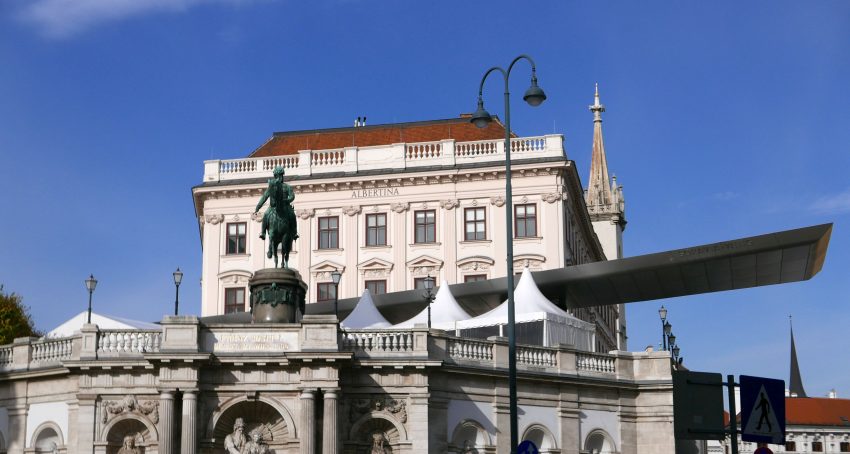
The Albertina is a major art museum best known for its graphic collections, originally founded through the collecting activities of Duke Albert of Saxe-Teschen in the late 18th century. The institution grew into one of the world’s significant print rooms, with extensive holdings of drawings and prints.
The building itself has layers of history, sitting on a site connected to Vienna’s former fortifications and later reshaped into a major cultural venue. That blend—historic palace setting plus a collection-driven museum identity—is central to its character.
What to see depends on exhibitions, but the museum’s strength is works on paper and rotating shows that draw on deep holdings. Also pay attention to the building’s setting and terraces, which help explain why the Albertina is both an architectural and museum visit.
Location: Albertinapl. 1, 1010 Wien, Austria | Hours: Monday: 10:00–18:00. Tuesday: 10:00–18:00. Wednesday: 10:00–21:00. Thursday: 10:00–18:00. Friday: 10:00–21:00. Saturday: 10:00–18:00. Sunday: 10:00–18:00. | Price: Adults: €19.90; Seniors (65+): €15.90; Under 26: €15.90; Children under 19: free. | Website
22. Austrian National Library
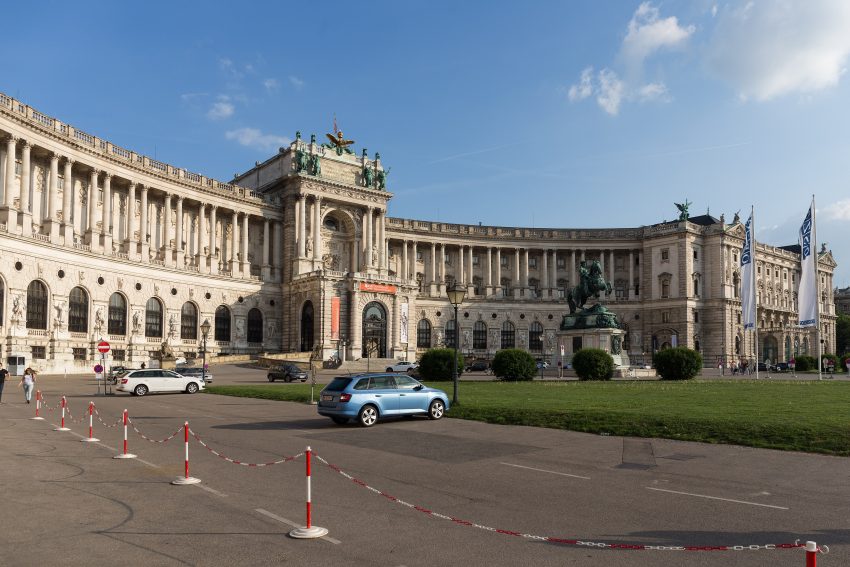
The Austrian National Library (Österreichische Nationalbibliothek) traces its origins to the Habsburg Imperial Court Library, with the institution commonly dated to 1368. It was an imperial collection for centuries, then took on its modern “national” role after the end of the monarchy, with the name change in 1920.
The most celebrated historic space is the Baroque State Hall (Prunksaal), commissioned under Emperor Charles VI and built in the 1720s to designs associated with Johann Bernhard Fischer von Erlach and completed by his son Joseph Emanuel. The hall was conceived as both a working library and a statement of imperial prestige, which is why the room’s decoration is so elaborate.
What to see is primarily the State Hall itself: the long, theatrical interior with its fresco programme, the sculptural and architectural ornament, and the visual impact of thousands of historic volumes on the shelves. Look as well for the large globes and the “war” and “peace” thematic division in the decoration, which is part of how the hall was originally staged as an ordered universe of knowledge.
Location: Josefsplatz 1, 1010 Wien, Austria | Hours: (October – May) Tuesday – Wednesday: 09:00–18:00; Thursday: 09:00–21:00; Friday – Sunday: 09:00–18:00; Closed on Monday. (June – September) Monday – Wednesday: 09:00–18:00; Thursday: 09:00–21:00; Friday – Sunday: 09:00–18:00. | Price: Adults: €12; Reductions: €10; Under 19: free. | Website

Moira & Andy
Hey! We're Moira & Andy. From hiking the Camino to trips around Europe in Bert our campervan — we've been traveling together since retirement in 2020!
This website uses affiliate links which earn a small commission at no additional cost to you.
Walking Tour Summary
Distance: 6 km
Sites: 22