Self-Guided Walking Tour of Rovinj (+ Maps!)
This website uses affiliate links which earn a small commission at no additional cost to you.
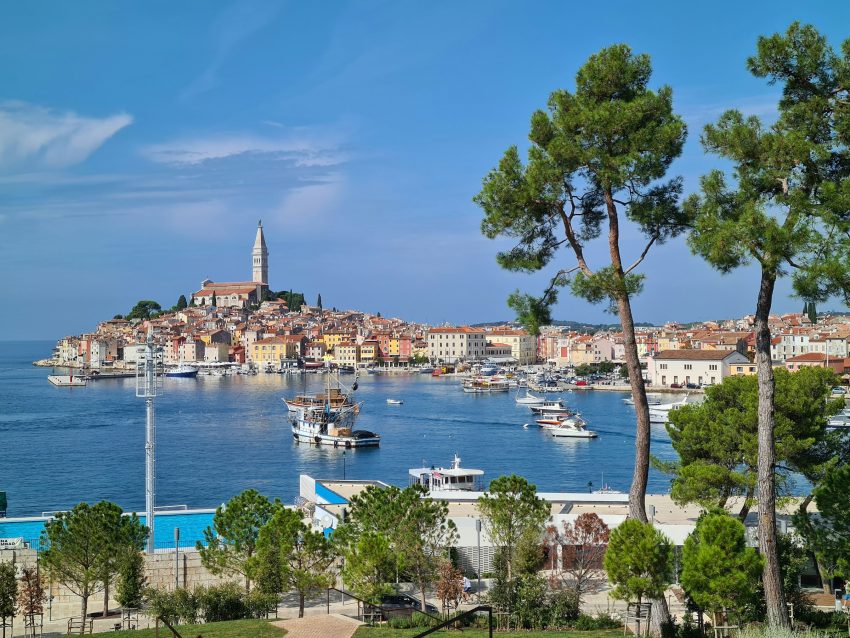
Rovinj is made for wandering: stone lanes that twist without warning, viewpoints that open up over the Adriatic, and little architectural surprises that make you slow down without meaning to. This self-guided route keeps things simple with a clear walking tour map you can follow stop-by-stop, while still leaving room for spontaneous detours.
Along the way you'll pass through the town's most atmospheric streets and squares, moving from the busy waterfront into the quieter, older lanes where the city's story is etched into facades, arches, and worn steps. If you're trying to prioritise the best things to see in Rovinj without overplanning, this structure helps you do it efficiently.
Because it’s self-guided, you can shape the day to your energy level: start early for softer light and fewer crowds, pause for coffee wherever the view looks good, and spend longer at the places that actually grab you rather than rushing through a fixed schedule.
How to get to Rovinj
By Air: The closest airport is Pula Airport, which is the most practical entry point if you want to minimise transfer time. From there, you can reach Rovinj by pre-booked shuttle, taxi, or a hire car, with travel times typically around 45-60 minutes depending on traffic and your exact drop-off point. If you're arriving via larger hubs, Zagreb and Trieste can work too, but you'll usually add a longer ground transfer. For the best deals and a seamless booking experience, check out these flights to Rovinj on Booking.com.
By Train: Rovinj doesn't have a mainline rail connection into the town itself, so the typical approach is to take a train to a larger regional rail node and then continue by bus or car. If you're coming from within Croatia, you'll often route through major stations first, then complete the last leg by bus. If you're coming from neighbouring countries, it's common to combine international rail to a border-area city with onward bus connections into Istria. Train schedules and bookings can be found on Omio.
By Car: Driving is one of the easiest ways to reach Rovinj, especially if you're exploring Istria as a road trip. Roads are generally straightforward, and having a car helps if you're staying outside the centre or planning day trips. Once you arrive, expect to leave the car in designated parking areas outside the tightest Old Town streets, then walk in with day bags.
By Bus: Intercity buses are a reliable way to arrive if you're not driving, with routes that typically connect Rovinj to other Istrian towns and major Croatian cities. For getting around Rovinj itself, the historic core is best explored entirely on foot, and that's exactly what this walking tour is built for. If you're staying farther out, you can usually combine short taxi rides with walking, and the seafront promenades make it easy to stitch neighbourhoods together without needing constant transport.
A Short History of Rovinj
Rovinj in the Early Settlement Period
Rovinj’s earliest development was shaped by the logic of defence and the sea: compact building patterns, tight lanes, and a community oriented toward fishing, trade, and safe harbour. Even today, the way the Old Town rises in layers hints at an older settlement rhythm, where space was precious and movement was channelled through narrow corridors rather than broad avenues.
Rovinj Under the Maritime Powers
As regional maritime influence expanded, Rovinj evolved into a working coastal town with stronger links to trade routes and port activity. The Port of Rovinj wasn't just an economic engine; it influenced how the town presented itself to arrivals, with waterfront structures and approach routes that still guide the way you experience the city from the sea-facing side.
Rovinj and the Rise of Civic Life
Over time, civic spaces became more defined, and the town’s public “front room” took clearer shape. Marsala Tita Square reflects this civic identity: a practical gathering point that connects the waterfront energy to the older interior lanes. Nearby landmarks like the Clock Tower functioned as both timekeeper and symbol, anchoring daily routines while also signalling order and status to anyone moving through the centre.
Rovinj’s Old Town Character Takes Shape
Rovinj’s most recognisable Old Town details come from centuries of incremental change rather than a single rebuild. Features like Balbi’s Arch mark transitions in the urban fabric-part gateway, part statement-showing where movement, commerce, and identity intersected. As you walk, you’ll notice how streets naturally funnel you toward key nodes, reinforcing the idea that the town was built to be navigated on foot long before “walking tours” existed.
Rovinj’s Cultural Institutions and Heritage
As the town matured, collecting and curating its own story became part of its identity. The Rovinj Heritage Museum represents that impulse: a place where local art, archaeology, and everyday life are framed as heritage rather than just background. This cultural layer adds depth to the walk, turning what could be “pretty streets” into a more legible story about how Rovinj sees itself.
Rovinj in the Everyday Life of the Streets
Some of Rovinj’s most distinctive history is experienced through its lived-in streetscape rather than formal monuments. Grisia Street is the clearest example: a steep, characterful lane where the architecture and atmosphere do the storytelling, and where creative life has become part of the modern identity. It’s the kind of place where history feels less like a museum label and more like continuity.
Rovinj’s Landmark Skyline and the Hilltop Church
Rovinj’s skyline is dominated by the Church of St. Euphemia and the Bell Tower, and that prominence is historically meaningful: it signals both spiritual life and the town’s relationship with visibility from the sea. Walking up toward it creates a natural “climb-and-reward” structure to your route, and the church precinct acts like a final chapter-where you look back over the port, rooftops, and the same maritime approaches that shaped Rovinj’s earlier centuries.
Where to Stay in Rovinj
To make the most of visiting Rovinj and this walking tour then you consider stay overnight at the centre. The Old Town is the best base if you want to step straight into the lanes early, beat the day-tripper wave, and end the evening with a short stroll back after dinner. Look for small heritage-style stays tucked into the historic streets, like Spirito Santo Palazzo Storico or The Melegran, both well-placed for walking to the waterfront, the arch, and the climb toward St. Euphemia.
If you prefer a little more space and easier access (especially with luggage), the areas just outside the Old Town edge are ideal: you’re still within a short walk of Marsala Tita Square and the harbour, but you avoid the tightest lanes and stair-heavy routes. This is where larger full-service hotels work well for comfort and logistics, such as Grand Park Hotel Rovinj by Maistra Collection and Hotel Eden.
For a quieter, resort-style feel with beaches and walking paths, consider the Golden Cape (Punta Corrente) and south-facing seafront zones, where you can start the day with a coastal stroll before heading into the Old Town. You’ll trade a few extra minutes of walking for calmer evenings and easy nature access, with options like Lone Hotel by Maistra Collection and Maistra Select Family Hotel Amarin.
Your Self-Guided Walking Tour of Rovinj
Explore Rovinj on foot with our walking tour map guiding you between each stop as you weave through its Old Town lanes, lively waterfront, and landmark viewpoints. Because this is a self-guided walking tour, you can set your own pace: skip any stops that don't interest you, linger where the atmosphere is best, and build in coffee breaks whenever you find a terrace you can't walk past.
1. Port of Rovinj
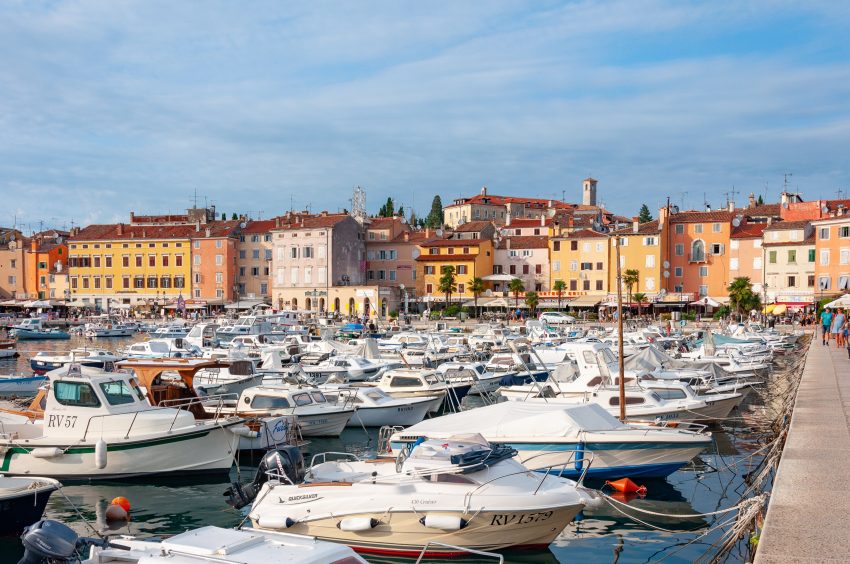
Rovinj’s harbour has been the town’s working front door for centuries, shaped by fishing, small-scale shipbuilding, and the broader Adriatic trade that intensified under Venetian influence. Even today, the port reads as a living piece of maritime infrastructure rather than a single “monument,” with the old town rising immediately behind it. Start at the waterline and look back toward the old-town façades: this is the classic Rovinj profile, and it explains why the harbour has always been the social and economic hinge of the settlement. You’ll also notice how the sheltered basin naturally supports mooring and short crossings to nearby islets. What to see is largely in the details: working boats alongside leisure craft, the promenade rhythm of cafés and kiosks, and the constant visual pull up the hill to the church tower. If you want context beyond the scenery, the local “batana” tradition (Rovinj’s emblematic wooden boat) is closely tied to the port’s identity.
Location: Ul. Joakima Rakovca 6, 52210, Rovinj, Croatia | Hours: 24 Hours. | Price: Free. | Website

2. Clock Tower
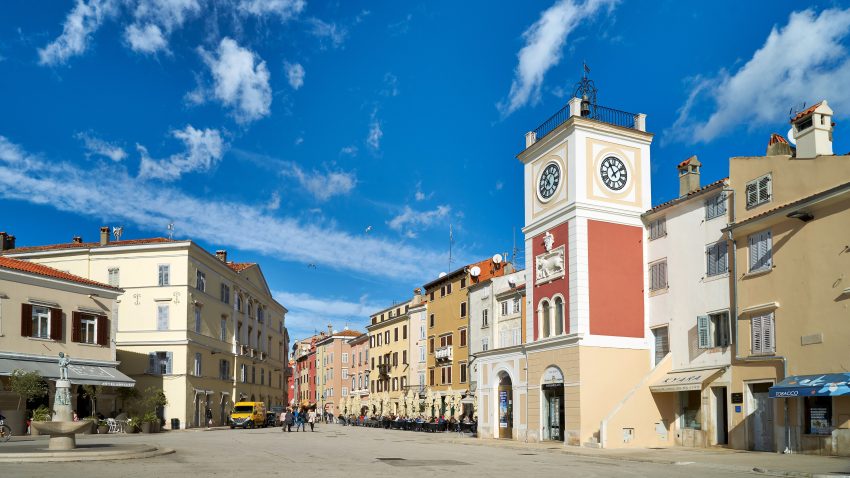
Rovinj’s town clock tower is a long-lived piece of urban fortification repurposed into a civic landmark, with origins commonly placed in the medieval period and significant rebuilding and extensions in later centuries. Sources note major work in the 17th century and the presence of a small prison beneath it for minor offenders, which fits the tower’s role as both boundary and authority.
The tower’s iconography points straight to Rovinj’s Venetian past, most visibly through the Lion of Saint Mark motif associated with the Venetian Republic. This is the kind of detail that turns a quick photo stop into a readable historical artifact.
What to see is the clock face itself (and its setting against the square), then the surrounding cluster of civic buildings that make the area feel like Rovinj’s “administrative heart.” Even without going inside anything, the tower works as a navigation point: harbour behind you, old town ahead, and the street network funneling outward from the square.
Location: Crkva sv. Eufemije u Rovinju, Trg Sv. Eufemije, 52210, Rovinj, Croatia | Hours: Check official website. | Price: From €4 (tower climb; may vary).
3. Rovinj Heritage Museum
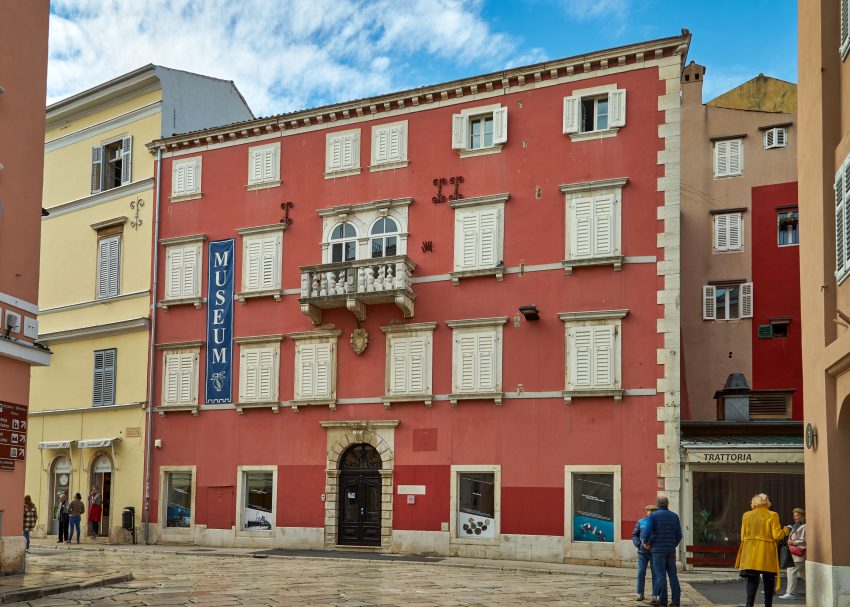
The Rovinj Heritage Museum is housed in a Baroque palace associated with the Califfi counts (17th/18th century), which already makes the building part of the story before you see a single exhibit. The museum itself was established in 1954, created to gather and present the town’s cultural wealth and to support exhibition activity. Its scope typically spans archaeology, art, and local life—useful in Rovinj because the town’s identity is a layered mix of Adriatic maritime culture and shifting political periods. In other words, it’s a good place to replace “pretty coastal town” impressions with specific objects, documents, and timelines. What to see depends on current programming, but the building’s interiors and the permanent/temporary exhibition rhythm are the core draw. If your time is limited, treat it as a calibration stop: one focused museum visit here makes the motifs you’ll notice outside (Venetian symbols, maritime references, civic spaces) much easier to interpret.
Location: Trg na mostu 1, 52210, Rovinj, Croatia | Hours: Daily: 10:00–18:00. | Price: Free. | Website
4. Church of St. Euphemia and the Bell Tower
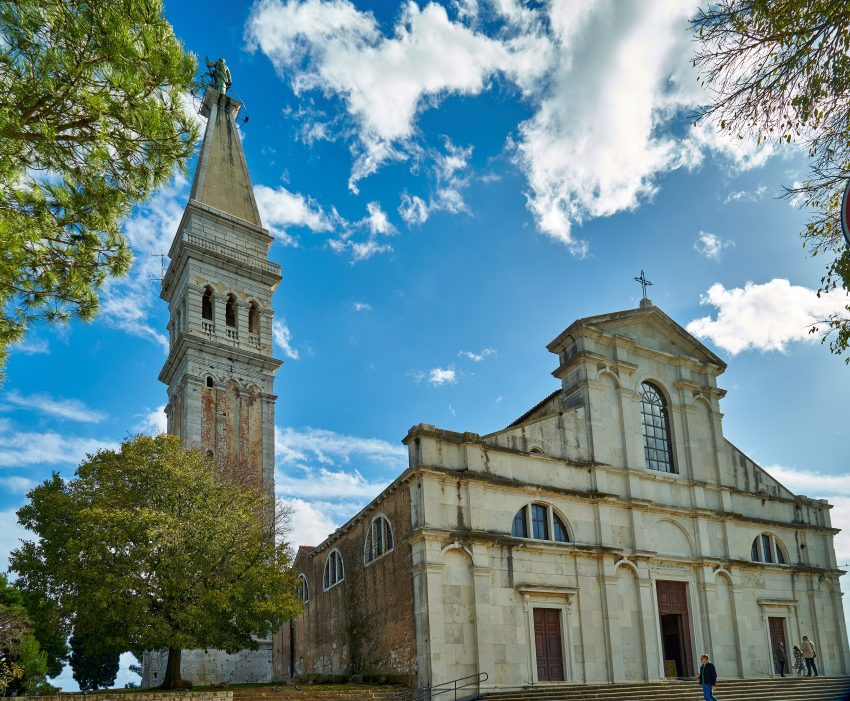
The Church of St. Euphemia is Rovinj’s dominant hilltop landmark, a Baroque church built in the early 18th century over earlier Christian structures, dedicated to the town’s patron saint. The bell tower is older in conception and strongly Venetian in inspiration, often compared to the campanile of St Mark’s in Venice; construction began in the mid-17th century and continued into the late 17th century. The church’s core historical claim is the presence of Saint Euphemia’s relics, kept in a sarcophagus with origins in late antiquity (commonly described as 6th century, later adapted). That kind of relic tradition matters here because it explains why the church sits where it does—prominent, elevated, and symbolically “watching” the sea routes that shaped the town. What to see: inside, look for the mix of sacred art and older devotional objects associated with the saint; outside, the bell tower is the must-do for orientation, because it delivers the clearest read of Rovinj’s peninsula form and island-studded seascape. At the very top, the statue of St. Euphemia acts as a wind vane—an elegant detail that turns the skyline into a functional instrument.
Location: Crkva sv. Eufemije u Rovinju, Trg Sv. Eufemije, 52210, Rovinj, Croatia | Hours: Check official website. | Price: Check official website. | Website
5. Grisia Street
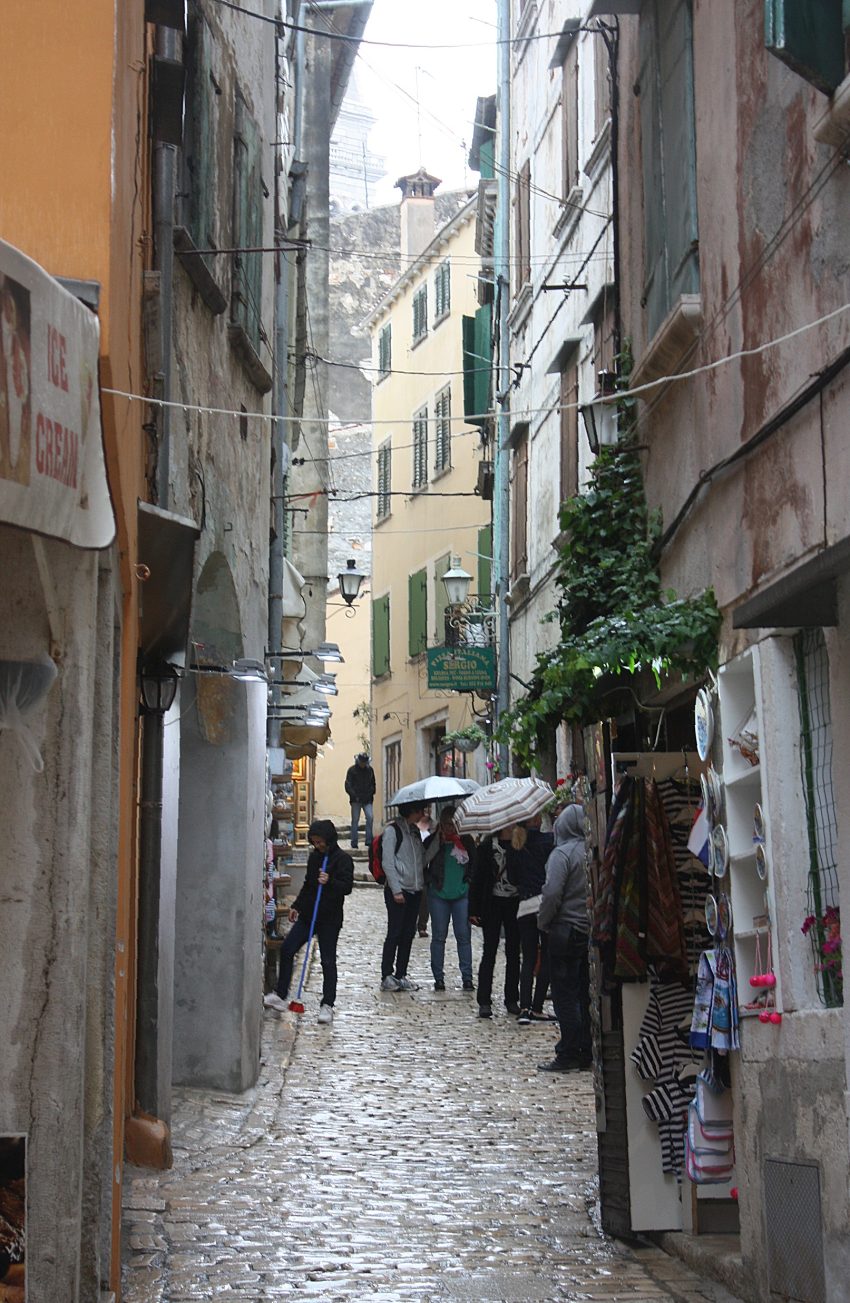
Grisia is the steep, stone-paved street linking the main square area up toward the Church of St. Euphemia, and it has become synonymous with Rovinj’s public-facing arts identity. Its reputation is reinforced by recurring art exhibition traditions that turn the street into an open-air gallery at set times of year. Historically, streets like this are the old town’s connective tissue: practical routes shaped by slope, walls, and the need to reach the hilltop sanctuary. Over time, the same tight urban form that once served defensive and everyday needs became the perfect stage for small galleries, studios, and temporary displays. What to see is the continuous visual climb: shopfronts and artworks at eye level, then widening views as you gain height. Even when no event is on, it’s worth moving slowly—textures underfoot, doorways, and glimpses back toward the harbour are the street’s “exhibit,” with the church complex as the natural finale.
Location: Ul. Grisia, 52210, Rovinj, Croatia | Hours: 24 Hours. | Price: Free.
6. Balbi’s Arch
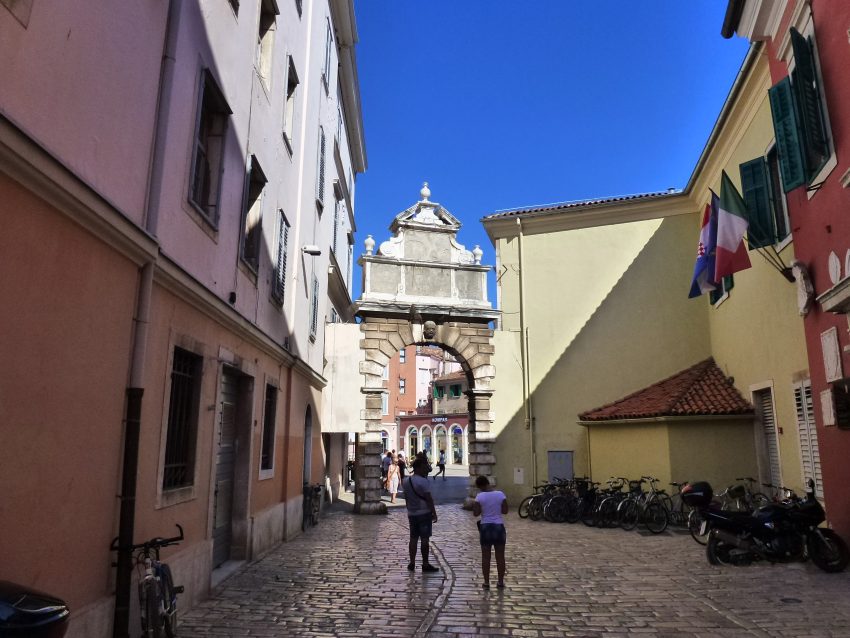
Balbi’s Arch was built in 1678–79 on the site of an older town gate, effectively marking the threshold into Rovinj’s historic core. It’s a compact but information-dense monument: one side shows a carved “Turk” head and the other a “Venetian” head, signalling how border politics and identity were publicly expressed in stone. Above, Venetian symbolism is explicit, tying the gate to the centuries when Rovinj sat within the Venetian sphere. That combination—gate site, dated construction, and emblematic carving—makes it one of the clearest “readable” survivals of the fortified town. What to see is not just the arch itself but what it does: it funnels you directly toward Grisia Street, turning a defensive boundary into a ceremonial entrance. Stand slightly off-centre and you can frame the arch as a portal, with the old-town street texture immediately beyond it.
Location: 52210, Rovinj, Croatia | Hours: 24 Hours. | Price: Free.

Moira & Andy
Hey! We're Moira & Andy. From hiking the Camino to trips around Europe in Bert our campervan — we've been traveling together since retirement in 2020!
This website uses affiliate links which earn a small commission at no additional cost to you.
Walking Tour Summary
Distance: 1.5 km
Sites: 6