Plaošnik Archaeological Site, Ohrid
Church, Historic Site and Ruins in Ohrid
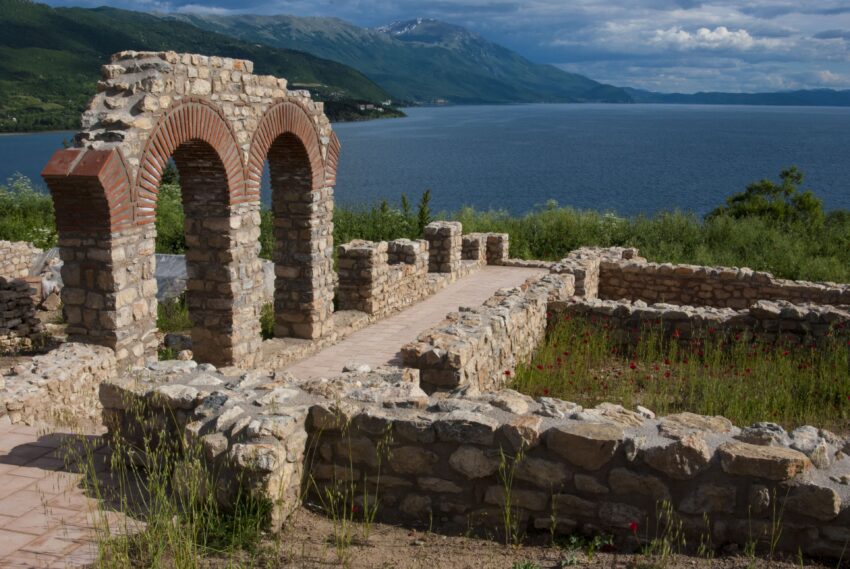
Plaošnik Archaeological Site in Ohrid is an archaeological complex on Ohrid Hill, just downhill from Samoil's Fortress. It brings together ruined sacred architecture, excavation zones, and one of the city's key early Christian landmarks.
The site matters because it layers a basilica, Saint Clement’s church, and later Ottoman reuse into one compact stop. Visitors usually come for the mosaics, the church remains, and the sense that work here is still ongoing. It suits history-focused travelers best, while casual visitors may treat it as a shorter add-on to a walk around the old town.
Table of Contents
- History and Significance of the Plaošnik Archaeological Site
- Things to See and Do in the Plaošnik Archaeological Site
- How to Get to the Plaošnik Archaeological Site
- Is the Plaošnik Archaeological Site Worth Visiting?
- Practical Tips on Visiting the Plaošnik Archaeological Site
- Where to Stay Close to the Plaošnik Archaeological Site
- FAQs for Visiting the Plaošnik Archaeological Site
History and Significance of the Plaošnik Archaeological Site
Plaošnik is tied closely to early Lychnidos, the ancient name associated with Ohrid, and to the religious and cultural development of the city. The site preserves remains from different periods rather than a single untouched monument, which is part of its appeal for archaeology-minded visitors.
Early Christian foundations
Archaeological work has identified an early basilica beneath the later church, along with mosaic floors and baptistery remains. The mosaics date to the early Christian period and include decorative animal forms and geometric patterns.
The basilica was dedicated to Saint Panteleimon, and the layers underneath the visible church help explain why the site is important beyond its later medieval form. It shows how religious use, rebuilding, and excavation shaped the place over time.
Saint Clement and medieval Ohrid
In 893, Saint Clement built a church here and established the Ohrid Literary School on the same site. That school became a major centre of Slavic culture, so the site is important not only for religion but also for regional education and writing.
Saint Clement was buried in the church in a tomb he prepared himself, which adds another layer of pilgrimage interest. For visitors, this is the period most closely associated with the site’s current identity.
Ottoman period and later rediscovery
Under Ottoman rule, the church was converted into the Imaret Mosque, and the later structure covered the earlier Christian remains. The mosque remains were moved in 2000 so the older layers could be seen and studied again.
That recovery makes the site feel less like a finished monument and more like a living excavation. Even now, it reads as a place where different eras of Ohrid are still being uncovered.
Things to See and Do in the Plaošnik Archaeological Site
The main thing to do here is walk the excavation area and look closely at the church remains, basilica foundations, and mosaic surfaces. I would slow down near the baptistery and the preserved floor sections, because those details help the site make sense as more than a ruin.
Take time to follow the route around the complex rather than moving straight through it. The shifting ground levels, stone outlines, and restored sections give you the clearest idea of how many different buildings once stood here.
If you enjoy archaeology, this is the place to look for small changes in material and layout rather than a single grand view. The site rewards a patient visit, especially when the light picks up the texture of the stone and exposed surfaces.
How to Get to the Plaošnik Archaeological Site
The nearest airport is Ohrid St. Paul the Apostle Airport, with the easiest onward transfer usually by taxi or prearranged car. For the best deals and a seamless booking experience, check out these flights to Ohrid on Booking.com.
Ohrid does not have a major passenger train connection for most visitors, so train travel is not the practical way to reach this site. Train schedules and bookings can be found on Omio.
Driving into the old-town area can be awkward, so it is usually easier to park lower down and walk up to Plaošnik.
Is the Plaošnik Archaeological Site Worth Visiting?
Plaošnik is worth a short stop if you care about archaeology, early Christianity, or the history of Ohrid’s old town. It is less essential if you want a polished museum experience, because parts of the area can feel unfinished and the appeal comes more from the site’s layers than from neat presentation.
What Other Travellers Say...
This archeological site features a restored 9th-century church plus ruins from earlier structures.


Practical Tips on Visiting the Plaošnik Archaeological Site
- Entrance fee: Free.
- Opening hours: 24 Hours.
- Best time to visit: Go in the morning or late afternoon for softer light and fewer people. Midday can feel exposed in summer, and the stone surfaces are easier to read when the sun is lower.
- How long to spend: Plan 30–60 minutes for a focused visit. Add more time if you want to study the excavation areas and combine it with nearby viewpoints.
- Accessibility: The ground is uneven and the site sits on a hill, so it is not ideal for visitors with limited mobility. Expect slopes, rough surfaces, and some areas that may be harder to navigate.
- Facilities: Facilities are limited on site, so it is better to assume a basic visit rather than a fully serviced one. Bring water and use cafés in the old town before or after.
Where to Stay Close to the Plaošnik Archaeological Site
For this area, the best base is Ohrid’s old town if you want to stay close to the main sights and keep most of your sightseeing on foot.
If you want the easiest access to Plaošnik and the surrounding historic quarter, choose a place in or near the old town rather than farther along the lakefront. That keeps your route simple, especially if you plan to combine the site with Samoil’s Fortress, church visits, and evening walks.
For a practical, central stay, Villa St. Sofija works well for visitors who want to be close to the historic core. Villa & Winery Mal Sveti Kliment suits travelers who prefer a quieter base with a more residential feel. SU Hotel is a sensible pick if you want to stay walkable to Plaošnik and other old-town stops without focusing on luxury.
FAQs for Visiting the Plaošnik Archaeological Site
Getting There
Tickets & Entry
Visiting Experience
Photography
Accessibility & Facilities
Food & Breaks Nearby
Safety & Timing
The Plaošnik Archaeological Site appears in our Complete Guide to Visiting Ohrid!

Moira & Andy
Hey! We're Moira & Andy. From hiking the Camino to trips around Europe in Bert our campervan — we've been traveling together since retirement in 2020!
This website uses affiliate links which may earn a commission at no additional cost to you!
Nearby Attractions
- King Samoil Fortress (0.2) km
Castle, Hill and Historic Site - Church of St. John at Kaneo (0.3) km
Church, Historic Site and Viewing Point - Church of St. Sophia (0.3) km
Cathedral, Church and Historic Building - Ancient Theatre of Ohrid (0.3) km
Historic Site, Ruins and Theatre - St. Bogorodica Perivlepta Church (0.4) km
Church, Gallery and Viewing Point - Memorial House of Hristo Uzunov (0.4) km
Historic Building, Historic Site and Museum - Upper Gate (0.4) km
City Gate, City Walls and Historic Site - Lapidarium Museum (0.4) km
Historic Site, Monument and Museum - Robevi House. National Museum (0.4) km
Historic Building, Historic Site and Museum - Lower Gate (0.6) km
City Gate, Historic Site and Ruins