Church of St. Sophia, Ohrid
Cathedral, Church and Historic Building in Ohrid
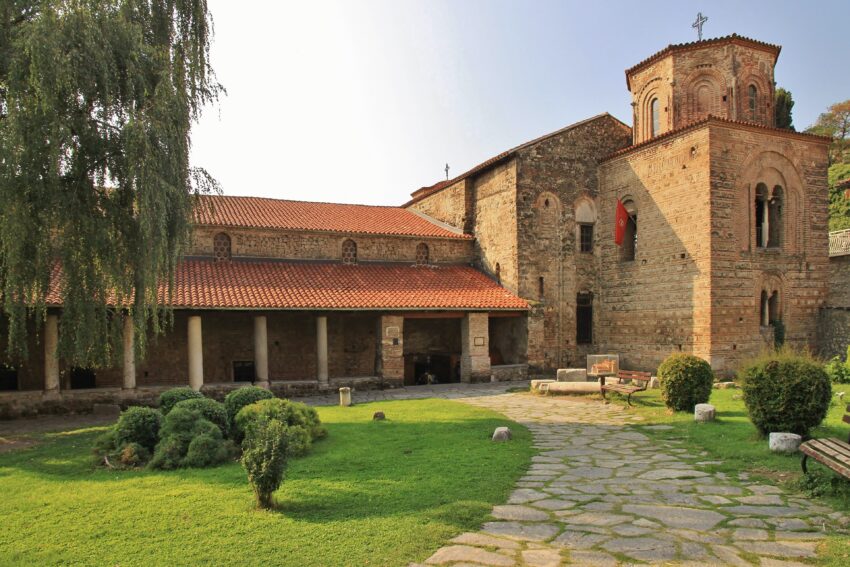
Church of St. Sophia in Ohrid is a historic Orthodox church in the city's old core. It is known for its early foundations, later Byzantine rebuilding, and interior frescoes that still dominate the visitor experience.
What stands out most is the quiet, almost museum-like interior, with painted scenes around the apse and nave rather than a heavily decorated modern church. It suits visitors who want a short cultural stop, especially if they enjoy art history, church architecture, or calm places for a brief pause.
Table of Contents
- History and Significance of the Church of St. Sophia
- Things to See and Do in the Church of St. Sophia
- How to Get to the Church of St. Sophia
- Is the Church of St. Sophia Worth Visiting?
- Practical Tips on Visiting the Church of St. Sophia
- Where to Stay Close to the Church of St. Sophia
- FAQs for Visiting the Church of St. Sophia
- Taxonomy
History and Significance of the Church of St. Sophia
The Church of St. Sophia grew out of an earlier Christian basilica and was later rebuilt into the form visitors see today. Its history reflects Ohrid's role as a religious center in the medieval Balkans, with the church tied to the city's Orthodox tradition and the Byzantine world.
Medieval rebuilding
In the medieval period, the church was reshaped and given a domed basilica form under Archbishop Leo of Ohrid. That rebuilding helped define its interior layout and the painted program that still draws attention today. The frescoes were designed to frame the altar space and the main nave with biblical and liturgical scenes.
Ottoman period and restoration
During Ottoman rule, the church was converted into a mosque and much of the original painting was covered. After the Balkan Wars, it returned to Orthodox use and underwent conservation work that revealed and stabilized the frescoes. The result is a building that shows both damage and recovery, rather than a perfectly untouched monument.
Things to See and Do in the Church of St. Sophia
Start with the main interior space and take a slow look at the frescoes across the apse, nave, and altar area. The painted Virgin in the apse and the surrounding scenes give the church its strongest visual character, and they are easiest to appreciate when you stand back and let the whole composition settle in.
Look more closely at the upper walls and side areas, where smaller narrative scenes add detail beyond the first impression. I also found the atmosphere itself part of the visit: the subdued light, the open volume of the church, and the contrast between the restored paintings and the older stone fabric make it more rewarding than a quick pass-through.
How to Get to the Church of St. Sophia
The nearest major airport is Ohrid St. Paul the Apostle Airport, with international connections that make the city easy to reach by air. For the best deals and a seamless booking experience, check out these flights to Ohrid on Booking.com.
Ohrid does not have a major rail hub for most visitors, so train travel is usually not the practical way to reach this stop; many travelers arrive by bus or private transfer instead. Train schedules and bookings can be found on Omio.
If you are driving, use central Ohrid parking and plan to walk through the old streets, since the church sits in a historic area where curbside access can be limited.
Is the Church of St. Sophia Worth Visiting?
It is worth a short stop if you care about Byzantine art, medieval churches, or Ohrid’s layered religious history. Skip it if you mainly want a high-energy sightseeing stop, since the appeal here is quieter and more specialized. It is best for travelers who appreciate frescoes and restored interiors; it is less essential if you are not interested in church art or older monuments.
What Other Travellers Say...
Built in the Middle Ages, this Macedonian Orthodox Church displays centuries-old religious art.


Practical Tips on Visiting the Church of St. Sophia
- Entrance fee: Free; donations appreciated.
- Opening hours: 24 Hours.
- Best time to visit: Go earlier in the day or later in the afternoon for a quieter visit and softer light inside. Summer can be busier because of festival activity.
- How long to spend: Allow 20–40 minutes for a focused visit. Give yourself longer if you want to study the frescoes carefully.
- Accessibility: Access can be uneven in older historic buildings, and the approach may involve walking on uneven surfaces. Visitors with limited mobility should expect some practical limitations.
- Facilities: Facilities are limited on site, so plan ahead for restrooms, snacks, and water in the surrounding old town.
Where to Stay Close to the Church of St. Sophia
For a culture-focused stay, base yourself in Ohrid’s old town or just above the lakeside so you can walk to the church and the main historic sights without relying on transport.
If you want the easiest access to the center, a midrange hotel near the old town is the most practical choice. I would look for a place with parking if you are driving, or a quieter street if you plan to walk everywhere.
FAQs for Visiting the Church of St. Sophia
Getting There
Tickets & Entry
Visiting Experience
Accessibility & Facilities
Food & Breaks Nearby
Safety & Timing
Taxonomy
The Church of St. Sophia appears in our Complete Guide to Visiting Ohrid!

Moira & Andy
Hey! We're Moira & Andy. From hiking the Camino to trips around Europe in Bert our campervan — we've been traveling together since retirement in 2020!
This website uses affiliate links which may earn a commission at no additional cost to you!
Planning Your Visit
24 Hours.
Free; donations appreciated.
Nearby Attractions
- Memorial House of Hristo Uzunov (0.1) km
Historic Building, Historic Site and Museum - Lapidarium Museum (0.1) km
Historic Site, Monument and Museum - Robevi House. National Museum (0.1) km
Historic Building, Historic Site and Museum - Lower Gate (0.3) km
City Gate, Historic Site and Ruins - St. Bogorodica Perivlepta Church (0.3) km
Church, Gallery and Viewing Point - Ancient Theatre of Ohrid (0.3) km
Historic Site, Ruins and Theatre - Plaošnik Archaeological Site (0.3) km
Church, Historic Site and Ruins - Upper Gate (0.3) km
City Gate, City Walls and Historic Site - King Samoil Fortress (0.4) km
Castle, Hill and Historic Site - St. Clement Monument (0.4) km
Monument, Sculpture and Square