Self-Guided Walking Tour of Noto (+Maps)
This website uses affiliate links which earn a small commission at no additional cost to you.
Noto is one of those places that feels designed for slow travel: honey-coloured stone, theatrical staircases, and a main street that keeps revealing another church façade or balcony carved like lace. This route is built to be simple to follow, but not rushed, so you can linger where the light looks best and duck into side lanes when something catches your eye.
You’ll cover the classic Baroque showpieces as well as a few calmer corners that help the city feel lived-in rather than museum-like. Along the way you’ll get repeated chances to climb for views, step into cool interiors when the sun is high, and time your stroll so the streets look their best in late afternoon.
If you're looking for the best things to see in Noto, this walk strings them together in a logical loop with natural breaks for granite, espresso, and people-watching. The idea is to give you structure without turning the day into a checklist.
How to get to Noto
By Air: The nearest major airport for most travellers is Catania-Fontanarossa (CTA), which has the widest range of flights, especially in summer. From the airport you can reach Noto by a mix of bus/train connections via Catania, or more directly by hiring a car for the last stretch into the Val di Noto. If you're arriving late, consider staying a night in Catania and continuing the next morning to avoid a messy connection chain. For the best deals and a seamless booking experience, check out these flights to Noto on Booking.com.
By Train: Noto has a station on the Siracusa-Ragusa line, and the most common rail approach is via Siracusa (Syracuse), which is better connected and easy to pair with a short onward ride. Trains in this part of Sicily can be slower than you expect, but they're scenic and practical if you're basing yourself without a car. If your schedule matters, check the exact departure times on the day and aim for earlier services rather than tight evening connections. Use Omnio to easily compare schedules, book train tickets, and find the best prices all in one place for a hassle-free journey across Italy.
By Car: Driving is the most flexible option, especially if you also want beaches, countryside viewpoints, or a second Baroque town on the same trip. From Catania you'll typically head south toward Siracusa and then continue to Noto; the final approach is straightforward and well signed. Parking is the main variable: plan to leave the car on the edge of the historic centre and walk in, rather than trying to thread narrow streets near the cathedral. If you are looking to rent a car in Italy I recommend having a look at Discover Cars, first, as they compare prices and review multiple car rental agencies for you.
By Bus: Intercity buses link Noto with nearby hubs such as Catania, Siracusa, and Ragusa, and they can be competitive with trains once you factor in station locations and transfers. Buses are often the easiest choice if you're staying in Siracusa and want a simple day trip. As with much of regional transport, services can thin out in the evening, so plan your return before you commit to a late dinner.
How to get around the city: Noto’s historic centre is made for walking, and this self-guided route assumes you’ll be on foot the entire time. The only real challenge is heat and hills, so start earlier in peak summer, carry water, and treat staircases as built-in viewpoint stops. If you’re staying outside town, local taxis can help with the last mile, but once you’re in the centre you won’t need anything motorised.
A Short History of Noto
Noto in Antiquity and the Early Middle Ages
The story of Noto begins long before the Baroque streets you see today, with settlements in the wider area shaped by successive powers in Sicily and the strategic value of hilltop positions. Early communities clustered where defensible terrain met access to inland routes, and that preference for strong viewpoints never really disappears from the local geography. Even when you're admiring ornamented façades in the modern centre, the wider landscape still explains why people chose to live, trade, and fortify here in the first place.
Noto under Arab and Norman Sicily
As rule shifted across Sicily, Noto’s region absorbed new agricultural practices, administrative systems, and architectural ideas that filtered into later building traditions. The layered heritage matters because it set patterns of land use and wealth that eventually funded religious institutions and civic building. Many of the churches and palazzi that dominate today’s streets were later expressions of long-established local power networks, refined over centuries of changing governance.
Noto and the 1693 Earthquake: The Turning Point
The defining moment for modern Noto was the catastrophic earthquake of 1693 that devastated much of south-eastern Sicily. Rather than simply rebuilding in place, the city was re-planned and reconstructed on a new site, allowing an unusually coherent urban design to emerge. This is why your walking tour feels so “composed”: the cathedral area, grand stairways, and the rhythm of churches and palaces along the main axis reflect a deliberate Baroque vision, where architecture became both a statement of recovery and a display of prestige.
Baroque Noto in the 18th Century: Churches, Palaces, and the City’s Signature Look
In the century that followed, Noto's builders leaned into theatrical façades, deep balconies, and ornate stonework that catch the sun and turn a simple walk into a series of set pieces. Landmarks like Noto Cathedral and major palaces such as Palazzo Ducezio and Palazzo Nicolaci became civic symbols, tying religious authority and aristocratic status to the rebuilt city's identity. The decorative exuberance you see on balconies and portals isn't just style for style's sake; it's the visible language of a town asserting continuity and confidence after disaster.
Noto in the Modern Era: Preservation and a Living Baroque City
Over time, weathering and changing fortunes took a toll, but Noto’s architectural unity also made it a natural candidate for preservation efforts. Today the city’s best-known buildings double as living spaces, places of worship, and event settings, which is why you’ll often see a blend of daily life and monumental backdrops. The walking experience you’re about to do is shaped by that balance: a historic centre curated enough to feel special, but active enough to feel real.
Where to Stay in Noto
To make the most of visiting Noto and this walking tour, then you consider stay overnight at the centre. Being inside the historic core means you can start early before day-trippers arrive, take a long lunch without watching the clock, and step out again for the golden-hour glow that makes the stonework look almost unreal. For an elegant stay right among the main Baroque streets, look at Seven Rooms Villadorata and Gagliardi Boutique Hotel, both ideal if you want to be a few minutes from the cathedral area and finish the day with a short stroll back after dinner.
If you prefer something central but slightly quieter, aim for the edges of the old town, where you still walk everywhere but avoid the busiest stretch at peak times. Properties like Hotel Porta Reale and Il Giardino del Barocco work well for this: you get quick access to the main route, easy in-and-out if you’re arriving by car, and a calmer feel when you return in the evening.
For more space, a slower pace, or a countryside-style base while still being close enough to drive in for the walk, consider staying just outside town and treating the historic centre as your daytime focus. La Corte del Sole is a strong fit for travellers who want a pool or garden setting and don’t mind a short drive to parking before starting the route, especially in warmer months when a midday reset can make the afternoon walking far more enjoyable.
Your Self-Guided Walking Tour of Noto
Discover Noto on foot with our walking tour map guiding you between each stop as you explore its Baroque streetscapes, landmark churches, and the palaces that define the city's golden-stone skyline. Because this is a self-guided walking tour, you control the pace: skip anything that doesn't grab you, linger on the cathedral steps, or detour down a side street when a balcony or doorway pulls you in. Build in coffee stops whenever you want, pause for photos when the light is right, and treat the route as a flexible framework for your own day in Noto rather than a strict schedule.
1. Statue of San Corrado
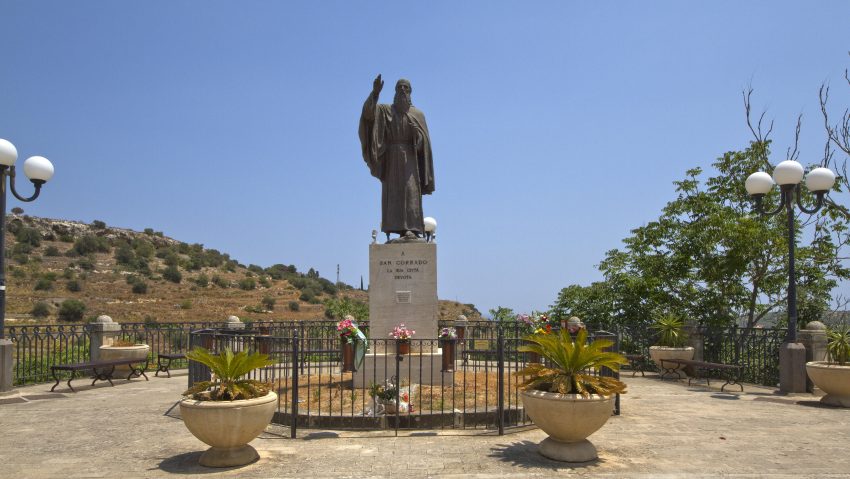
The Statue of San Corrado honours Corrado Confalonieri (Saint Conrad of Piacenza), the patron saint of Noto, whose local cult is tied closely to the city’s post-medieval religious identity. Modern commemoration is very visible here: the bronze statue was inaugurated in 1955, and it’s positioned as a symbolic “hello” to the historic centre.
What to look for is the iconography: San Corrado is shown in the act of blessing, which connects directly to the way he’s celebrated in local tradition and feast-day ritual. If you’re trying to understand why Noto’s cathedral and civic spaces lean so heavily into the saint, this monument is a straightforward starting point.
Treat it as a quick, interpretive stop rather than a long visit. The most rewarding “what to see” is how the statue frames the Baroque streetscape around it and how often you’ll spot San Corrado referenced again nearby (especially once you reach the cathedral area)
Location: Via Napoli, 1, 96017 Noto SR, Italy | Hours: 24 Hours. | Price: Free.

2. Corso Vittorio Emanuele III
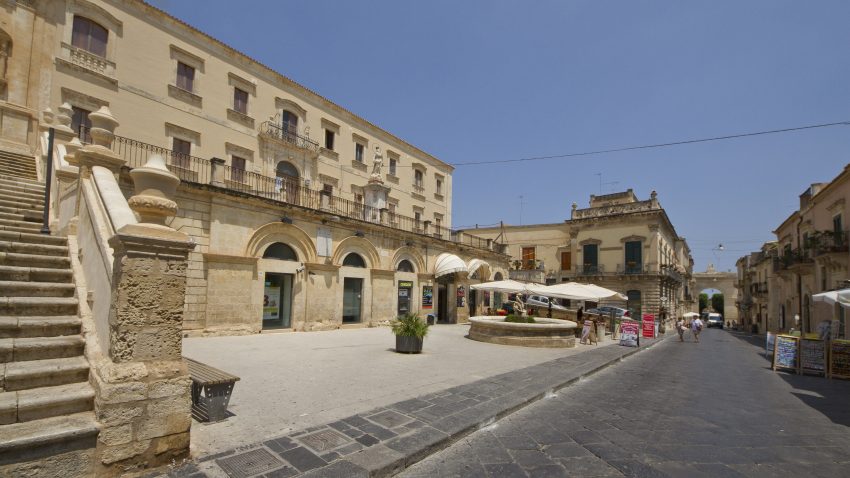
Corso Vittorio Emanuele III is the main axis through Noto’s rebuilt Baroque city, the street you enter after passing through Porta Reale and the one that stitches the major churches and palaces together. Its importance is essentially historical urban design: the post-1693 reconstruction produced a planned, monumental centre, and the Corso is where that planning is most legible at street level.
As you walk it, what you’re really “seeing” is the curated sequence of façades, steps, and piazzas that make Noto feel unusually harmonious for a Sicilian hill town. This is where the cathedral, the town hall (Palazzo Ducezio), and several headline churches sit in close visual dialogue, with the warm limestone making the architecture read almost like a single composition.
In practical terms, take your time and look laterally down the side streets as well as straight ahead. The Corso isn’t just a connector; it’s a “display case” for the city, with details that reward slow viewing: balconies, sculpted stonework, and the shifting sightlines as the street opens into squares and steps.
Location: Corso V. Emanuele, 97, 96017 Noto SR, Italy | Hours: 24 Hours. | Price: Free.
3. Porta Reale
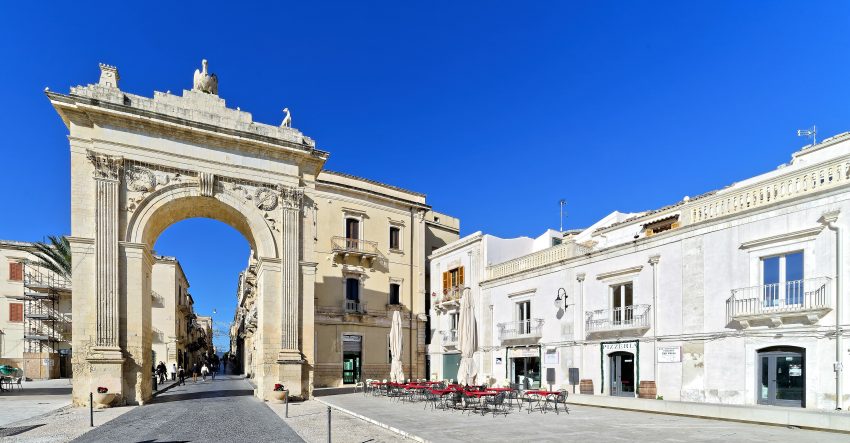
Porta Reale is a 19th-century ceremonial gate built in 1838 to mark a royal visit by Ferdinand II of Bourbon, and it’s one of Noto’s most recognisable thresholds into the historic core. It was commissioned by the Marquis of Canicarao and designed by architect Orazio Angelini, which is why it feels more like an intentional “stage entrance” than a leftover medieval fortification.
Historically, the gate matters because it signals how Noto’s identity didn’t stop evolving after the Baroque rebuild: even in the 1800s, the city was still shaping its public image through monumental architecture. If you like reading symbolism into city gateways, this is where Noto presents itself as orderly, elegant, and consciously grand.
What to see is mostly architectural: the proportions, the coats of arms noted on the interior side, and the immediate “reveal” of the Corso beyond it. Pause, turn back once you’ve crossed through, and you’ll get the classic framed view that explains why it’s so often photographed.
Location: Corso V. Emanuele, 182, 96017 Noto SR, Italy | Hours: 24 Hours. | Price: Free.
4. Chiesa di San Francesco d’Assisi all’Immacolata
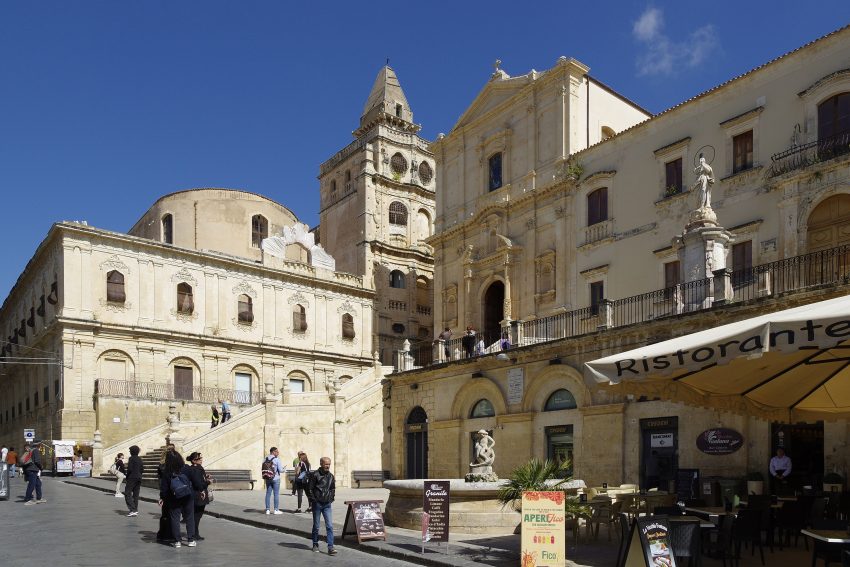
This church belongs to Noto’s great rebuilding phase after the 1693 earthquake, and it’s consistently cited as one of the city’s most imposing Baroque religious complexes. Construction is generally placed between 1704 and 1745, with design attributed to Vincenzo Sinatra and Rosario Gagliardi, two names that come up repeatedly in the Val di Noto’s architectural story.
The “what to see” begins before you even step inside: the monumental staircase and the way the façade is staged above it are part of the experience. Baroque Noto is very theatrical, and this church leans into that with height, layering, and a sense of procession as you approach.
Once inside, focus on the overall spatial effect rather than hunting for a single object. The most memorable visit tends to be about how the architecture directs your gaze and movement, and how the church fits into the wider cluster of nearby civic and religious buildings that make this part of town feel like an open-air museum of Sicilian Baroque.
Location: Corso V. Emanuele, 142, 96017 Noto SR, Italy | Hours: Check official website. | Price: Free; donations appreciated.
5. Chiesa di Santa Chiara
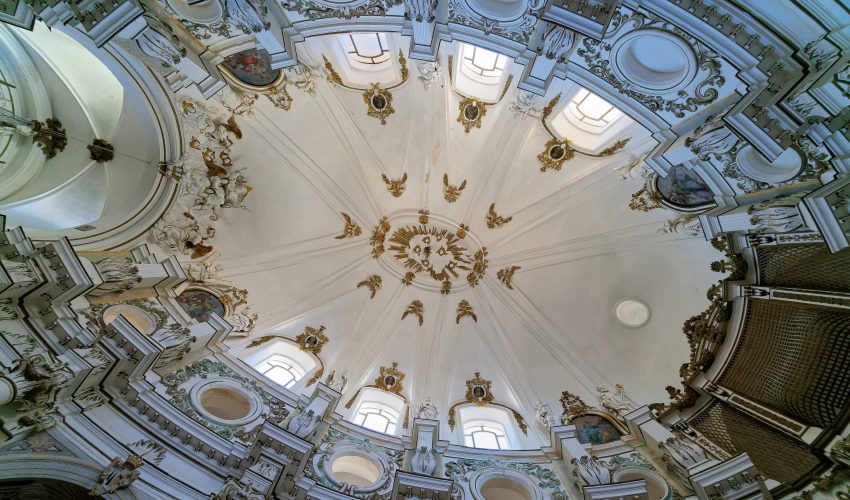
Chiesa di Santa Chiara is linked to the Benedictine community in Noto and is widely associated with architect Rosario Gagliardi, with construction commonly dated from the 1730s to the mid-18th century (often cited as 1730–1758). Like much of Noto, it sits in the historical context of rebuilding and reinvention after the 1693 earthquake.
Part of what makes it especially interesting is the relationship between church and convent life: sources often connect it to the former Benedictine convent complex, with today’s civic/cultural uses nearby reinforcing that layered history. It’s a good example of how Noto’s religious architecture wasn’t just about worship, but also about institutional presence and power in the rebuilt city.
When you visit, look for the contrast between an elegant exterior and a richly worked interior, and pay attention to how close it is to the city’s main flow of monuments. It’s the kind of church that rewards a few quiet minutes inside after the brightness of the Corso, especially if you’re comparing multiple Baroque interiors in one day.
Location: Corso V. Emanuele, 96017 Noto SR, Italy | Hours: Check official website. | Price: Check official website.
6. Basilica Santissimo Salvatore
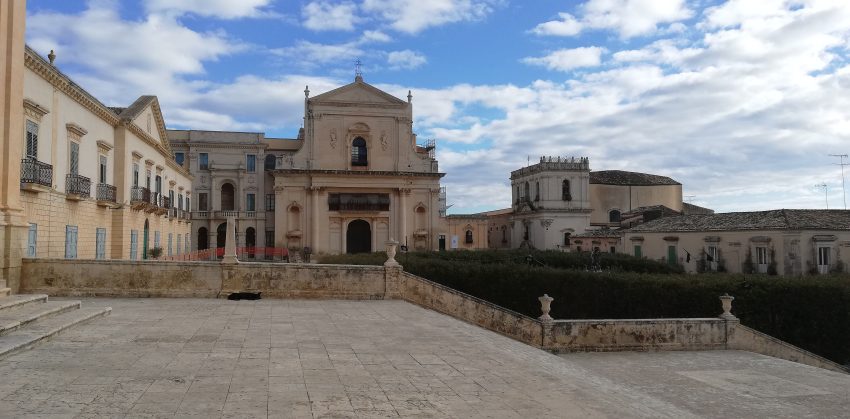
The Basilica del Santissimo Salvatore is tied to a major late-18th-century religious project in Noto: construction is described as beginning in 1767, promoted by the abbess Maria Isabella Rau della Ferla, with early involvement by architect Andrea Gigante and later completion/design input credited to canon Antonio Mazza. This places it slightly later than some of the headline early Baroque façades, which can make its details feel like an evolution of the same visual language.
Historically, it’s also connected to a wider ecclesiastical complex: the adjacent buildings have been associated with diocesan/seminary functions over time, underlining how these monumental churches were often part of larger institutional footprints. That broader context helps explain why the site can feel like more than a standalone church.
What to see is primarily architectural: the façade composition and the sense of scale when you step back far enough to take it in properly. Inside, visits tend to be about atmosphere and the cumulative impact of Noto’s Baroque craftsmanship, especially if you’re building a mental timeline of how the city’s reconstruction matured across the 1700s.
Location: Corso V. Emanuele, 128, 96017 Noto SR, Italy | Hours: Daily: 10:00–18:00. | Price: Church entry: Free; Bell tower/terrace access: €2.50.
7. Noto Cathedral
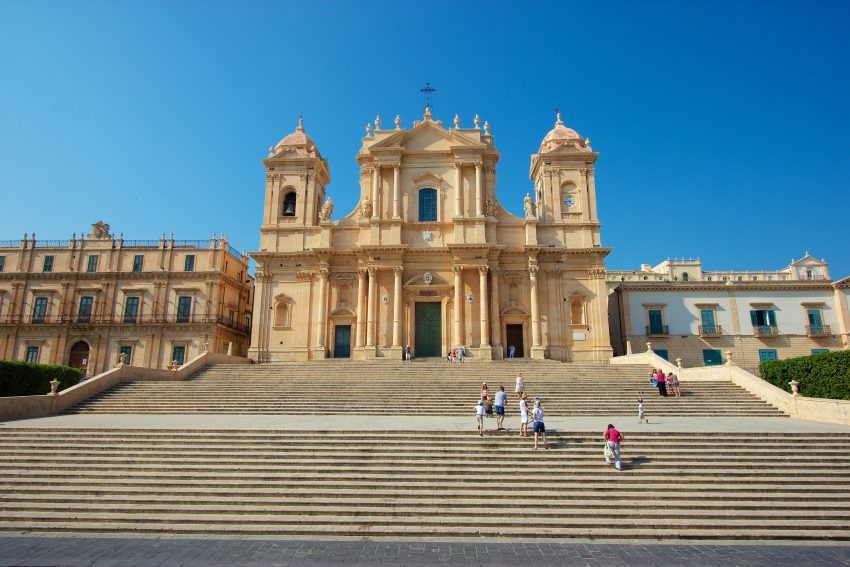
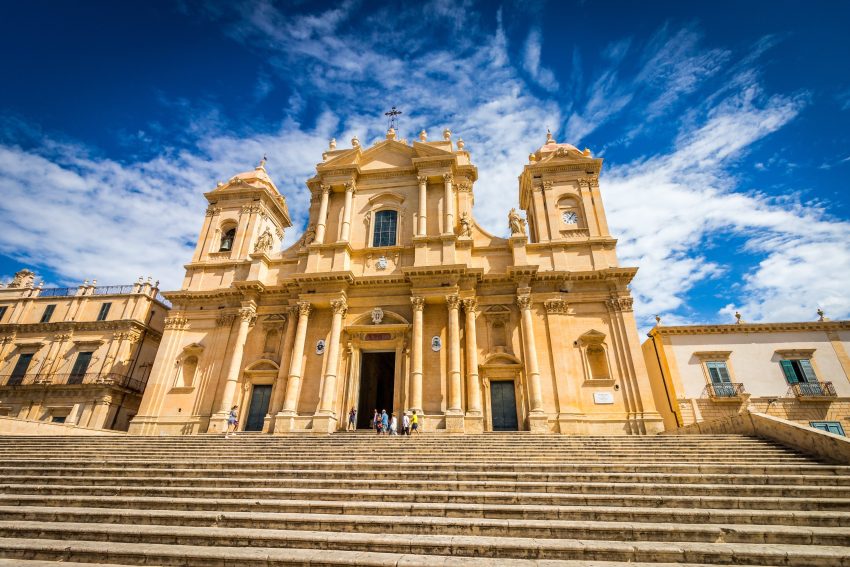
Noto Cathedral (Cattedrale di San Nicolò) is one of the defining monuments of the rebuilt city: construction began in the early 18th century and was completed in 1776, dedicated to Saint Nicholas of Myra. It also carries a modern chapter that shapes how you experience it today: a major collapse occurred on March 13, 1996, after long-term structural weakening, and the cathedral reopened in 2007 following reconstruction.
That collapse-and-rebuild story matters because it changed the interior character: much of what visitors see now is the result of careful reconstruction and renewed liturgical furnishing, rather than an untouched 18th-century decorative scheme. It’s a useful reminder that “historic” buildings in seismic Sicily often contain multiple rebuilds layered into a single monument.
What to see starts with the great staircase and the façade’s presence over the piazza, then continues inside with an eye for the building’s scale and the sense of restored openness. The cathedral is also closely tied to San Corrado: it’s associated with the patron saint’s cult in the city, which helps connect the cathedral visit back to other San Corrado sites you’ll notice around town.
Location: Piazza del Municipio, 96017 Noto SR, Italy | Hours: Daily: 09:00–20:00. | Price: From €2.50 (may vary by areas open). | Website
8. Ducezio Palace
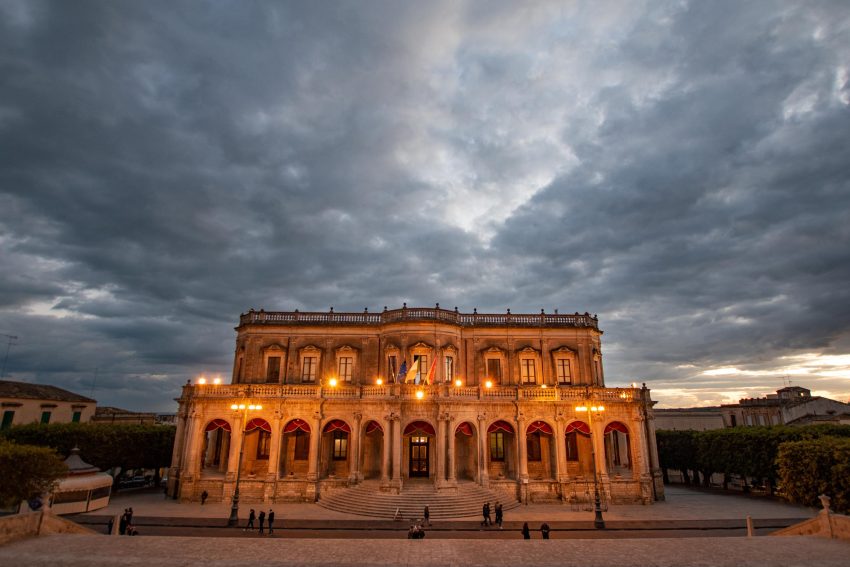
Palazzo Ducezio is Noto’s town hall, and its history sits at the intersection of aristocratic architectural taste and civic function. Construction began under architect Vincenzo Sinatra in 1746 and the core building was completed around 1760, with later changes that are very visible: a second storey was added in 1949–1951 by architect Francesco La Grassa, designed to harmonise with Sinatra’s Baroque rhythm.
The key interior highlight repeatedly singled out is the oval Hall of Mirrors, a room whose later enrichment (including mirrors and ornate decoration) reflects how these civic spaces were used to project prestige, not just to conduct municipal business. It’s one of the best places in Noto to see how a public building can carry the atmosphere of a private palace.
What to see when you’re there: start outside by reading the façade carefully, especially the “two eras” effect between the original lower level and the mid-20th-century upper addition. Then, if open, prioritise the principal halls over minor rooms; the building is most rewarding when you focus on the showpiece spaces and how they frame views back out toward the cathedral square.
Location: Corso V. Emanuele, 96017 Noto SR, Italy | Hours: Check official website. | Price: Check official website. | Website
9. Church of San Carlo al Corso
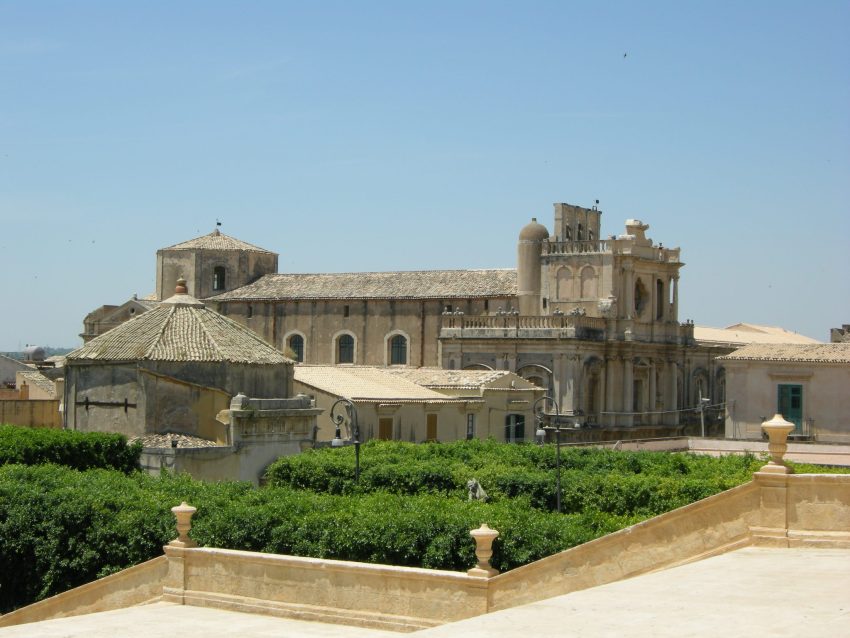
San Carlo al Corso (often referred to locally as the Collegiata because of its Jesuit associations) is part of Noto’s reconstruction story after the 1693 earthquake, replacing an earlier church on the site. Sources commonly connect its design to Rosario Gagliardi and describe its Baroque façade as a deliberate exercise in classical “orders,” stacked in progression across the concave front.
The façade is the first reason to stop: that concave curve changes how the building feels as you approach, pulling you inward rather than presenting a flat, theatrical “screen.” Inside, the emphasis shifts to a long, vaulted space with painted decoration noted in specialist descriptions, reinforcing the Jesuit taste for drama and visual teaching through art.
What most visitors remember, though, is the bell tower: it’s widely pointed out as one of the best viewpoints over Noto’s Baroque skyline and the main square. If you only do one “climb for a view” in the historic centre, this is typically the most directly rewarding.
Location: Corso V. Emanuele, 121, 96017 Noto SR, Italy | Hours: Check official website. | Price: Free; tower/terrace viewpoint may require a small fee.
10. Via Corrado Nicolaci
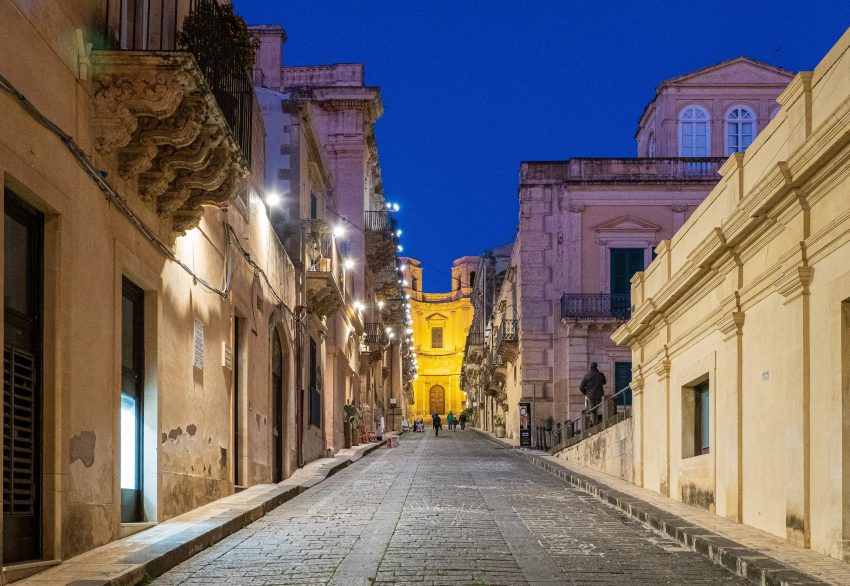
Via Corrado Nicolaci is historically significant less for ancient fabric and more for what it represents: the aristocratic heart of Noto’s Baroque identity, famously lined with noble façades and balconies. It’s also the setting for Noto’s Infiorata, a flower-carpet festival that began in Noto in the 1980s and became the city’s signature annual spectacle.
The Infiorata context matters because it changes how you read the street: for one weekend (typically in May), the roadway becomes a temporary artwork, with large-scale petal mosaics replacing stone as the “surface” everyone comes to see. Coverage of the event ties it to older Italian Catholic flower-carpet traditions while emphasising Noto’s modern revival and local creativity.
Outside festival time, what to see is the street itself as an architectural corridor, especially the sightlines toward Palazzo Nicolaci and the concentration of decorative details. Walk slowly, look up more than you look ahead, and treat it as a place where Noto’s Baroque craftsmanship is densest rather than grandest.
Location: Via Corrado Nicolaci, 96017 Noto SR, Italy | Hours: 24 Hours. | Price: Free.
11. Palazzo Nicolaci
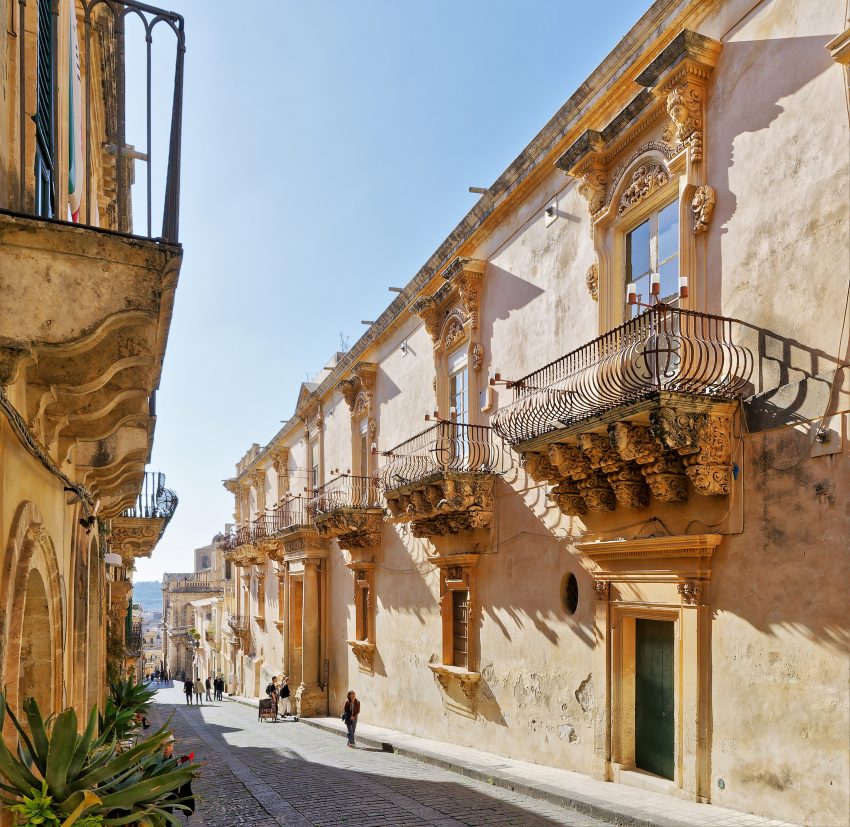
Palazzo Nicolaci (often associated with the Princes of Villadorata) is one of Noto’s best-known noble residences and a strong symbol of the city’s 18th-century aristocratic culture. Official tourism sources describe an extensive palace with construction beginning in 1720 and ending in 1765, and associate the design with Rosario Gagliardi, which places it squarely in the era when Noto’s rebuilt elite were investing heavily in urban display.
The “what to see” is very specific here: the palace’s famous balconies and their sculptural supports, which turn a functional architectural element into a kind of stone theatre. Even if you don’t go inside, the exterior details explain why this building is repeatedly singled out in discussions of Noto’s late Baroque flourish.
If the interior is accessible when you visit, approach it as a glimpse into how a leading family staged status through rooms, circulation, and ornament, rather than as a single-masterpiece museum stop. The palace is most satisfying when you connect it to the street outside: step back onto Via Corrado Nicolaci afterwards and you’ll notice how the building and the street effectively “perform” together.
Location: Via Corrado Nicolaci, 20, 96017 Noto SR, Italy | Hours: Daily: 10:00–13:00 & 15:00–19:00. | Price: Adults: €4. | Website
12. Scalinata Mariannina Coffa
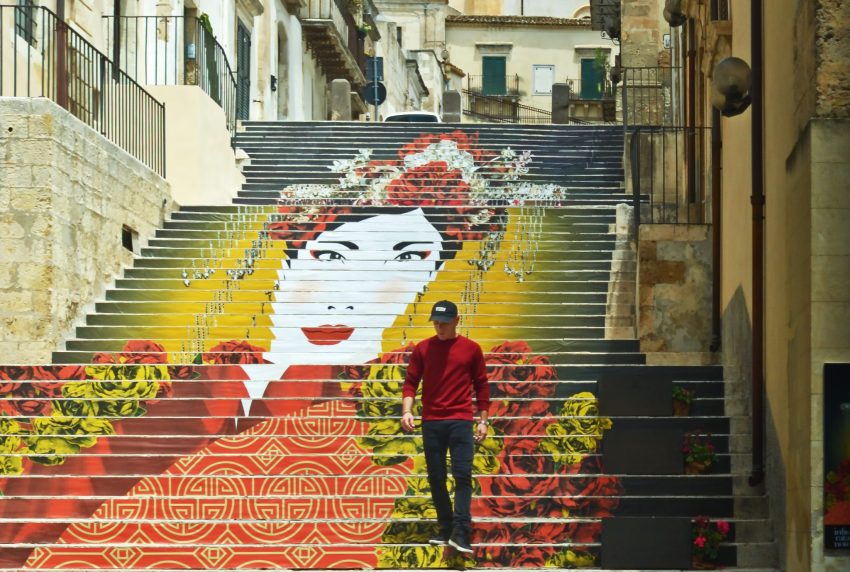
The Scalinata Mariannina Coffa is a well-known staircase in Noto that has become associated with contemporary, temporary street art rather than the 18th-century Baroque architecture the city is famous for. It takes its name from Mariannina Coffa Caruso, a 19th-century poet born in Noto (1841–1878), who is remembered locally as a notable literary figure from the town.
What makes the staircase worth seeking out is that it is frequently redecorated with large-scale painted or decorative themes on the risers, designed to be viewed from below (and photographed) without being walked on as “art.” Multiple travel sources note that the designs change over time and are often linked to the city’s wider creative events calendar, so the exact imagery you see can be different from what appears in older photos.
On site, the main “what to see” is the staircase as an evolving canvas: stand at the base to take in the full composition, then look at how it sits within the surrounding lanes and stone façades. Treat it as a quick, visual stop rather than a monument with a fixed interior visit; its appeal is the contrast between Noto’s historic fabric and the deliberately modern, playful interventions on the steps.
Location: Via Mariannina Coffa, 8-3, 96017 Noto SR, Italy | Hours: 24 Hours. | Price: Free.

Moira & Andy
Hey! We're Moira & Andy. From hiking the Camino to trips around Europe in Bert our campervan — we've been traveling together since retirement in 2020!
This website uses affiliate links which earn a small commission at no additional cost to you.
Walking Tour Summary
Distance: 1.5 km
Sites: 12