Self-Guided Walking Tour of Linz (+ Maps!)
This website uses affiliate links which earn a small commission at no additional cost to you.
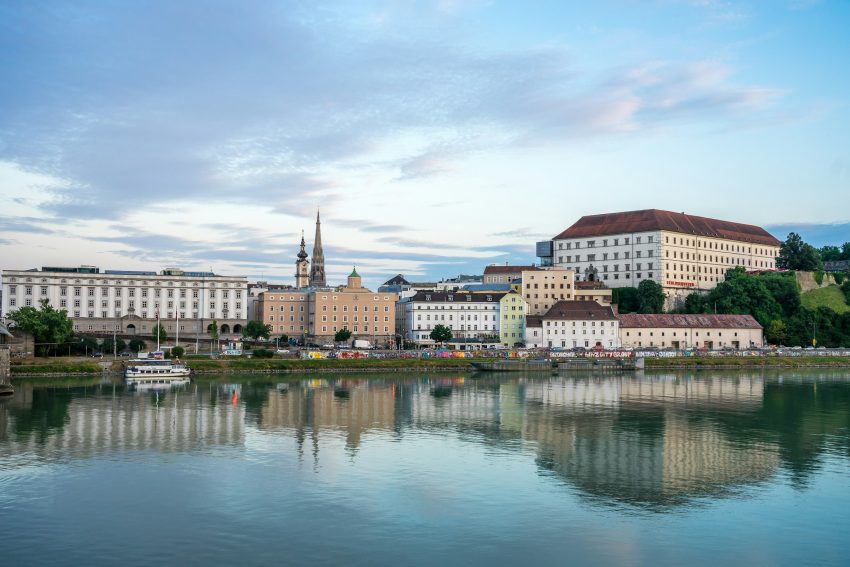
Linz is compact, creative, and easy to navigate on foot, which makes it ideal for a self-guided day out. This route links the historic core with the Danube riverfront and a few of the city's headline cultural stops, so you can cover a lot without feeling rushed.
You'll tick off some of the best things to see in Linz in a logical order: landmark squares, churches, viewpoints, and the modern museums that give the city its contemporary edge. Along the way, you'll also pass plenty of cafés and bakeries, so it's simple to build in breaks whenever you feel like it.
Because it’s self-guided, you can adapt the pace to suit you. Start early for quieter streets, sleep in and lean into coffee stops, or break the walk into two halves with a long lunch in the Old Town.
Table of Contents
- How to get to Linz
- A Short History of Linz
- Linz in the Roman and Early Medieval Period
- Linz in the Late Middle Ages and Early Modern Era
- Linz in the Baroque Age and the Rise of Monumental Landmarks
- Linz in the Industrial Age and the Danube as a Working Corridor
- Linz in the 20th Century and the City’s Cultural Repositioning
- Linz Today as a Danube City of Art, Music, and Technology
- Where to Stay in Linz
- Your Self-Guided Walking Tour of Linz
How to get to Linz
By Air: Linz Airport (LNZ) is the closest option and is a short transfer from the city, while Vienna Airport is the main international gateway with frequent onward connections. Depending on your flight, it can be easiest to fly into Vienna and continue by rail, especially if you're combining Linz with other Austrian cities. For the best deals and a seamless booking experience, check out these flights to Linz on Booking.com.
By Train: Linz Hauptbahnhof is a major stop on Austria's west-east rail corridor, with frequent services linking Linz with Vienna and Salzburg and easy onward connections elsewhere. The station is well connected to the centre by tram and taxi, so you can arrive and be sightseeing quickly without needing a car. You can easily check timetables and book train tickets through the ÖBB (Austrian Federal Railways) website. However, for a smoother experience, we recommend using Omio, which simplifies the booking process and lets you compare routes, prices, and departure times all in one place.
By Car: Driving is straightforward via the A1 (West Autobahn), with good access to central car parks and hotels that offer garages. If you’re arriving with a car, consider choosing accommodation with parking and then doing the walking tour entirely on foot or by tram to avoid city-centre traffic. If you are looking to rent a car in Austria I recommend having a look at Discover Cars, first, as they compare prices and review multiple car rental agencies for you.
By Bus: Long-distance buses can be useful for budget routes from nearby cities, typically arriving at or near the main station area, which keeps you close to public transport for the final hop into the centre. Once you’re in town, you won’t need a car to follow the route.
How to get around the city: Linz is very walkable, and the tram network is excellent for quick hops (especially if you're staying outside the core or want to swap a long riverside stretch for a short ride). Taxis are easy to use for late-night returns, and cycling is a good option along the Danube paths if you want to add an extra loop beyond the main tour.
A Short History of Linz
Linz in the Roman and Early Medieval Period
Linz grew in importance early as a strategic river settlement on the Danube, where movement of goods and people shaped the town's role long before it looked like a modern city. That enduring “river city” identity still frames many of today's sights, especially the Danube promenade and the way viewpoints and terraces are oriented toward the water.
Linz in the Late Middle Ages and Early Modern Era
As Linz developed into a regional centre, wealth and civic ambition began to show in its public spaces and prominent buildings. Places such as the Hauptplatz and the Altes Rathaus reflect a city investing in trade, administration, and representation, while churches and monastic sites gained influence as both spiritual and social anchors.
Linz in the Baroque Age and the Rise of Monumental Landmarks
In the Baroque era, Linz’s skyline and ceremonial spaces became more dramatic and more deliberately “staged,” which is why columns, façades, and grand interiors feature so strongly in a city walk today. Landmarks like the Trinity Column sit in the tradition of public monuments that signalled faith, civic confidence, and resilience through turbulent times, and they remain natural focal points on a walking route.
Linz in the Industrial Age and the Danube as a Working Corridor
Industrialisation reinforced Linz’s identity as a place of production and movement, with the Danube acting as an economic artery rather than just a scenic backdrop. This layer of history helps explain the contrasts you see on foot: historic squares and churches set against infrastructure, broad traffic corridors, and modern cultural venues that later reimagined parts of the city.
Linz in the 20th Century and the City’s Cultural Repositioning
The 20th century left deep marks on Linz, and the city's post-war decades involved rebuilding, rethinking, and redefining what it wanted to be known for. Over time, Linz leaned hard into culture, music, and technology, which is why contemporary institutions and performance venues feel like central “must-sees” rather than optional add-ons to the Old Town.
Linz Today as a Danube City of Art, Music, and Technology
Modern Linz is shaped by a deliberate blend of heritage and experimentation, and that's exactly what makes a walking tour here interesting. You can move from the Mariendom and older civic spaces to cutting-edge museums and riverfront architecture within a short stroll, seeing how the city's past influenced what it chose to build, preserve, and celebrate.
Where to Stay in Linz
To make the most of visiting Linz and this walking tour then you consider stay overnight at the centre, so you can start early, take long café breaks, and enjoy the evening atmosphere without worrying about transport. For maximum convenience, the Innere Stadt (Old Town) is the best base: you'll be steps from the Hauptplatz and the riverside, with restaurants and sights right outside your door. Good options here include Motel One Linz-Hauptplatz and Austria Classic Hotel Wolfinger.
If you want a central location with quick access to shopping streets and an easy walk into the Old Town, aim for the area around Landstraße and the city centre grid near Hessenplatz. This is a practical choice if you like being close to tram lines and prefer a slightly more “city hotel” feel while still staying walkable for the route. Consider Park Inn by Radisson Linz or Hotel Schillerpark Linz, a member of Radisson Individuals.
For riverside views and a calmer pace between walking days, the Danube promenade area is ideal, especially if you like an evening stroll along the water and easy access to viewpoints across the river. It’s still walkable into the historic centre, but the setting feels more open and scenic. A strong pick here is ARCOTEL Nike Linz, and for a sleek, design-forward stay close to major cultural stops across the Danube, look at Arte Hotel Linz.
If you prefer a quieter, more refined base with a “landmark on the doorstep” feel, stay near the cathedral quarter around Domplatz. This puts you close to the Mariendom and keeps you within easy reach of the tour, while feeling slightly removed from the busiest parts of the centre at night. A standout option is Hotel Am Domplatz.
Your Self-Guided Walking Tour of Linz
Explore Linz on foot with our walking tour map guiding you from stop to stop as you uncover the city's grand squares, riverside views, and a mix of historic landmarks and modern culture. Since this is a self-guided walking tour, you can set your own pace: linger where you want, skip anything that doesn't interest you, and build in coffee stops whenever the mood strikes.
1. Trinity Column
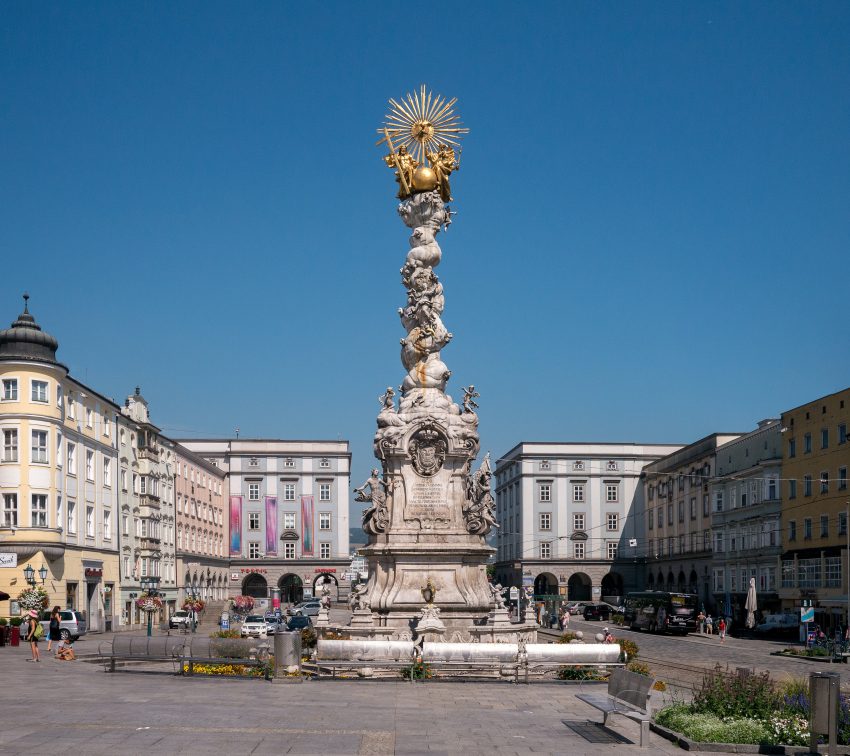
The Trinity Column on Linz’s Hauptplatz is a classic Central European Baroque plague column tradition, completed in 1723 and rising about 20 metres. It was commissioned as a votive monument in a period when cities across the region expressed collective memory of crisis—particularly plague—through highly symbolic public sculpture.
Historically, its meaning is inseparable from its setting: placed at the heart of the market square, it turns a commercial space into a civic-religious statement. The column’s iconography and vertical emphasis were designed to be legible from across the square, reinforcing the idea that the city’s wellbeing was a shared responsibility—and a shared vulnerability.
What to see up close: the sculptural program is the point—walk around it slowly and read it as a 360-degree monument rather than a single “front.” It’s also one of the best fixed reference points for understanding the Hauptplatz’s proportions and the way Linz’s old center is organized around a few dominant historic markers.
Location: Hauptpl., 4020 Linz, Austria | Hours: 24 Hours. | Price: Free. | Website

2. Altes Rathaus
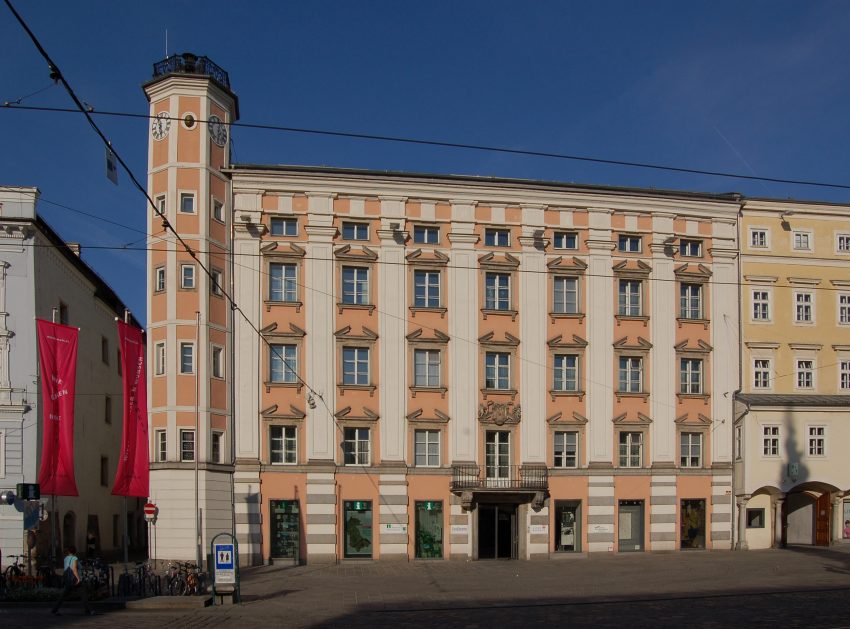
Linz’s Altes Rathaus (Old Town Hall) has long been tied to the city’s civic identity; tradition places a town hall on this site from as early as 1415. The building you see today is the result of rebuilding and expansion across centuries rather than a single unified “moment” of construction.
A key turning point came after the town fire of 1509, when the hall was redesigned (often attributed to “Master Christoph” in local accounts). Later, in 1658/1659, it was extended and given the Baroque façade that largely defines its outward character—an architectural statement that matched Linz’s growing administrative confidence.
What to see when you’re there: focus on the exterior composition and how it addresses the Hauptplatz, then look for the characteristic arcaded-courtyard tradition common in the old-town fabric. The building’s value as a sight is partly visual (its façade and urban placement) and partly contextual—it anchors the idea of Linz as a self-governing city with deep municipal continuity.
Location: Hauptpl. 1 - 5, 4041 Linz, Austria | Hours: Daily: 10:00–17:00. | Price: Free. | Website
3. Hauptplatz
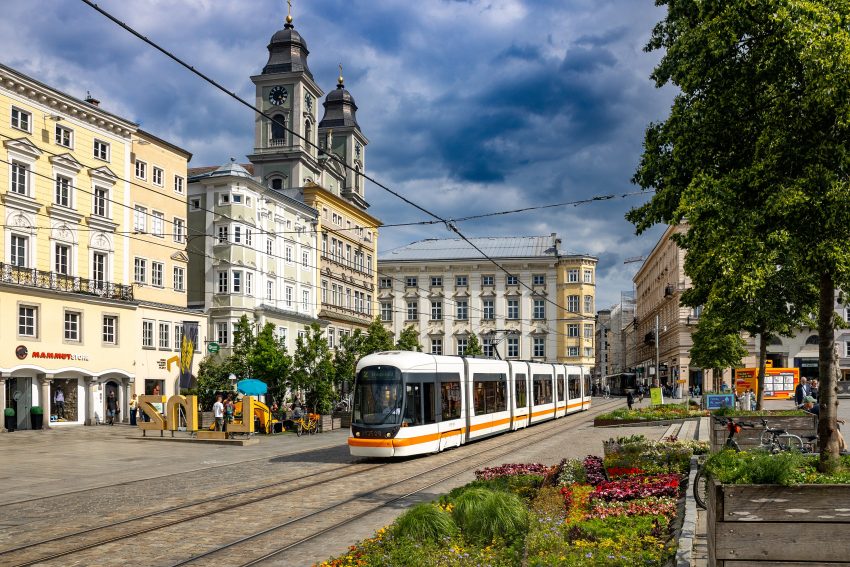
Linz’s Hauptplatz has been the city’s central market square since the 13th century, and its scale still reflects that original civic purpose. At roughly 13,200 m², it’s often cited as one of the largest urban squares of its kind in Europe, shaped by centuries of trade, public announcements, and ceremonial life.
The square’s most prominent historic centerpiece is the Baroque Trinity Column, completed in 1723, which was raised as a votive monument associated with the disasters the city endured (including plague and war) and as an appeal for protection. Around it, the enclosing rows of buildings read like a condensed lesson in Linz’s old-town development, with façades that range from restrained civic architecture to more decorative Baroque and later treatments.
What to see on-site is largely about orientation and close-looking: take in the spatial drama of the square itself, then pick out the major landmarks at its edges, including the Old Town Hall and (at the southern end) the Old Cathedral. Even without entering anything, the Hauptplatz works as a “map” of the historic center—best appreciated by walking its perimeter and pausing at the column to understand how the city staged public life here.
Location: Hauptpl., 4020 Linz, Austria | Hours: 24 Hours. | Price: Free.
4. Alter Dom
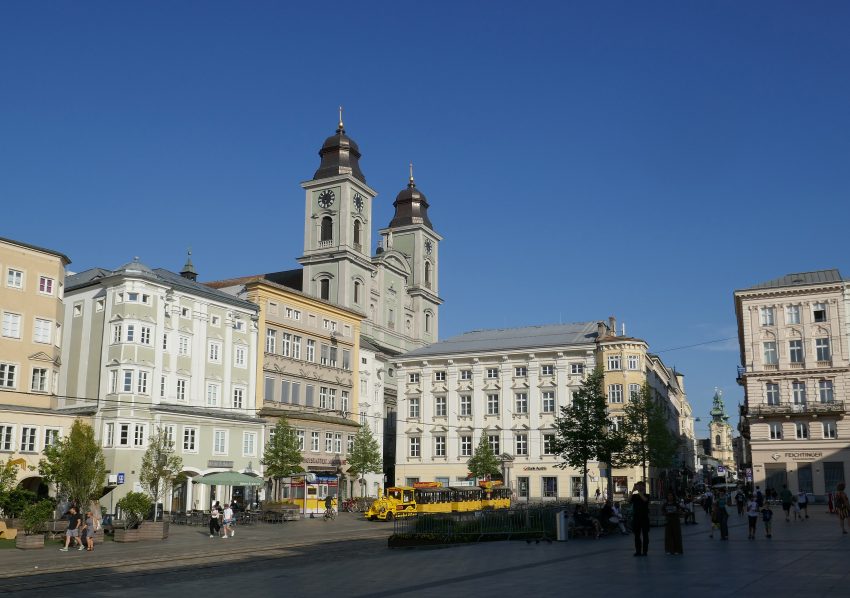
Linz’s Alter Dom (Old Cathedral), also known as the Ignatius Church or Jesuit Church, was built by the Jesuits in the late 17th century (commonly dated 1669–1683) in Baroque style, associated with plans by Pietro Francesco Carlone. It began as a Jesuit church connected to the Jesuit college presence near the Hauptplatz, and its dedication to St. Ignatius of Loyola makes that origin explicit.
Its most distinctive historical role came later: from 1785 to 1909 it served as the cathedral of the Diocese of Linz, which is why it’s remembered as the “old” cathedral after the Mariendom took over the cathedral function. This change of status captures a broader shift in Linz’s ecclesiastical organization during the late Enlightenment/early modern administrative period.
What to see on-site: look for the Baroque character (spatial unity, chapel rhythm, and altar focus) and then connect it to its musical history—Anton Bruckner is associated with the cathedral as organist in the mid-19th century, and the organ itself is singled out in local descriptions. It’s one of the clearest places in central Linz where architecture, institutional history, and music heritage intersect.
Location: Domgasse 3, 4020 Linz, Austria | Hours: Daily: 08:00–18:00. | Price: Free; donations appreciated. | Website
5. Ursulinenkirche
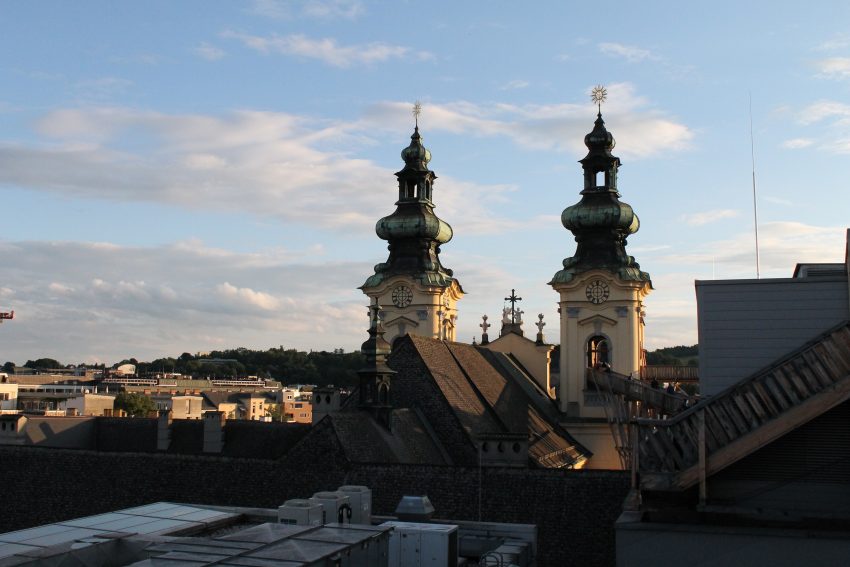
The Ursuline Church of St. Michael (Ursulinenkirche) in Linz was built for the Ursulines in phases across the 18th century, commonly dated from 1736 to 1772, with dedication in 1757. Architect Johann Haslinger is credited with the design, and the church’s late Baroque façade and twin-tower composition place it firmly in the city’s high-Baroque building story.
Its history is also about institutional change: the church is tied to the former Ursuline convent complex, and the site’s later reuse as a cultural centre and concert venue (not just a strictly monastic setting) speaks to how religious buildings in Central Europe often gained second lives as civic-cultural infrastructure.
What to see when you’re there: read the exterior first—the curved façade and towers are part of the statement—then, inside, look for the Baroque program (altars and artworks are specifically associated with artists of the Altomonte circle in standard descriptions). The building works best as a concentrated example of Linz’s 18th-century artistic and architectural taste.
Location: Landstraße 31, 4020 Linz, Austria | Hours: Monday – Sunday: 08:00–19:00. | Price: Free. | Website
6. OK Center for Contemporary Art
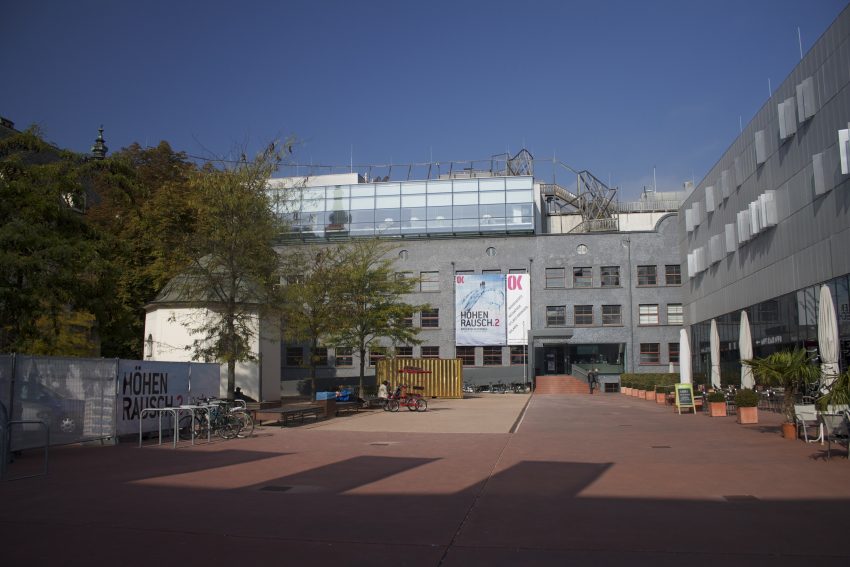
The OK Center for Contemporary Art (often described as OK / Offenes Kulturhaus Oberösterreich) is a state-run contemporary art institution in Linz with a clear mandate as an exhibition and production venue for current art. Its institutional roots go back to the late 1980s, and the building was extensively converted from 1994 to 1998 so it could function as a modern exhibition/production house; it then reopened in April 1998.
Programmatically, OK is known for installation-heavy and media-oriented contemporary art, alongside performance and projects that engage explicitly with socio-political themes. In other words, it’s not just a “hang pictures on walls” venue: it’s set up as a lab-like space where complex, often technically demanding works can be produced and shown.
What to see when you’re there depends on the current program, but the best approach is to treat it as a rotating exhibition house: go for whatever temporary shows are on, then pay attention to how the building’s spaces shape the art (the venue is regularly described as having an unusually varied spatial structure that supports contemporary formats). If you’re also interested in how Linz clusters cultural institutions, OK sits within the broader Kulturquartier context, so the immediate surroundings tend to reinforce that “contemporary culture campus” feel rather than a standalone museum visit.
Location: OK-Platz 1, 4020 Linz, Austria | Hours: Tuesday – Sunday: 10:00–18:00. Closed on Monday. | Price: Check official website. | Website
7. Landstrasse
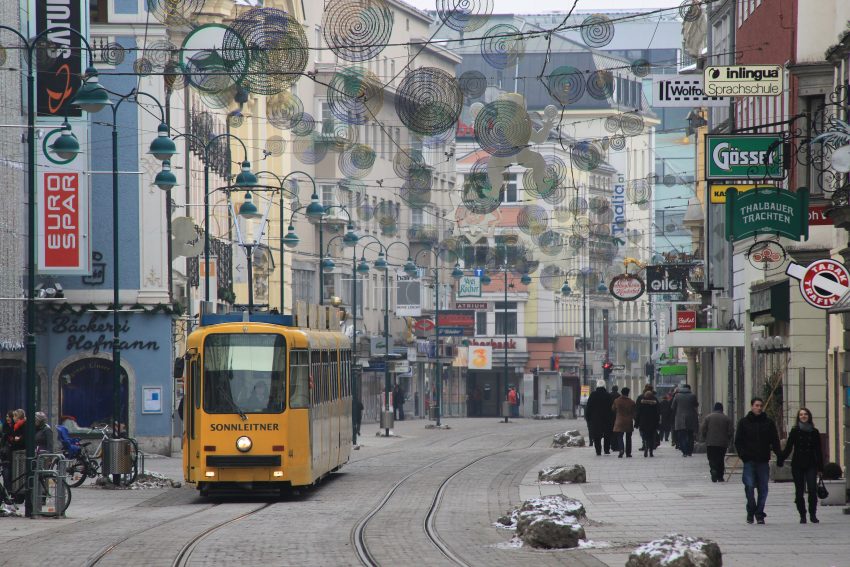
Linz’s Landstraße is more than a shopping street; it’s a historical axis that has been discussed in sources as early as the medieval period (commonly linked to the 13th century in local summaries). Its longevity matters because it shows how movement through the city consolidated into a recognizable “main line” long before modern retail culture existed.
Over time, the street’s function evolved from route and connective tissue into a commercial spine, mirroring Linz’s urban growth and economic change. Contemporary descriptions still frame it as one of Austria’s best-known and most frequented shopping streets, which is essentially the modern expression of an old pattern: the primary street draws trade, people, and civic energy.
What to see when there: the interest is partly architectural—how the street “reads” as a continuous urban room—and partly cultural, watching how Linz’s everyday life flows through it. Use it to notice transitions: where it opens into squares, where historic buildings interrupt the retail rhythm, and how older city structure survives under modern signage and storefronts.
Location: Landstraße, 4020 Linz, Austria | Hours: 24 Hours. | Price: Free.
8. Mariendom
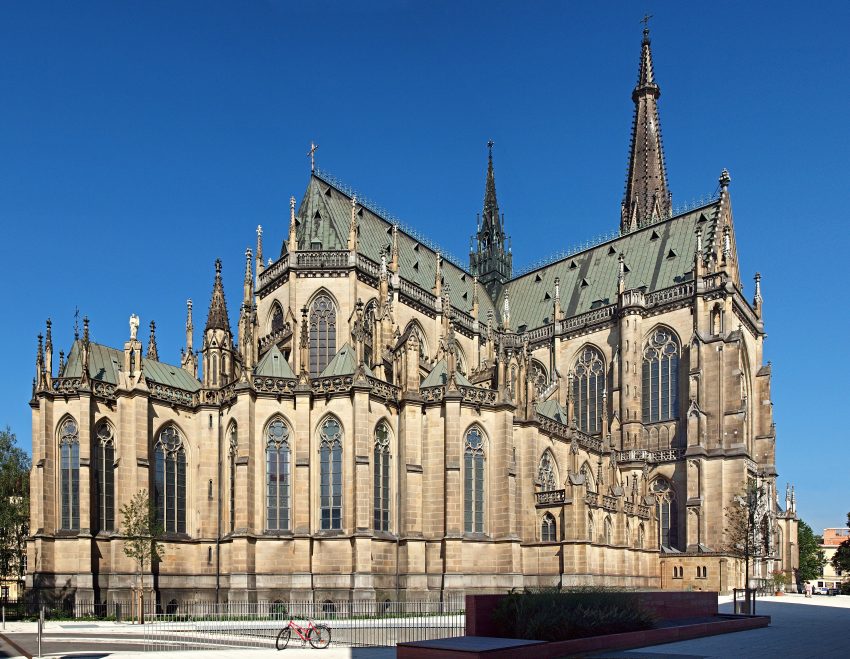
Linz’s New Cathedral, commonly called the Mariendom (Cathedral of the Immaculate Conception), is a flagship of 19th–early 20th century ecclesiastical ambition in Gothic Revival form. Planning began in the mid-19th century, construction started in 1862, and the building was completed in 1924—an unusually long timeline that mirrors the scale of the project and the era’s changing constraints.
Historically, it is often described as the largest church building in Austria, and its design choices reflect both local pride and broader European revival styles. The cathedral is also well known for its stained-glass windows, including a “Linz Window” that depicts aspects of the city’s history, and for later layers such as modern replacement windows after WWII damage.
What to see when you’re there: give the stained glass real time (it’s one of the building’s defining features), then step back to read the interior volume—the point is the sense of scale and verticality. Even if you’re not focused on religious architecture, the Mariendom is a clear statement of how Linz positioned itself culturally in the modern era through monumental building.
Location: Domplatz 1, 4020 Linz, Austria | Hours: Monday – Saturday: 08:00–19:00. Sunday: 08:00–19:15. | Price: Free; donations appreciated. | Website
9. Landhaus
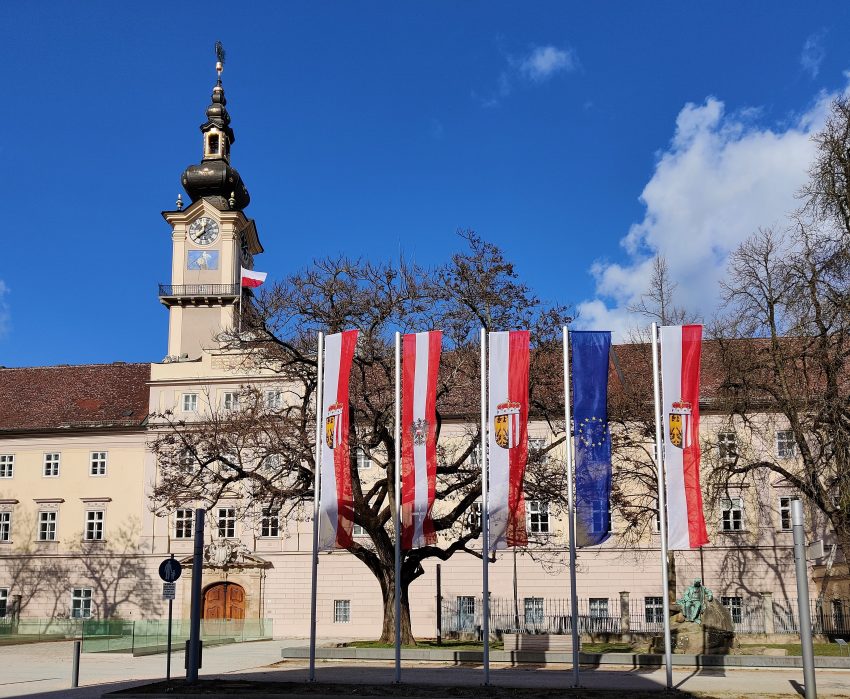
The Linzer Landhaus is a major Renaissance-era civic complex, erected in the 16th century on the site of a former Minorite monastery. Its later identity has been strongly administrative: it is associated with the provincial government of Upper Austria and the institutions that sit at the core of regional governance.
Historically, buildings like this reflect a shift in power from ecclesiastical dominance to more formalized territorial administration, expressed through architecture: ordered courtyards, arcades, and representational façades that signal stability and authority. The Landhaus’s long use as a governmental seat makes it less a “monument to one ruler” and more a monument to institutional continuity in Linz.
What to see on-site: the Renaissance character is best appreciated through the spatial experience—courtyard proportions, arcaded walks, and the overall composure of the complex. Even without deep access to interiors, it communicates the shift toward secular governance architecture that shaped many Central European cities in the early modern period.
Location: Landhausplatz 1, 4020 Linz, Austria | Hours: Daily: 10:00–17:00. | Price: Free. | Website
10. Martinskirche
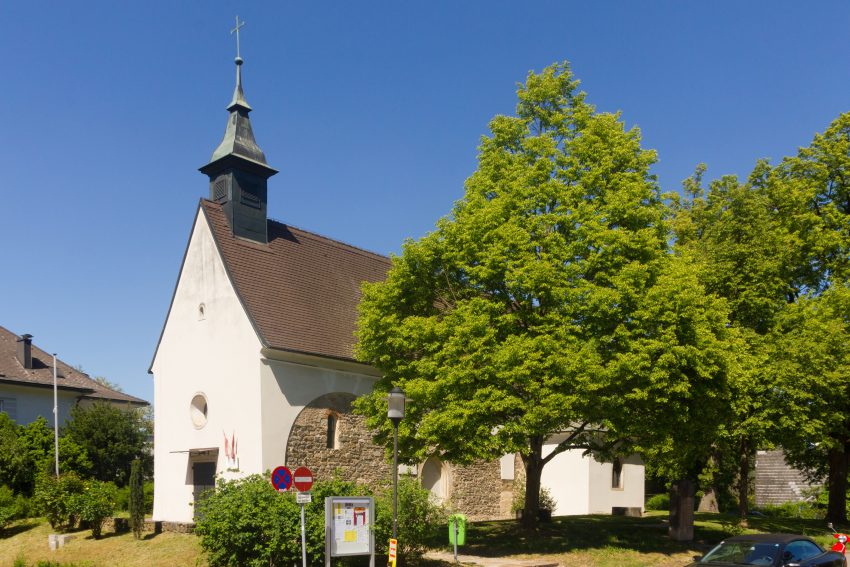
St. Martin’s Church (Martinskirche) is often described as one of Austria’s oldest churches, and local accounts connect it to more than a millennium of Linz’s religious and urban history. Its significance is partly chronological and partly archaeological: the church preserves tangible traces that point back to Roman-era presence in the area.
What makes its history unusually “visible” is what survives inside: exposed Roman inscriptions and even a Roman kiln are highlighted as features, turning a church visit into a layered encounter with different eras rather than a single period style statement. That overlap—Christian worship space containing older material culture—captures how Linz developed over earlier settlement footprints.
What to see when there: prioritize the interior details that connect to antiquity (inscriptions, kiln) and then read the building’s modest exterior in relation to its age and setting. It’s not only a devotional space; it’s also a compact historical document that rewards slow looking rather than quick “tick-box” sightseeing.
Location: 4020 Linz, Austria | Hours: Friday: 14:00–16:00. Sunday: 09:45–11:00. | Price: Free; donations appreciated. | Website
11. Linz Castle
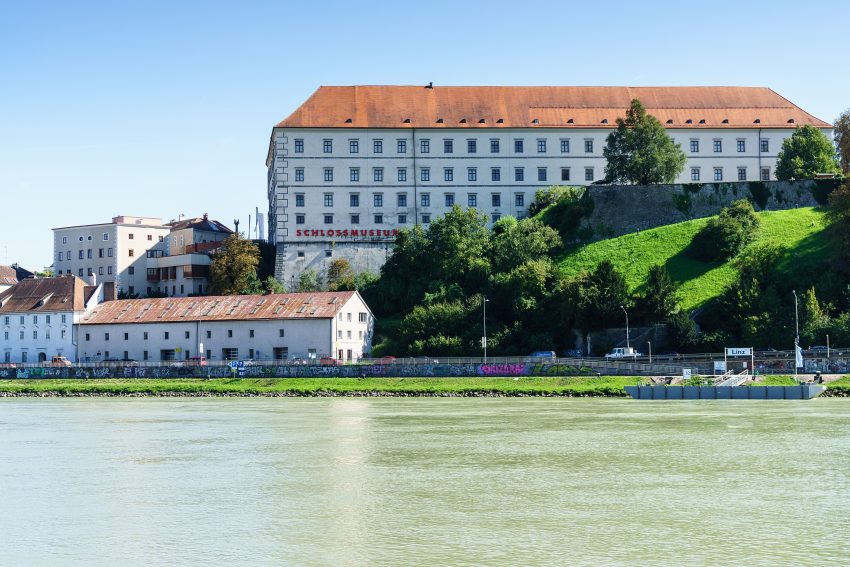
Linz Castle (Linzer Schloss) sits above the old town on a site with very deep roots: it was built where the Roman fort of Lentia once stood, and documentary references to the castle go back to at least 799. Over the medieval period it passed through various hands tied to regional power structures, reflecting Linz’s importance as both settlement and strategic node.
In the late 15th century, the complex was significantly reshaped; under Emperor Frederick III it was converted toward a palatial residence, and it served as his residence in Linz for several years (late 1480s into the early 1490s). Later centuries layered on more change: fortification work, damage in the great city fire of 1800, and shifts in function that included military and carceral uses before modern restoration and museum use.
What to see today is closely tied to its current role: the Schlossmuseum (Castle Museum) uses the site to present Upper Austria’s cultural, natural, and technical history, with permanent displays and major temporary exhibitions. Even if your focus is the building itself, the courtyards and the way the castle commands views over the old town are central parts of the experience—it’s architecture, history, and setting in one place.
Location: Schlossberg 1, 4020 Linz, Austria | Hours: Tuesday – Sunday: 10:00–18:00. Closed on Monday. | Price: Adults: €6.50; Students: €3. | Website

Moira & Andy
Hey! We're Moira & Andy. From hiking the Camino to trips around Europe in Bert our campervan — we've been traveling together since retirement in 2020!
This website uses affiliate links which earn a small commission at no additional cost to you.
Walking Tour Summary
Distance: 4 km
Sites: 11