Self-Guided Walking Tour of Korčula (+ Maps!)
This website uses affiliate links which earn a small commission at no additional cost to you.
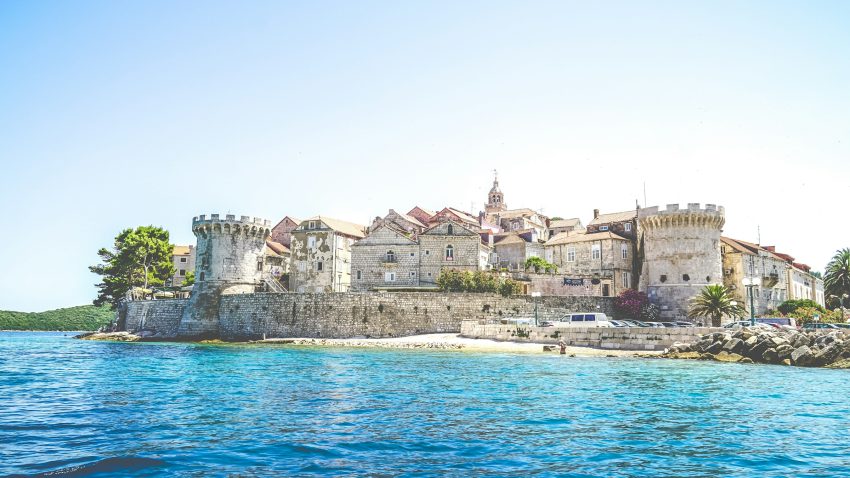
Korčula is the kind of place that rewards slow travel. Its Old Town is compact, atmospheric, and built for wandering, with stone lanes that twist between honey-coloured houses, little squares, and viewpoints over the Adriatic. A self-guided route works particularly well here because you can follow a logical loop while still letting curiosity pull you down side streets.
On this route, you’ll tick off many of the best things to see in Korčula without it feeling rushed or over-planned. Expect a mix of fortifications, elegant civic buildings, and churches that anchor the town’s history, along with small moments that make the walk memorable: sea breezes at the walls, bells echoing between rooftops, and café terraces tucked into quiet corners.
Because the distances are short, you can treat this walk as a flexible framework rather than a strict schedule. Start early for softer light and fewer people, or go later and time it around sunset viewpoints. Either way, Korčula’s Old Town has a natural flow that makes it easy to keep discovering something new just around the next bend.
How to get to Korčula
By Air: The most practical approach is to fly into Dubrovnik Airport or Split Airport, then connect onward by a combination of bus or taxi to the port and a catamaran or ferry to Korčula. In summer, fast catamarans often make this straightforward, while in shoulder season you may need a slower ferry or an extra connection via nearby islands. If you're aiming to arrive with minimal hassle, align your flight so you reach the port with plenty of buffer for maritime timetables. For the best deals and a seamless booking experience, check out these flights to Korcula on Booking.com.
By Train: Croatia's coast and islands aren't well-served by rail in the way inland routes are, so trains are generally not the primary option for reaching Korčula. If you're travelling by train from elsewhere in Europe, you'll typically use rail to reach a major hub (often Zagreb or Split) and then switch to coach and ferry connections for the final leg. Plan the rail portion to land you in a port city early enough to comfortably catch a same-day sailing. Train schedules and bookings can be found on Omio.
By Car: Driving is a good option if you want maximum flexibility, especially if you’re combining Korčula with a Dalmatian coast road trip. You’ll drive to a suitable crossing point and take a vehicle ferry onto the island, then continue to Korčula Town. In peak season, queues can be significant, so it’s wise to arrive early, carry water, and treat the ferry as part of the journey rather than an afterthought.
By Bus: Long-distance buses are common along the coast and can be an efficient way to reach a departure port if you’re not driving. Depending on the route and season, you may be able to combine coach travel with a catamaran connection, or use a bus to reach a port city and then switch to a ferry. The main thing is to check the final bus arrival time against the last sailing of the day, as missed connections can mean an overnight stop elsewhere.
How to get around the city: Korčula Town’s Old Town is best explored entirely on foot, and that’s exactly what this walking tour is designed for. The lanes are narrow, often stepped, and not suited to cars, so walking is both the simplest and the most enjoyable way to move around. If you’re staying outside the historic centre, you can usually reach the Old Town by a short walk, local taxi, or seasonal shuttle options, then do the full route on foot once inside the walls.
A Short History of Korčula
Korčula’s Earliest Foundations and Maritime Beginnings
Korčula’s story is inseparable from the sea: trade, shipbuilding, and strategic positioning shaped the town’s earliest growth and identity. Over time, settlement consolidated into a defensible urban core, and the logic of protection began to influence the street plan and building patterns you still see today. The enduring presence of stone architecture hints at a community that invested early in permanence and security, not just seasonal coastal life.
Medieval Korčula and the Rise of Fortified Urban Life
As threats and rivalries grew across the Adriatic, Korčula’s medieval development leaned heavily into defence and controlled access. The Korčula Town Walls and key entry points such as the Land Gate reflect the town’s need to regulate movement, safeguard wealth, and withstand attack. Towers that now feel picturesque-like Revelin Tower and Kula Zakerjan-were once practical military assets, designed to deter incursions and give defenders commanding views over approaches by land and sea.
Korčula Under Venetian Influence and Adriatic Power Politics
For centuries, Venetian influence across the Adriatic left a deep imprint on coastal towns, and Korčula’s built fabric reflects that era’s priorities: order, civic display, and maritime control. Defensive upgrades and maintained fortifications supported the town’s role in broader regional networks, while religious and civic buildings signalled stability and cultural confidence. Landmarks such as the Korčulanska Katedrala are tied to these periods of patronage and prosperity, when stonecraft, public space, and identity were shaped in step with wider Adriatic politics.
Korčula’s Churches, Civic Identity, and Local Traditions Over Time
As the town matured, daily life revolved around institutions that blended faith, community, and governance. Churches such as Crkva Gospojina and Crkva Svetog Petra show how neighbourhood life, ceremonies, and local identity were anchored in specific sacred spaces, often rebuilt, expanded, or embellished as tastes and fortunes changed. Smaller defensive structures-including Mala Knezeva Kula and Velika Knezeva Kula-also hint at how authority and security were woven into the town’s civic landscape, not separated from it.
Modern Korčula, Cultural Heritage, and the Marko Polo Narrative
In more recent history, Korčula has leaned into its cultural heritage and storytelling, pairing authentic medieval fabric with modern interpretation. The Marko Polo Centar reflects how the town presents its maritime past and identity to visitors today, using exhibitions and viewpoints to connect the Old Town to wider themes of exploration and seafaring. While the experience is now more about discovery than defence, the same walls, towers, and landmark churches continue to shape how Korčula feels-compact, layered, and distinctly historical.
Where to Stay in Korčula
To make the most of visiting Korčula and this walking tour then you consider stay overnight at the centre. Staying within or right beside the Old Town walls means you can start early before day-trippers arrive, take breaks whenever you like, and easily return for sunset viewpoints. Look for accommodation around the central lanes and near the waterfront edge of the Old Town for the easiest access to the Land Gate and the main sights, such as San Teodoro and Lesic Dimitri Palace.
If you want a little more space and a calmer feel while still being walkable to the route, consider the areas just outside the walls where you can reach the Old Town in minutes but enjoy easier luggage access and more modern facilities. This works well if you’re arriving with a car or prefer a beach-adjacent base for mornings or evenings. Options to consider include Aminess Korčula Heritage Hotel and Hotel Liburna.
For longer stays or a more residential vibe, base yourself slightly further along the coastline from the centre where apartments and smaller guesthouses are common, often with terraces and sea views. You’ll still be close enough to walk in for the tour, but you’ll have a quieter setting for downtime and dinner away from the busiest lanes. A couple of solid choices in this style include Port 9 Hotel and Accommodation Drasko.
Your Self-Guided Walking Tour of Korčula
Discover Korčula on foot with our walking tour map guiding you between each stop as you explore its fortified gates, landmark churches, and medieval towers above the sea. As this is a self guided walking tour, you are free to skip places, and take coffee stops when ever you want!
1. Revelin Tower and Land Gate
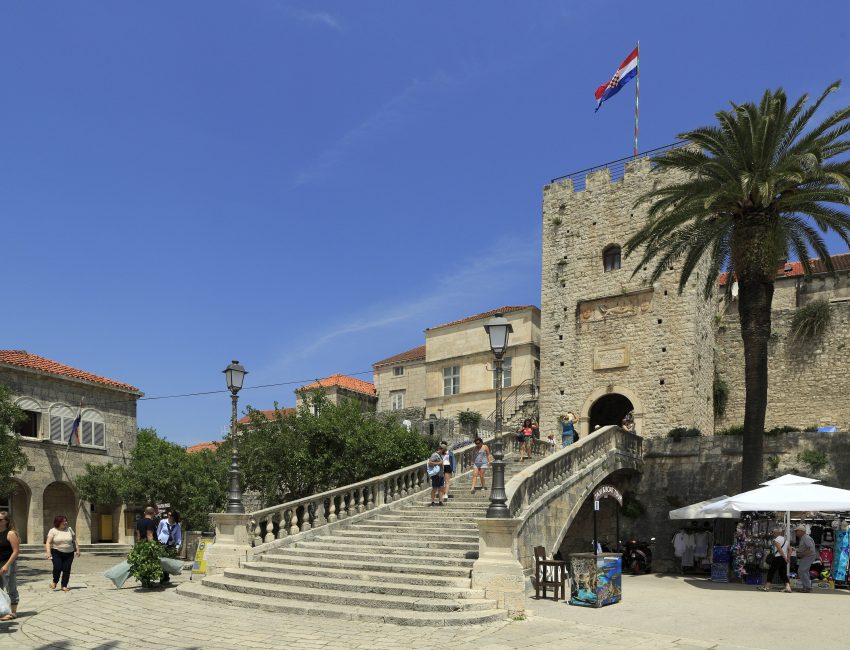
Korčula’s main land entrance is a product of centuries of fortification, shaped heavily during the Venetian period when the town’s defenses were strengthened against maritime rivals and raids. The gate-and-tower complex you see today reflects that layered history: an older medieval core that was later reinforced and expanded as artillery warfare evolved. Approaching from outside the walls, the Land Gate is where you feel the “walled town” logic most clearly—narrow access, heavy stonework, and defensive sightlines designed to control movement into the old town. Look for the Venetian lion relief and other civic or commemorative markers that underline how long Korčula sat within Venetian influence. Once inside, pause and look back: the geometry of the entrance explains how the town protected itself, while the upper levels reward you with elevated views over rooftops and the channel. It’s also one of the best places to appreciate the relationship between the fortifications and the dense street plan behind them.
Location: Ul. Korčulanskih domobrana 6, 20260, Korčula, Croatia | Hours: Daily: 00:00–24:00. | Price: Free; tower access may require a ticket when open. | Website

2. Antun and Stjepan Radić Square
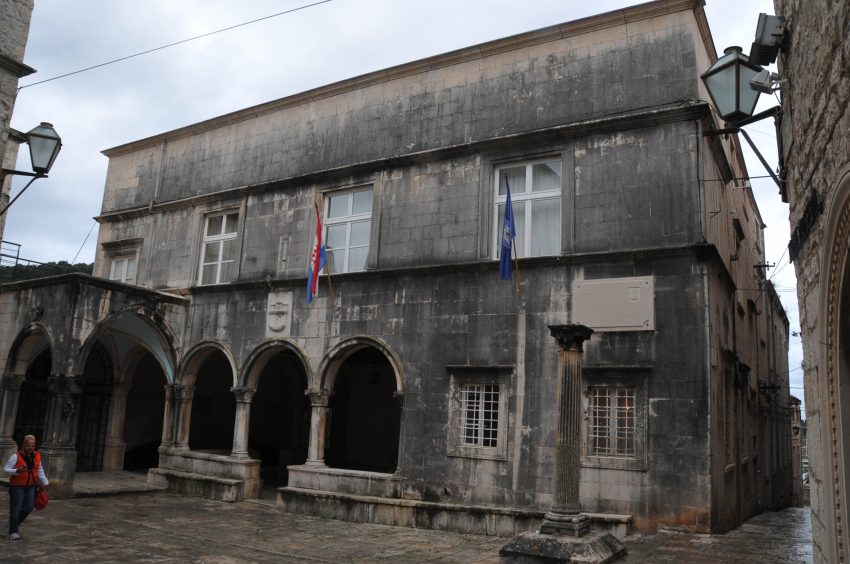
Just inside Korčula Old Town’s main entrance, this small square functions as a historic “threshold” space between the fortified approach and the dense lanes beyond. Its setting is inseparable from the town’s Venetian-era civic layout, where defensive access points fed directly into administrative and religious landmarks. Korčulainfo places it in the heart of the old town and associates it with late-19th-century street-scene photography, which underlines how long it has been a focal point of daily life.
The square is anchored by Korčula’s Town Hall (the municipal building), described as part of the former governor’s palace complex built in the early 16th century under Venetian rule. A nearby inscription and the Renaissance character of the building are often singled out as tangible evidence of that administrative past, when the governor’s office operated right here by the gate-facing frontage. Standing in the square, you can read the old town’s hierarchy at a glance: governance, church, and defenses clustered tightly together.
Directly opposite the Town Hall is St Michael’s Church, documented from the early 15th century and later reworked with a Baroque character (with restoration dated to 1615 in some descriptions). For visitors, the “what to see” is largely about this concentration: pause to take in the church façade and details, then turn to the civic building and note how the space channels movement toward the inner streets. The square’s modern name commemorates Antun and Stjepan Radić—prominent Croatian political figures and brothers—adding a national-historical layer to a setting whose fabric is much older.
| Hours: 24 Hours | Price: Free. | Website
3. Crkva Gospojina
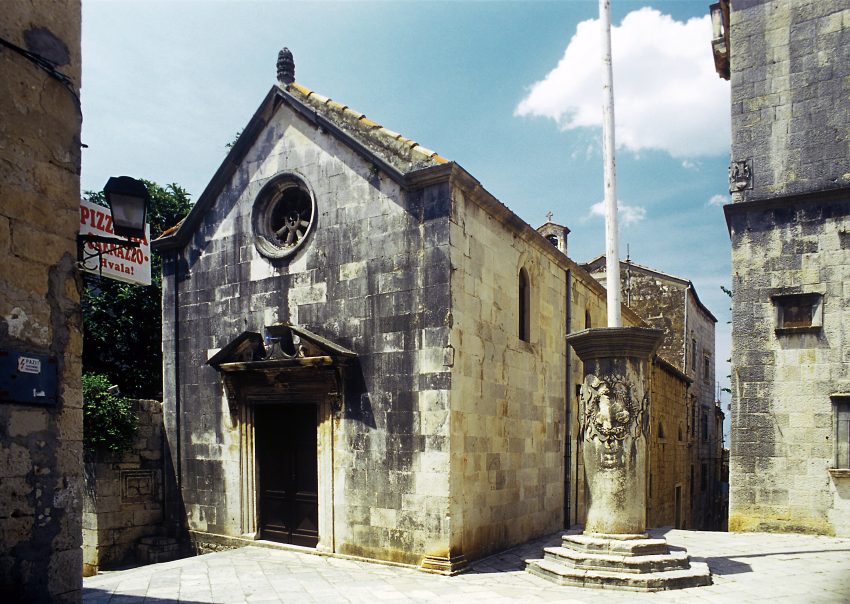
Crkva Gospojina (the Church of Our Lady) was built in the late 15th century, during the same broad era when Korčula’s civic and ecclesiastical architecture took on its distinctive Adriatic-Gothic and Renaissance character. Its position just off the main square area, close to the cathedral precinct, signals its role as a central town church rather than a remote chapel. The exterior is modest compared with the cathedral nearby, but that contrast is part of its appeal: it feels intimate, local, and closely tied to Korčula’s everyday devotional life over generations. Inside, focus on how the space is scaled for a town congregation, and on the kind of details—altars, memorials, and period fittings—that often preserve family and community history. What to see here is partly architectural and partly atmospheric: step in for a quiet break from the busier lanes, then step back out to take in how tightly Korčula’s sacred buildings cluster around the civic heart of the old town. It’s an easy stop that adds texture to the bigger headline sights.
Location: 20260, Korcula Old Town, Korčula, Croatia | Hours: Check official website. | Price: Free; donations appreciated.
4. Korculanska Katedrala
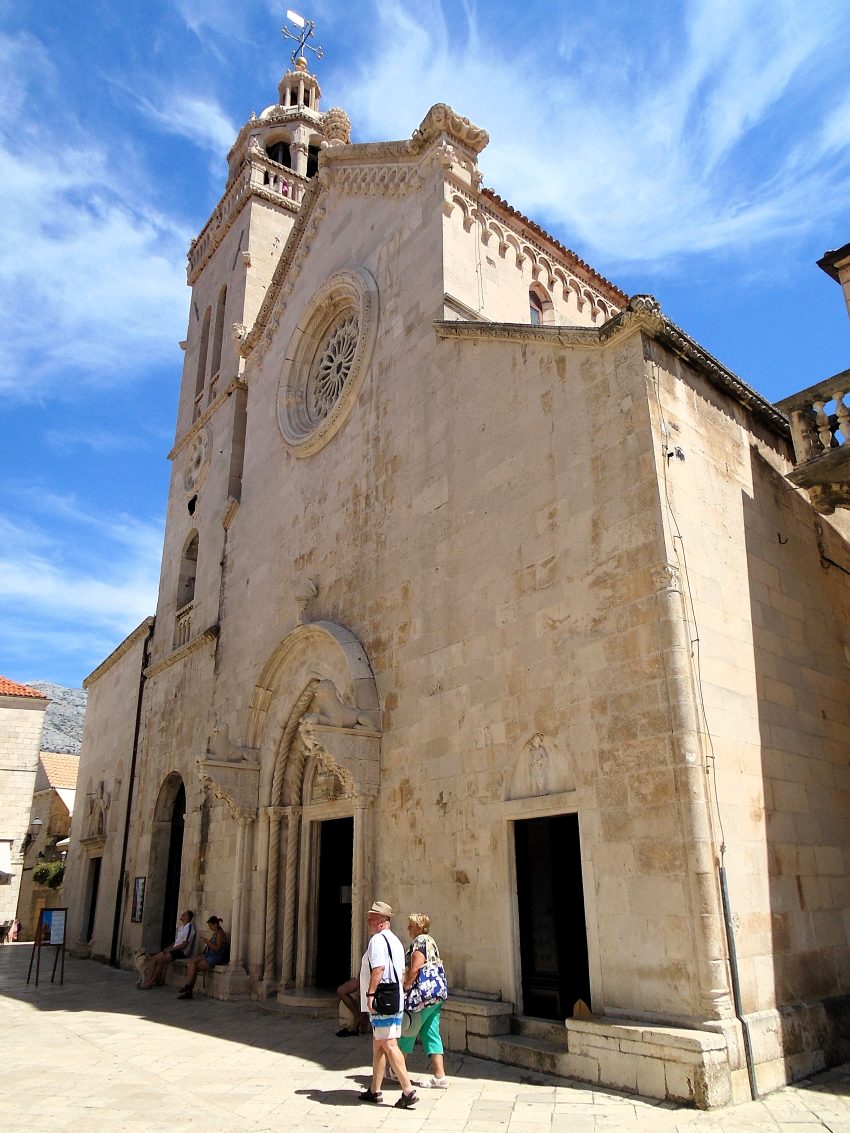
St Mark’s Cathedral dominates the old town’s central space and is one of the clearest expressions of Korčula’s prosperity under Venice, constructed over a long span from the 15th into the 16th century by local masters and visiting craftsmen. Its siting on slightly elevated ground reinforces the symbolic hierarchy you see in many Dalmatian towns: faith and civic identity anchored at the core. Pay close attention to the main portal, attributed to Bonino da Milano, where the sculptural program and craftsmanship set the tone before you even step inside. The interior holds notable works and furnishings associated with the cathedral’s long status as Korčula’s ecclesiastical center, including a famous Tintoretto altarpiece often highlighted by guides and reference works. Beyond the art, the cathedral is a place to read the town’s history in stone: limestone surfaces, Gothic-Renaissance transitions, and later additions that show changing tastes and resources. If you have time, look for side chapels and the way light moves through the space—small details that make the building feel lived-in rather than purely monumental.
Location: 20260, Korcula Old Town, Korčula, Croatia | Hours: Check official website. | Price: Cathedral entry: €3; Bell tower: +€5; Children: free (reported by visitors).
5. Crkva Svetog Petra
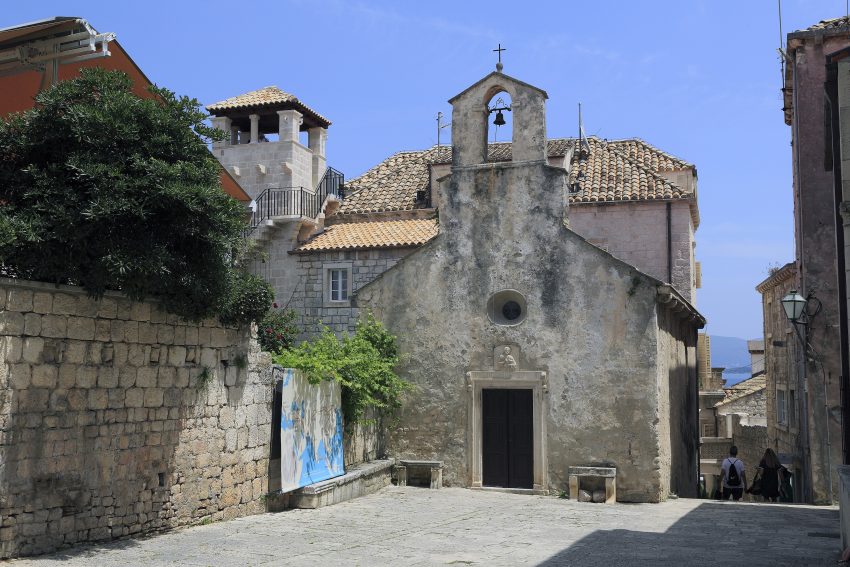
St Peter’s Church is one of Korčula’s older sacred buildings, a small Gothic structure dating to the 14th century and set right beside the cathedral area. Its survival, scale, and placement make it a good example of how medieval Korčula layered churches into compact urban pockets rather than spreading them across wide plazas. The façade detail to look for is the relief of St Peter, associated with Bonino da Milano, which links this small church to the same broader artistic world that shaped the cathedral’s most celebrated stonework. Inside, the atmosphere is typically simple and historic, with features that reward a slower look rather than a quick photo. This is a good stop for understanding Korčula beyond the “big” landmarks: it shows continuity of worship and community life across centuries, in a space that feels genuinely medieval in scale. Step into the little square outside afterward and you’ll see how naturally these buildings fit the tight grain of the old town.
Location: 20260, Korcula Old Town, Korčula, Croatia | Hours: Check official website. | Price: Free; donations appreciated.
6. Marko Polo Centar
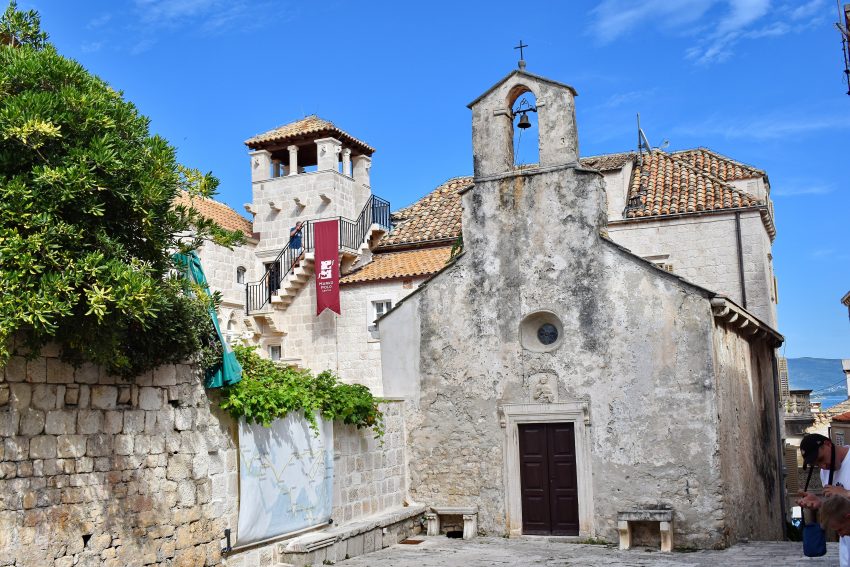
The Marko Polo Centre is an interpretation space focused on the life and legacy associated with Marco Polo, set within Korčula’s wider tradition of linking the town to his story. It frames Polo’s era through the lens of medieval maritime networks—trade, travel writing, and the encounter between East and West that later made his name famous. Rather than presenting only biography, the centre emphasizes historical context and storytelling: routes, obstacles, and the world of seafaring republics that shaped the Adriatic in the late Middle Ages. Exhibits commonly connect Polo’s narrative to Korčula’s own history, including the maritime conflicts that played out in nearby waters and helped define the region’s identity. What to see is the interpretive content itself—multimedia, curated themes, and objects or reconstructions that make the period legible for modern visitors. Treat it as a place to build a clearer mental map of how Korčula fit into bigger Mediterranean systems, whether or not you come primarily for the Polo connection.
Location: Ul. Depolo 3, 20260, Korčula, Croatia | Hours: Monday – Friday: 09:00–17:00. | Price: Adults: €6; Children (primary & secondary school): €3; Family (2 adults + 2 children): €15; Group (10+): €5; Combined ticket (1 person): €12; Combined family ticket: €25. | Website
7. Kula Zakerjan
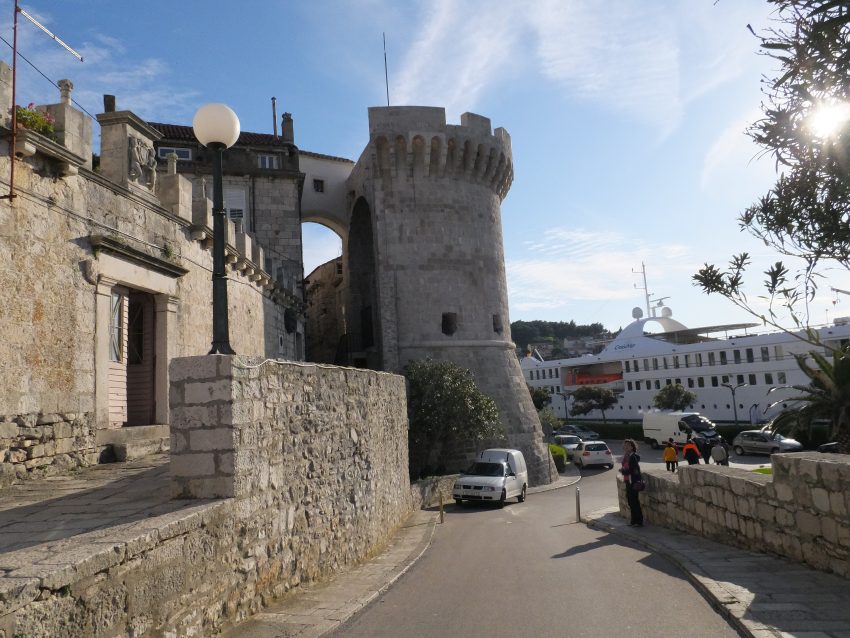
Kula Zakerjan (also known as Berim Tower) is one of Korčula’s standout late-15th-century defensive structures, built on the north side of the old town during a period of intensified Venetian fortification. Sources commonly place its construction in the early 1480s, reflecting the push to strengthen walls and towers as threats shifted from raids to larger naval and political contests. Architecturally, it reads as a purpose-built lookout and defensive position: a detached, strongly profiled tower with clear outward orientation toward the channel. Look for heraldic elements and the way the structure is positioned to command approaches from the sea-facing side of town. For visitors, the appeal is twofold: it’s a concentrated lesson in Korčula’s military architecture, and it’s a prime viewpoint for the coastline and water traffic. It’s especially compelling when you approach from outside the walls and see how the town’s fortifications present a hard edge to the Adriatic.
Location: Kula Zakerjan, Šetalište Petra Kanavelića, 20260, Korčula, Croatia | Hours: 24 Hours. | Price: Free.
8. Korcula Town Walls
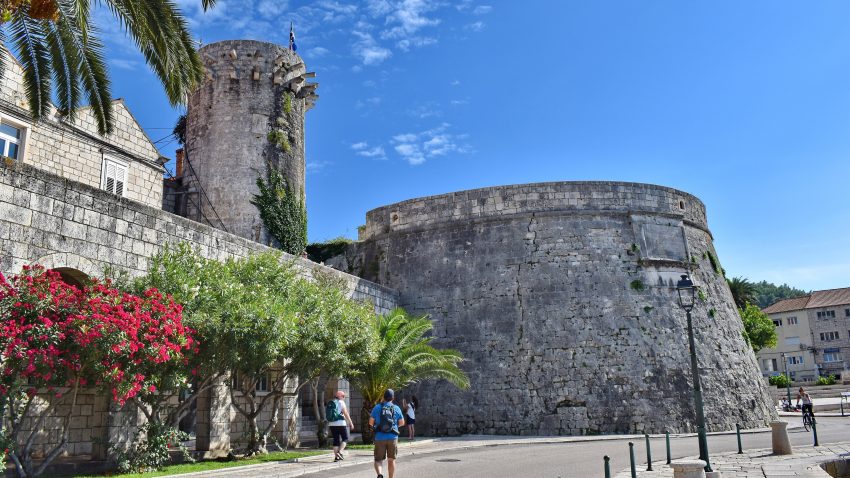
Korčula’s town walls are the defining frame of the old town, with core phases dating to the medieval period (commonly cited from the 13th and 14th centuries) and later modifications responding to changing military technology. Their continued presence is part of why Korčula is so often compared—visually, at least—to other walled Adriatic towns, even though its footprint is smaller and more tightly packed. Walking the perimeter from outside makes the defensive logic easy to read: thick stonework, towers placed to cover angles, and gateways that concentrate entry points. Some accounts note the circuit is roughly in the 700–750 meter range, which matches the “small but complete” feel you get when you trace the outline. What to see is not a single set-piece but the cumulative effect—towers, gates, and stretches of wall that reveal themselves as you move around the edge of town. Come back after dark if you can; lighting on walls and towers is frequently remarked on as a highlight for atmosphere and photography.
Location: Ul. Korčulanskih domobrana 6, 20260, Korčula, Croatia | Hours: 24 Hours. | Price: Free (tower access may have a small fee when open).
9. Mala Knezeva Kula
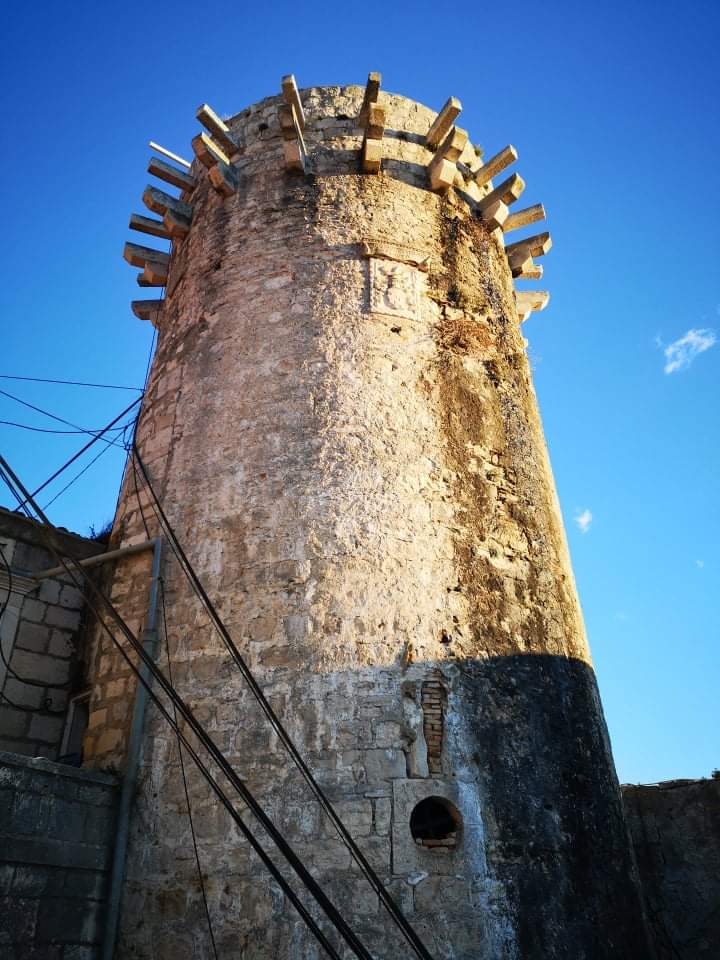
Mala Kneževa Kula (the Small Governor’s Tower, sometimes called the Lombardo Tower) sits on the seaward side of Korčula’s old town defenses and is closely tied to the former Governor’s Palace complex. It belongs to the late medieval / Venetian defensive build-out, and multiple guides associate it with mid-15th-century construction as the harbor-facing side of town was reinforced. The easiest thing to appreciate here is the relationship between structures: this smaller tower is positioned behind and near the larger governor’s tower, forming a layered defensive and administrative zone rather than a single isolated fortification. Look for carved coats of arms and exterior detailing that signal governance as much as defense—these towers were statements of authority as well as military assets. For visitors, it’s a strong spot for harbor views and for understanding how Korčula protected its waterfront, where trade and arrivals were lifelines but also vulnerabilities. It’s also one of those features that becomes more impressive the longer you stay in town, as you start recognizing how often the fortifications shape everyday routes and sightlines.
Location: Mala kneževa kula, Knežev pro., 20260, Korčula, Croatia | Hours: 24 Hours. | Price: Free.
10. Velika Knezeva Kula
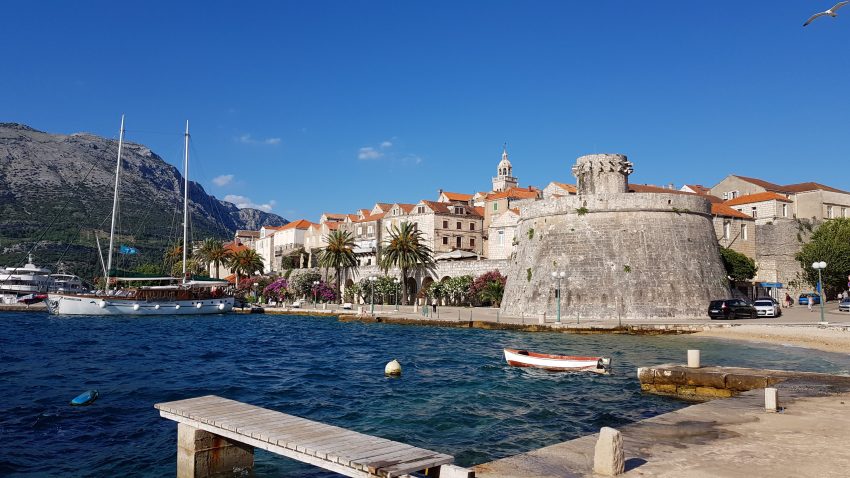
Velika Kneževa Kula (the Large Governor’s Tower) is one of Korčula’s most distinctive fortified forms, often described as a massive truncated-cone tower and strongly associated with the late 15th-century Venetian defensive program. Many references place its construction in 1483, and it is consistently linked to protecting the Governor’s Palace and the crucial harbor frontage. Up close, it feels less like a “pretty” monument and more like a piece of engineering: heavy masonry, minimal openings, and a stance designed to deter attack rather than invite entry. It also carries later layers of memory—plaques and markings connected to 20th-century events are noted in some descriptions, reminding you that these buildings kept accruing meaning long after the medieval era. What to see here is the tower in context: stand where you can frame both the large and small governor’s towers, then look across the harbor to understand why this corner mattered. It’s also a good evening sight, as lighting on the towers is often singled out as part of Korčula’s night-time atmosphere.
Location: Velika kneževa kula, Obala dr. Franje Tuđmana, 20260, Korčula, Croatia | Hours: 24 Hours. | Price: Free.

Moira & Andy
Hey! We're Moira & Andy. From hiking the Camino to trips around Europe in Bert our campervan — we've been traveling together since retirement in 2020!
This website uses affiliate links which earn a small commission at no additional cost to you.
Walking Tour Summary
Distance: 1 km
Sites: 10