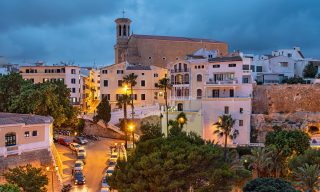
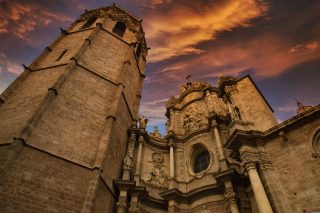
Self-Guided Walking Tour of Cartagena (2026)

This website uses affiliate links which earn a small commission at no additional cost to you.
Cartagena is a city made for walking: pastel-coloured colonial streets, shaded plazas, sea breezes on the ramparts, and a steady rhythm of cafés and courtyards that rewards slow exploring. This self-guided route focuses on the historic centre (the Walled City) with an optional extension into Getsemaní, letting you set your own pace while still hitting the major highlights. If you want a simple plan for the best things to see in xxx, this walk keeps you in the most atmospheric areas with minimal backtracking.
Expect a mix of landmark sights and small “in-between” moments: balconied townhouses draped in bougainvillea, churches that open onto lively squares, and lanes where the light changes constantly. The route works well early in the morning for cooler temperatures and softer photos, then again later in the afternoon as the city comes back to life and sunset approaches. Along the way you can build in stops for a cold drink, a museum visit, or a longer lunch without losing the thread of the walk.
To get the most out of Cartagena, treat this tour as a framework rather than a strict timetable. Start inside the walls, take your time around the main plazas, then decide whether to continue into Getsemaní for street art, local bars, and a more neighbourhood feel. With comfortable shoes, water, and a willingness to wander one street beyond the obvious, you will quickly see why this route captures the best things to see in Cartagena in a single, satisfying loop.
How to Get to Cartagena
By Air: Cartagena’s main gateway is Rafael Núñez International Airport (CTG), located close to the historic centre, which makes arrivals relatively straightforward compared with many large cities. You will typically find the widest choice of routes and fares via Bogotá, Medellín, and Panamá City, with additional seasonal or limited direct services from North America and Europe depending on the time of year. On arrival, plan for a short transfer into the Walled City, Getsemaní, or Bocagrande; official airport taxis are the simplest option, while pre-booked transfers can be good value if you are arriving late or travelling with luggage. For the best deals and a seamless booking experience, check out these flights to Cartagena on Booking.com.
By Train: Cartagena does not have a passenger rail network linking it to other Colombian cities, so travelling by train is not a practical option for reaching the city. If you are planning a wider Colombia itinerary, the realistic overland alternatives are long-distance buses between major hubs or flying to save time, particularly if you are moving between distant regions. In short, you should treat “by train” as unavailable and plan your route around air or road transport instead. Train schedules and bookings can be found on Omio.
By Car: Driving to Cartagena can work well if you are already on the Caribbean coast or building a road trip, but it is generally less efficient for long cross-country journeys due to distance, traffic, and variable road conditions. If you do drive, aim to arrive outside peak hours and be aware that parking inside or near the Walled City can be limited and expensive; many travellers choose accommodation with secure parking or leave the car and continue on foot. For day-to-day sightseeing, you will not need a car in the historic centre, so consider whether renting is only useful for side trips rather than for Cartagena itself. If you are looking to rent a car in Spain I recommend having a look at Discover Cars, first, as they compare prices and review multiple car rental agencies for you.
By Bus: Long-distance buses are a common way to reach Cartagena from other cities, with frequent services from major terminals, but journey times can be significant and comfort varies by operator and departure time. As a rule, overnight buses can save a hotel night but may be tiring, while daytime services are easier if you want to see the landscape and arrive rested. Once you arrive at the bus terminal, you will still need a short taxi or rideshare into the areas most visitors stay, so factor that last transfer into your timing and budget.
Where to Stay in Cartagena
To make the most of visiting Cartagena and this walking tour then you consider stay overnight at the centre. The most convenient base is inside the Walled City (Centro), where you can start early, return for a midday break, and finish the loop on foot without relying on taxis. Good options here include Hotel Casa San Agustín, Hotel Charleston Santa Teresa, and Hotel Boutique Casona del Colegio-all well-placed for plazas, museums, and the ramparts.
If you want the same “inside-the-walls” convenience but a slightly calmer, more residential feel, San Diego is a strong choice, particularly for evenings after the day-tripper crowds thin out. This area keeps you close to the main sights while giving you easy access to quieter lanes and plazas, with solid choices such as Sofitel Legend Santa Clara Cartagena and Casa Pestagua Boutique Hotel.
For a livelier atmosphere just outside the walls, Getsemaní is ideal if you want quick walking access to the Clock Tower area and the start of the historic centre, plus street art, bars, and a more local neighbourhood vibe at night. It is also practical for this walking tour because you can be at the edge of the Walled City in minutes. Consider Capellán de Getsemaní and Hotel Monaguillo de Getsemaní.
If you prioritise beach access, pools, or a more modern high-rise hotel experience, Bocagrande can work well, but you will typically use short taxi rides to reach the Walled City to begin and end the tour. This is a sensible trade-off if you are mixing sightseeing with downtime by the water. Two reliable picks are Hyatt Regency Cartagena and Hotel Almirante Cartagena.
A Short History of Aarhus
Aarhus is one of Denmark’s oldest urban centres, with roots reaching back to the Viking Age when it developed as a trading settlement on the east coast of Jutland. Over the medieval period, the city’s ecclesiastical and commercial importance was expressed in its main church: Aarhus Cathedral (St Clement’s), whose construction began in the late 12th century and gathered momentum under Bishop Peder Vognsen (ordained in 1191). The cathedral evolved over centuries into the large brick Gothic landmark seen today, anchoring the old town’s street pattern of squares, lanes, and waterfront connections.
By the late 19th and early 20th centuries, Aarhus expanded rapidly and commissioned major civic and cultural buildings that still define its architectural identity. Aarhus Theatre was designed by the architect Hack Kampmann and built from 1898 to 1900, signalling the city’s growing confidence as a regional capital. Kampmann also designed Marselisborg Palace, constructed between 1899 and 1902, which became a royal residence and remains a prominent symbol of Aarhus’s national status. In parallel, the city began institutionalising heritage: Den Gamle By (The Old Town) grew from preservation efforts led by Peter Holm and opened to the public in 1914 as an open-air museum of urban life.
In the modern era, Aarhus continued to express its ambitions through landmark public architecture. Aarhus City Hall was inaugurated in 1941, designed by Arne Jacobsen and Erik Møller, and is widely regarded as a classic statement of Danish modernism in civic form. Cultural investment accelerated again in the 21st century: ARoS Aarhus Art Museum opened in a new purpose-built building in 2004 designed by Schmidt Hammer Lassen, and Moesgaard Museum’s striking exhibition building opened in 2014, designed by Henning Larsen Architects. Together, these projects reflect a city that balances deep historical layers with a deliberate, design-led approach to contemporary identity.
Your Self-Guided Walking Tour of Cartagena
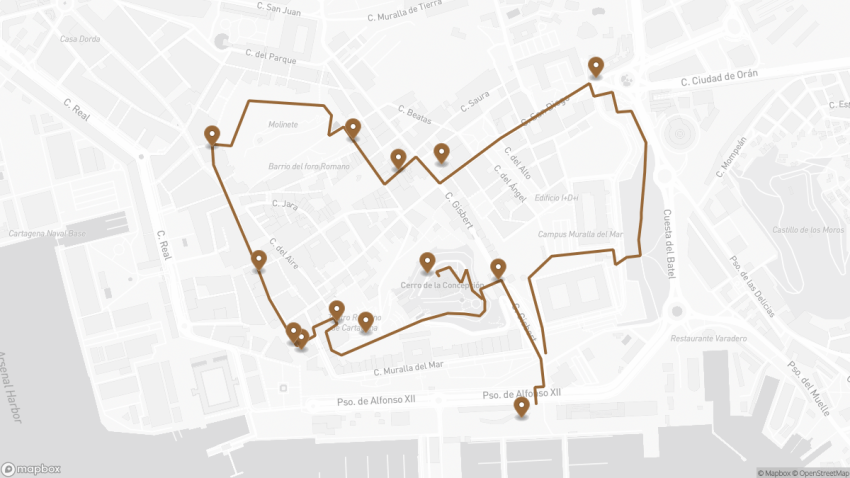
Discover Cartagena on foot with the interactive walking tour map guiding you between each pinned stop-its stone ramparts, grand plazas, colonial lanes, and colourful neighbourhoods. This walking tour traces the city's layered history-from the Walled City and its churches and fortifications to the lively streets of Getsemaní-blending Caribbean atmosphere with landmark sights, small courtyards, and sunset viewpoints, all within a city shaped by trade winds, maritime routes, and centuries of coastal defence.
1. National Museum of Underwater Archaeology
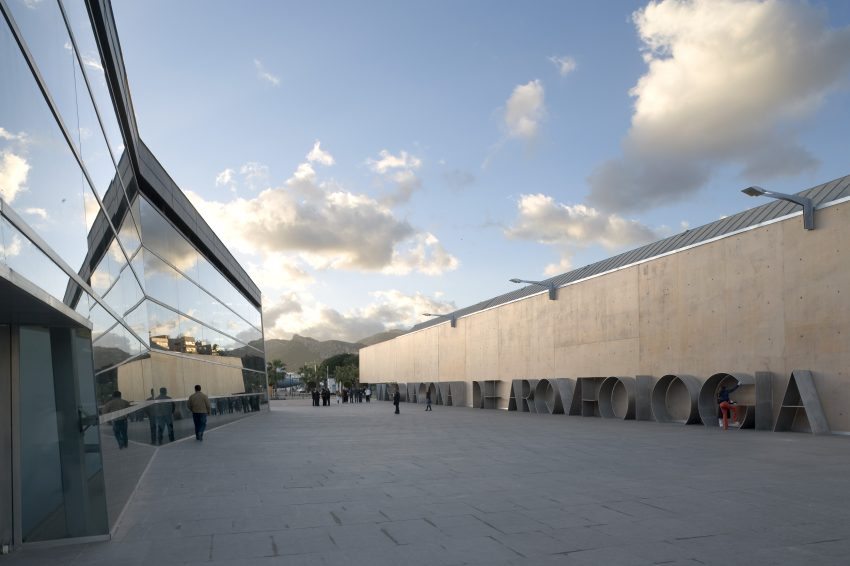
ARQVA exists because the sea has always been Cartagena’s archive. Trade, warfare, shipbuilding, and navigation have left an underwater record of wrecks and cargoes, and the museum was created to conserve and interpret those finds rather than letting them disappear into private collections or decay. It is also part of a broader Spanish effort to protect maritime heritage and explain why underwater archaeology is both scientifically demanding and culturally important.
Inside, you will see material that makes the ancient Mediterranean feel practical and physical: amphorae and trade goods, maritime equipment, and exhibits that explain routes, shipwreck contexts, and conservation. The museum is as much about method as treasure, so it spends time on how objects are recovered, stabilised, and studied, which helps you appreciate why these finds matter beyond their visual impact.
This is an excellent counterbalance to Cartagena’s open-air Roman ruins. If the day is hot or you want a more curated experience, ARQVA provides depth and air-conditioned pacing, and it connects the dots between the Roman city and the sea that fed it. It is especially rewarding if you have any interest in ships, trade networks, or the practical mechanics of archaeology.
Location: P.º Alfonso XII, 22, 30202 Cartagena, Murcia, Spain | Hours: (Summer) April 15 – October 15; Tuesday – Saturday: 10:00–21:00; Sunday & Public holidays: 10:00–15:00; Closed on Monday. (Winter) October 16 – April 14; Tuesday – Saturday: 10:00–20:00; Sunday & Public holidays: 10:00–15:00; Closed on Monday. | Price: Adults: €3.00 | Website

2. Cartagena’s Panoramic Lift

Cartagena’s Panoramic Lift is a quick, comfortable way to reach the top of Concepción Hill, rising 45 metres from Gisbert Street to the area around Torres Park and Concepción Castle, where you get some of the best views over the city and bay. The base also acts as an entrance to the Civil War Museum-Refuge, set into the hillside shelters. In the glass cabin you can look out over key landmarks, including the Roman amphitheatre remains and the bullring above it, several 18th-century military structures, and the port area including Santa Lucía and the El Batel auditorium and congress centre. Opened in 2004, it has become a modern design landmark and a familiar reference point in Cartagena.
Location: Ascensor Panorámico, C. Gisbert, 10 30202 Cartagena, Murcia, Spain | Hours: (Summer) 1 July – 15 September: Monday – Sunday: 10:00–20:00. 15 March – 30 June; 16 September – 1 November: Tuesday – Sunday: 10:00–19:00. (Winter) 2 November – 14 March: Tuesday – Sunday: 10:00–17:30. 5 January; 24 December; 31 December: Daily: 10:00–14:00. | Price: €2 (Panoramic Elevator only); €6 (Castillo de la Concepción + Panoramic Elevator). | Website
3. Castillo de la Concepción
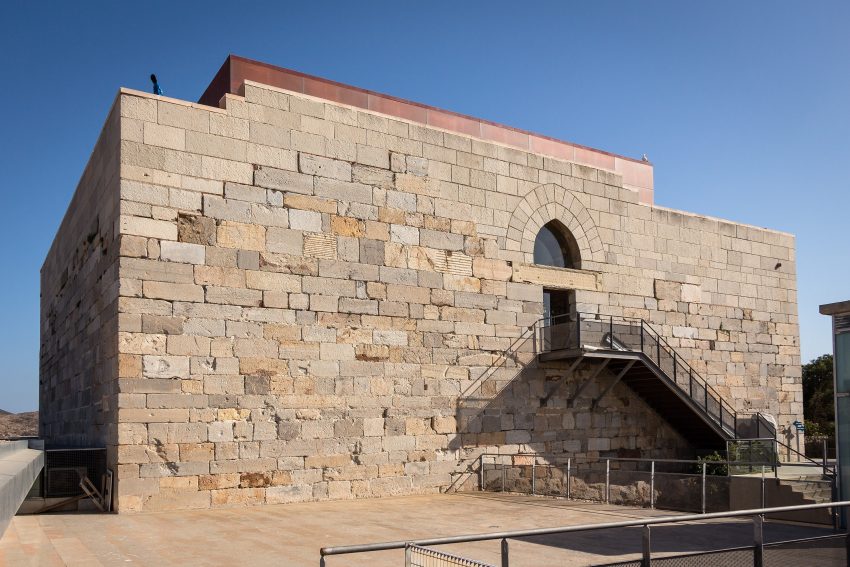
The Castillo de la Concepción crowns one of Cartagena’s key hills and is part of the city’s long tradition of fortifying high ground to control the port and approaches. The site has seen multiple defensive phases over the centuries, reflecting Cartagena’s value as a naval and commercial node. What stands today is associated with medieval fortification, later adapted as military needs evolved.
The appeal is a combination of masonry, views, and orientation. The castle area helps you understand Cartagena’s topography—why the city is shaped the way it is, how the harbour defines movement, and how the hills create natural lookout points. Even if the interior spaces are modest, the setting does most of the work.
For visitors, this is one of the best panoramic stops in town. Go up when the light is gentle and the heat is lower, and use it as a “map in real life” before you start ticking off Roman sites. It pairs well with a slow walk back down into the old centre, because you can connect what you saw from above with the streets, plazas, and monuments at ground level.
Location: Parque Torres, 30202 Cartagena, Murcia, Spain | Hours: (Summer) July 1 – September 15; Monday – Sunday: 10:00–20:00. (Winter) March 15 – June 30 & September 16 – November 1: Tuesday – Sunday: 10:00–19:00; November 2 – March 14: Tuesday – Sunday: 10:00–17:30. | Price: Adults: €5.00 | Website
4. Roman Theatre (Teatro Romano)
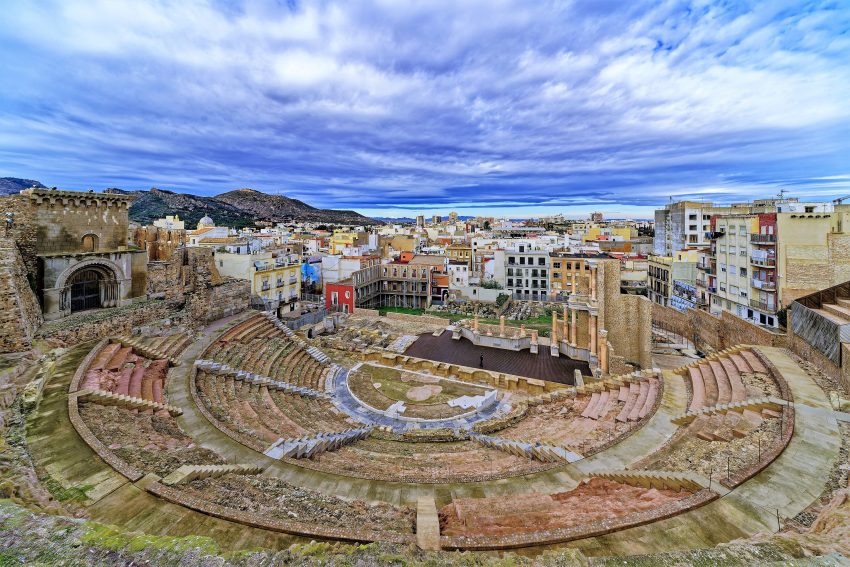
Cartagena’s Roman Theatre was built at the height of Roman power in the region, when public entertainment was both a cultural obsession and a political statement. Large theatres were not only places to watch drama; they were monuments to Roman identity, imperial patronage, and urban prestige. In Cartagena, the theatre’s placement and scale underline how important the city was in Roman Hispania.
What you see today is the result of careful excavation and restoration: the curved seating carved into the slope, the passages and stairways that managed crowds, and the stage area where performances took place with an architectural backdrop. Even without a performance, you can read the choreography of the space—the way people entered, how the seating tiers were organised, and how sound and sightlines were engineered.
Give yourself time to sit and look rather than simply snapping a photo and moving on. The best moments come when you imagine the theatre full and noisy, then notice how the city around it has changed. If you pair the theatre with the museum route, the visit feels complete: history, archaeology, and the emotional impact of standing inside a monument that was hidden for centuries.
Location: Palacio Pascual del Riquelme, Pl. Ayuntamiento, 9, 30202 Cartagena, Murcia, Spain | Hours: (Summer) May 1 – September 30; Tuesday – Saturday: 10:00–20:00. Sunday: 10:00–14:00. Closed on Monday. (Winter) October 1 – April 30; Tuesday – Saturday: 10:00–18:00. Sunday: 10:00–14:00. Closed on Monday. | Price: Adults: €7 | Website
5. Catedral de Santa María la Mayor
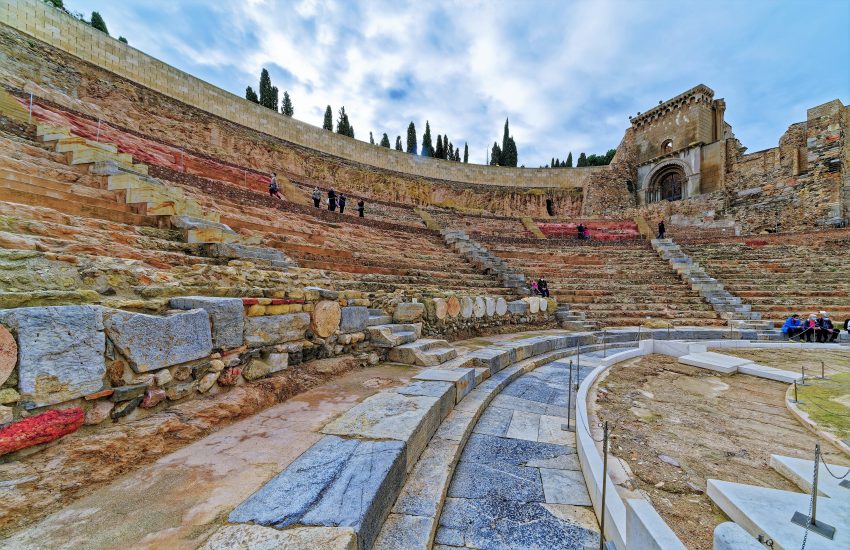
Cartagena’s old cathedral, Santa María la Mayor, is less a functioning cathedral today and more a powerful historic ruin that tells a complicated story of faith, urban change, and conflict. The site sits on an elevated, historically strategic part of the old city and reflects centuries of rebuilding and adaptation, including medieval phases that followed the Christian reconquest, and later alterations as Cartagena’s fortunes rose and fell.
What most visitors notice immediately is the sense of absence: roofless sections, exposed stone, and the quiet that comes with a place no longer used in the way it was intended. The cathedral suffered severe damage in the 20th century and was never fully restored, which means what you see now is a fragmentary shell—atmospheric, raw, and deeply evocative rather than polished.
Visiting works best if you treat it like a viewpoint into Cartagena’s layers. Look for surviving structural details and the way the ruins sit within the surrounding archaeology, then take time to read the landscape: you are close to major Roman sites, and the overlap between sacred space, civic space, and ancient entertainment districts becomes very tangible. It is also a good stop for quieter photos and a reflective pause between the busier museums.
Location: C. Segundilla, 7, 30202 Cartagena, Murcia, Spain | Hours: (Summer) May 1 – September 30; Tuesday – Saturday: 10:00–20:00. Sunday: 10:00–14:00. Closed on Monday. (Winter) October 1 – April 30; Tuesday – Saturday: 10:00–18:00. Sunday: 10:00–14:00. Closed on Monday. | Price: Adults: €7; Concessions: €6; Under 3: free. | Website
6. Museo del Teatro Romano
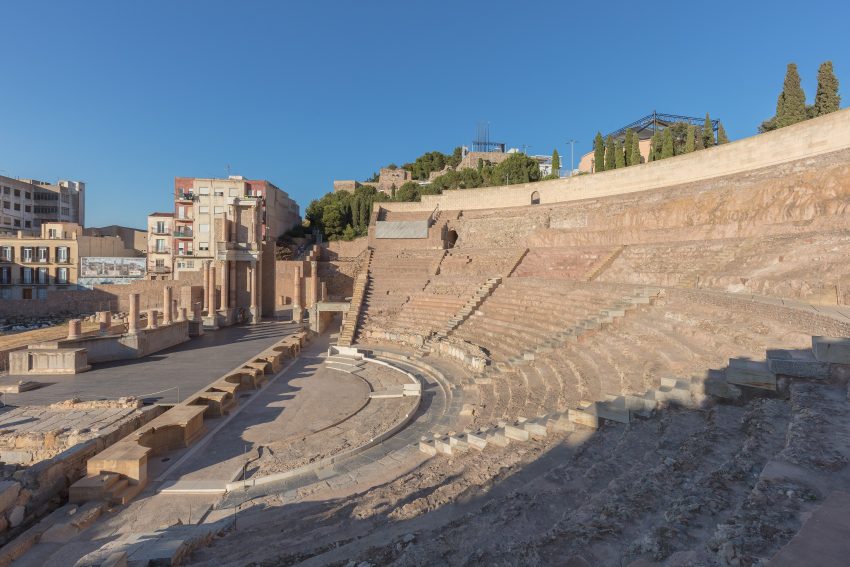
The Roman Theatre Museum is Cartagena’s modern gateway into one of Spain’s most significant Roman monuments, developed after the theatre’s relatively recent rediscovery in the late 20th century. The museum was conceived to explain not only the theatre itself but also how the ancient city evolved, was built over, forgotten, and then carefully revealed again through excavation and restoration.
The experience is designed as a narrative route rather than a simple gallery visit. You move through exhibits that introduce Roman Cartagena, theatrical life, and the archaeology, and then the building’s pathway guides you toward the theatre in a way that gradually increases anticipation. It is a well-judged mix of artefacts, interpretation, and architecture, with the finale being the first full view into the seating and stage area.
Plan to spend time here even if you think you “just want to see the theatre.” The museum gives the theatre context, and the route makes the reveal feel earned rather than accidental. It also works well in hot weather, because you get shade and structure before stepping out into the open stonework of the monument.
Location: Pl. Ayuntamiento, 9, 30201 Cartagena, Murcia, Spain | Hours: (Summer) May 1 – September 30; Tuesday – Saturday: 10:00–20:00. Sunday: 10:00–14:00. Closed on Monday. (Winter) October 1 – April 30; Tuesday – Saturday: 10:00–18:00. Sunday: 10:00–14:00. Closed on Monday. | Price: Adults: €7 | Website
7. Ayuntamiento Cartagena
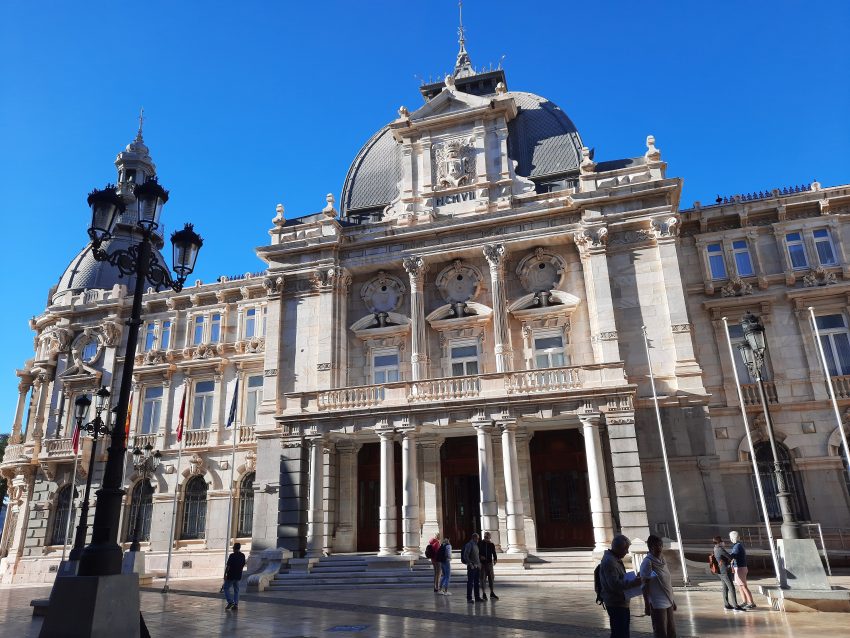
Cartagena’s City Hall is one of the city’s most recognisable early-20th-century landmarks, built when the port and local industry were bringing new confidence and money into the city. Architecturally it sits firmly in the modernist tradition that spread around Spain in that era, and it was designed to project civic pride with lavish materials, curved façades, and a prominent corner presence facing the harbour.
Inside, the appeal is the building itself as much as the municipal function. Expect a grand staircase, decorative ironwork, stained glass, and polished surfaces that feel deliberately theatrical. Even from outside, the building repays a slow walk around it, because the details change with the angle: domes, balconies, sculpted ornament, and the way the light hits the pale stone.
As a visitor, this is a good “start point” for Cartagena’s historic centre: you can take photos with the port backdrop, then peel off into Calle Mayor and the Roman sites nearby. If it is open to the public when you arrive, a quick look inside helps you understand how Cartagena’s modern history sits on top of its ancient one—port city, military city, and administrative city all layered together in a few streets.
Location: C. San Miguel, 8, 30201 Cartagena, Murcia, Spain | Hours: Monday – Saturday: 10:00–13:30 & 16:30–18:30. Sunday: 10:30–13:30. | Price: Free (exterior viewing; interior access limited). | Website
8. Calle Mayor
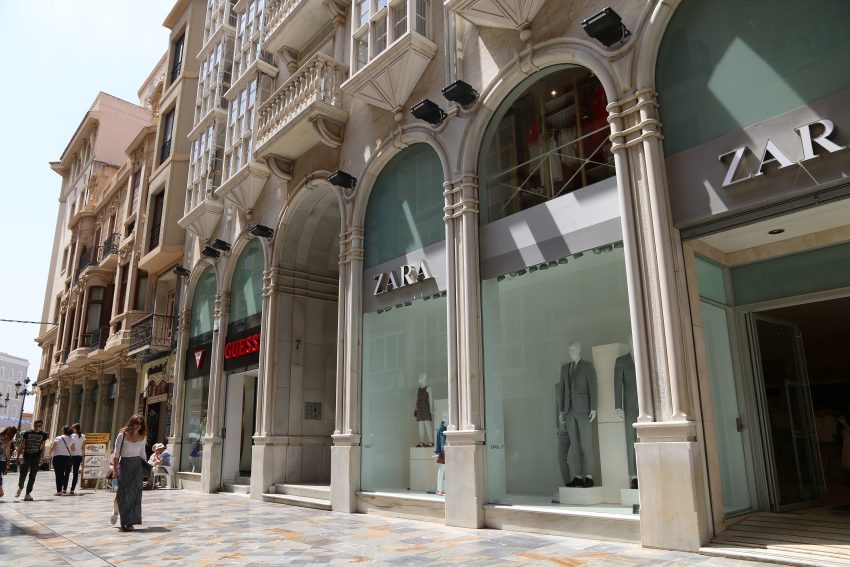
Calle Mayor is Cartagena’s main historic shopping street and the city’s most enjoyable “between the sights” experience. Historically, this axis developed as the commercial and social spine of the centre, and its prominence reflects Cartagena’s identity as a port city that has always mixed sailors, merchants, officials, and locals in a relatively compact urban core.
What you see here is architecture as street theatre: elegant façades, balconies, and distinctive buildings that make the walk feel like a curated sequence, even though it is simply the city going about its business. Look up as much as you look into shop windows, because the details above street level often tell the story of Cartagena’s late-19th and early-20th-century confidence.
As a visitor, Calle Mayor is where you come to reset your pace. Use it for coffee, a shaded stroll, and people-watching, and to link major attractions without feeling like you are “commuting” between them. It is also one of the best areas for an evening walk, when the streetlights pick out architectural details and the city feels lively but not frantic.
Location: C. Mayor, 30201 Cartagena, Murcia, Spain | Hours: 24 Hours. | Price: Free
9. Columnata Romana
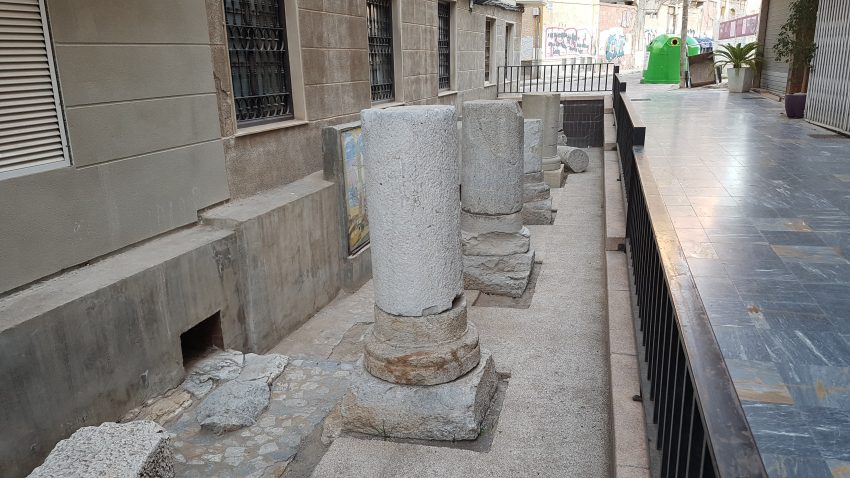
Cartagena’s Roman colonnade remains are a small but telling fragment of how Roman urban space was staged. Colonnades were not decorative extras; they were practical frameworks for shade, circulation, and status, creating structured public corridors that made a city feel ordered, wealthy, and unmistakably Roman. In a port city with heat and foot traffic, these covered or semi-covered routes mattered.
What you see today is typically a preserved stretch of columns and foundations that hints at a larger complex—possibly linked to a significant civic or commercial zone. Even when the surviving portion is limited, it helps you visualise the original scale: repetitive stone rhythm, long lines of perspective, and a deliberate sense of procession.
Treat this as a “connector” site in your Roman itinerary. It will not take long, but it adds texture to the bigger monuments by showing the mundane grandeur of Roman streetscape design. If you visit after the theatre or the Molinete complex, the colonnade reads as part of the same system: a city built for movement, display, and daily routines.
Location: C. Morería Baja, 4, 30201 Cartagena, Murcia, Spain | Hours: 24 Hours. | Price: Free
10. Museo Foro Romano Molinete
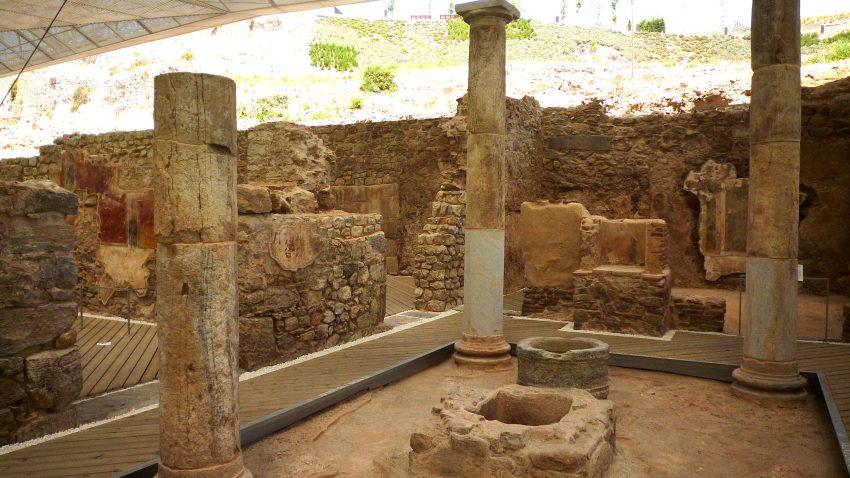
The Molinete archaeological complex opens a window onto the everyday and civic life of Roman Cartagena, centred on the remains of a neighbourhood that included public buildings and social spaces. The site’s importance lies in showing how the Roman city functioned beyond the headline monuments: not only theatres and grand façades, but also the places where people bathed, worked, ate, met friends, and participated in urban routines.
What you can see includes excavated streets and building footprints, with highlights often involving bathing complexes, architectural fragments, and spaces linked to the forum district. Because it is a hillside site, the walk naturally creates changing vantage points, and you get a good sense of how Romans used terrain to organise their city and make impressive public architecture feel even more dominant.
To enjoy it, take it slowly and imagine movement through the district: where noise would have gathered, where you would have queued, where conversation happened. It also pairs well with the theatre and the castle hill, because together they show three dimensions of Roman and post-Roman Cartagena: entertainment, civic life, and strategic geography.
Location: C. Adarve, 6, 30201 Cartagena, Murcia, Spain | Hours: (Summer) July 1 – September 15; Monday – Sunday: 10:00–20:00. (Winter) March 15 – June 30 & September 16 – November 1; Tuesday – Sunday: 10:00–19:00. (Winter) November 2 – March 14; Tuesday – Sunday: 10:00–17:30. | Price: Adults: €7; Reduced: €6; Under 3: free. | Website
11. Augusteum

The Augusteum is associated with the Roman imperial cult, reflecting how politics and religion were fused under the early emperors. Dedicating spaces to the emperor’s official veneration was a way for cities to demonstrate loyalty and align themselves with imperial power. In provincial cities like Cartagena, such buildings signalled status and connection to Rome’s centre.
Visually, the site tends to be about architectural remains rather than a complete building: foundations, walls, and structural elements that suggest formal rooms and a carefully planned public interior. Interpretation on-site usually does the heavy lifting, helping you translate surviving stone into a sense of ceremonies, civic gatherings, and the symbolic choreography that surrounded imperial worship.
For visitors, the Augusteum is best appreciated as an idea made physical: a reminder that Roman rule was reinforced not only by soldiers and law, but by ritual and public space. It is a worthwhile stop if you want your Roman walk to include more than engineering and entertainment—this is where the story shifts toward identity, power, and the messaging of empire.
Location: C. Caballero, 6, 30202 Cartagena, Murcia, Spain | Hours: (High season) Tuesday – Sunday: 10:00–15:00. (July 1 – September 15). | Price: Adults: €4 | Website
12. Casa de la Fortuna
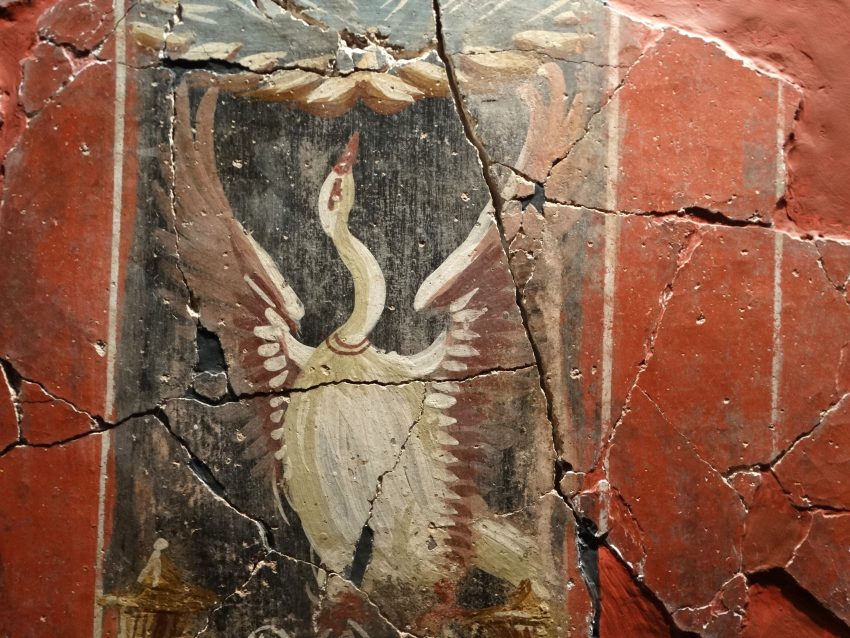
Casa de la Fortuna is one of the most accessible ways to imagine ordinary Roman domestic life in Cartagena. Roman houses were not purely private retreats; they were social tools where status was displayed, clients were received, and family identity was performed. The survival of a domestic site like this adds balance to a city otherwise dominated by public monuments.
What you can see typically includes the layout of rooms around internal spaces and, importantly, decorative elements that survive better than you might expect: fragments of wall painting, mosaics, and household features that show how colour and pattern shaped daily experience. Even partial remains can be surprisingly intimate because they sit at human scale—thresholds, corners, and surfaces designed to be lived with.
Visit with patience and imagination. Instead of rushing for a single photo, trace the routes someone would have walked from entrance to reception areas and deeper private zones. It pairs particularly well with the Molinete complex: one shows the neighbourhood and public life, the other shows how a household fitted into that urban fabric.
Location: Pl. de Risueño, 14, 30202 Cartagena, Murcia, Spain | Hours: Tuesday – Sunday: 10:00–15:00. Closed on Monday. Closed on January 1, January 6, December 25. Last entry: 15 minutes before closing. | Price: Adults: €4.00 | Website
13. Punic Wall of Cartagena
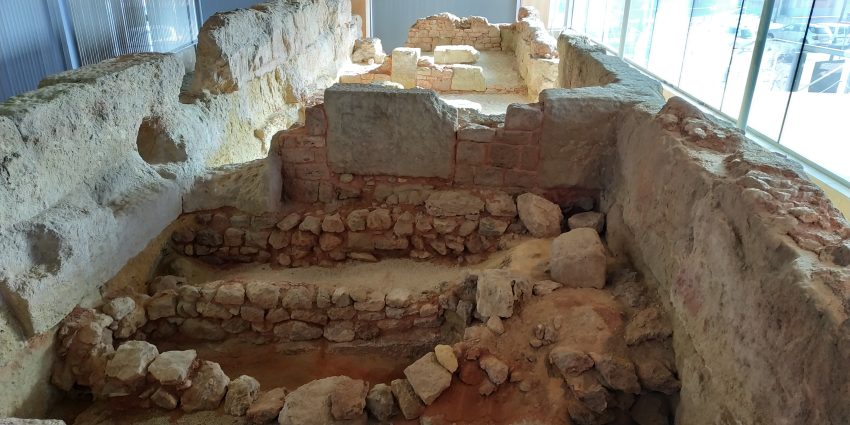
The Punic Wall is one of Cartagena’s most important pre-Roman survivals, tied to the era when the city’s fortunes were shaped by Carthaginian power in the western Mediterranean. Cartagena’s strategic harbour made it a prized stronghold, and fortifications like this were part of securing a base for control, supply, and defence in a contested region.
What you see is typically a preserved section of wall structure that emphasises mass and purpose rather than ornament. The value is archaeological and historical: you are looking at the bones of a defensive system from a period that often gets overshadowed by the later Roman layers. With good interpretation, the wall becomes a clear marker of “before Rome,” anchoring Cartagena’s story in a wider Mediterranean struggle.
As a visitor, this is an excellent place to start your ancient timeline. Seeing the Punic layer first makes the later Roman monuments feel like a deliberate transformation rather than the whole story. It is also a useful reminder that Cartagena is not a single-period destination; it is a city repeatedly remade by whoever controlled the sea routes, the harbour, and the hills.
Location: C. San Diego, 25, 30202 Cartagena, Murcia, Spain | Hours: (Summer) July 1 – September 15; Monday – Sunday: 10:00–20:00. (Mid season) March 15 – June 30 & September 16 – November 1; Tuesday – Sunday: 10:00–19:00. (Low season) November 2 – March 14; Tuesday – Sunday: 10:00–17:30. Closed on Monday. | Price: Adults: €4.00 | Website

Moira & Andy
Hey! We're Moira & Andy. From hiking the Camino to trips around Europe in Bert our campervan — we've been traveling together since retirement in 2020!
This website uses affiliate links which earn a small commission at no additional cost to you.
Walking Tour Summary
Distance: 3.5 km
Sites: 13
Walking Tour Map