Self-Guided Walking Tour of Cannes (2026)
This website uses affiliate links which earn a small commission at no additional cost to you.
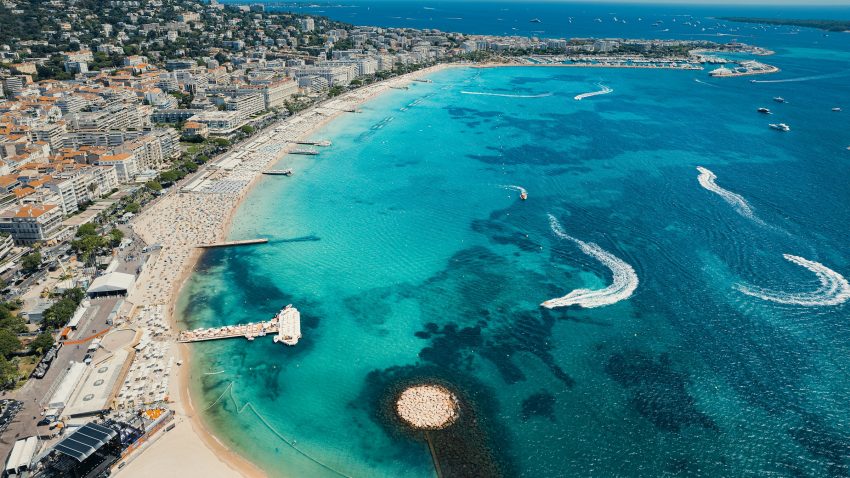
Cannes is often associated with glamour and the film festival, but the city is also a rewarding place to explore on foot at a slower pace. This self-guided walking tour of Cannes helps you move beyond the headline attractions and experience the layers of the city, from the waterfront and old port to historic lanes, local markets, and hilltop viewpoints. It is a practical and enjoyable way to get to know Cannes while taking in both its polished seafront and its older neighbourhoods.
As you follow the route, you will see how Cannes blends everyday Provençal character with its international reputation. One moment you may be walking past luxury boutiques and palm-lined promenades, and the next you are climbing into Le Suquet, where narrower streets and older buildings reveal a very different side of the city. For first-time visitors, this is one of the best things to see in Cannes if you want an introduction that combines famous landmarks with local atmosphere.
Because this is a self-guided walk, you can shape the experience around your own interests and pace. You can stop for coffee by the port, linger at a market, spend extra time at a museum, or skip a stop and head straight to the beach or the Croisette. Whether you are visiting Cannes on a day trip or staying longer on the French Riviera, this walking tour gives you a flexible way to explore the city and understand its appeal beyond the red carpet.
How to Get to Cannes
By Air: The main airport for Cannes is Nice Côte d'Azur Airport, which is the most practical choice for most international and domestic arrivals. From there, you can continue to Cannes by train, airport bus/coach connections, taxi, private transfer, or hire car, and the onward journey is usually straightforward. Cannes also has Cannes-Mandelieu Airport, but it is mainly used for business and general aviation rather than regular commercial flights. For the best deals and a seamless booking experience, check out these flights to Cannes on Booking.com.
By Train: Cannes is easy to reach by rail and is a convenient option if you are travelling from other cities in France. The main station is Cannes station, which is well placed for reaching the centre on foot, and routes typically connect through major hubs such as Nice, Marseille, and Paris depending on your starting point. Train travel is often one of the simplest ways to arrive if you want to avoid parking and start exploring soon after you get there. You can use SNCF Connect to check schedules, compare routes, and purchase tickets for National (SNCF ) and regional trains (TER). For a more streamlined experience, we recommend using Omio, which allows you to easily compare prices, schedules, and book tickets for both National and Regional travel across all of Europe, all in one place.
By Car: Driving to Cannes can work well if you are exploring more of the French Riviera, travelling with luggage, or planning day trips before or after your visit. Road access is straightforward via the motorway network, but traffic and parking can be more challenging in peak periods and during major events, so it helps to plan ahead. Long-distance buses and coaches can also be a useful budget alternative on some routes, especially from nearby cities and airports. If you are looking to rent a car in France I recommend having a look at Discover Cars, first, as they compare prices and review multiple car rental agencies for you.
A Short History of Cannes
Early Cannes and the Origins of Le Suquet
The earliest history of Cannes is tied to a small settlement that developed around the hill now known as Le Suquet, where the city's oldest quarter still preserves its historic character. This elevated position offered a defensive advantage, and over time it became the focus of religious and civic life. Landmarks such as Notre Dame d'Espérance and the site that now houses the Musée des Explorations du Monde reflect this early phase of Cannes, when the town was far smaller and more closely tied to maritime activity and local agriculture.
Below the hill, the shoreline and harbour area gradually became more important as trade and fishing developed. What is now the Vieux Port grew in significance as a working waterfront, linking Cannes to regional commerce and seafaring networks. The old town streets that survive today, including the area around Rue Meynadier, preserve something of this earlier urban pattern, where daily life centred on markets, workshops, and the port.
Medieval and Early Modern Cannes
During the medieval period and into the early modern era, Cannes remained a modest but active coastal town shaped by religious institutions, local power structures, and the practical demands of defence and trade. The hilltop quarter continued to dominate the settlement, while the lower town expanded slowly around routes that connected homes, small commercial spaces, and places of worship. The historic fabric of Le Suquet still hints at this period, with narrow streets and a compact layout that contrasts with later urban development.
Cannes did not yet have the grand seafront image it is known for today. Instead, it functioned as a local town with a working harbour, modest civic life, and a close relationship to surrounding rural production. The enduring importance of market culture, now represented by Marché Forville, has roots in these earlier patterns of exchange, when food supply, local trade, and everyday commerce were central to the town's identity.
19th-Century Cannes and the Rise of a Resort City
The 19th century transformed Cannes dramatically, as improved transport and growing international interest turned it into a fashionable destination for winter visitors and wealthy travelers. This was the period when the city expanded beyond its old core and developed elegant new districts, wider streets, and promenades designed for leisure as much as movement. Boulevard de la Croisette became the defining symbol of this new Cannes, reshaping the shoreline into a prestigious seafront lined with hotels, villas, and social spaces.
At the same time, commercial streets such as Rue d'Antibes grew in importance as the city's modern retail and urban life expanded. Cannes evolved from a small port town into a place associated with comfort, style, and seasonal high society, while still retaining the older districts around the port and hill. This layering of old and new is still one of the most interesting aspects of the city's history and cityscape.
20th-Century Cannes and the Global Image of Cannes
In the 20th century, Cannes developed an international cultural identity that extended far beyond its Riviera setting, largely through cinema and major events. The creation and later expansion of the Palais des Festivals et des Congrès made Cannes globally recognised as a centre of film culture, conferences, and international gatherings. This changed the city's economy and image, reinforcing its role as both a resort destination and a major events city.
Modern Cannes also continued to invest in culture and public identity in other ways, including visual art in the urban landscape such as Les Murs Peints, which celebrate film and local character through large painted murals. While the city became more famous and more polished, its history remained visible in the contrast between the Vieux Port, the old quarter around Notre Dame d'Espérance, the market traditions of Marché Forville, and the modern glamour associated with the Croisette and the Palais des Festivals.
Cannes Today and the Layers of Its Past
Today, Cannes presents a city shaped by many distinct eras, from its early hilltop origins and working port to its 19th-century resort expansion and 20th-century global cultural profile. Walking between the Vieux Port, Rue Meynadier, Rue d'Antibes, and Boulevard de la Croisette reveals how each period added a new layer rather than fully replacing what came before. Historic religious and civic landmarks coexist with luxury shopping, event venues, and contemporary public spaces.
This blend of continuity and reinvention is a key part of Cannes's appeal. The city's past is not confined to one monument or district, but spread across its churches, museums, markets, streets, and waterfront. From the older character of Le Suquet to the modern prominence of the Palais des Festivals et des Congrès, Cannes tells a story of adaptation, ambition, and changing identity over centuries.
Where to Stay in Cannes
To make the most of visiting Cannes and this walking tour, then you should consider staying overnight near the centre so you can start early, explore on foot, and take breaks without needing transport between most stops. The best base for convenience is the central area around the Palais des Festivals, the train station, and the lower end of Rue d'Antibes, where you are close to the port, shopping streets, and the seafront. Good options here include Hôtel Barrière Le Majestic Cannes, Hotel America, and Five Seas Hotel Cannes.
If you want a more atmospheric stay with easier access to the old-town part of the route, look around Le Suquet and the streets near Marché Forville and the Vieux Port. This area suits travellers who want to be close to historic lanes, local restaurants, and a quieter evening feel while still being able to walk to the Croisette and central sights. Strong choices include Hôtel LE SUQUET CANNES, Chanteclair, and Hôtel & Spa Belle Plage.
For a stay that balances walking-tour access with beach time and shopping, the Rue d'Antibes and mid-Croisette area is an excellent option. You will be well placed for boutiques, cafés, and seafront strolls, and it is still an easy walk back toward the old town and port stops on the route. Good picks in this part of Cannes include Hotel Le Canberra, Cannes Croisette Prestige Appart'Hôtel, and Eden Hôtel & Spa Cannes.
Your Self-Guided Walking Tour of Cannes
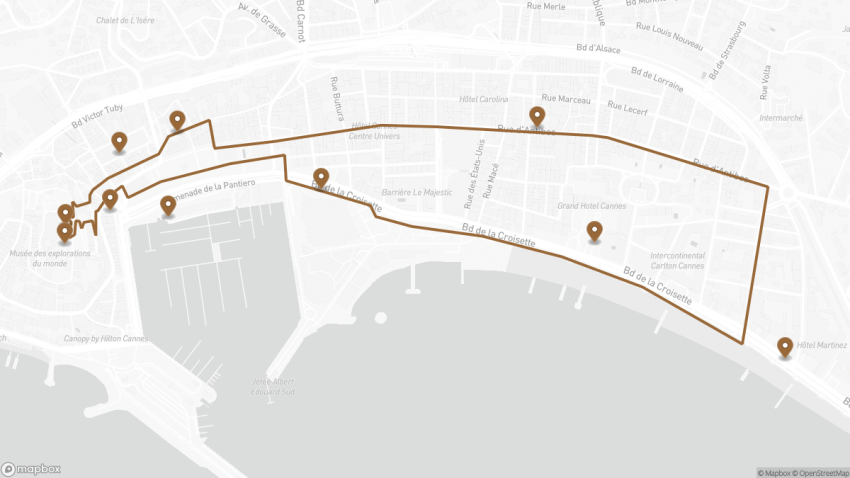
Discover Cannes on foot with our walking tour map, which guides you between each stop as you explore the city at your own pace. Because this is a self-guided walking tour, you are free to skip places and take coffee stops whenever you want.
1. Rue d'Antibes
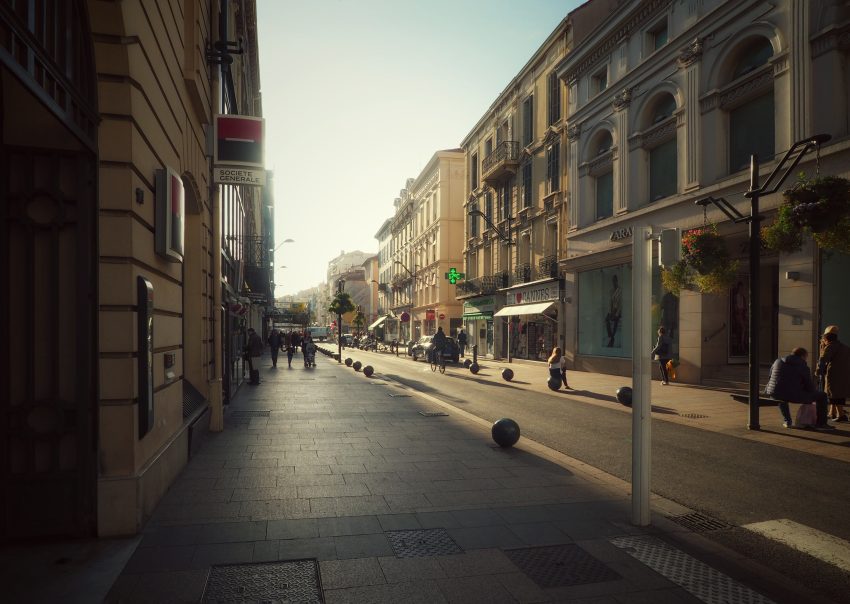
Rue d’Antibes is one of the central streets in modern Cannes and has played a major role in the city’s development as a resort and shopping destination. Named for the direction it leads, it evolved into a major urban artery as Cannes expanded in the 19th and early 20th centuries. Today it stands as a historic-commercial counterpart to the seafront Croisette, reflecting the city’s growth inland from the shoreline.
The street is now known as the epicentre of shopping in Cannes, with a very high concentration of boutiques and brands. Official tourism sources emphasize both the scale of retail here and its open-air format, which makes it more than just a shopping strip; it is one of the main urban promenades in the city centre. Its importance is not only commercial but also social, as it links multiple districts and side streets.
When visiting, what to see depends on your interests: fashion and international brands, local specialty shops, and the changing architecture and passages that branch off toward the Croisette and adjacent streets. Even if you are not shopping, Rue d’Antibes is useful for understanding the everyday energy of central Cannes and how the city balances luxury tourism with mainstream urban life.
Location: Rue d'Antibes, 06400 Cannes, France | Hours: 24 Hours. | Price: Free.
2. Boulevard de la Croisette
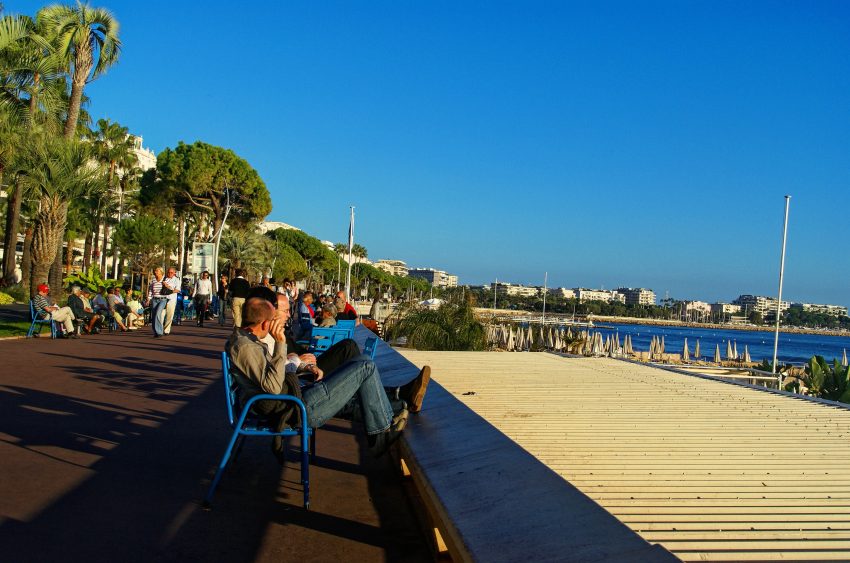
Boulevard de la Croisette is the most famous promenade in Cannes and one of the key reasons the city became internationally known. Its development in the 19th century accompanied Cannes’ rise as a fashionable seaside resort, and over time it became lined with grand hotels, beaches, and leisure spaces. The Croisette’s history is therefore closely tied to Cannes’ shift from a small coastal town to a Riviera destination of prestige.
It is also inseparable from film history because the Cannes Film Festival became associated with this waterfront area, first through earlier venues and later through the present Palais des Festivals at one end of the boulevard. The Croisette is where the city’s global image is performed most visibly: cinema, luxury, sea views, and ceremonial spectacle all meet here.
What to see on the Croisette includes the promenade itself, the line of historic and luxury hotels, beach clubs, palm-lined sea views, and the changing public spaces along the waterfront. It is worth paying attention to both old and new elements, as recent redevelopment has aimed to modernise the boulevard while highlighting its historic identity. More than a single sight, the Croisette is an experience of Cannes’ public face.
Location: Bd de la Croisette, 06400 Cannes, France | Hours: 24 Hours. | Price: Free.

3. La Malmaison
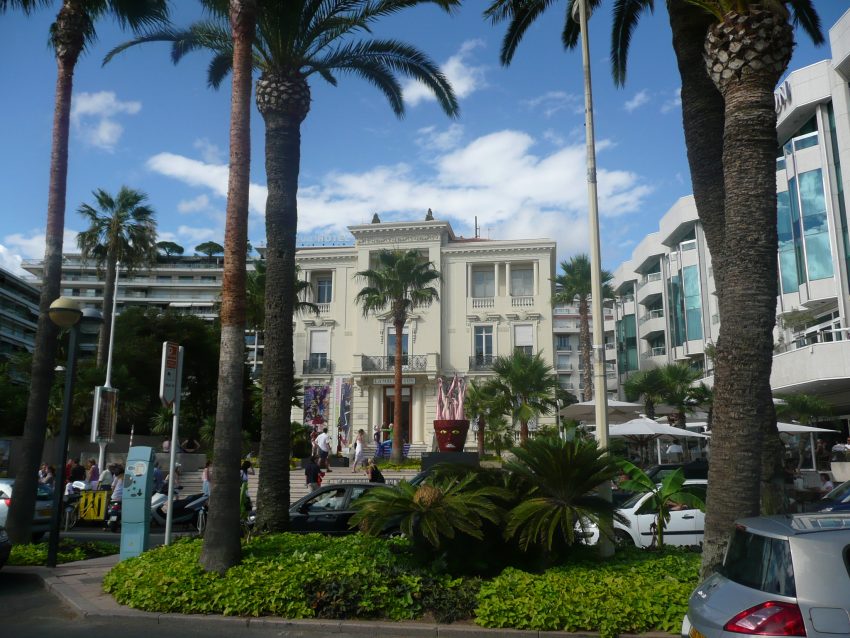
La Malmaison is one of Cannes’ most important heritage buildings on the Croisette, and its history reflects the city’s rise as a Riviera resort. Built in the 19th century as an annex to the Grand Hôtel, it later evolved through different uses before becoming a municipal contemporary art venue. This layered past is part of its appeal: it is not just a gallery space, but a surviving Belle Époque landmark in a part of Cannes that has changed dramatically over time.
In recent years, La Malmaison entered a new phase after a major renovation and extension, reopening in early 2025 as an expanded international contemporary art centre. The redevelopment preserved the building’s heritage character while significantly increasing exhibition space, which has strengthened its role in Cannes’ cultural life beyond the film festival. It is now presented as a flagship art venue on the Croisette, combining historic architecture with a modern exhibition programme.
What to see when visiting depends on the current temporary exhibition, as La Malmaison focuses on rotating contemporary art shows rather than a fixed permanent collection. Beyond the artworks, the building itself is worth attention, especially the contrast between the historic façade and the renewed interiors. If accessible during your visit, the panoramic terrace overlooking the Croisette and the Mediterranean is also a highlight, adding a strong sense of place to the art experience.
Location: 47 Bd de la Croisette, 06400 Cannes, France | Hours: September – June: Tuesday – Sunday: 10:00–13:00 & 14:00–18:00. September – June: Closed on Monday. July – August: Daily: 10:00–19:00. | Price: Adults: €6.50; Reduced: €3.50; Free (with proof) for eligible visitors and on the 1st Sunday of each month (November – March). | Website
4. Palais des Festivals et des Congrès
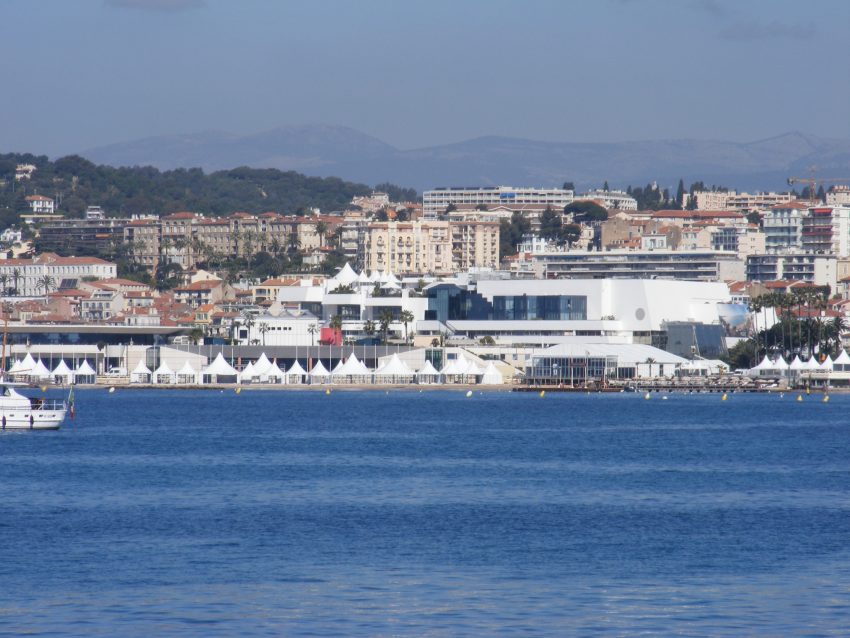
The Palais des Festivals et des Congrès is one of the defining symbols of modern Cannes, but its story is tied to the longer history of the Cannes Film Festival itself. The festival’s roots go back to the late 1930s, with the first proper post-war edition held in 1946, and the event later moved through earlier festival buildings before the current Palais became the main venue in the early 1980s. The present complex represents Cannes’ transformation from a fishing town and winter resort into a global events capital.
What most visitors come to see first is the famous staircase and forecourt associated with the Cannes Film Festival. Even outside festival season, people stop here for photos, to look at the handprints nearby, and to get a feel for the city’s cinema identity. The building itself is a major conference and exhibition venue, so the atmosphere changes depending on what is on, from film-related events to trade shows and cultural gatherings.
When you are here, also pay attention to the setting rather than only the façade. The Palais sits beside the Croisette and close to the Old Port, so it is a useful place to take in Cannes’ contrasts: luxury waterfront, working marina activity, and the old quarter rising behind. If the interior is accessible for a public event or exhibition, it is worth stepping inside; otherwise, the exterior steps and seafront views are the main draw.
Location: Palais des festivals et des congrès de Cannes, 1 Bd de la Croisette, 06400 Cannes, France | Hours: Check official website. | Price: Prices vary by show. | Website
5. Vieux Port
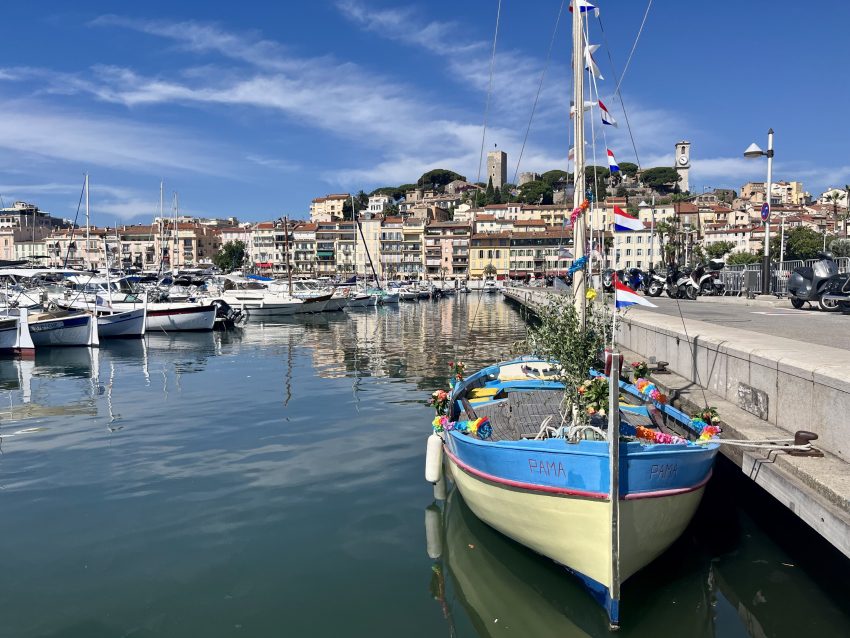
Cannes’ Vieux Port preserves the maritime side of the city that existed long before red carpets and luxury boutiques. The port developed from the small fishing settlement at the foot of Le Suquet, and it remains one of the clearest reminders of Cannes’ original identity. Over time it expanded and modernised, but it still functions as a historic threshold between the old town, the sea, and the later glamour of the Croisette.
Today, the main pleasure of visiting the Vieux Port is watching the mix of boats and the movement around the quays. You can see everything from local craft and ferries to larger yachts, depending on the season, and the masts create one of the classic Cannes views. It is also a key departure area for boats to the Lérins Islands, which gives the port a practical role as well as a scenic one.
The best things to notice are the relationship between the harbour and the surrounding landmarks: Le Suquet above, the quays below, and the Palais des Festivals across the waterline. If you visit during major boating events, the atmosphere can be especially lively, but even on an ordinary day the port is one of the easiest places to read Cannes as a city shaped by both sea trade and tourism.
Location: Jetée Albert Edouard, 06400 Cannes, France | Hours: 24 Hours. | Price: Free. | Website
6. Les Murs Peints
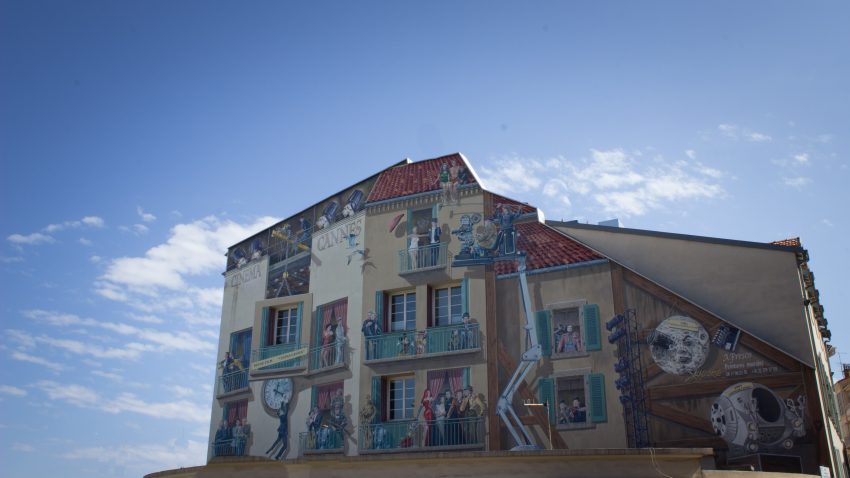
Les Murs Peints are a more recent layer of Cannes’ cultural identity, created to celebrate the city’s long association with cinema beyond the festival period. Rather than one single monument, they are a series of large painted murals spread across Cannes, each turning an ordinary wall into a tribute to film history, iconic actors, or memorable scenes. They show how the city has woven cinema into everyday streets and neighbourhoods.
What makes them interesting is the variety of styles and locations. Some murals are in well-trafficked areas, while others appear in quieter corners, so seeing them feels a bit like discovering an open-air gallery. The official Cannes material highlights that they are scattered from the Croisette to Le Suquet, which means they also help you notice different parts of the city while following the film theme.
When visiting, look closely at the artistic details and the way each work uses the building surface and surrounding street. Some murals focus on classic cinema references, while others are more playful or nostalgic. Even if you do not recognise every character, the murals are worth seeing because they capture Cannes’ public image—cinema, spectacle, and visual storytelling—outside the formal festival venues.
Location: 1 Quai Saint-Pierre, 06400 Cannes, France | Hours: 24 Hours. | Price: Free.
7. Notre Dame d'Esperance
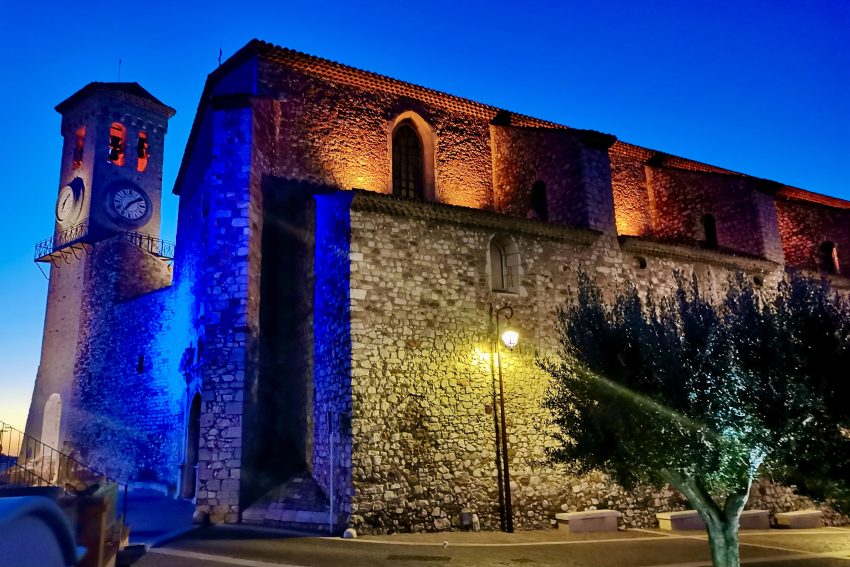
Notre-Dame d’Espérance is one of the most important historic religious buildings in Cannes and a major landmark of Le Suquet. Built on the hill above the old quarter, it replaced an earlier chapel and was constructed over a long period from the 16th into the 17th century, with interruptions linked to instability and epidemics. That extended construction history helps explain its layered Gothic and Renaissance character.
Inside, the church is valued for its calm atmosphere and its architectural details rather than overwhelming grandeur. Sources describe a single nave with side chapels and a semicircular choir, and many visitors come as much for the historic interior as for the sense of continuity with old Cannes. It is one of the places where the city feels older, quieter, and less tied to the modern Riviera image.
What to see here includes both the church itself and the views around it. Because of its elevated position in Le Suquet, the area offers some of the best perspectives over Cannes, including the old quarter, the port, and the bay. It is especially rewarding to take your time in the square and nearby lanes after visiting the church, as the setting is part of what makes the site memorable.
Location: 1 Rue de la Castre, 06400 Cannes, France | Hours: Daily: 09:00–17:00. | Price: Free; donations appreciated.
8. Musée des Explorations du Monde
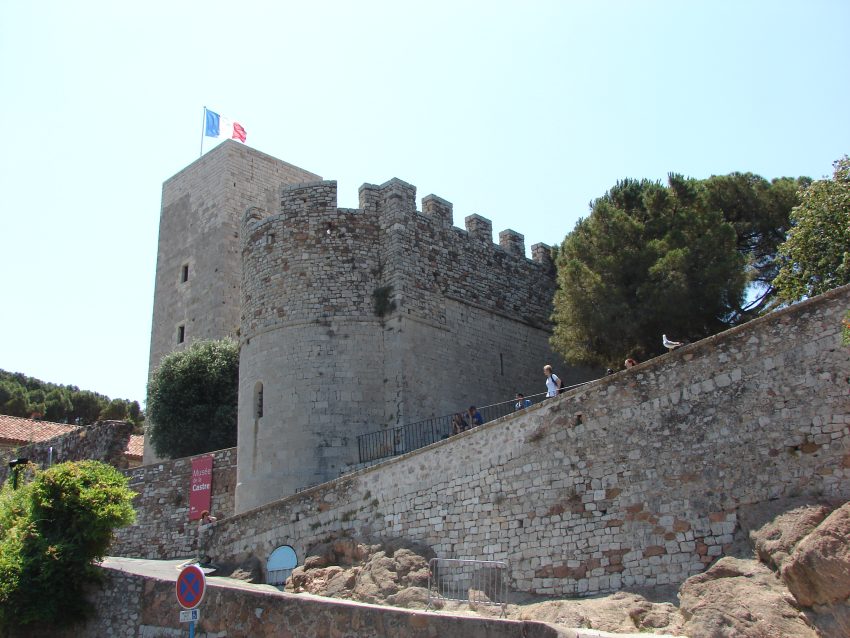
The Musée des Explorations du Monde is housed in a historic hilltop complex above Le Suquet and is one of Cannes’ most distinctive cultural sites. Formerly known as the Musée de la Castre, it was renamed at the beginning of 2021, but the museum’s role remains rooted in displaying collections that connect Cannes to wider world cultures and historical eras. The city acquired the buildings in 1919 to house collections previously kept in the Town Hall.
The museum’s setting is part of its historical appeal. The former convent/fortified complex has defensive walls and a tower, reflecting the strategic hilltop position above the old town. That gives the museum a very different atmosphere from a modern gallery: you are exploring collections inside a place that is itself an artifact of Cannes’ earlier urban history.
In terms of what to see, the museum is known for varied collections including musical instruments from around the world, Mediterranean antiquities, non-European art, and 19th-century landscape painting, along with temporary exhibitions. Many visitors also come for the grounds and panoramic views as much as the exhibits, so it is worth allowing time to enjoy both the displays and the site’s elevated outlook over Cannes.
Location: 6 Rue de la Castre, 06400 Cannes, France | Hours: (October – March) Tuesday – Sunday: 10:00–13:00 & 14:00–17:00; Closed on Monday. (April – June) Tuesday – Sunday: 10:00–13:00 & 14:00–18:00; Closed on Monday. (July – August) Daily: 10:00–19:00. (September) Tuesday – Sunday: 10:00–13:00 & 14:00–18:00; Closed on Monday. | Price: Adults: €6.50; Reduced: €3.50. | Website
9. Marche Forville
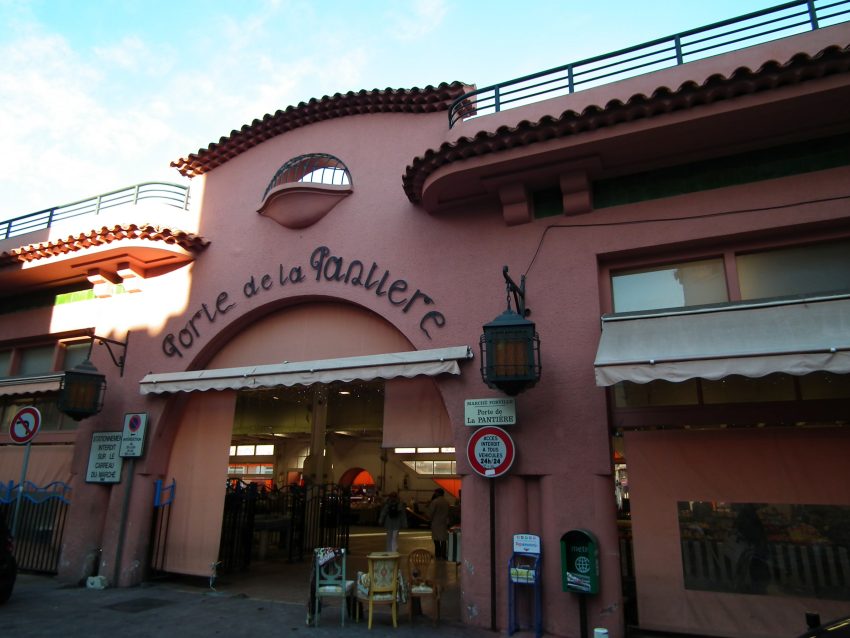
Marché Forville is one of the places where Cannes feels most connected to daily local life rather than festival glamour. It has long served as the city’s principal produce market, and modern descriptions still present it as a central meeting place for local growers, fish sellers, and shoppers. Its importance comes from continuity: this is where the food culture of Cannes is visible in a very direct way.
Historically and architecturally, Forville is associated with the covered market hall, which gives it a more permanent civic character than a temporary street market. The market has become a culinary landmark in Cannes, known for local produce from the surrounding area and seafood from the Bay of Cannes. It is often described as a place that supplies both residents and serious cooks, including chefs.
When you visit, the main things to see are the produce displays, fish counters, flowers, and the overall rhythm of the market rather than a single monument. Look for seasonal items and the interaction between traders and regular customers, which gives the market much of its character. Even if you are not shopping, it is one of the best places in Cannes to understand local flavours and everyday city life.
Location: Rue du Marché Forville, 06400 Cannes, France | Hours: (Summer) July 1 – August 31; Monday – Sunday: 07:00–13:00. (Winter) September 1 – June 30; Tuesday – Sunday: 07:00–13:00. | Price: Free. | Website
10. Rue Meynadier
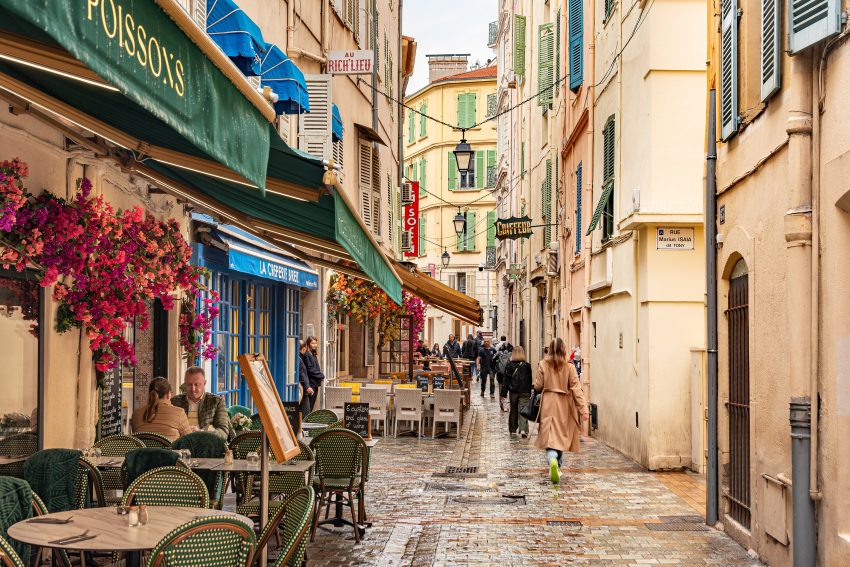
Rue Meynadier is one of the oldest commercial streets in Cannes and offers a clear link to the city before it became synonymous with luxury tourism. It developed as a practical market and trade street near the foot of Le Suquet and close to Forville, and its long commercial role is still visible today. Cannes tourism material explicitly describes it as the historical street of the city’s commerce.
Its historical character differs from the more polished shopping avenues nearby. Rue Meynadier has traditionally been associated with food shops, everyday purchases, and older local businesses, and it keeps more of a Provençal street feel than the prestige-focused retail zones. That contrast is part of its appeal, especially if you want to see a version of Cannes shaped by residents as well as visitors.
What to see here is less about formal sights and more about atmosphere: narrow pedestrian stretches, shopfronts, specialist food stores, and the flow between market, old town, and central Cannes. It is a good place to look for local snacks, sweets, or gourmet products, and to observe how older commercial Cannes still survives within a city better known internationally for glamour.
Location: Rue Meynadier, 06400 Cannes, France | Hours: 24 Hours. | Price: Free.

Moira & Andy
Hey! We're Moira & Andy. From hiking the Camino to trips around Europe in Bert our campervan — we've been traveling together since retirement in 2020!
This website uses affiliate links which earn a small commission at no additional cost to you.
Walking Tour Summary
Distance: 4 km
Sites: 10
Walking Tour Map