Self-Guided Walking Tour of Bregenz, Austria (+Maps!)
This website uses affiliate links which earn a small commission at no additional cost to you.
A Self-Guided Walking Tour of Bregenz is one of the easiest ways to get under the skin of this lakeside city: you can move at your own pace, follow a clear route between highlights, and keep the day as relaxed (or as packed) as you like. With a simple map in hand, the walk naturally strings together the waterfront, cultural “mile,” and the atmospheric upper town without you constantly doubling back.
What makes Bregenz especially satisfying on foot is how quickly the scenery changes. One moment you're by Lake Constance with wide-open views; a few streets later you're climbing into quieter lanes where historic buildings, small squares, and lookout points start to take over. It's a compact city, but it doesn't feel repetitive, and the short distances make it easy to add detours when something catches your eye.
If you're looking for the best things to see in Bregenz, this route is built to cover the essentials while still leaving plenty of room for spontaneity. Expect a mix of lake promenade moments, culture and architecture, and a couple of “pause and stare” viewpoints that are worth planning your day around.
Table of Contents
- How to get to Bregenz
- A Short History of Bregenz
- Where to Stay in Bregenz
- Your Self-Guided Walking Tour of Bregenz
- Martinsturm
- Altes Rathaus
- Ehregutaplatz
- Fountain of the Minnesinger of Montfort
- Deuringschloessle
- Kirche St. Gallus
- Kapuzinerkloster
- Palais Thurn and Taxis Art House
- Thurn-und-Taxis Park
- Gruenes Haus
- Altes Landhaus
- Vorarlberg Provincial Museum
- Kunsthaus Bregenz
- Nepomukkapelle
- Kornmarktstrasse No. 7
- Valley Station Cable Car
- Port Bregenz
- Bregenz Promenad
How to get to Bregenz
By Air: Bregenz doesn't have a major airport in the city, so the usual approach is to fly into a nearby regional or international hub and continue by rail or road. Common options include St. Gallen-Altenrhein (small and close), Friedrichshafen (across the lake), and Zürich (the biggest choice with frequent onward connections). From the airport, aim for a train to Bregenz Hauptbahnhof (main station) or a direct drive if you're continuing as part of a wider trip. For the best deals and a seamless booking experience, check out these flights to Bregenz on Booking.com.
By Train: Arriving by train is often the simplest, because Bregenz sits on a well-used corridor connecting Austria, Germany, and Switzerland, with a main station that's walkable to the centre and the lake. Services on routes such as Zürich-Munich and long-distance Austrian trains that terminate or stop here make it straightforward to arrive without a car. For planning and tickets, start with ÖBB (Austrian Railways), DB (Deutsche Bahn), or SBB (Swiss Federal Railways). You can easily check timetables and book train tickets through the ÖBB (Austrian Federal Railways) website. However, for a smoother experience, we recommend using Omio, which simplifies the booking process and lets you compare routes, prices, and departure times all in one place.
By Car: If you're driving, Bregenz is easy to reach via the A14 (Rheintal/Walgau Autobahn), which links into the wider motorway network around Lake Constance. The practical tip is to decide in advance whether you want to park once and walk all day (often the most pleasant option) or keep the car for a quick hop to viewpoints outside the centre. In peak festival periods and summer weekends, parking can tighten up near the waterfront, so arriving earlier makes the day calmer. If you are looking to rent a car in Austria I recommend having a look at Discover Cars, first, as they compare prices and review multiple car rental agencies for you.
By Bus: Long-distance coaches and regional buses can also work well, particularly if you’re coming from nearby cities around the lake or from larger hubs where coaches are frequent. The advantage is that you’ll usually arrive close to the station/centre area, which is ideal for starting a walking route without needing to think about parking at all.
How to get around the city: Bregenz is highly walkable, and this walking tour assumes you'll cover most of the day on foot with short, easy distances between stops. If you want to reduce walking time or link neighbourhoods, the local bus network is useful, and taxis are easy for quick point-to-point trips. For the biggest elevation change, use the Pfänder cable car when it suits your timing (it can be a great “finale” viewpoint if you want a big finish to the day).
A Short History of Bregenz
Bregenz in Roman Brigantium
Long before today's lakefront promenades and cultural venues, Bregenz was known to the Romans as Brigantium, a strategic settlement linked to trade and movement around Lake Constance. That early importance shaped the pattern of the place: routes converged here, and the idea of Bregenz as a “gateway” town around the lake never really disappeared. When you walk the waterfront and then drift back into the older streets, you're following a rhythm that has existed for centuries-movement, arrival, exchange, and a city shaped by connections.
Bregenz in the Medieval Upper Town
The medieval period is still felt most strongly in the Upper Town, where steep lanes and historic silhouettes make the city feel older and more defensive in character. Martinsturm (St. Martin's Tower) is the standout landmark up here, and it works as more than a photo stop: it's a reminder of the Upper Town's historic role as a vantage point and a symbol of civic identity. On a walking tour, this is the moment when the city's story becomes physical-views open out, the streets tighten, and the idea of “Bregenz above the lake” makes immediate sense.
Bregenz under the Habsburgs and a Borderland Identity
Over time, Bregenz’s position near today’s Austrian, German, and Swiss borders encouraged a borderland identity-commercially active, outward-looking, and shaped by wider political shifts. That broader Central European context influenced the city’s civic architecture and the way the centre developed: streets and squares that feel practical and merchant-minded rather than purely monumental. On foot, you notice how the city centre balances everyday life with a sense of being a meeting point for visitors coming in from multiple directions.
Bregenz in the Modern Cultural Era
Modern Bregenz is inseparable from its cultural institutions and its relationship with the lake as a stage. The lakeside festival tradition (and the distinctive waterside performance setting) helped push the city's identity toward arts and events, while contemporary cultural architecture strengthened that direction. Kunsthaus Bregenz is the clearest example-international in outlook and deliberately modern-while the nearby Vorarlberg Museum anchors the local story and gives context to the region the city represents. On a walking route, this “culture mile” feel is one of Bregenz's defining contrasts: medieval viewpoints a short walk from some of Austria's most striking contemporary museum spaces.
Where to Stay in Bregenz
To make the most of visiting Bregenz and this walking tour then you consider stay overnight at the centre. If you stay in the central area near the pedestrian streets and the lake, you can begin the route within minutes of your hotel, take an early-morning promenade before day-trippers arrive, and finish the day without thinking about transport back to where you're sleeping. Strong, walkable options here include Hotel Messmer and Hotel Weißes Kreuz, both of which put you close to the harbour, central streets, and the main cluster of sights you’ll cover on foot.
If you’d like a slightly quieter base while still staying within easy reach of the centre, look for places just outside the busiest core, where you can enjoy calmer evenings and often easier parking, then walk or bus in as needed. A reliable choice for that “quiet but connected” feel is Hotel Schwärzler, which is well-suited if you want comfort, facilities, and a neighbourhood vibe rather than being directly on the central pedestrian lanes.
If your priority is being near the lakefront, lido area, and festival grounds, staying in the lakeside zone can be ideal-especially if you want to build your walking day around the promenade and cultural venues by the water. It keeps the start and end of the route naturally scenic, and it’s convenient for evening strolls when the light drops over the lake. A practical option in this area is JUFA Hotel Bregenz, which also works well for travellers who want straightforward logistics close to the station-lake axis.
Your Self-Guided Walking Tour of Bregenz
Discover Bregenz on foot with a walking tour map guiding you between each stop as you explore its lakefront promenades, cultural landmarks, historic upper town viewpoints, and characterful streets. Because this is a self-guided walking tour, you're free to skip anywhere that doesn't match your interests, swap the order to suit the weather, and take coffee breaks whenever you want-your map keeps the route simple, but the day stays completely flexible.
1. Martinsturm
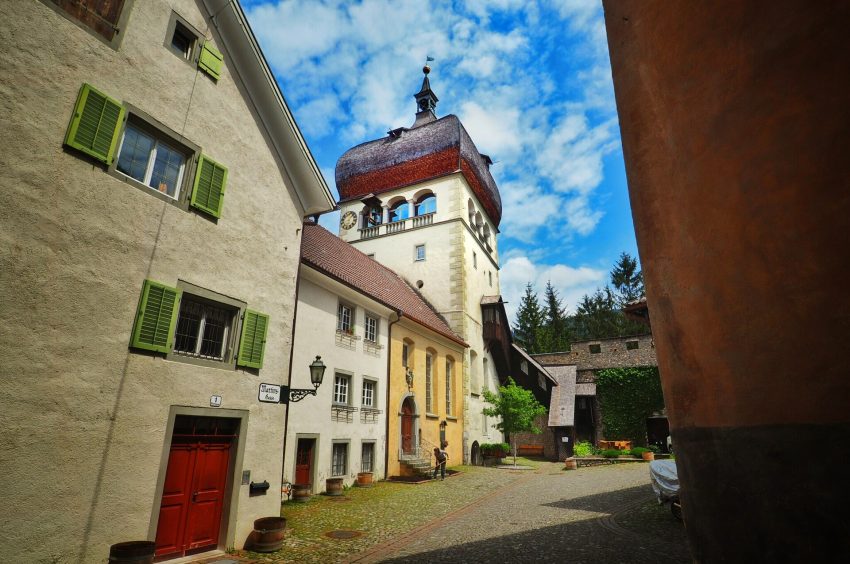
Martinsturm is one of the best-known landmarks in Bregenz’s Oberstadt, built as an early-17th-century watchtower (commonly dated to 1599–1602) and later crowned by its distinctive Baroque onion dome. It also preserves older fabric around it, including the adjacent chapel traditionally associated with medieval wall-paintings.
Inside, the appeal is partly architectural: you’re moving through a compact historic tower that still reads as a piece of the town’s old fortification system, with small rooms and a “tower life” feel rather than a grand palace interior. The setting on the hilltop Oberstadt also helps you place it in the wider story of Bregenz’s defended upper town.
For visitors, the main “what to see” is the climb and the panorama—Lake Constance, rooftops, and the Alpine horizon—plus the preserved spaces and chapel details at the base. Plan on narrow stairways and a short, vertical visit that’s more about views and atmosphere than long galleries.
Location: Martinsgasse 3b, 6900 Bregenz, Austria | Hours: (Summer) May 1 – October 31; Tuesday – Sunday: 10:00–18:00. Closed on Monday. | Price: Adults: €5; Reduced: €3.50; Children (up to 15): €2. | Website

2. Altes Rathaus
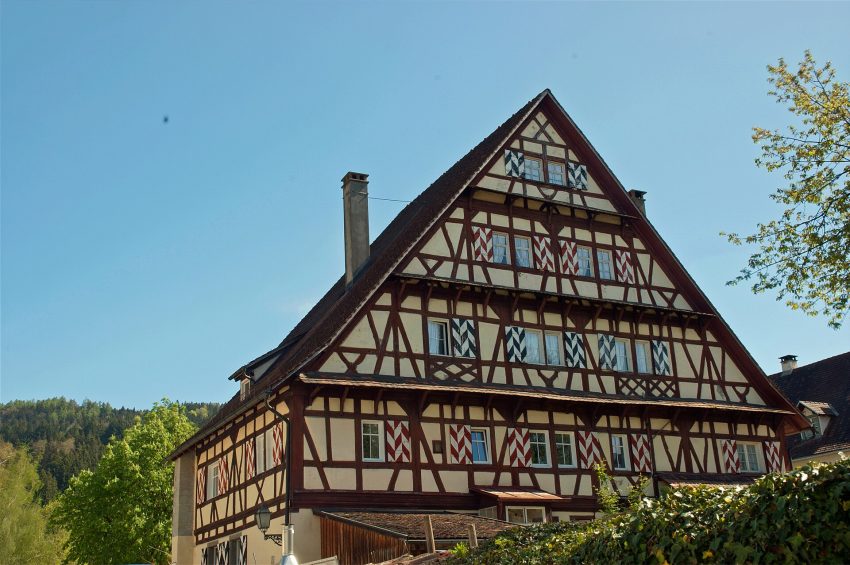
Altes Rathaus in the Oberstadt is widely described as the city’s largest half-timbered house, built in 1662 and used as an administrative centre into the 19th century. Its survival in the upper town makes it a useful “anchor” for understanding how civic power used to sit up on the hill before Bregenz’s focus shifted more strongly to the lower town and the lakefront.
Historically, the building reads as a statement of early-modern municipal confidence: big timber framing, prominent façade, and a scale that still stands out among the Oberstadt’s streets. Even though it is no longer the working town hall, it remains one of the clearest pieces of everyday civic architecture from that era.
What to see today is primarily exterior: the timber work and proportions, how it sits in the tight fabric of the upper town, and the way it frames the surrounding historic lanes and squares. Treat it as a “look closely” stop—details, textures, and the feel of the old administrative quarter.
Location: Eponastraße 11, 6900 Bregenz, Austria | Hours: 24 Hours. | Price: Free.
3. Ehregutaplatz
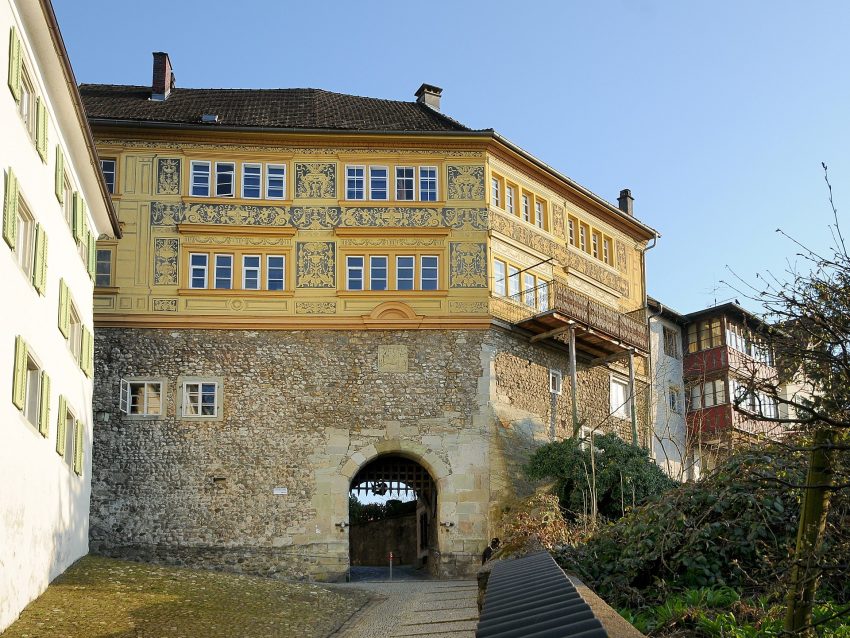
Ehregutaplatz is a small but story-heavy square in Bregenz’s Upper Town, associated with the local legend of “Guta,” who is credited in tradition with warning the town during conflict in 1407 (often linked to the Appenzell Wars). Whether you read it as firm history or civic legend, it’s clearly a named place of memory in the Oberstadt.
The square’s significance is less about a single monumental building and more about how it concentrates several Oberstadt highlights into one open space—an old-town pause point where Bregenz’s layered medieval-to-early-modern narrative is easy to sense. It’s also repeatedly identified as the setting for notable nearby features such as the Montfort fountain and the proximity to Martinsturm.
When you’re there, the “what to see” is the ensemble: the square itself, the surrounding historic façades, and how quickly it links you to neighbouring landmarks in the upper town. It’s a good place to stop, orient yourself, and look outward to connect the Oberstadt’s compact geography.
Location: Ehregutapl., 6900 Bregenz, Austria | Hours: 24 Hours. | Price: Free.
4. Fountain of the Minnesinger of Montfort
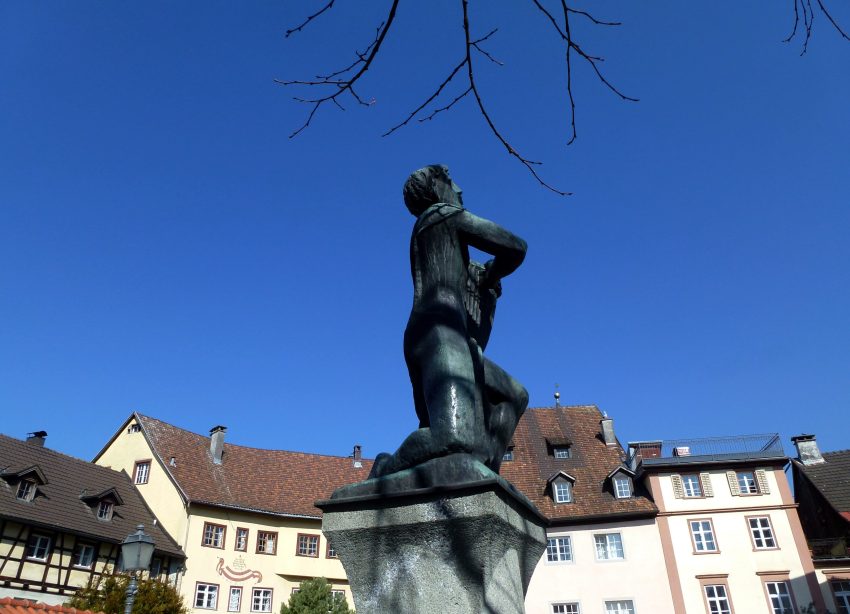
This fountain commemorates Hugo of Montfort (1357–1423), a nobleman and poet associated with the Montfort-Bregenz line, represented in bronze with a harp in a fountain setting. The dedication makes it one of those small monuments that points directly at medieval regional identity, not just decoration.
As a historical marker, it’s essentially a public reminder that elite patronage, politics, and literature overlapped in the late medieval Lake Constance world. Hugo’s presence here is part heritage branding, part genuine commemoration, tying a named individual to a lived urban space rather than leaving him in manuscripts alone.
What to see is straightforward but rewarding: the sculptural details (pose, instrument, basin and column treatment) and how it plays against the calm of the upper town square setting. It’s a short stop, best appreciated by lingering long enough to notice the workmanship and the symbolism.
Location: 6900 Bregenz, Austria | Hours: 24 Hours. | Price: Free.
5. Deuringschloessle
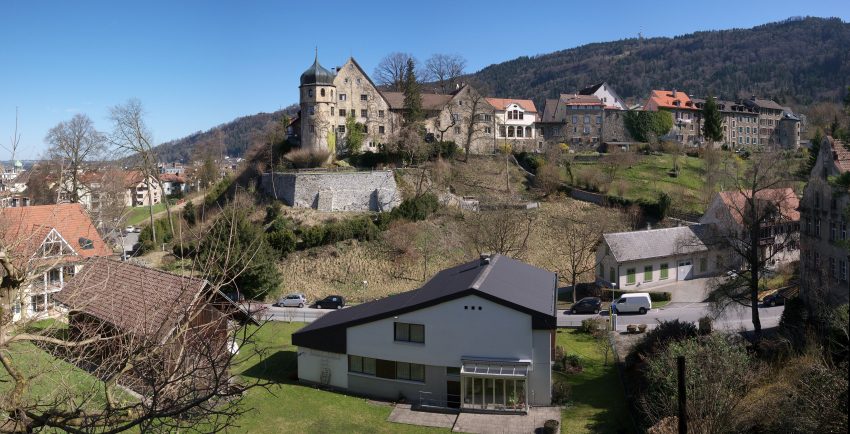
Deuringschloessle is a protected historic residence in the Oberstadt whose core is described as late medieval (14th/15th century), later expanded substantially after Johann Albert von Deuring acquired it in 1660. Its history includes documented damage during the Swedish capture of Bregenz in 1647 and later Baroque-era reshaping that helped define the upper town’s silhouette.
The building’s story is essentially “growth over centuries”: medieval house form, early-modern fortification context, and then a more representational Baroque profile as the Deuring family developed the property. That layered evolution is part of why it’s frequently discussed as an architectural partner to Martinsturm in defining the Oberstadt skyline.
For visitors, the emphasis is on exterior appreciation—massing, the relationship to the town wall and corner towers, and the overall silhouette effect from viewpoints around the upper town. Access and use have varied over time, so it’s best approached as a historic landmark to read from the street rather than a guaranteed interior visit.
Location: Ehregutapl., 6900 Bregenz, Austria | Hours: Monday: Open 24 hours Tuesday: Open 24 hours Wednesday: Open 24 hours Thursday: Open 24 hours Friday: Open 24 hours Saturday: Open 24 hours Sunday: Open 24 hours | Website
6. Kirche St. Gallus
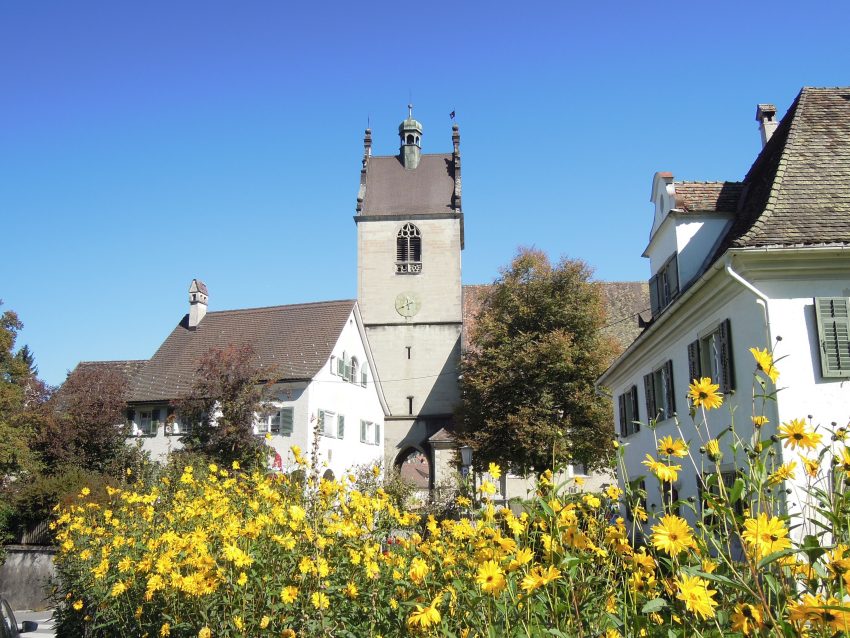
Kirche St. Gallus has roots reaching back into the early Middle Ages, with parts of the walling described as late Roman and dating to the 5th century, and later phases that include Gothic tower elements and a largely Baroque dome and interior character. It’s a prime example of how sacred sites in Bregenz were repeatedly rebuilt rather than replaced.
Historically, the church’s long continuity is tied to shifting religious administration and changing architectural taste: early foundations, medieval strengthening, then Baroque transformation that brought a more theatrical spatial experience and decorative programme. That “time stack” is the key to understanding it—what you see now is the product of multiple centuries of investment.
What to see on site is the contrast between the older structural elements and the later interior atmosphere: façade/tower character outside, then the dome-led Baroque feel within. Even a short visit works well here because the building communicates its history through visible stylistic shifts.
Location: Kirchpl. 3, 6900 Bregenz, Austria | Website
7. Kapuzinerkloster
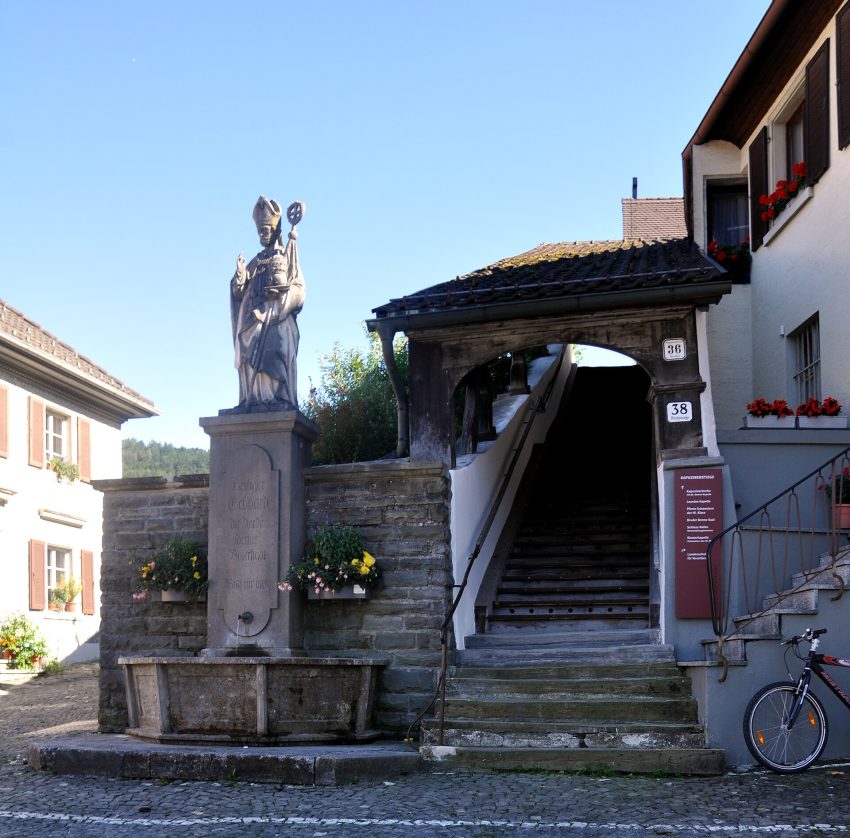
Kapuzinerkloster was founded in the 1630s (commonly given as 1636, with consecration soon after), established in the Counter-Reformation era to reinforce Catholic life near the religious frontier zones around Lake Constance. The Capuchins’ emphasis on simplicity and pastoral service shaped how such houses functioned in towns like Bregenz.
Its endurance is part of the story: many monasteries were dissolved under Joseph II’s reforms, yet this house is commonly presented as surviving and continuing its religious tradition. That continuity makes it a useful lens for understanding 17th-century religious politics and the everyday institutional presence of monastic orders in the region.
What to see tends to be the quiet atmosphere and the sense of place more than a checklist of objects: the monastery complex as a historic precinct, its relationship to the upper town streets, and the way it leads naturally toward nearby parkland and civic-cultural buildings.
Location: Kirchstraße 36, 6900 Bregenz, Austria | Hours: Monday: 9:30 – 11:30 AM Tuesday: 9:30 – 11:30 AM Wednesday: 9:30 – 11:30 AM Thursday: 9:30 – 11:30 AM Friday: 9:30 – 11:30 AM Saturday: 9:30 – 11:30 AM Sunday: Closed | Website
8. Palais Thurn and Taxis Art House
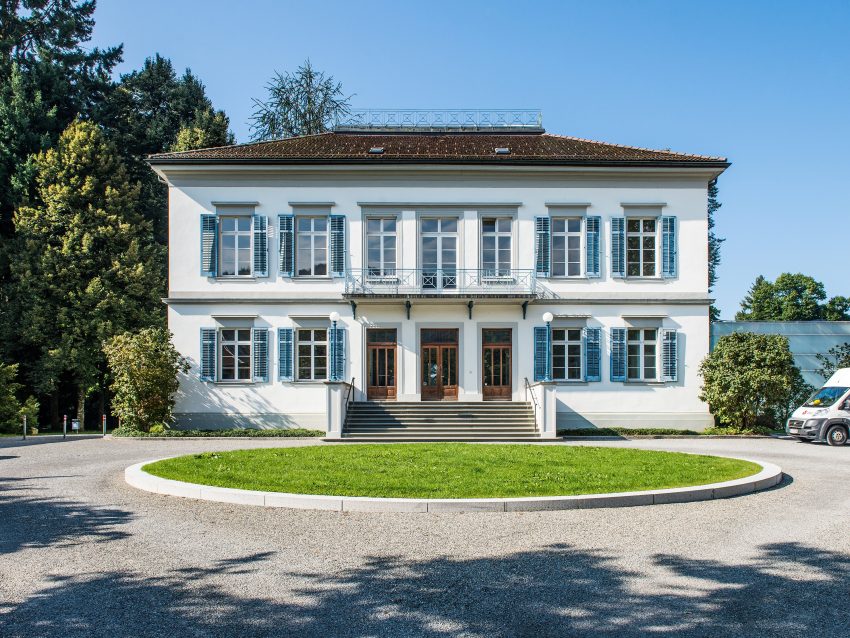
This villa was built in 1848 and later acquired by Prince Gustav of Thurn and Taxis in the late 19th century, giving the property its lasting name; it has been owned by the city since 1915. Since 1953 it has served as the seat of the professional association of visual artists in Vorarlberg, anchoring it as a long-running local arts institution rather than a one-off gallery.
Historically, it’s a good “Bregenz modernity” marker: a mid-19th-century villa that moved from private prestige to civic ownership and public cultural use. That shift mirrors broader European patterns where prominent residences become municipal assets and cultural infrastructure.
What to see is the house-and-park combination: the villa’s period character from the outside, and (when open) the exhibitions and programming associated with the artists’ association. Even without an interior visit, the setting makes sense as a cultivated cultural enclave within the city.
Location: Gallusstraße 10, 6900 Bregenz, Austria | Hours: Wednesday – Saturday: 14:00–18:00. Sunday: 11:00–17:00. Closed on Monday, Tuesday. | Price: Check official website. | Website
9. Thurn-und-Taxis Park
Thurn-und-Taxis Park is closely tied to the Palais Thurn und Taxis property and is described as one of the city’s most attractive parks, notable for a mix of exotic and native trees. Its identity is fundamentally as a landscaped villa park that became part of Bregenz’s public-facing green network.
The park’s historical importance is bound up with the site’s ownership changes and later civic role: once the grounds of a private residence, then increasingly a public urban park setting connected to the city-owned cultural building. That private-to-public evolution is part of what makes it feel “old city” rather than purely recreational infrastructure.
What to see is essentially the landscape experience: mature trees, shaded paths, and the relationship between greenery and the villa architecture. It’s best used as a slow, observational stop—more about atmosphere and scale than monuments.
Location: 6900 Bregenz, Austria | Hours: 24 Hours. | Price: Free.
10. Gruenes Haus
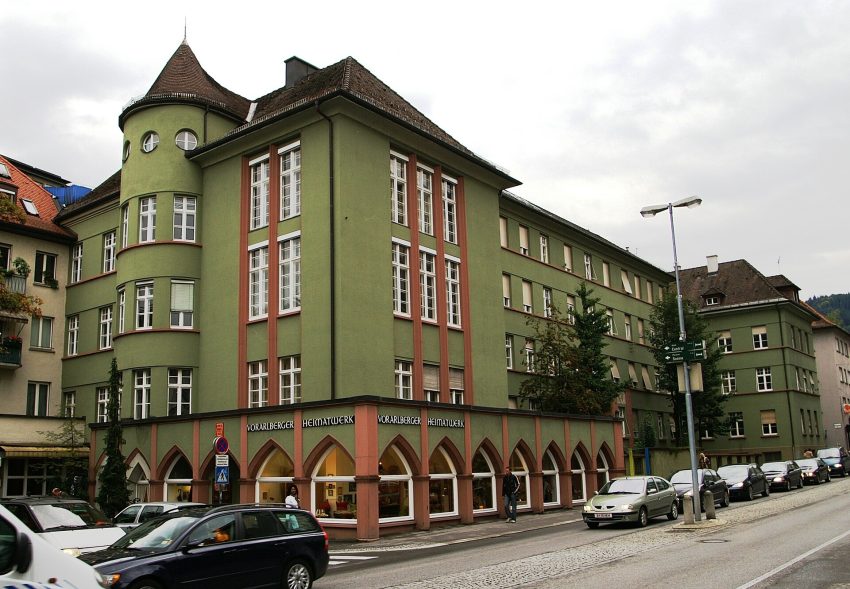
Publicly available references most consistently identify “Grünes Haus” in Bregenz in connection with the Altes Landhaus / provincial government context, but detailed, visitor-oriented historical write-ups are comparatively scarce in the sources that are easy to verify. What can be stated safely is that the term is used for a building associated with the provincial administration area in Bregenz.
In practical terms, that means it belongs to the civic/government layer of the city’s built history rather than the medieval Oberstadt layer: the “what it is” is primarily administrative architecture and the evolution of Bregenz as Vorarlberg’s governmental centre. If you need a precise construction date or architect for “Grünes Haus” specifically, that would require a dedicated archival or official-building reference beyond the general identifiers above.
What to see when you’re there is the streetscape of the government quarter—how the older and newer Landhaus-related buildings sit together and how their façades present a very different Bregenz from the upper town. Treat it as an exterior stop unless you have a specific reason or access for an interior visit.
Location: Kirchstraße 29, 6900 Bregenz, Austria | Hours: 24 Hours. | Price: Free.
11. Altes Landhaus
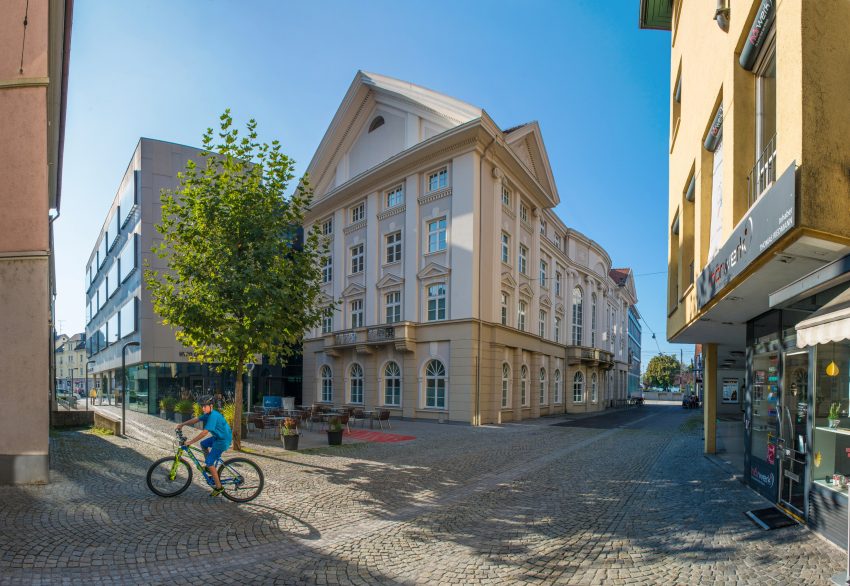
Altes Landhaus is described as an early-20th-century government and convention building, completed in 1921 and designed in a Neoclassical idiom. It represents the period when official architecture aimed for authority and symmetry, using classical elements to signal institutional stability.
Its historic interest is partly civic: it’s tied to the development of provincial administration and public life in Bregenz, and it sits within a broader cluster of public buildings that reflect Vorarlberg’s political and administrative presence in the city. In other words, it’s “state Bregenz,” not “merchant Bregenz” or “fortified Bregenz.”
What to see is the exterior composition—columns, façade rhythm, and the overall scale—plus the way it relates to nearby museums and cultural buildings in the lower town. It’s most rewarding if you enjoy reading architectural detail rather than expecting a traditional attraction interior.
Location: Römerstraße 15, 6900 Bregenz, Austria | Hours: Monday – Friday: 08:00–12:00 & 14:00–17:00. Closed on Saturday, Sunday. | Price: Free.
12. Vorarlberg Provincial Museum
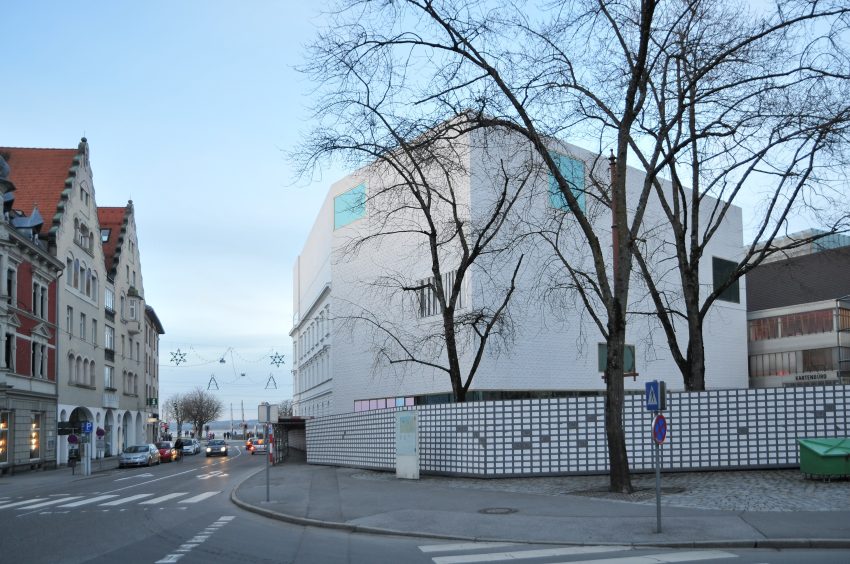
Vorarlberg Museum is the state museum for Vorarlberg, presenting collections that span archaeology, history, art history, and regional folklore, and it functions as a central institution for how the province narrates itself. In that sense, it’s less a single “topic museum” and more a structured introduction to the region through objects and exhibitions.
Its historical role is to gather, preserve, and interpret material culture from across Vorarlberg, and it continues to expand and update its collections. That ongoing curatorial work is important: you’re seeing a living institution that changes with research priorities and exhibition practice, not a static cabinet of curiosities.
What to see depends on the current programme, but the reliable “must” is to focus on the core regional narratives—archaeology and early settlement, social history, and how Vorarlberg’s culture differentiates itself within Austria. If you have limited time, prioritise the permanent-collection highlights and any temporary exhibition with a clear regional anchor.
Location: Kornmarktpl. 1, 6900 Bregenz, Austria | Hours: Tuesday – Sunday: 10:00–18:00. Monday: Closed. First Thursday of the month: 10:00–20:00. | Price: Adults: €12; Reduced: €10; Under 19: free. | Website
13. Kunsthaus Bregenz
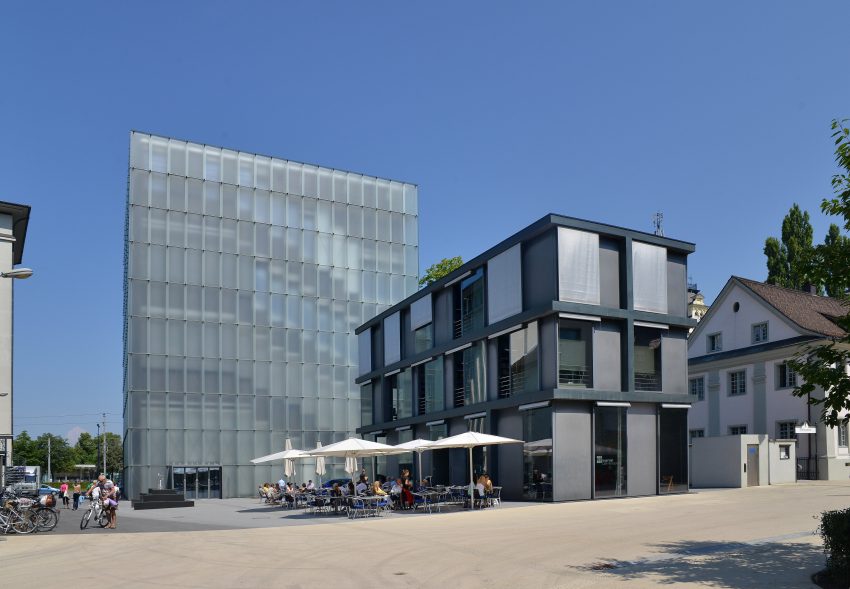
Kunsthaus Bregenz is internationally known both for contemporary art and for its architecture by Peter Zumthor; the building was constructed in the mid-1990s and opened in 1997. It’s often discussed as an exercise in light, material, and spatial restraint—an institution where the building is part of the experience, not just a container.
Historically (in a “recent history of museums” sense), KUB reflects how late-20th-century cultural investment reshaped the Bregenz waterfront zone into a serious arts district. The museum’s identity is tightly tied to changing exhibitions rather than a single permanent collection, which is typical of many contemporary-art institutions.
What to see is twofold: the current exhibition programme, and the building itself—especially how natural light is managed through the façade and interior volumes. If you care about architecture, give yourself time to notice how the galleries feel as you move upward, and how the surroundings (water, civic buildings, lake air) are part of the experience.
Location: Karl-Tizian-Platz, 6900 Bregenz, Austria | Hours: Tuesday – Sunday: 10:00–18:00. Thursday: 10:00–20:00. Closed on Monday. | Price: Adults: €14; Reduced: €12; Ages 20–27: €8; Under 20: free. Free admission every first Thursday of the month, 17:00–20:00. | Website
14. Nepomukkapelle
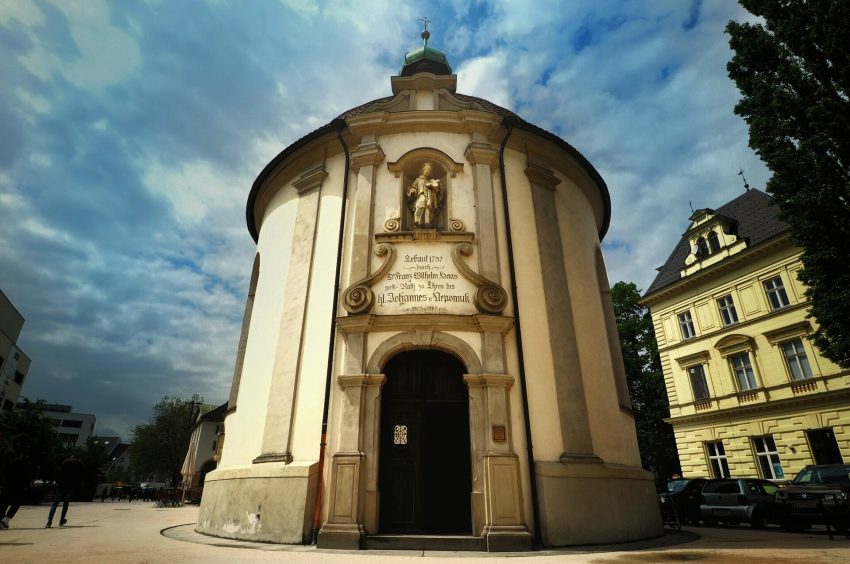
Nepomukkapelle is a small Baroque chapel on Kornmarkt, built in 1757 and explicitly linked in local tradition to a near-drowning on Lake Constance: Franz Wilhelm Haas is described as having commissioned it in gratitude after being rescued. Dedication to St John of Nepomuk (patron associated with water peril) fits that origin story closely.
Its historical interest is precisely this tight link between personal vow, civic location, and devotional practice—an 18th-century “thanksgiving” foundation that became part of the city’s everyday streetscape. Chapels like this are often overlooked because they’re small, but they can be more historically specific than larger churches.
What to see is the exterior form and the interior decoration (where accessible), including the chapel’s Baroque character and the way it sits as a jewel-like interruption in the urban fabric. Even if you only view it from outside, it’s worth pausing to read it as a narrative object: a story about water, danger, survival, and gratitude turned into architecture.
Location: Kaspar-Moosbrugger-Platz 204, 6900 Bregenz, Austria | Hours: Check official website. | Price: Free; donations appreciated.
15. Kornmarktstrasse No. 7
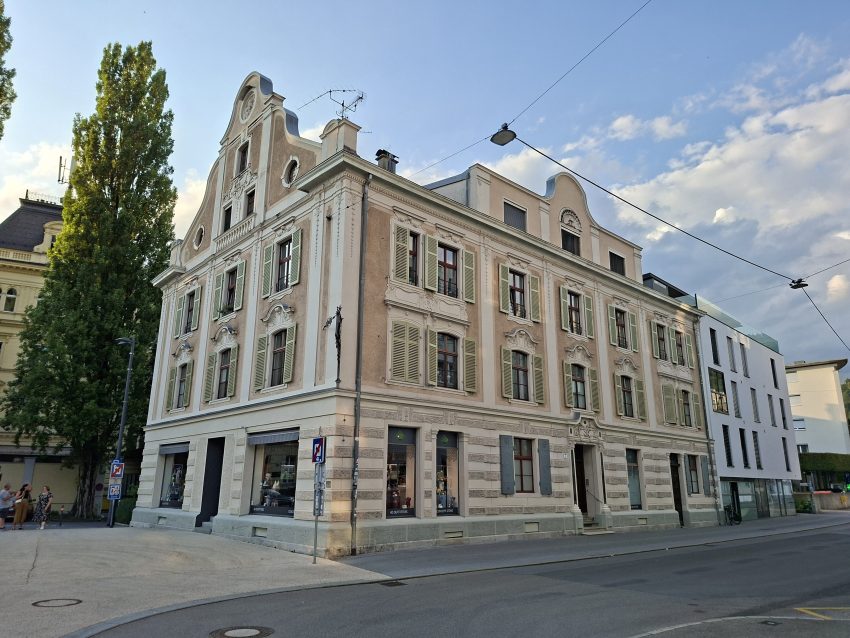
Kornmarktstrasse No. 7 is described as a three-storey historic house whose current appearance dates to a major renovation in 1896, with a façade presented in a late Baroque style and devotional imagery (including a Madonna figure) associated with its frontage. It’s one of those buildings where the “history” is best understood as a visible re-styling moment rather than a single founding date.
That late-19th-century reworking matters because it reflects the era when historicist taste and façade renewal reshaped many Central European town centres—older structures updated to meet contemporary ideas of beauty, status, and urban polish. Here, the result reads as decorative confidence on a prominent street.
What to see is façade detail: openings, ornament, the niche figure, and how the building contributes to Kornmarkt’s architectural “rhythm.” It’s a quick stop, but a good one for anyone interested in how Bregenz’s historic streets aren’t frozen in one century—they’re edited and re-presented over time.
Location: Kornmarktstraße 7, 6900 Bregenz, Austria | Hours: Tuesday – Thursday: 12:00–17:30. Friday – Saturday: 10:00–18:00. Closed on Monday, Sunday. | Price: Free. | Website
16. Valley Station Cable Car
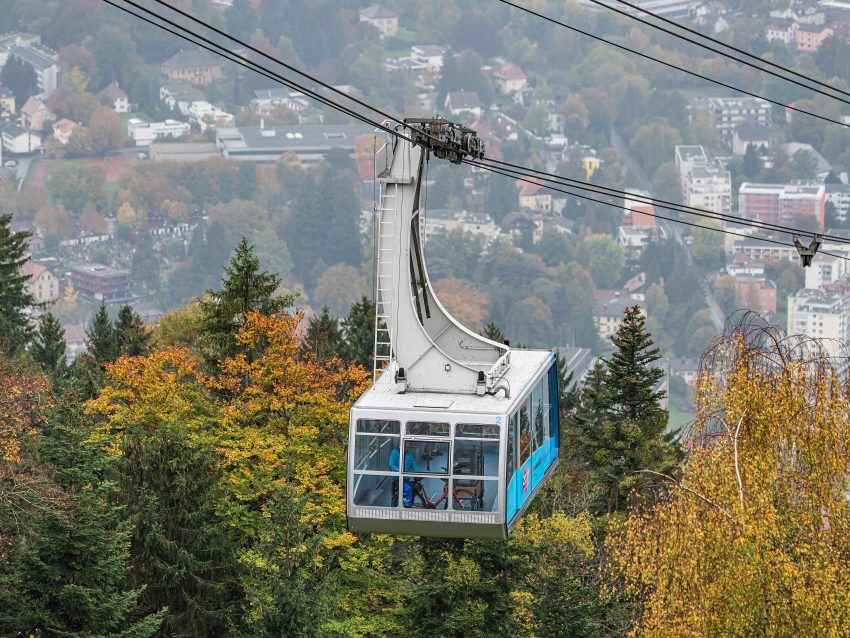
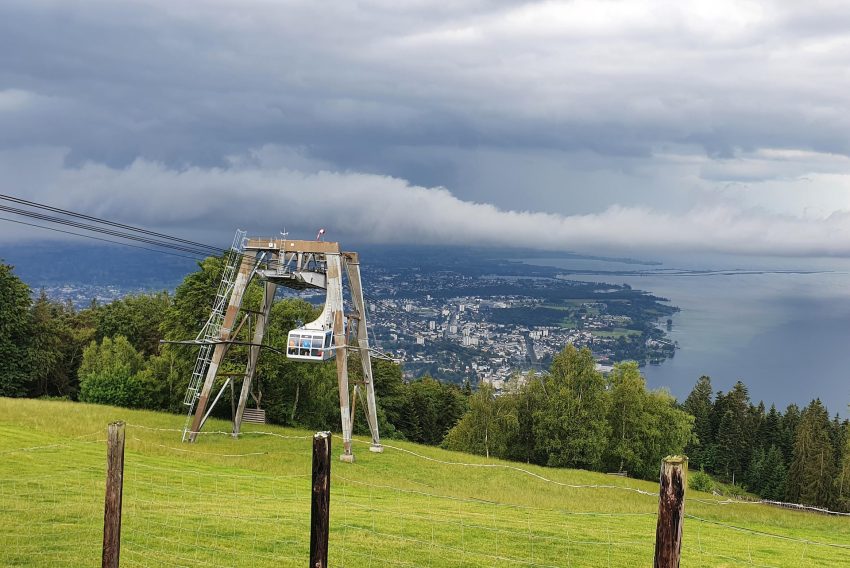
Valley Station Cable Car in Bregenz refers to the Pfänderbahn valley station (Talstation), the lakeside base for the cable car up to Pfänder. The line was built in 1926–1927 and officially opened on 20 March 1927; the station buildings were designed by Bregenz architect Willibald Braun, and the route was chosen over a cog railway largely for practicality in winter conditions.
A major modernisation took place in October 1994 (including new fully glazed cabins and station/platform changes), keeping the system contemporary while retaining the historic identity of the valley station as the gateway to the mountain. The valley station is also where the Pfänderbahn Museum is located, which focuses on the project’s development from early ideas through to the present-day operation.
What to see when you’re there is mainly the “experience set-up”: the listed valley station building, the small museum (if open), and the start of the six-minute ride itself, which is designed to be step-free and accessible for boarding. It’s also a practical place to orient yourself, with official travel/parking information tied to the station site (Steinbruchgasse 4 is the core address used by the operator).
Location: Steinbruchgasse 4, 6900 Bregenz, Austria | Hours: Daily: 08:00–19:00. | Price: Adults (round trip): €19.00; Adults (one way): €12.70; Children 6–15 (round trip): €9.50; Children 6–15 (one way): €6.30; Under 6: free. | Website
17. Port Bregenz
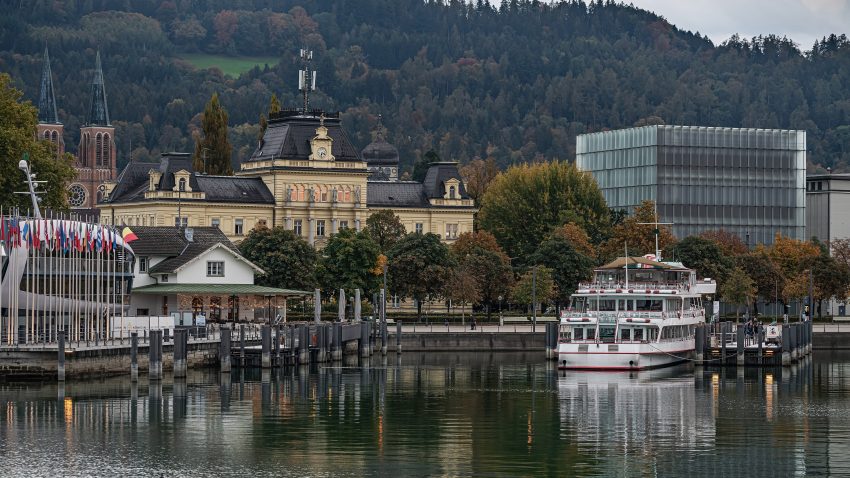
Bregenz’s harbour area is described as having origins in the Middle Ages and evolving into a modern port that has been comprehensively redesigned to handle growing visitor numbers on land and water. That long arc—from working lakeside infrastructure to leisure-focused public realm—is central to understanding present-day Bregenz by the lake.
Historically, the port connects to Lake Constance’s transport economy: documented references to the shore and landing activity go back centuries, and the harbour’s story is part of how Bregenz functioned as a node in regional movement and trade long before it became a cultural destination.
What to see now is the harbour as a place to linger: the redesigned waterfront, the sense of the lake opening out, and the easy connections to nearby cultural venues and promenades. It works well as a “big-sky” stop—boats, open water, and the town’s modern face at the edge of the lake.
Location: 6900 Bregenz, Austria | Hours: 24 Hours. | Price: Free. | Website
18. Bregenz Promenad
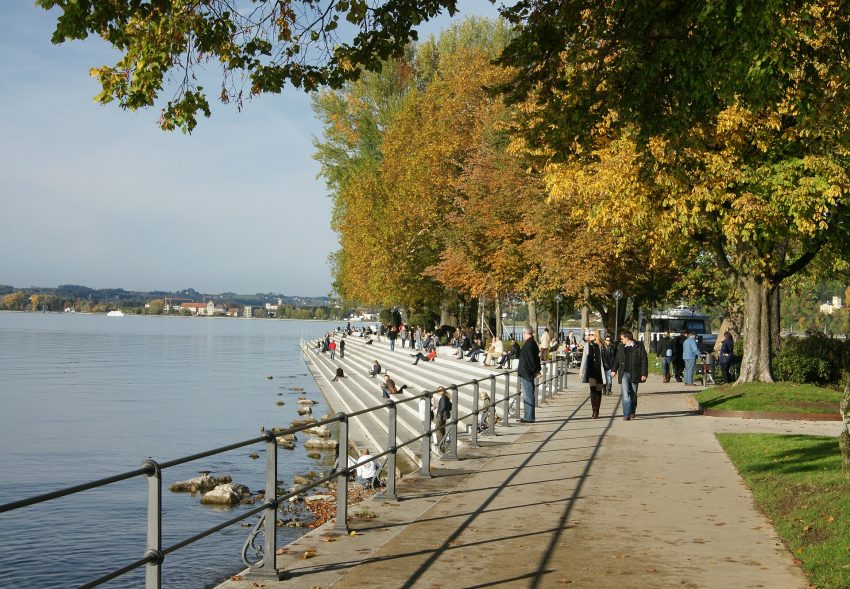
The Lake Promenade developed strongly in the late 19th century as the lakeside shifted from primarily trade and utility toward leisure and tourism, supported by improved rail links and a growing culture of public strolling. That change is part of a broader European pattern where waterfronts become civic living rooms rather than purely economic edges.
In Bregenz, the promenade is also bound to the city’s modern identity as a place where culture and the lake meet—most famously through the festival area and lakeside venues. Even without attending an event, you can read the shoreline as a purpose-built setting for public life.
What to see is essentially the sequence of views and spaces: long lake horizons, public parkland and seating, piers and harbour perspectives, and the general “slow city” rhythm of people out for air and scenery. Time it for changing light if you can—this is one of those places where the main attraction is the atmosphere.
Location: 6900 Bregenz, Austria | Hours: 24 Hours. | Price: Free.

Moira & Andy
Hey! We're Moira & Andy. From hiking the Camino to trips around Europe in Bert our campervan — we've been traveling together since retirement in 2020!
This website uses affiliate links which earn a small commission at no additional cost to you.
Walking Tour Summary
Distance: 3.5 km
Sites: 18