Kapuzinerkloster, Bregenz
in Bregenz
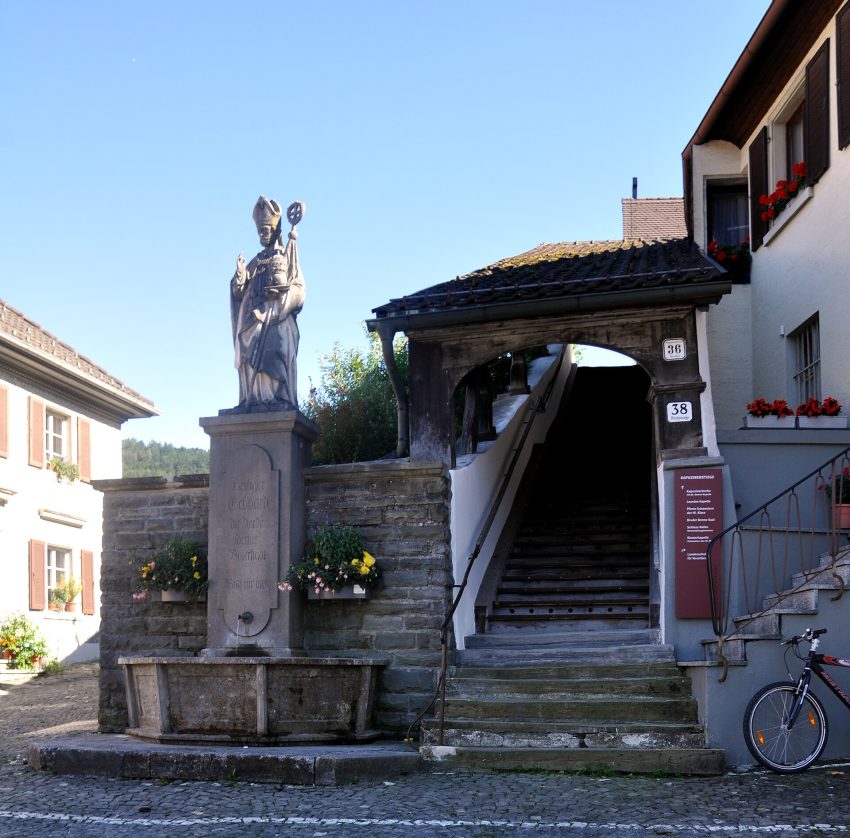
Kapuzinerkloster in Bregenz, Austria, is a former Capuchin monastery in the city's Upper Town and a small-scale religious site with a quiet, local feel. Built in 1639, it remained home to Capuchin monks and the sisters of Saint Claire until 2002, and today visitors usually come here for St. Antonius Church, the monastery setting, and the peaceful streets around Kirchstraße.
The site matters less as a major tourist draw than as part of Bregenz's older urban fabric. Inside and around the complex, visitors can notice covered staircases, the Lourdes Chapel, devotional images, and a baroque church interior that suits a brief, reflective stop. Kapuzinerkloster is best for travelers who like churches, monastic sites, and places that feel tied to everyday local life rather than formal sightseeing.
Table of Contents
- History and Significance of the Capuchin Monastery
- Things to See and Do in the Capuchin Monastery
- How to Get to the Capuchin Monastery
- Practical Tips on Visiting the Capuchin Monastery
- Where to Stay Close to the Capuchin Monastery
- Is the Capuchin Monastery Worth Visiting?
- For Different Travelers
- FAQs for Visiting Capuchin Monastery
Capuchin Monastery in Bregenz is one of those places that can easily be missed if you focus only on the lake, the festival stage, and the city's modern cultural landmarks. Yet it offers something many larger attractions cannot: a more intimate encounter with Bregenz's historic and spiritual side. Tucked into the Upper Town, it feels rooted in the older rhythm of the city, where narrow lanes, church towers, and centuries-old buildings still shape the experience of walking around.
What makes the site memorable is the contrast it provides. Bregenz is often associated with bold architecture and the open sweep of Lake Constance, but here the mood becomes quieter and more inward-looking. The monastery and church invite a slower pace, whether you are interested in architecture, religious history, or simply a peaceful stop away from the busiest parts of town.
It also works well as part of a broader route through the Upper Town. Rather than standing in isolation, it belongs to a cluster of historic places that together reveal Bregenz’s layered past. Even a short visit can add depth to your understanding of the city, especially if you enjoy lesser-known religious landmarks and places that still retain a lived-in sense of purpose.
History and Significance of the Capuchin Monastery
The Capuchin presence in Bregenz goes back centuries, and the monastery formed part of the city's longstanding religious life. Like many Capuchin foundations, it was shaped by the order's emphasis on simplicity, preaching, humility, and closeness to ordinary people. That tradition gave the site a practical and spiritual role that extended beyond the monastery walls and into the life of the town.
Over time, the church associated with the monastery became more widely known as St. Antonius Church, and the site developed a continuing identity as a place of worship rather than simply a historical relic. That continuity matters. It means visitors are not just looking at an old building, but at a place that has remained tied to prayer, devotion, and the local Catholic community over many generations.
Architecturally, the church adds to the significance of the complex. Its baroque character reflects the visual language of the period, while the wider monastery setting anchors it in the historic urban fabric of Bregenz. The result is a site that feels both spiritual and civic, part of the religious story of the city and part of its architectural memory as well.
Things to See and Do in the Capuchin Monastery
The main focus of a visit is the church itself, where the quieter scale of the interior encourages a slower, more reflective experience than many major city churches. Look closely at the baroque detailing, the devotional atmosphere, and the way the space feels designed for prayer rather than spectacle. Even if you are not especially religious, the church has a calm and grounded character that makes it worth stepping inside.
Another reason to visit is the setting in the Upper Town. The monastery makes more sense when seen as part of the surrounding neighborhood, where older streets and historic buildings create a much more intimate version of Bregenz than the waterfront promenade. A short stop here can easily become one of the most atmospheric parts of a walking route through the old quarter.
The site also has meaning for visitors interested in local religious history, especially through the continuing life of St. Antonius Church and its links to devotion in the city. It is a good place to pause, take in the quieter side of Bregenz, and appreciate how much of the city's identity lies away from its better-known modern attractions.
How to Get to the Capuchin Monastery
The Capuchin Monastery is in Bregenz's Upper Town on Kirchstraße, within walking distance of the city center but slightly removed from the lakeside areas where many visitors spend most of their time. If you are already exploring central Bregenz, the simplest approach is on foot, following the streets uphill into the older quarter where the church and monastery complex sit among other historic buildings.
If you are arriving by air, the nearest practical airports are Friedrichshafen Airport in Germany, St. Gallen-Altenrhein Airport in Switzerland, and Zurich Airport for the widest range of international connections, after which you continue to Bregenz by rail or road. For the best deals and a seamless booking experience, check out these flights to Bregenz on Booking.com. If you are coming by train, Bregenz station is well connected within the Lake Constance region and wider Austria, and from the station you can either walk uphill to the Upper Town or take a short local transfer before continuing on foot. You can easily check timetables and book train tickets through the ÖBB (Austrian Federal Railways) website. However, for a smoother experience, we recommend using Omio, which simplifies the booking process and lets you compare routes, prices, and departure times all in one place. If you are driving, Bregenz is easy to reach by road, but parking is usually more convenient near the center rather than directly beside the old quarter, so it makes sense to park once and explore the area on foot. If you are looking to rent a car in Austria I recommend having a look at Discover Cars, first, as they compare prices and review multiple car rental agencies for you.
Practical Tips on Visiting the Capuchin Monastery
- Entrance fee: Free.
- Opening hours: Monday: 9:30 – 11:30 AM Tuesday: 9:30 – 11:30 AM Wednesday: 9:30 – 11:30 AM Thursday: 9:30 – 11:30 AM Friday: 9:30 – 11:30 AM Saturday: 9:30 – 11:30 AM Sunday: Closed
- Official website: https://www.klaraschwestern.at/hauptsitz-bregenz.htm
- Best time to visit: Go in the late morning or afternoon when you can combine the church with a relaxed walk through the Upper Town and nearby historic streets.
- How long to spend: Around 20-45 minutes is enough for a focused visit, though longer works well if you are combining it with a self-guided walk around old Bregenz.
- Accessibility: Access may be more difficult for travelers with limited mobility because the surrounding old quarter includes uphill streets and older paving.
- Facilities: Facilities are limited, so treat this as a short historic and spiritual stop rather than a fully serviced museum-style attraction.
Where to Stay Close to the Capuchin Monastery
For most travelers, the best base is central Bregenz near the lake and station if you want easy access to the main sights, while staying closer to the Upper Town suits a quieter, more atmospheric trip focused on historic streets and local character.
If you want a comfortable central stay with straightforward access to both the waterfront and the old quarter, Hotel Messmer is a strong all-round choice. Hotel Weißes Kreuz works particularly well if you want something with character in a central location that still feels connected to the historic side of the city.
For a more contemporary option close to transport and the lake, Grand Hotel Bregenz - MGallery suits travelers who want comfort and convenience. If your priority is a smart, efficient base within easy reach of the station and a manageable walk to the monastery, Hotel Ibis Bregenz is also worth considering.
Is the Capuchin Monastery Worth Visiting?
Yes, especially if you enjoy quieter churches, historic quarters, and places that reveal a more local side of a city. It is not Bregenz’s biggest or most famous sight, but it adds depth, atmosphere, and a welcome change of pace from the busier lakefront attractions.
The honest pivot is that travelers focused only on headline attractions, panoramic viewpoints, or major museum experiences may find it too understated. This is a stop for people who appreciate religious heritage, old streets, and subtle atmosphere rather than dramatic sightseeing.
What Other Travellers Say...





For Different Travelers
Families with Kids
Families will usually find this stop best as part of a broader walk rather than a standalone destination. Older children may enjoy exploring the Upper Town around it, but the church itself is more about quiet atmosphere than hands-on activity.
For younger kids, keep the visit short and combine it with a route that includes open spaces or other nearby sights. That way it feels like one varied part of the day rather than a stop that asks too much patience.
Couples & Romantic Getaways
For couples, the Capuchin Monastery works well as part of a slower walk through Bregenz’s older streets. The peaceful setting and more intimate scale make it feel calm and reflective, especially compared with the busier waterfront.
It is a good fit for travelers who like finding places that feel slightly hidden or overlooked. Combined with a wander through the Upper Town and a lakeside evening later on, it adds balance to a romantic stay in Bregenz.
Budget Travelers
Budget travelers should appreciate that the monastery is free to visit, making it an easy addition to a lower-cost day in the city. It offers architecture, history, and atmosphere without requiring a ticket or a lot of time.
It also works well for anyone exploring Bregenz mainly on foot. If you are building a self-guided route through the city, this is the kind of stop that adds interest without adding cost.
History Buffs
History buffs will get more out of the site than casual passersby, because the monastery reflects both the religious history of Bregenz and the wider Capuchin tradition in the region. Its continuing use as St. Antonius Church also gives it a strong sense of continuity.
The surrounding Upper Town adds another layer of interest. Visiting the monastery as part of that historic setting helps place it in the older story of Bregenz, rather than treating it as an isolated monument.
FAQs for Visiting Capuchin Monastery
Getting There
Tickets & Entry
Visiting Experience
Tours, Context & Itineraries
Photography
Accessibility & Facilities
Food & Breaks Nearby
Safety & Timing
The Kapuzinerkloster appears in our Complete Guide to Visiting Bregenz!

Moira & Andy
Hey! We're Moira & Andy. From hiking the Camino to trips around Europe in Bert our campervan — we've been traveling together since retirement in 2020!
This website uses affiliate links which may earn a commission at no additional cost to you!
Planning Your Visit
Monday: 9:30 - 11:30 AM
Tuesday: 9:30 - 11:30 AM
Wednesday: 9:30 - 11:30 AM
Thursday: 9:30 - 11:30 AM
Friday: 9:30 - 11:30 AM
Saturday: 9:30 - 11:30 AM
Sunday: Closed
Free.
Nearby Attractions
- Palais Thurn and Taxis Art House (0.1) km
Arts Venue, Gallery and Historic Building - Kirche St. Gallus (0.1) km
- Thurn-und-Taxis Park (0.2) km
Attraction, Gardens and Park - Deuringschloessle (0.2) km
- Fountain of the Minnesinger of Montfort (0.2) km
Attraction, Fountain and Statue - Ehregutaplatz (0.2) km
Historic Site and Square - Unteres Tor / Lower Gate (0.2) km
City Gate, Historic Building and Historic Site - Altes Rathaus (0.3) km
Historic Building, Historic Site and Town Hall - Thalbach Convent (0.3) km
Convent, Historic Building and Religious Building - Martinsturm (0.3) km
Historic Building, Historic Site and Tower