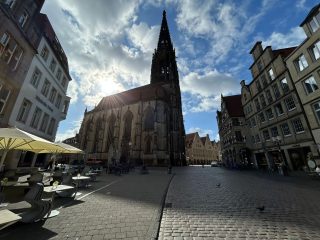
Westphalian State Museum of Art and Cultural History, Münster
Museum in Münster

Right in the heart of Münster, just a short stroll from Domplatz, the Westphalian State Museum of Art and Cultural History (LWL-Museum für Kunst und Kultur) is one of the best places to visit in Münster if you love art in all its forms. Behind its striking façade, this flagship museum brings together centuries of creativity, from medieval altarpieces and Renaissance sculpture to bold contemporary works that push at the edges of what “art” can be.
The museum feels both grand and welcoming: spacious galleries, thoughtful lighting, and clear curation make it easy to move from one era to another without feeling rushed or overwhelmed. With a strong focus on Westphalian heritage but plenty of European context, it is a highlight of any walking tour of Münster for travellers who want to understand not just the city's streets and churches, but the culture that has grown up around them.
Table of Contents
- History and Significance of the Westphalian State Museum of Art and Cultural History
- Things to See and Do in the Westphalian State Museum of Art and Cultural History
- How to Get to the Westphalian State Museum of Art and Cultural History
- Practical Tips on Visiting the Westphalian State Museum of Art and Cultural History
- Where to Stay close to the Westphalian State Museum of Art and Cultural History
- Is the Westphalian State Museum of Art and Cultural History Worth Visiting?
- FAQs for Visiting Westphalian State Museum of Art and Cultural History
- Nearby Attractions to the Westphalian State Museum of Art and Cultural History
History and Significance of the Westphalian State Museum of Art and Cultural History
The Westphalian State Museum of Art and Cultural History, often shortened to the LWL-Museum für Kunst und Kultur, serves as the region's cultural anchor, bringing together artworks and objects that tell the story of Westphalia from the Middle Ages to the present day. Its collection has grown over decades through acquisitions, donations, and long-term projects, reflecting both regional pride and a desire to place Westphalian art in a broader European conversation.
Housed in a grand building near Münster’s historic core, the museum’s architecture mirrors its mission: classic, dignified spaces that honour older works, combined with modern extensions and interiors that suit contemporary exhibitions. Walking through its galleries, you feel how the institution has evolved, adapting to new curatorial ideas while remaining rooted in its role as guardian of the region’s artistic memory.
The museum’s significance lies not only in its individual masterpieces, but in the way it connects them. Medieval religious images, baroque paintings, 19th-century landscapes, and 20th-century abstraction are arranged to show continuities and ruptures across time. For Westphalia, this is the place where local artistic voices are preserved, interpreted, and set alongside international movements, ensuring that the region’s visual heritage remains visible and alive.
Things to See and Do in the Westphalian State Museum of Art and Cultural History
The permanent collection is the natural starting point. Here you can trace a chronological path from medieval panel paintings and sculpture-filled with gold leaf, saints, and dense symbolism-through Renaissance and baroque works that introduce new ideas of perspective, drama, and individual character. These early rooms are a great way to ground yourself before tackling later, more experimental art.
Moving into the 19th and 20th centuries, you encounter paintings, sculptures, and decorative arts that reflect changing tastes, technologies, and social realities. German masters sit alongside broader European trends such as Romanticism, Impressionism, and modernism, allowing you to see how Westphalian artists absorbed and responded to ideas flowing in from Paris, Vienna, or beyond. Design objects and applied arts add another layer, showing how aesthetics filtered into everyday life.
Do not skip the contemporary sections, where recent works in a variety of media-installation, photography, video, conceptual pieces-offer fresh perspectives on identity, history, and the environment. Temporary exhibitions are a key part of the museum’s life, rotating regularly and often focusing on specific themes, artists, or movements. Between shows, café stops, and a browse in the museum shop, it is easy to spend several hours here without noticing the time.
How to Get to the Westphalian State Museum of Art and Cultural History
The museum is centrally located in Münster, just a short walk from Domplatz and the Old Town, making it easy to include in any city itinerary. Most international visitors will arrive via Münster Osnabrück International Airport, which has connections to a number of European destinations and onward links by bus or taxi into the city centre. For the best deals and a seamless booking experience, check out these flights to Münster on Booking.com.
Münster is very well connected by rail, and arriving by train is one of the simplest ways to reach the museum.Train schedules and bookings can be found on Omio. From Münster (Westf) Hauptbahnhof, you can either walk into the centre in around 15-20 minutes or take a short bus ride toward Domplatz or the Innenstadt; from there it is just a few minutes on foot to the museum entrance.
If you are travelling by car, follow signage for Münster’s Innenstadt and look for public car parks around the edges of the historic core.If you are looking to rent a car in Germany I recommend having a look at Discover Cars, first, as they compare prices and review multiple car rental agencies for you. Once you have parked, everything is pleasantly walkable-simply follow streets leading toward the cathedral and Domplatz, then continue a short distance to find the Westphalian State Museum of Art and Cultural History. Münster is also famously bike-friendly, so hiring a bicycle is another enjoyable way to get there.
Practical Tips on Visiting the Westphalian State Museum of Art and Cultural History
- Suggested tips: Start your visit with the permanent collection so you have a sense of the region’s artistic story, then dive into any temporary exhibitions that catch your eye.
- Best time to visit: Late morning or mid-afternoon on weekdays is usually quieter; weekends can be busier, especially on rainy days when locals head indoors.
- Entrance fee: Adults: €10
- Opening hours: Tuesday-Sunday (and public holidays): 10am-6pm 2nd Friday of the month 10-24 h (free admission from 18 h)
- Official website: https://www.lwl-museum-kunst-kultur.de/en/visit/opening-hours-prices/
- How long to spend: Plan for 2-3 hours if you want to see both the permanent galleries and at least one temporary exhibition without rushing.
- Accessibility: The museum is housed in a modernised building with lifts and accessible routes, though you may wish to check details with staff if you have specific mobility needs.
- Facilities: Expect a cloakroom, shop, and café or bistro, plus information desks where you can pick up maps, guides, or family activity materials.
- Photography tip: If photography is permitted, look for contrasts between historic works and sleek, contemporary architectural lines; be mindful of reflections in glass and always avoid flash.
- Guided tours: Keep an eye out for public tours, themed walks, or audio guides, which can be especially helpful for understanding key works and the logic behind the museum’s layout.
- Nearby food options: The surrounding streets and Domplatz area are full of cafés, bakeries, and restaurants where you can reflect on your favourite pieces over coffee, cake, or a leisurely meal.
Where to Stay close to the Westphalian State Museum of Art and Cultural History
Staying near the museum puts you in a perfect position to explore Münster’s cultural and historic heart on foot. A convenient and comfortable option is Stadthotel Münster, which offers modern rooms within easy walking distance of the museum, Domplatz, and the Prinzipalmarkt. For something with a bit more design flair, Factory Hotel sits in a redeveloped industrial complex and pairs distinctive interiors with good transport connections into the centre. If you prefer to be closer to both the station and the Old Town, Hotel Kaiserhof provides classic comfort and makes it simple to reach the museum, cathedral, and shopping streets in just a short stroll.
Is the Westphalian State Museum of Art and Cultural History Worth Visiting?
The Westphalian State Museum of Art and Cultural History is absolutely worth visiting, whether you consider yourself an art buff or just a curious traveller. Few places in Münster offer such a clear, beautifully presented journey through regional and European art, and the mix of medieval treasures, 19th-century favourites, and contemporary experimentation keeps things varied and engaging. Add in well-curated temporary exhibitions and a central location, and it becomes easy to see why this museum is one of the must-see places in Münster for anyone interested in culture.
What Other Travellers Say...

LWL Museum of Natural History with Planetarium at Sentruper Str. 285 is a family-friendly natural history museum with animal and geological exhibits, a planetarium and a café; visitors praise the planetarium’s shows on constellations and the aurora (German narration) and note interactive, child-friendly displays like sand-topography and sound buttons, lockers and student discounts, plus a small restaurant, but warn some exhibits may be closed for work and that most signage is only in German (an audio guide in English/Dutch covers parts), and experiences with staff are mixed.


FAQs for Visiting Westphalian State Museum of Art and Cultural History
Nearby Attractions to the Westphalian State Museum of Art and Cultural History
- St. Paulus Dom (Münster Cathedral): The city's iconic Romanesque-Gothic cathedral on Domplatz, with a famous astronomical clock and impressive interior.
- Prinzipalmarkt: Münster's historic main street, lined with arcaded gabled houses, cafés, and shops, perfect for a post-museum wander.
- City Hall of Münster (Rathaus): A landmark Gothic building associated with the Peace of Westphalia, featuring historic halls and exhibits.
- LWL Museum of Natural History: A family-friendly museum with exhibitions on natural history, space, and planetary science, plus an adjoining planetarium.
- Lake Aasee: A large urban lake just southwest of the centre, ideal for a relaxing walk, pedal-boat ride, or picnic after a culture-filled morning.
The Westphalian State Museum of Art and Cultural History appears in our Complete Guide to Visiting Münster!

Moira & Andy
Hey! We're Moira & Andy. From hiking the Camino to trips around Europe in Bert our campervan — we've been traveling together since retirement in 2020!
This website uses affiliate links which may earn a commission at no additional cost to you!
Planning Your Visit
Tuesday-Sunday (and public holidays): 10am-6pm
2nd Friday of the month 10-24 h (free admission from 18 h)
Adults: €10
Nearby Attractions
- Münster Cathedral (0.2) km
Cathedral - Pablo Picasso Museum (0.2) km
Museum - Prinzipalmarkt (0.3) km
Square - City Hall of Münster (0.3) km
Town Hall - Überwasserkirche (0.3) km
Church - Kiepenkerl Denkmal (0.3) km
Statue - Lambertikirche (0.4) km
Church - Krameramtshaus (0.4) km
Historic Building - Buddenturm (0.5) km
Tower - Erbdrostenhof (0.6) km
Historic Building