Weinmarkt, Lucerne
Square in Lucerne
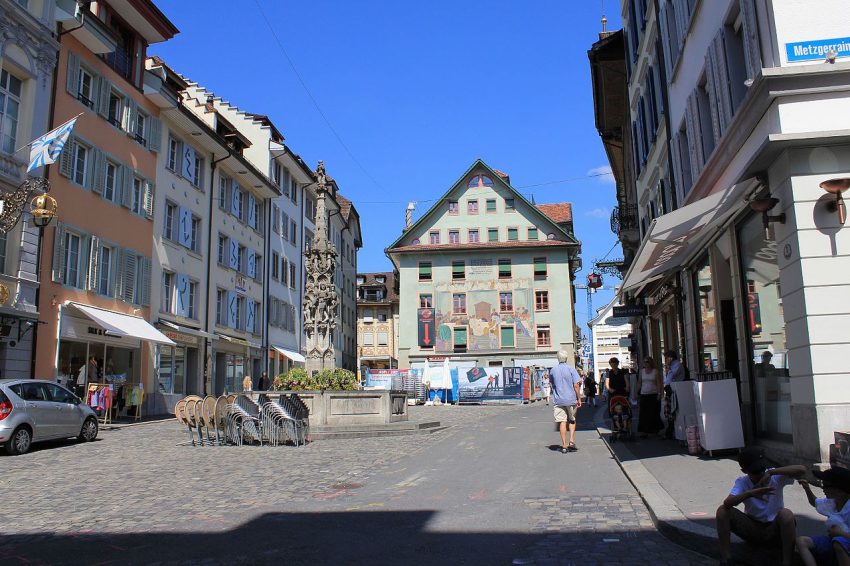
Weinmarkt is one of those Old Town squares that quietly reveals the deeper layers of a city's story. Today it feels like a charming, almost stage-like space framed by colourful historic façades, but for centuries this “Wine Market” was the beating commercial and political heart of Lucerne. Long before it took its present name, the square served as the fish market, linked by narrow alleys to the Reuss River so that fresh catches could be landed and sold quickly. Standing here now, it is easy to imagine the shouts of traders, the smell of river fish, and the bustle of guild members gathering to discuss city affairs in what was once one of the must-see places in Lucerne for anyone doing business.
During the Middle Ages, Weinmarkt was far more than just a place to buy and sell. Until 1447, the southwest corner was home to Lucerne's first city hall, and the surrounding houses hosted taverns that doubled as guildhalls for butchers, tanners, shoemakers, and innkeepers. With the demolition of the medieval Schaal - a two-storey covered market hall for meat, bread, and leather - the square took on its present open form in 1481, creating a ready-made stage for religious and secular plays. Today, it is often visited on walking tours of Lucerne, with guides using the space to bring to life the city's guild traditions, trade routes, and carnival legends.
History and Significance of the Weinmarkt
The story of Weinmarkt begins with water. In its earliest phase, up until the mid-16th century, this square functioned as Lucerne's fish market. The town was still very much a fishing community, and the narrow alleys provided a direct connection to the Reuss, allowing fishermen to carry their catch quickly from river to stall. Because of this role, the square became a natural meeting place for townspeople and merchants, and gradually evolved into a political focal point as well, with decisions and deals being struck amid the noise and smells of daily trade.
The built environment around the square reflected this importance. The first city hall stood at the southwest corner until 1447, symbolising the square's central role in civic life. Around its edges, taverns belonging to different trades acted as informal guildhalls, each one a social and economic hub for butchers, tanners, shoemakers, or innkeepers. When the medieval Schaal - the covered two-storey market structure - was demolished in 1481, Weinmarkt opened up into a broader, more flexible space, suitable not only for trading but also for performances. Religious pageants and secular plays could now be staged here, turning the square into a kind of outdoor theatre where faith, politics, and entertainment intersected.
It was in this period that the Fritschi Fountain was installed as the square's centrepiece. Originally equipped with a hexagonal basin, later replaced by an octagonal one, the fountain is decorated with colourful figures and rich symbolism linked to Lucerne's carnival traditions. Over the centuries the central column has changed several times; the current version in shell limestone is by sculptor Leopold Häfliger, while the original column is preserved in the History Museum on Pfistergasse. This layering of original and replacement elements mirrors the square's own story: constantly adapted, yet always rooted in its medieval origins.
Things to See and Do in the Weinmarkt
The best way to experience Weinmarkt is simply to step into the middle of the square and turn slowly in a circle. You'll see a harmonious ensemble of historic houses with painted façades, carved details, and arcades that hint at their former roles as guild taverns and trading houses. Try to imagine which buildings once housed butchers or shoemakers, and how the square might have looked when stalls, barrels, and baskets filled the space instead of café tables and relaxed visitors.
Make sure you spend time at the Fritschi Fountain, whose vivid statues are closely tied to Lucerne's Fasnacht (carnival) traditions. The figure of Fritschi himself - a legendary character who represents the spirit of carnival - presides over the square, surrounded by playful and grotesque details that reward close inspection. Knowing that the fountain has changed over time, and that its original column now stands in the History Museum, adds a sense of continuity between this outdoor space and the city's collections and archives.
If you are interested in trade history, try to picture Weinmarkt during its wine-selling heyday. After the mid-16th century, goods arriving over the Gotthard trade route transformed the square's role. Sumpters - men hired to lead pack animals - would haul salt and hard Sbrinz cheese from central Switzerland to Val Formazza in Italy, braving alpine passes like the Brünig, Grimsel, and Gries. On the return journey they brought back wine, spices, and textiles to be sold here. This north-south flow of goods is part of what gave Weinmarkt its later name and character as a wine market rather than a fish market.
Finally, look out for the Weinmarktapotheke (Wine Market Pharmacy), built in 1530, which stands as one of the most historically interesting buildings on the square. Its structure and details offer a glimpse into how prosperous tradespeople lived and worked in the early modern city. Whether you are lingering over a coffee, taking photographs, or listening to a guide, Weinmarkt rewards a slow, observant visit.
How to Get to the Weinmarkt
Most international visitors reach Lucerne via Zurich Airport (ZRH), which offers the most frequent European and intercontinental connections and has direct or easy rail links to the city. For the best deals and a seamless booking experience, check out these flights to Lucerne on Booking.com. From the airport, trains run to Lucerne either directly or via Zurich HB, with typical journey times of around one to one and a quarter hours, making it straightforward to include Lucerne and its Old Town squares in a wider Swiss itinerary.Train schedules and bookings can be found on Omio.
Once you arrive at Lucerne's main railway station, Weinmarkt is an easy walk away. Exit towards the lake or Old Town, cross one of the nearby bridges over the Reuss, and follow the narrow streets uphill into the historic centre; within about 10-15 minutes, you'll find yourself among frescoed façades and cobbled lanes, with Weinmarkt clearly signposted or easily located on a city map.Train schedules and bookings can be found on Omio. Local buses also connect the station with stops around the edge of the Old Town, but most visitors enjoy approaching on foot to appreciate how the medieval street pattern still shapes the city.
If you are travelling by car, Lucerne is connected to the rest of Switzerland by the A2 and A14 motorways, with several multi-storey car parks located close to the station and the Old Town. Because many central streets are pedestrianised or restricted to local traffic, it's best to leave your car in one of these garages and explore on foot. From the parking, Weinmarkt is only a short walk through characterful alleys, so you can easily combine your visit to the square with stops at nearby bridges, churches, and other Old Town landmarks.
Practical Tips on Visiting the Weinmarkt
- Suggested tips: Visit early in the morning or later in the evening if you want a quieter, more atmospheric feel, and take time to look up at the painted façades and architectural details as you move around the square.
- Best time to visit: Spring and autumn offer pleasant temperatures and softer light for photography, while winter can be particularly charming if there are festive decorations or a dusting of snow.
- Entrance fee: Free — Weinmarkt is a public square open to everyone.
- Opening hours: Accessible at all times, though shops and cafés around the square follow their own individual opening hours.
- Official website: https://www.luzern.com
- How long to spend: Allow at least 20-30 minutes to explore the square, study the Fritschi Fountain, and wander the surrounding lanes; history and architecture enthusiasts may happily stay longer.
- Accessibility: The cobbled surface and slight slopes can be a little uneven for wheelchairs and strollers, but the square itself is open and spacious, and alternative routes with gentler gradients can be found from nearby streets.
- Facilities: There are no dedicated facilities on the square itself, but cafés, restaurants, and shops around Weinmarkt and in adjacent streets provide toilets, refreshments, and shelter in all seasons.
- Photography tip: Try photographing the Fritschi Fountain from different angles to capture both its colourful figures and the surrounding façades, and consider returning at dusk when the warm light brings out the textures of the buildings.
- Guided tours: Many Old Town walking tours include Weinmarkt as a key stop, using it to explain Lucerne's guild system, trade routes, and carnival traditions, so joining a tour can give extra context to what you see.
- Nearby food options: You'll find a mix of traditional Swiss eateries, cosy cafés, and small restaurants in and around Weinmarkt, making it easy to combine sightseeing with a drink, snack, or leisurely meal.
Where to Stay close to the Weinmarkt
If you want to stay right on the square itself, Hotel des Balances is an ideal choice. This elegant hotel occupies a historic building with beautifully restored interiors and a riverside terrace, and stepping outside places you immediately amid Weinmarkt’s cobbles, fountain, and frescoed façades. It’s perfect if you like to experience the square early in the morning or late in the evening, when day-trippers have gone.
Another excellent option just a short stroll away is Altstadt Hotel Krone Luzern, which combines comfortable rooms with a prime position on one of the Old Town's most atmospheric squares. From here you can explore Weinmarkt, neighbouring plazas, and the nearby Reuss bridges in minutes, making it easy to drop back to your room for a break between walks.
For travellers who prefer a slightly quieter base while still being close to Weinmarkt, Boutique Hotel Weisses Kreuz offers a cosy, central stay in the Old Town's narrow lanes. It's only a few minutes on foot from the square, yet set just off the busiest routes, so you can enjoy both easy access to Weinmarkt and a more tucked-away feel in the evenings.
Is the Weinmarkt Worth Visiting?
Weinmarkt is absolutely worth including on your Lucerne itinerary, especially if you enjoy places where everyday life and deep history meet in a single setting. The square's layered past as fish market, political hub, guild centre, performance stage, and later wine market gives it a richness that goes far beyond its pretty façades. Between the Fritschi Fountain, the 16th-century pharmacy, and the stories of alpine trade and carnival tradition, a visit here adds real depth to your understanding of Lucerne's development from river village to trading town and tourist destination.
What Other Travellers Say...

Weinmarkt-Brunnen in Luzern sits in the old town as a pleasant market square centered on a working, decorative fountain; visitors note painted buildings, murals and quaint shops, plus cafés and restaurants lining the open space — it can get busy with tourists so allow time if you want photos.


FAQs for Visiting Weinmarkt
Nearby Attractions to the Weinmarkt
- Kapellbrücke (Chapel Bridge) - Lucerne's iconic covered wooden bridge with a water tower and historic paintings, just a short walk towards the river.
- Spreuerbrücke - The more somber of Lucerne's wooden bridges, decorated with Danse Macabre panels and offering evocative views of the Reuss.
- Jesuit Church - A beautiful Baroque church on the riverbank, known for its twin towers and richly decorated interior.
- Lucerne Town Hall and Kornmarkt - Adjacent historic square with the Renaissance town hall and former grain market, reflecting the city's commercial past.
- History Museum (Historisches Museum Luzern) - Located on Pfistergasse, this museum holds the original Fritschi Fountain column and other objects that illuminate Lucerne's past.
The Weinmarkt appears in our Complete Guide to Visiting Lucerne!

Moira & Andy
Hey! We're Moira & Andy. From hiking the Camino to trips around Europe in Bert our campervan — we've been traveling together since retirement in 2020!
This website uses affiliate links which may earn a commission at no additional cost to you!
Planning Your Visit
Accessible at all times, though shops and cafés around the square follow their own individual opening hours.
Free - Weinmarkt is a public square open to everyone.
Nearby Attractions
- Hirschenplatz (0.0) km
Square - Kornmarkt (0.1) km
Square - Lucerne Town Hall (0.1) km
Town Hall - Jesuitenkirche (0.1) km
Church - Ritterscher Palace (0.2) km
Palace - Chapel Bridge and Water Tower (0.2) km
Bridge - Fritschi Fountain (0.2) km
Fountain - Peter's Chapel (0.2) km
Church - Spreuerbrücke (0.2) km
Bridge - History Museum (0.3) km
Museum